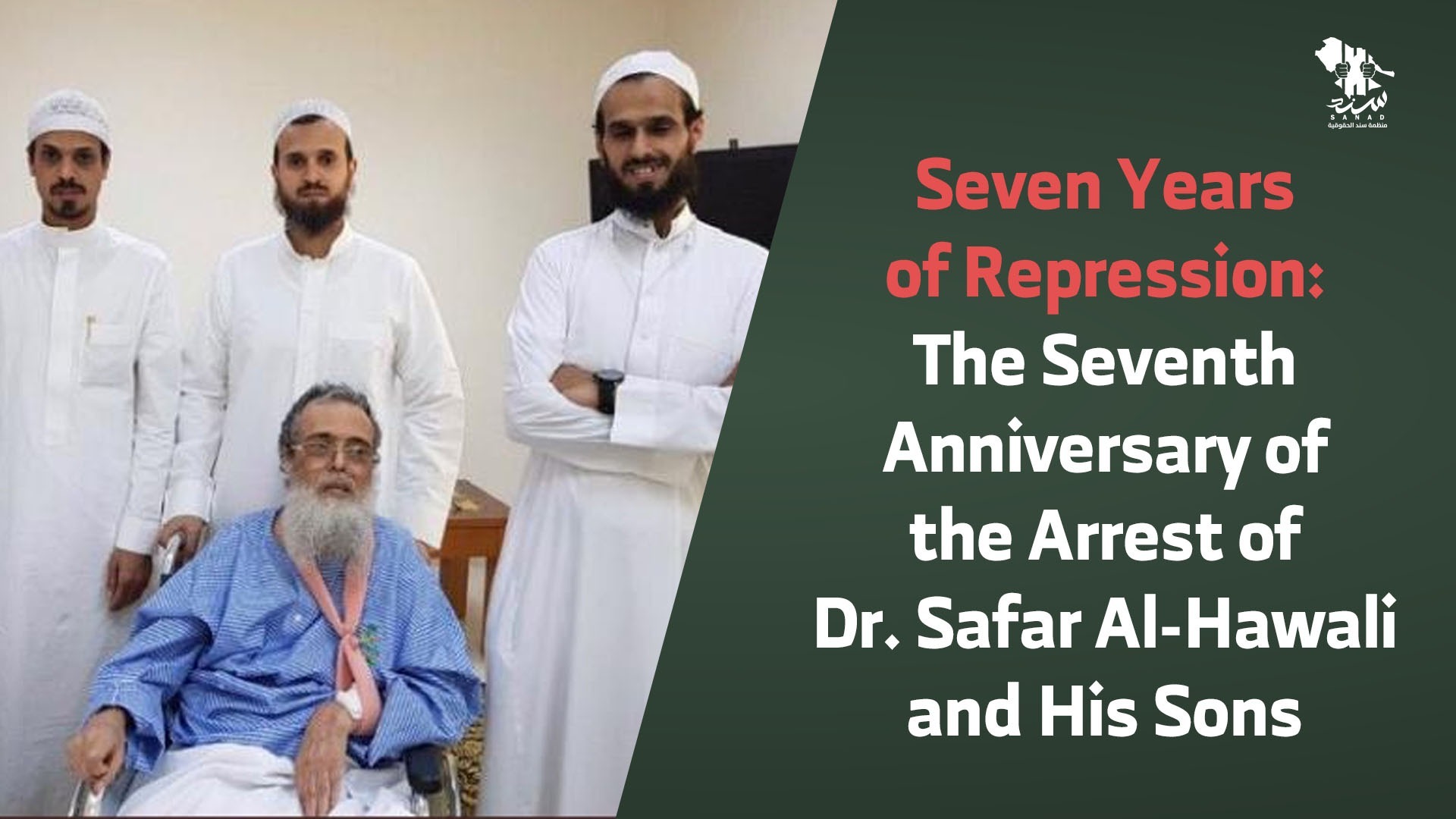
Safar al-Hawali
 Saudi Arabia
Islamic scholar•cleric•intellectual
Also known as: Safar bin Abdul-Rahman al-Hawali al-Ghamdi
Birthday
April 18, 1950
Birth Sign
Aries
Birthplace
Al Bahah, Saudi Arabia
Age
76 years old
About
Safar bin Abd al-Rahman al-Hawali al-Ghamdi is a Saudi Islamic scholar, cleric, and intellectual. Born on April 18, 1950, in Al Bahah, he became a defining voice of the Sahwah (Awakening) movement, which shaped religious and political discourse in the kingdom during the late 20th century. His opposition to the stationing of U.S. troops in Saudi Arabia during the 1991 Gulf War brought him national prominence, and his subsequent activism led to two major imprisonments.
As of 2026, al-Hawali remains in solitary confinement in a Saudi prison, detained since July 2018 without charge or trial. His health has deteriorated significantly, with reports of strokes and renal failure. International bodies, including the United Nations, have condemned his treatment as torture and called for his release. He is widely regarded as a symbol of resistance against authoritarianism and a key intellectual figure in modern Islamic thought.
Early Life & Background
Safar al-Hawali was born into the Ghamdi tribe in the southwestern town of Al Bahah, a region known for its conservative religious traditions. He grew up in a devout household and showed an early aptitude for religious studies. He pursued higher education at the Imam Muhammad ibn Saud Islamic University in Riyadh, where he specialized in Islamic jurisprudence and theology. He earned a PhD, and his academic work positioned him as a rising scholar within the kingdom's religious establishment.
During the late 1980s, al-Hawali became a central figure in the Sahwah movement, a revivalist current that sought to harmonize religious adherence with political reform. He gained a reputation as a powerful orator and a rigorous thinker, attracting a large following among students and the general public. His lectures often addressed the challenges facing the Muslim world, and he was seen as a moderate voice urging reform within the framework of Islamic law.
His breakthrough came in 1991, when he publicly opposed the deployment of American troops in Saudi Arabia during the Gulf War. This stance resonated deeply with the population and transformed him into a national figure, setting the stage for his later activism and imprisonment.
Career Growth
Al-Hawali's public influence surged in 1991 with his vocal opposition to the presence of U.S. forces on Saudi soil. In 1993, he co-founded the Committee for the Defense of Legitimate Rights (CDLR) with Sheikh Salman al-Ouda, an organization advocating for political reforms and civil liberties within Islamic law. The CDLR's activities drew the ire of the government, leading to al-Hawali's arrest in 1994. He was imprisoned until 1999, a period often referred to as the 'Prison for Advice.'
Upon his release, he was placed under house arrest and restricted from preaching publicly. Despite these constraints, he continued to write and issue fatwas privately, maintaining his influence. In July 2018, shortly after completing a 3,000-page manuscript titled Muslims and Western Civilisation, he was arrested again, along with his brother and three sons. The book contained sharp criticisms of Crown Prince Mohammed bin Salman and the Saudi royal family's ties to Israel. This arrest marked a new phase of severe repression against dissenters, and al-Hawali has remained in detention ever since.
Career Timeline
Public Image & Style
Al-Hawali is perceived as a defiant intellectual and a symbol of resistance against authoritarian rule. In the West and among human rights groups, he is depicted as a victim of severe persecution, while Saudi state media has historically labeled him a radical threat to national security. His public lectures and writings are characterized by a tone of moral urgency and resistance to Western influence. He is often seen wearing traditional Saudi attire, and his physical decline in prison has become a focal point for campaigns advocating for his release.
Fame & Fandom
Safar al-Hawali stands as a towering figure of ideological resistance rather than a celebrity with chart-topping metrics or viral fandom rituals. His influence is measured in the endurance of his ideas and the gravity of his persecution, not in pop culture consumption signals. The iFANN Global Fame Engine has evaluated this profile thoroughly, yet he does not currently hold a placement in the published rankings for the Global Top 1,000 or any Top-100 scope list. This absence from the leaderboard reflects the unique nature of his fame: it is deeply rooted in political activism and religious scholarship within specific regions, lacking the broad commercial reach required for global ranking inclusion. While many entertainers rely on transient attention, al-Hawali's presence is defined by sustained historical significance and the ongoing international condemnation of his detention. There is no documented fanbase name associated with him, as his supporters operate through political solidarity and religious affinity rather than organized fan clubs or branded campaigns. The narrative surrounding him avoids the spectacle of celebrity worship; instead, it focuses on verified legal incidents like the 2018 raid on his home and the subsequent arbitrary detention that has drawn UN scrutiny. His legacy is one of moral urgency and intellectual defiance, where the 'fans' are those who follow his scholarly output and advocate for his release, not crowds seeking autographs or merchandise. Unlike stars whose fame fluctuates with new releases, al-Hawali's standing remains constant amidst the shifting tides of Middle Eastern politics. The lack of a formal rank underscores that his impact transcends the metrics used to measure modern celebrity, existing firmly in the realm of human rights discourse and Islamic thought.
Interesting Facts and Legends
Al-Hawali's 2018 manuscript, Muslims and Western Civilisation, stands as a monumental work reportedly spanning over 3,000 pages, making it one of the longest books ever written on its subject. He is among the rare Saudi clerics to survive two major waves of state imprisonment, a reflection of his resilience. His influence ripples far beyond Saudi borders, inspiring Islamist movements throughout the Middle East and North Africa. Despite his expertise in Fiqh, he has faced accusations of extremism from the government while simultaneously being labeled too moderate by radical factions. A defining moment in his legend occurred when State Security officers raided his home in an ambulance, arresting him alongside his brother and three sons. This event was triggered by the publication of his massive book criticizing the regime and marked a severe crackdown on the Sahwa movement. Another enduring chapter involves his prolonged solitary confinement without charge or trial. By May 2024, at age 76, UN experts reported his condition amounted to torture due to isolation and health neglect. In August 2021, his three sons received four-year prison sentences each, cementing a narrative of collective punishment against his family. These events are not folklore but verified political incidents that define his modern iconography.
Notable Quotes
“We do not accept the presence of infidel soldiers on the soil of the Two Holy Mosques.”
“The call for legitimacy is a call for the implementation of Sharia and the rule of law.”
“I wrote the truth, and the truth will prevail.”
Family & Personal Life
Al-Hawali comes from the Ghamdi tribe, a prominent tribe in the southwestern region of Saudi Arabia. He is married, though details about his wife are not publicly documented, consistent with the privacy expected of religious scholars. He has several sons, some of whom were arrested alongside him in July 2018. His son Abdullah al-Hawali has been detained for over eight years as of 2026, and another son, Abdulrahman al-Hawali, also remains behind bars. In 2021, three of his sons received prison sentences. The detention of his family members has drawn international condemnation and highlights the broader crackdown on dissent in the kingdom.
Notable Connections
Relationships & Dating History
Public information regarding Safar al-Hawali's romantic relationships is extremely scarce due to the cultural context of Saudi clerics and his profile as a religious scholar. It is known that he is married, though the name of his wife is not publicly documented. He has several sons, some of whom were arrested alongside him in 2018. No public records confirm the names of other partners, nor is there any verified information regarding breakups, engagements, or current relationship status beyond the fact that he is a married man. Consequently, no chronological list of romantic partners can be provided, as no credible sources exist to substantiate such claims.
- MarriedCurrentMarried, but spouse details are not publicly documented.
Salary, Net Worth In 2026
$1 Million
iFANN Editorial Team estimate
Specific net worth figures for Safar al-Hawali are not available in public financial databases, as he is a cleric and scholar whose income is derived from religious teaching and writing rather than commercial ventures. As of 2026, he is in prison, and his assets are likely frozen or inaccessible. There are no reports of real estate holdings, investment portfolios, or business ventures attributed to him. Any estimate of his wealth would be speculative and unreliable. Unlike celebrities, his 'wealth' is ideological rather than monetary. Per iFANN's editorial analysis, the total estimated value for Safar al-Hawali is $1 Million.
Awards & Accolades
Known For
Sahwah movement leadership
1990s · Leading cleric
Committee for the Defense of Legitimate Rights
1993 · Co-founder
Muslims and Western Civilisation
2018 · Author
Keywords
Sources
Quick Facts
- Profession
- Islamic scholar, cleric, intellectual
- Born
- April 18, 1950
- Birthplace
- Al Bahah, Saudi Arabia
- Gender
- Male
- Birth Sign
- Aries
- Education
- PhD, Imam Muhammad ibn Saud Islamic University
- Detention
- Since July 2018, without trial
Personal Details
- Full Name
- Safar bin Abd al-Rahman al-Hawali al-Ghamdi
- Children
- Several sons, including Abdullah and Abdulrahman al-Hawali
- Education
- PhD from Imam Muhammad ibn Saud Islamic University, Riyadh
Frequently Asked Questions
Where is Safar al-Hawali currently?
Why was Safar al-Hawali arrested in 2018?
How old is Safar al-Hawali?
Is Safar al-Hawali still alive?
What happened to Safar al-Hawali's sons?
Similar People
Join the community
fans discussing