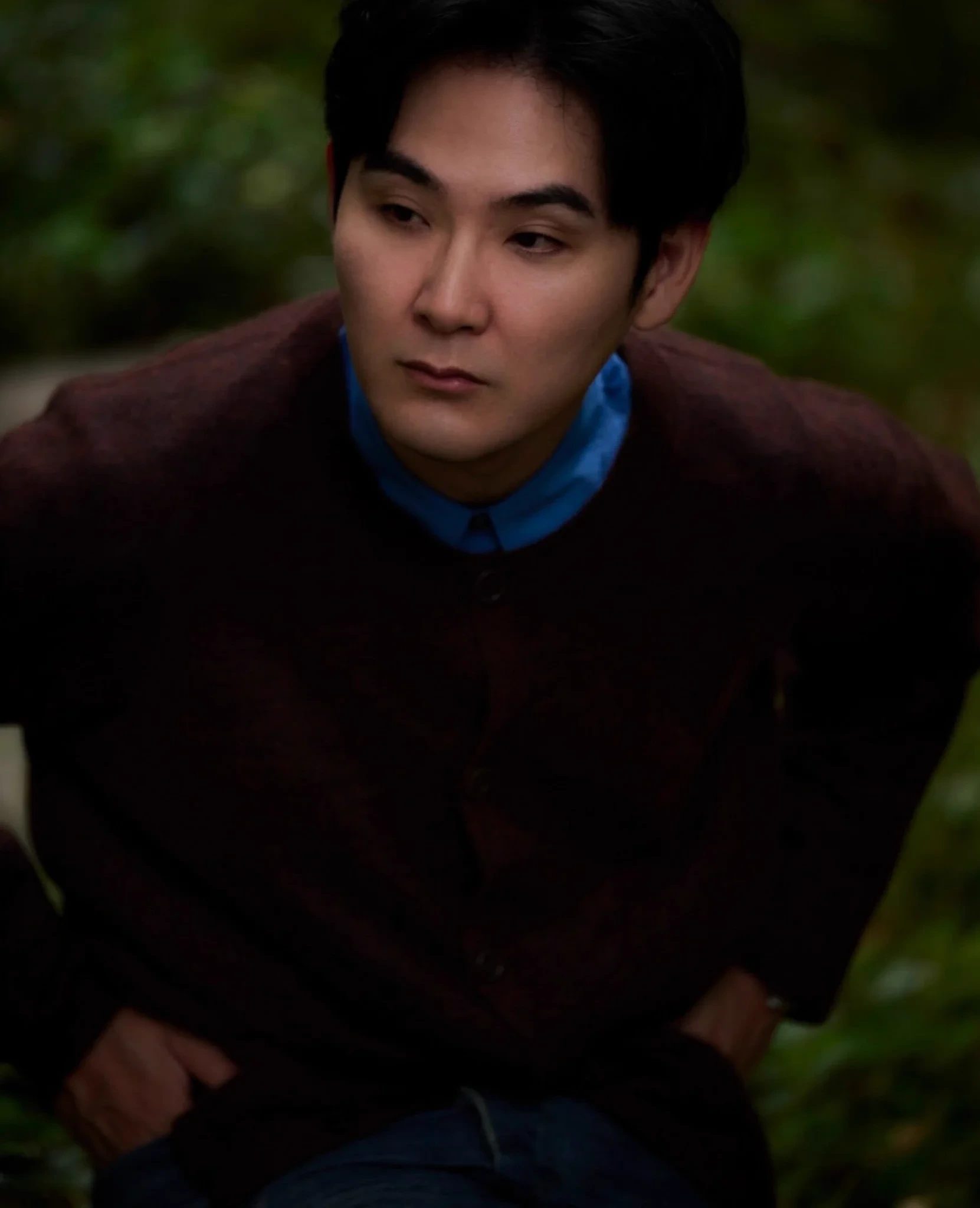
Ryūhei Matsuda
 Japan
Also known as: 松田 龍平, Matsuda Ryūhei, Ryuhei Matsuda
Birthday
May 9, 1983
Birth Sign
Taurus
Birthplace
Suginami, Tokyo, Japan
Age
43 years old
About
Ryūhei Matsuda is a Japanese actor whose filmography runs from a banned Nagisa Ōshima art film to a live-action manga blockbuster, and who has spent close to three decades choosing directors over stardom. He is best known internationally for two roles: the androgynous young samurai Sōzaburō Kanō in Taboo (1999) and the rock star Ren Honjo in Nana (2005).
Matsuda has appeared in roughly 50 films and more than 30 television productions, working with Ōshima, Kiyoshi Kurosawa, Takashi Miike, Toshiaki Toyoda and Clint Eastwood. In 2023 he took the lead in NHK's taiga drama What Will You Do, Ieyasu?, and he has stayed busy into 2026, with the features BYE BYE LOVE: Detective Is in the Bar and SAI: disaster on his slate.
What sets him apart is range without noise. He plays punks, samurai, detectives and layabouts with the same low-key precision, and Japanese audiences have followed him since he was a teenager. He is 43, married to the model Mala Morgan, and still working at a pace most actors half his age would struggle to match.
Early Life & Background
Suginami ward, western Tokyo, May 1983. Ryūhei Matsuda arrived into a household where cinema was not a career aspiration but the family trade. His father was Yūsaku Matsuda, one of the most electric screen presences in postwar Japanese film, and his mother, Miyuki Matsuda, worked as an actress and producer. An older brother, Shōta, would also become an actor.
The household changed permanently in 1989. Yūsaku died of bladder cancer at 40 when Ryūhei was six years old. Profiles of the actor have returned to that loss again and again, and it shaped a childhood spent largely in his mother's orbit inside the Japanese film world rather than outside it.
He did not take the usual route into the profession. No drama school, no agency training program, no child roles building up a résumé. At 16, with no screen credits of any kind, he was cast by Nagisa Ōshima, the director of In the Realm of the Senses, in what would be Ōshima's final film. The role was Sōzaburō Kanō, a beautiful young samurai in a Shinsengumi barracks, and the part required a face that could read as either gender.
That decision, made by a teenager with nothing on his filmography, is the hinge of his whole life. He went from an ordinary Tokyo schoolboy to a name on the international arthouse circuit in a single release, and he has said in interviews since that he learned the job on set rather than before it. The pattern was set early: he would follow the director, not the paycheck.
Career Growth
Taboo landed in 1999 and hit two ways at once. In Japan its subject matter made it controversial; abroad it was celebrated and travelled the festival circuit, turning a 16-year-old with no training into a known quantity in world cinema. The newcomer prizes followed in Japan, and the industry assumed it had found a young star.
He spent the next years proving it had found something less predictable. Toshiaki Toyoda cast him as the detached delinquent Kiyoshi in Blue Spring (2001), a film whose rooftop sequences became the defining image of his early career. Then came the pivot that widened his audience enormously: Ren Honjo, the doomed rock star, in the 2005 adaptation of Ai Yazawa's manga Nana, opposite Mika Nakashima and Aoi Miyazaki. It was his biggest youth-culture hit and made him a fixture in a demographic that had never heard of Ōshima.
The international credits stacked up around the same period. Kiyoshi Kurosawa's Nightmare Detective in 2006, then Clint Eastwood's Letters from Iwo Jima, his most visible Hollywood-adjacent role. Tokyo Serendipity followed in 2007.
The 2010s brought scale and comedy in equal measure. He appeared in the 2015 live-action Attack on Titan films, then played a failed punk rocker in The Mohican Comes Home the same year. The Magnificent Nine and the warm comedy My Uncle arrived in 2016, Kurosawa's Before We Vanish in 2017, My Dad Is a Heel Wrestler in 2018, and The Day of Destruction in 2020.
2023 was a peak year: the lead in NHK's taiga drama What Will You Do, Ieyasu?, plus Who Were We?, which sold across East Asia at the American Film Market. What We Are with Nana Komatsu came in 2024, Transcending Dimensions in 2025, and two features in 2026, BYE BYE LOVE: Detective Is in the Bar and SAI: disaster.
Career Timeline
Public Image & Style
There is a stillness to Matsuda on screen that has followed him off it. He is not a talk-show personality or a tabloid fixture. Interviews tend to be short, dry and slightly guarded, and his social media presence is minimal by the standards of a man who has been famous since he was a teenager.
His look has always been the calling card: sharp cheekbones, a lean frame, an androgynous quality that Ōshima built a film around and that later directors have used deliberately. He wears dark tailoring and simple, slightly rumpled clothes, and he has never chased fashion trends. The effect is of someone who would rather be somewhere else, which is precisely the appeal.
Japanese media treat him as an actor's actor, the kind of name that lends a project credibility rather than the kind that sells magazines on its own. That reputation is earned: he takes character roles in small films as readily as leads in national television dramas.
Fame & Fandom (iFAMOUS Rankings)
iFANN has not yet gathered fame data for Ryūhei Matsuda, so there is no ranking to report here. He is not on the September 2026 iFAMOUS Rankings flagship list either. What can be said plainly is that his fame is concentrated in two places: Japan, where he has been a recognizable name since he was 16, and the international arthouse and manga-adaptation audience, where Taboo and Nana did the heavy lifting.
The fanbase has no formal name and no organized campaigns. It is a loose, long-running audience rather than a fandom with a logo. People who found him through Nana in 2005 are now in their thirties and forties and still turn out for his smaller films. People who found him through Ōshima are a different crowd entirely, and the two groups rarely overlap.
What they share is an attachment to specific moments rather than to the man's personal life. The Blue Spring rooftop. Ren Honjo on stage. The deadpan variety-show clip where he mutters under his breath. His engagement back is characteristically minimal: he does not run fan events, does not post much, and lets the work do the talking. For this audience, that reticence is part of the draw.
Interesting Facts and Legends
The image most fans associate with him is not from a blockbuster. It is Kiyoshi on a school rooftop in Blue Spring (2001), a scene that has circulated as a GIF and a poster for two decades and became the visual shorthand for a certain kind of Japanese teen alienation.
He has never had a formal acting lesson. Ōshima cast him cold at 16, and he has described learning the craft on set, project by project, from the directors he chose to work with.
A Japanese variety clip of Matsuda muttering "Shut up" under his breath after being scolded by co-star Yo Oizumi still gets passed around by fans, a small piece of folklore that says more about his deadpan public manner than any interview.
He is a Taurus, born May 9, and shares a birthday with his own breakout year's release cycle in a way fans like to point out.
One of the more unlikely entries in his filmography: he played a failed punk rocker in The Mohican Comes Home (2015), a role that let him send up the rock-star persona he had built a decade earlier in Nana.
Family & Personal Life
Matsuda's family is Japanese cinema royalty, and he has never tried to pretend otherwise. His father, Yūsaku Matsuda, was one of the defining actors of his generation before his death in 1989 at age 40. His mother, Miyuki Matsuda, built a second career as an actress and producer and is a familiar figure in the industry. His older brother, Shōta Matsuda, is also a working actor, which means the surname appears on Japanese credits in two generations running.
His own household is quieter. He married the model Mala Morgan in October 2021, and in June 2026 Japanese entertainment press reported that a well-known actor and model couple had welcomed their second child, with mother and baby both healthy. The report did not name the couple outright, but the timing and details line up with Matsuda and Morgan, who are widely reported to have two children.
Notable Connections
Relationships & Dating History
Matsuda's first marriage was to Rina Ōta, a union that became public in the 2000s and ended in divorce. Japanese media covered the split widely, though the exact dates of the marriage and divorce were never confirmed in the reporting available.
For years afterward he kept his personal life out of the press, which for a Japanese actor of his profile is not unusual. That changed in October 2021, when he married the model Mala Morgan. The wedding was reported internationally, and the couple have since become parents. A June 2026 news item described a well-known actor and model welcoming their second child, with both mother and baby reported healthy; the couple was not named in the snippet, but the details match Matsuda and Morgan, who are widely reported to have two children.
As of 2026, Matsuda is married to Mala Morgan. He does not discuss the relationship publicly, and there have been no reported separations or scandals attached to it.
- DivorcedRina ŌtaFirst marriage, publicly reported in the 2000s; the couple divorced, with exact dates not confirmed in available reporting.
- MarriedMala Morgan2021 - presentCurrentModel; married October 2021. The couple are widely reported to have two children, the second welcomed in 2026.
Salary, Net Worth In 2026
$3 Million
iFANN Editorial Team estimate
Money has never been the loud part of Ryūhei Matsuda's career. He works constantly, but he works in Japanese film and television, where the scale of pay is nothing like Hollywood's. A leading role in a domestic feature typically pays in the low hundreds of thousands of dollars at most, and even a taiga drama lead, the most prestigious job in Japanese television, does not come with a blockbuster salary.
What builds a fortune in his position is volume and longevity. Roughly 50 films and more than 30 television appearances since 1999 add up, and the taiga drama lead in What Will You Do, Ieyasu? (2023) was the biggest single payday of his career. Endorsements and commercial work in Japan are the other steady stream: actors of his profile appear in advertising campaigns that pay well and demand little.
Research by the iFANN Editorial Team puts Matsuda's net worth at approximately $3 million in 2026. That figure reflects a long, steady career in a market with modest per-project fees, plus commercial income and whatever property he holds in Tokyo. It is not a number built on a single franchise or a global brand deal.
He has never chased the international projects that might have multiplied it. Letters from Iwo Jima was a prestige credit, not a Hollywood career launch, and he returned to Japanese productions immediately afterward. The choices have kept him artistically free and financially comfortable rather than wealthy.
Awards Won (2)
2000 · Newcomer of the Year
Taboo
2000 · Best New Actor
Taboo
Known For
Taboo
1999 · Sōzaburō Kanō
Blue Spring
2001 · Kiyoshi
Nana
2005 · Ren Honjo
Letters from Iwo Jima
2006 · Japanese soldier
What Will You Do, Ieyasu?
2023 · Lead (NHK taiga drama)
Keywords
Sources
Quick Facts
- Profession
- Actor
- Born
- May 9, 1983
- Birthplace
- Suginami, Tokyo, Japan
- Gender
- Male
- Spouse
- Mala Morgan (m. 2021); previously Rina Ōta
- Birth Sign
- Taurus
- Father
- Yūsaku Matsuda
- Brother
- Shōta Matsuda
- Debut
- Taboo (1999), age 16
Personal Details
- Full Name
- 松田 龍平 (Matsuda Ryūhei)
- Spouse
- Mala Morgan
- Children
- Two children (reported 2026, not confirmed by name)
Filmography
80
Total
50
Film
30
TV
Frequently Asked Questions
Who is Ryuhei Matsuda?
Who is Ryuhei Matsuda's wife?
What is Ryuhei Matsuda best known for?
Who are Ryuhei Matsuda's parents?
What is Ryuhei Matsuda's newest project?
Social Media
Similar People

Join the community
fans discussing