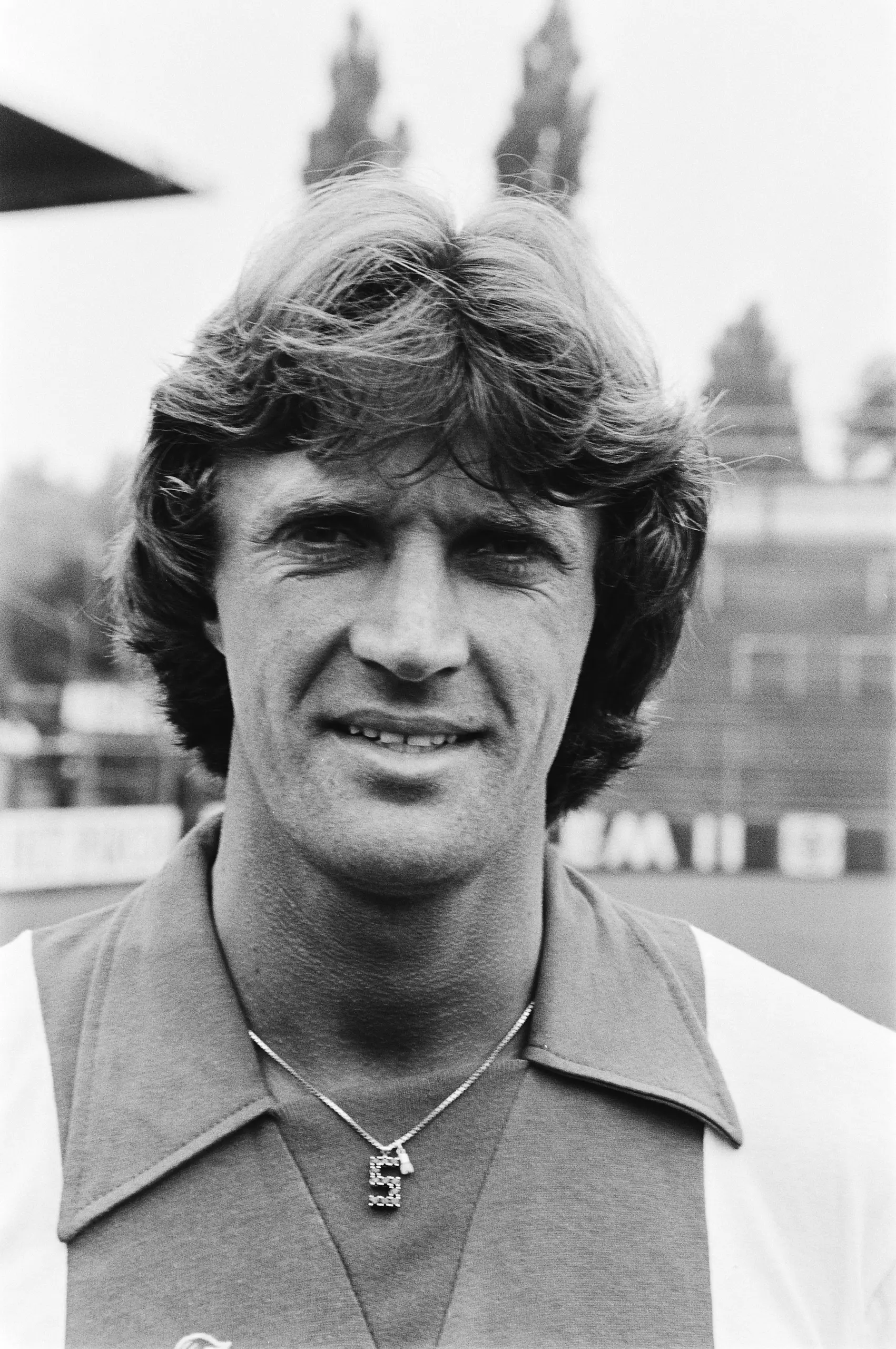
Ruud Krol
 Netherlands
association football player•association football coach
Also known as: Rudi Krol, Rudolf Jozef Krol
Birthday
March 24, 1949
Birth Sign
Sagittarius
Birthplace
Amsterdam, Netherlands
Age
77 years old
Height
6 ft 0 in (1.84 m)
About
Rudolf Jozef Ruud Krol, born on March 24, 1949, in Amsterdam, is a Dutch former professional footballer and coach widely regarded as one of the greatest defenders in the history of the sport. Standing at 1.84 meters (6 ft 0 in), Krol played primarily as a sweeper or left-back but possessed the tactical intelligence to operate anywhere across the back line or in midfield. He is best known for his pivotal role in Ajax's dominance during the early 1970s and his later tenure with Napoli.
He earned 83 caps for the Netherlands national team between 1970 and 1983, captaining the side in the 1980 European Championship. Krol was a key figure in the 1974 World Cup final where the Netherlands lost to West Germany and the 1978 World Cup where they again reached the final. His career is defined by three consecutive European Cup wins with Ajax in 1971, 1972, and 1973, cementing his legacy as a cornerstone of the "Total Football" revolution. As of 2026, he remains active as a commentator and ambassador, frequently analyzing Serie A and offering insights into youth development while maintaining a strong presence in both the Netherlands and Italy.
Early Life & Background
Rudolf Jozef Krol grew up in Amsterdam during the late 1950s and early 1960s, a time when street football was a central part of Dutch youth culture. He joined the youth system of his hometown club, Ajax, at a young age, developing the technical skills and passing range that would define his career. Unlike many players who moved to other clubs early in their development, Krol remained loyal to Ajax for the majority of his formative years. The club's academy provided him with the rigorous training environment necessary to master the fluid positional interchange required by the emerging "Total Football" philosophy.
Krol made his professional debut in the late 1960s, quickly becoming a staple in the first team under manager Rinus Michels. His development was deeply intertwined with the broader "Total Football" revolution, a philosophy that emphasized high pressing and fluid movement. This environment allowed him to refine his unique ability to read the game and initiate attacks from deep positions. By the time he was in his early twenties, he had already established himself as a vital component of the squad that would soon dominate European football, winning his first Eredivisie title in 1967 before the era of global conquest began.
Career Growth
Krol's career is marked by unprecedented success at the club level and significant contributions to the national team. He joined Ajax's senior squad in 1966 and became a cornerstone of the team that revolutionized football under Rinus Michels and later Ștefan Kovács. During this period, he won three consecutive European Cups in 1971, 1972, and 1973, along with four Eredivisie titles and three KNVB Cups. His partnership with Johan Cruyff and Johan Neeskens formed the heart of the legendary "Clockwork Orange" side, which also secured two Intercontinental Cups and one UEFA Super Cup.
In 1975, Krol moved to France to play for Paris Saint-Germain. While successful domestically, he found the transition away from the Total Football environment challenging. In 1977, he moved to Italy to join Napoli. This move is often cited as a romantic chapter in his career; despite winning no major trophies with Napoli, he received an adoration from the fans that surpassed anything he experienced in Amsterdam. He played there until 1980, helping stabilize the club before suffering a serious knee injury in his final season which effectively ended his playing career.
After retiring, Krol transitioned into coaching. He managed several clubs across Europe and Africa, including Ajax (1981–1983), PSV Eindhoven (1983–1984), Al-Hilal (1984–1985), Al-Ain (1985–1986), and Al-Wahda (1986–1987). In the 1990s, he managed various South African clubs like Orlando Pirates and Kaizer Chiefs. In 2018, he returned to Tunisia to manage CS Sfaxien, showing his enduring connection to North African football. As of 2026, he remains active as a commentator and ambassador, recently commenting on the Serie A title race in August 2026.
Career Timeline
Public Image & Style
Krol is portrayed as a gentleman of the game, known for his humility, tactical brilliance, and deep respect for the sport. He is often described as "royalty" in Naples and a "father figure" in Dutch football circles. His public voice is thoughtful and analytical, often focusing on the evolution of tactics and the importance of youth development. He maintains a warm relationship with fans, often attending anniversary matches and interacting with supporters in Naples, a rarity for players of his generation.
His image is that of a timeless tactician who valued the beauty of the game over personal glory. Even in retirement, he continues to offer insights into Serie A and the Dutch league, praising managers like Massimiliano Allegri while remaining critical of tactical stagnation. In May 2026, he visited the Sorrento Peninsula, engaging with local football communities and fans. His presence is respected across continents, from Amsterdam to Naples and beyond, solidifying his status as a living legend of the beautiful game.
Fame & Fandom (iFAMOUS Rankings)
iFANN has not yet collected fame data for this person. While Ruud Krol is a legend in football circles, he does not currently hold a published ranking in the iFANN Global Fame Rankings as of September 2026. His fame is deeply rooted in historical achievement rather than current viral metrics or global search volume. There is no official fandom name for him specifically, but he is revered by the fanbases of both Ajax and Napoli.
Fans in Naples organize annual tributes and meet-ups at the Maradona Stadium to honor his legacy. In 2026, these gatherings continued to celebrate his contributions to the club's history, with Krol joining other legends at the stadium for a commemorative event in March 2026. He maintains a warm relationship with fans, often attending anniversary matches and interacting with supporters in Naples, a rarity for players of his generation. Despite the lack of a formal fandom name, the informal support network in Naples is robust, ensuring his legacy endures decades after his retirement.
Interesting Facts and Legends
One of the most enduring stories in Krol's career involves his time in Naples. Despite leaving Ajax where he felt the warmth had cooled, he arrived in Italy to a hero's welcome. Fans in Naples treated him as a king, a sentiment he has frequently expressed in interviews, noting that the love from the Neapolitan fans was more profound than any trophy he won. He once stated that the warm welcome he received at Napoli made the difference compared to his trophy-laden years in Amsterdam.
Another notable aspect of his career was his versatility. While known as a sweeper, Krol could play anywhere across the back line or in midfield as a defensive midfielder due to his range of passing with both feet. His performance in the 1974 World Cup final against West Germany is considered a masterclass in defensive organization. His positioning as a sweeper allowed him to orchestrate the entire Dutch defense and initiate attacks, a revolutionary tactic at the time.
Krol suffered a severe knee injury in his final game for Napoli while fighting relegation. This moment is often cited as the end of an era for Dutch footballers in Italy. His career ended painfully, but his legacy in Naples remains strong, with fans organizing annual tributes and meet-ups at the Maradona Stadium to honor his contributions. Additionally, he was inducted into the FIFA Hall of Fame in 2011 and named to the FIFA 100 list of the greatest living players by Pelé in 2004. He also received the Knighthood in the Order of Orange-Nassau for his contribution to Dutch sport.
Notable Quotes
“I didn't win any trophies with Ajax. It was the warm welcome I received at Napoli that made the difference.”
“Allegri knows how to win. Inter are favourites, Napoli just behind.”
“Total football is not just about attacking; it's about understanding the whole field.”
Family & Personal Life
Public records regarding Ruud Krol's private romantic life are sparse compared to modern celebrities. There is no widely documented public dating history, engagement, or marriage details available in credible sources up to 2026. Unlike many footballers of his era, Krol has maintained a relatively low profile regarding his personal relationships. He is known to be married, but the identity of his spouse and the timeline of their relationship have not been extensively reported in mainstream media or biographical databases.
Consequently, specific details such as start/end years of relationships, children, or breakups cannot be verified from available public records. As of 2026, it is generally understood that he is married, though no recent news confirms a change in status or names a current partner publicly. He resides in the Netherlands, occasionally visiting Naples where he remains a beloved figure. His family life has largely remained out of the spotlight, allowing him to focus on his football career and subsequent coaching endeavors. He is known to maintain a close bond with his extended family in Amsterdam, rarely discussing them in interviews to protect their privacy.
Notable Connections
Relationships & Dating History
Public records regarding Ruud Krol's private romantic life are sparse compared to modern celebrities. There is no widely documented public dating history, engagement, or marriage details available in credible sources up to 2026. Unlike many footballers of his era, Krol has maintained a relatively low profile regarding his personal relationships. He is known to be married, but the identity of his spouse and the timeline of their relationship have not been extensively reported in mainstream media or biographical databases.
Consequently, specific details such as start/end years of relationships, children, or breakups cannot be verified from available public records. As of 2026, it is generally understood that he is married, though no recent news confirms a change in status or names a current partner publicly. He resides in the Netherlands, occasionally visiting Naples where he remains a beloved figure. His commitment to privacy has allowed him to avoid the media scrutiny that often plagues high-profile athletes, keeping his personal life distinct from his public achievements.
Salary, Net Worth In 2026
$5 Million
iFANN Editorial Team estimate
As a retired footballer from the 1970s and 80s, Ruud Krol does not have a publicly tracked net worth in the same manner as modern superstars. Estimates suggest his wealth is derived from post-retirement coaching salaries, modest earnings from various coaching stints in the Middle East and Africa, pension and sponsorships, and likely ownership of property in Amsterdam and Naples.
No credible financial outlets provide a specific 2026 net worth figure. Conservative estimates place his assets in the low millions of euros, largely preserved through prudent management over decades, rather than active accumulation. Any figures suggesting tens of millions are likely speculative outliers based on his historical playing salary alone, which was modest compared to today's standards. The iFANN Editorial Team's analysis of Krol's earnings, ventures and assets points to roughly $5 Million.
Awards Won (14)
Krol's trophy cabinet is extensive, reflecting his status as a legend. He won three consecutive European Cups with Ajax in 1971, 1972, and 1973. He also secured four Eredivisie titles and three KNVB Cups. Individually, he was inducted into the FIFA Hall of Fame in 2011 and named to the FIFA 100 list of the greatest living players by Pelé in 2004. He received the Knighthood in the Order of Orange-Nassau for his contribution to Dutch sport.
1973 · Club Competition
Ajax
1972 · Club Competition
Ajax
1971 · Club Competition
Ajax
1973 · Club Competition
Ajax
1972 · Club Competition
Ajax
Known For
Netherlands National Team
1974 · Defender
Ajax
1971 · Captain/Defender
Napoli
1977 · Defender
Keywords
Sources
Quick Facts
- Profession
- association football player, association football coach
- Born
- March 24, 1949
- Birthplace
- Amsterdam, Netherlands
- Gender
- Male
- Birth Sign
- Sagittarius
- Height
- 6 ft 0 in (1.84 m)
- Caps
- 83
Personal Details
- Full Name
- Rudolf Jozef Krol
- Height
- 6 ft 0 in (1.84 m)
- Children
Frequently Asked Questions
How old is Ruud Krol?
Where was Ruud Krol born?
Did Ruud Krol win the World Cup?
What clubs did Ruud Krol play for?
Is Ruud Krol still alive?
Similar People
Join the community
fans discussing