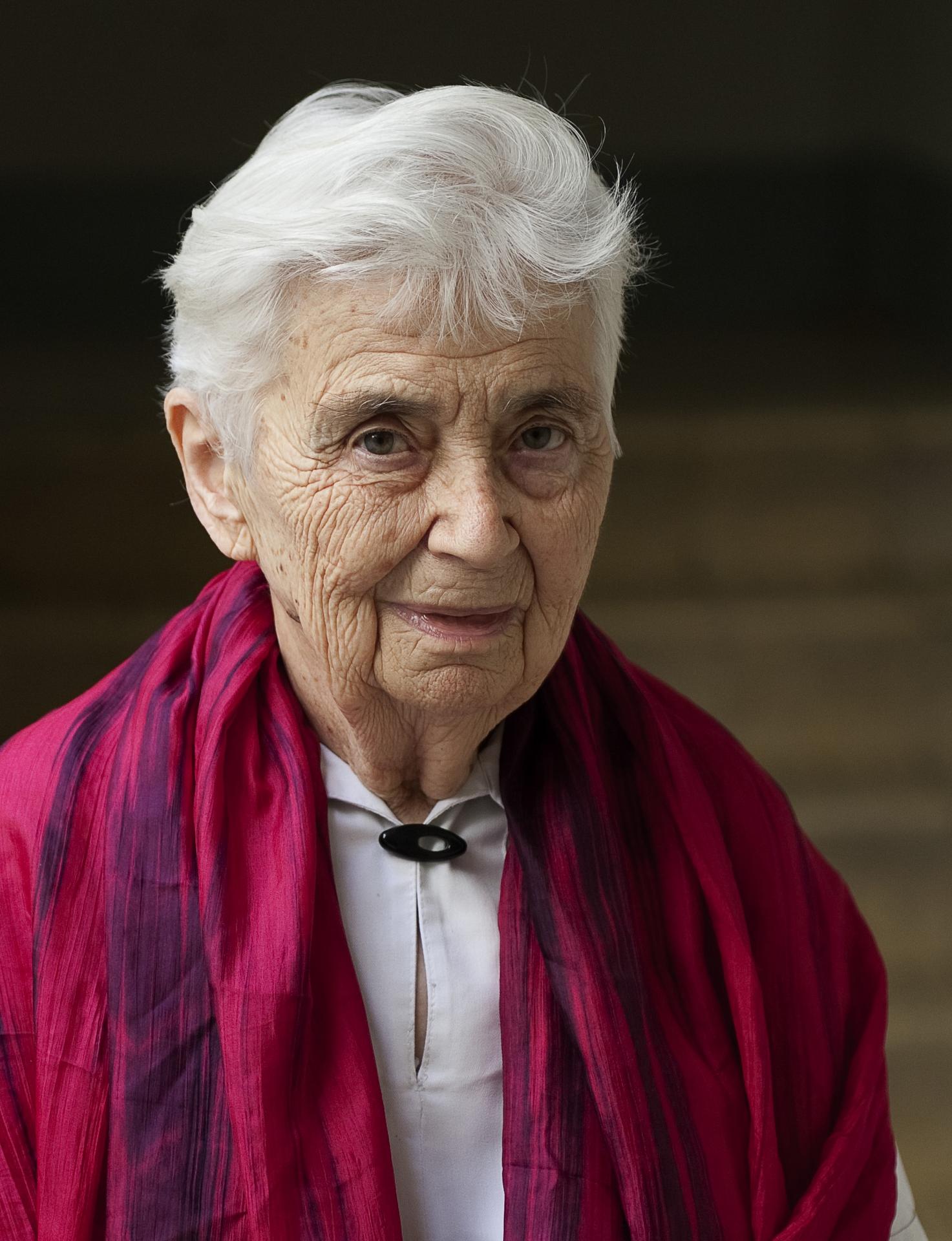
Ruth Pfau
 Pakistan
Also known as: Dr. Ruth Pfau, Sister Mary Ruth, Mother Teresa of Pakistan, Dr. Sahiba
Birthday
September 9, 1929
Birth Sign
Virgo
Birthplace
Leipzig, Germany
Age
Died at 87
About
Ruth Katherina Martha Pfau, universally known as Dr. Ruth Pfau, was a German-Pakistani Catholic nun and physician who dedicated her life to eradicating leprosy in Pakistan. Born in Leipzig on September 9, 1929, she moved to Pakistan in 1961 and spent over 55 years treating and rehabilitating patients. She passed away on August 10, 2017, at the age of 87, leaving behind a legacy that transformed the nation's approach to leprosy treatment and rehabilitation. Her work earned her Pakistan's highest civilian honors, including the Hilal-e-Imtiaz and the Nishan-e-Quaid-i-Azam. She is often referred to as the "Mother Teresa of Pakistan" due to her selfless service. Pfau helped establish 157 leprosy clinics across Pakistan, treating more than 56,780 people. Her legacy lives on through institutions like the Fazaia Ruth Pfau Medical College and Dr. Ruth Pfau Hospital in Karachi, both named in her memory.
Early Life & Background
Ruth Pfau entered the world in Leipzig, Germany, during a time when the Nazi regime was reshaping the country. Her father served as a Protestant pastor while her mother worked as a teacher. The political climate of the era left a deep impression on her young mind as she witnessed the persecution of Jewish citizens and the moral fractures within society. These early observations planted seeds of resistance against injustice that would later guide her path. After finishing secondary school, she initially trained as a nurse before shifting her focus to medicine. She enrolled at the University of Leipzig and completed her medical degree in 1957. Following graduation, she took a position at a hospital in West Berlin where she developed a specific interest in tropical diseases. Her training prepared her for humanitarian work abroad, but her destination changed due to circumstances beyond her control.
In 1960, Pfau planned to travel to India to join a religious mission there. Political tensions between India and China caused her visa application to be denied. While waiting for alternative arrangements, she stopped in Karachi, Pakistan. During a visit to the McLeod Road slum area, she encountered leprosy patients living in squalid conditions. The sight of their disfigurement and social ostracization shocked her. Instead of returning to Germany or continuing to India, she decided to stay in Karachi. In 1961, she joined the Daughters of the Heart of Mary, taking vows and changing her name to Sister Mary Ruth. She immediately began working with marginalized communities in the city's slums.
Career Growth
Pfau arrived in Karachi in 1961 with no resources or infrastructure for leprosy care. Undeterred, she founded the Marie Adelaide Leprosy Centre (MALC) in 1963, naming it after her aunt who had died of the disease. Initially operating out of a small rented house, MALC grew under her leadership into a comprehensive institution. By the 1970s, she established the first mobile clinics to reach remote areas of Pakistan, ensuring treatment reached those isolated from cities. In 1964, she completed her medical specialization in dermatology and venereology.
Her advocacy led to the integration of leprosy treatment into Pakistan's national health system, a rare achievement for a non-governmental initiative. In 1994, she played a pivotal role in the World Health Organization's Global Initiative for the Elimination of Leprosy, helping to reduce Pakistan's prevalence rate significantly. By the 2000s, MALC expanded to include 157 leprosy clinics across the country, treating over 56,780 patients. In 1998, she established the Fazaia Ruth Pfau Medical College to train future doctors and nurses, securing the long-term sustainability of her mission.
Her relentless fight against the disease earned her the Nishan-e-Quaid-i-Azam in 2010, Pakistan's highest civilian honor. She continued working at MALC until her death in 2017, leaving behind a transformed approach to leprosy treatment and rehabilitation in the nation.
Career Timeline
Public Image & Style
Dr. Pfau's public image is that of a selfless servant and a national saint. She is universally addressed with honorifics like "Mother Teresa of Pakistan" or "Dr. Sahiba." While there is no formal fandom name, her following manifests as a profound national reverence. In Pakistan, she is celebrated annually on her death anniversary, with thousands gathering to honor her memory. The phrase "crazy love" has become a sacred shorthand for her commitment. Her supporters are not organized into clubs but are deeply institutionalized through the Marie Adelaide Leprosy Centre. She appeared on the cover of Time magazine in 1999, recognized globally for her humanitarian work.
Fame & Fandom (iFAMOUS Rankings)
Ruth Pfau currently holds the position of the 99th most famous person in Religious Leaders, a standing that slipped from the 98th spot in the previous cycle. This placement within the Religious Leaders category reflects her enduring global resonance as a figure who transcended her vocation to become a national icon. Her stature is recognized across the iFANN Global Fame Rankings.
While no formal fandom name exists for Ruth Pfau, her following manifests as a profound national reverence rather than a conventional fanbase. In Pakistan, she is universally addressed with honorifics like "Mother Teresa of Pakistan" or "Dr. Sahiba," titles that function as the closest equivalent to a dedicated fan identity. Her supporters are not organized into clubs but are deeply institutionalized through the Marie Adelaide Leprosy Centre, which she founded in 1963 and which remains the primary vessel for her legacy. Commemorative events on her death anniversary draw thousands of citizens and officials, while state media regularly publishes tributes declaring her debt "Pakistan can never repay." The only recurring narrative element that functions as an inside reference for her admirers is the phrase "crazy love," derived from her own description of her radical devotion to leprosy patients. This term has become a sacred shorthand for her seemingly irrational commitment to those living in squalid conditions.
Interesting Facts and Legends
The most widely retold story about Dr. Pfau is her decision to stay in Pakistan after being denied a visa to India. This "visa incident" is often cited as the divine intervention that led her to her life's work. Another iconic moment is her declaration of "crazy love" for the leprosy patients, a phrase that has become synonymous with her radical devotion. Fans and admirers often recount stories of her walking barefoot through the slums to visit patients, refusing to wear shoes to show solidarity with the poor. These stories are verified by historical records and eyewitness accounts from her colleagues.
Google honored her with a special Doodle on September 9, 2019, marking what would have been her 90th birthday. This digital recognition brought her story to a global audience for the first time in the internet age. Her autobiography, One Light Still Shines, chronicles her journey and continues to inspire readers worldwide. Notable quotes include "Better to light a candle than to curse the darkness" and "Crazy love is the only love that can save us." A film about her life won a prize at the Pakistan Minority Week competition in September 2026.
Notable Quotes
“Better to light a candle than to curse the darkness.”
“I am not a doctor, I am a nurse. I am not a nun, I am a sister. But I am a human being.”
“Crazy love is the only love that can save us.”
Family & Personal Life
Ruth Pfau was born into a middle-class family in Leipzig, Germany. Her father was a Protestant pastor and her mother was a teacher. She had an aunt whose death from leprosy inspired the naming of her foundation. Upon joining the Daughters of the Heart of Mary in 1961, she took a vow of celibacy. Consequently, she had no romantic relationships, marriages, or children. Her "family" was the community of patients she treated and the staff she mentored. She lived a life of extreme simplicity, often sharing meals with patients and sleeping in the same quarters as the sick. Her personal life was entirely dedicated to her faith and her mission. She remained single and unmarried until her death in 2017.
Notable Connections
Relationships & Dating History
Ruth Pfau took a vow of celibacy upon joining the Daughters of the Heart of Mary in 1961. Consequently, she had no romantic relationships, marriages, or children. Her "family" was the community of patients she treated and the staff she mentored. She lived a life of extreme simplicity, often sharing meals with patients and sleeping in the same quarters as the sick. Her personal life was entirely dedicated to her faith and her mission, making the concept of a dating history irrelevant. She remained single and unmarried until her death in 2017.
Death & Aftermath
Died
August 10, 2017 (aged 87)
Death Place
Karachi, Pakistan
Cause of Death
Natural causes associated with advanced age
The announcement of Dr. Ruth Pfau's passing triggered a wave of national mourning across Pakistan, with tributes pouring in from the President and Prime Minister who praised her unwavering commitment to eradicating leprosy. The German Embassy also issued statements honoring her dual heritage, while patients and staff gathered at the Christian Medical College Hospital and various clinics to pay their respects. She passed away on August 10, 2017, at the age of 87 within Karachi, specifically at the hospital she founded and led, having spent her final days in relative seclusion as a spiritual figurehead after stepping back from daily administration. Reports attribute her death to natural causes related to old age and long-term health complications consistent with decades of physical exhaustion, with no specific acute illness highlighted.
A funeral service attended by thousands of mourners, including dignitaries and former patients, was held shortly after her death in Karachi before she was laid to rest in the missionary cemetery associated with the Society of the Daughters of the Heart of Mary. In the years following her departure, the National Leprosy Eradication Programme continued to operate under the legacy she built, and the government posthumously awarded her the Nishan-e-Imtiaz for her services. A new institution named the Dr. Ruth Pfau University was established in Karachi to continue medical education, while documentaries like "The 'Crazy Love' of Dr. Ruth Pfau" documented her life for future generations.
Net Worth (Estate Value)
$0
iFANN Editorial Team estimate
As a nun who took a vow of poverty, Dr. Ruth Pfau did not accumulate personal wealth. Her net worth was effectively zero in terms of personal assets. However, the institutions she founded, particularly the Marie Adelaide Leprosy Centre, hold significant value. The center operates multiple hospitals, clinics, and training colleges, generating revenue through government contracts, donations, and international grants. The estate of Dr. Pfau is managed by the Daughters of the Heart of Mary and the MALC board, ensuring that all funds are reinvested into patient care and research. Posthumous earnings continue to flow from book royalties (her autobiography, One Light Still Shines), documentary sales, and licensing deals related to her story. The exact valuation of the estate is not publicly disclosed, but it is estimated to be substantial due to the ongoing operations of the foundation.
Awards Won (7)
Dr. Ruth Pfau received numerous accolades for her humanitarian work, both nationally and internationally. She was awarded the Sitara-e-Imtiaz in 1980, followed by the Hilal-e-Imtiaz in 1990 and the Nishan-e-Imtiaz in 1988. In 1998, she received the Nishan-e-Quaid-i-Azam, Pakistan's highest civilian honor. Internationally, she was honored with the Order of Merit of the Federal Republic of Germany in 1999 and the Lasker Award in 1999. She also received the UNESCO Prize for Peace Education in 2000.
1980 · Civilian Award
Contribution to Medicine
1988 · Civilian Award
Contribution to Public Health
Known For
Marie Adelaide Leprosy Centre
1963 · Founder
One Light Still Shines
1990 · Author
Lasker Award
1999 · Recipient
Keywords
Sources
Quick Facts
- Profession
- Christian nun, physician
- Born
- September 9, 1929
- Birthplace
- Leipzig, Germany
- Died
- August 10, 2017
- Death Place
- Karachi, Pakistan
- Gender
- Female
- Birth Sign
- Virgo
Personal Details
- Full Name
- Ruth Katherina Martha Pfau
- Children
- Education
- University of Leipzig (Medical Degree, 1957)
Frequently Asked Questions
Who was Ruth Pfau?
How did Ruth Pfau die?
What was Ruth Pfau's nationality?
Did Ruth Pfau have children?
What is the Marie Adelaide Leprosy Centre?
Similar People
Join the community
fans discussing