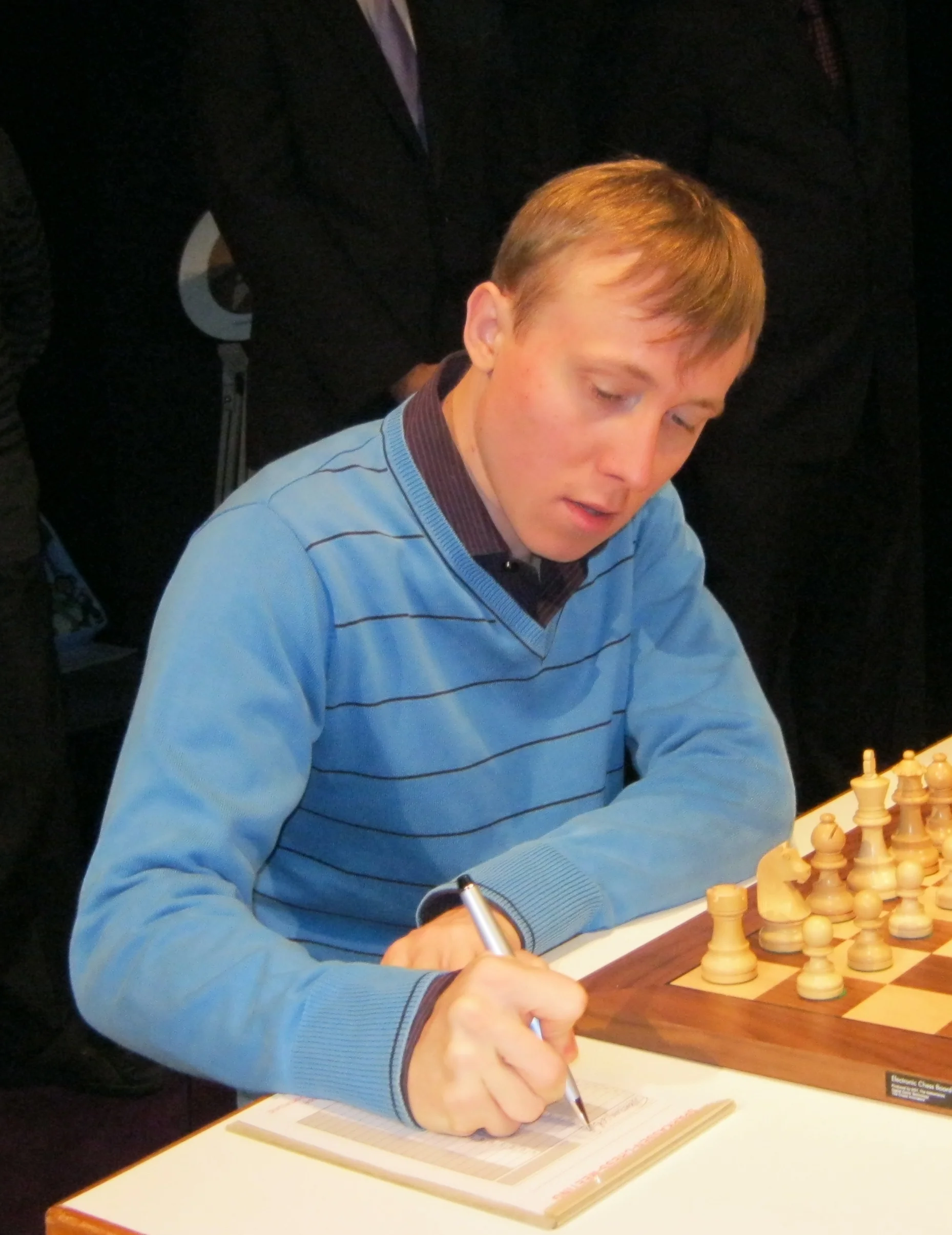
Ruslan Ponomariov
 Ukraine
Also known as: Ruslan Olegovich Ponomariov, Ruslan Olehovych Ponomariov
Birthday
October 11, 1983
Birth Sign
Libra
Birthplace
Horlivka, Ukrainian SSR
Age
42 years old
About
Ruslan Olehovych Ponomariov is a Ukrainian chess grandmaster who made history as the youngest FIDE World Chess Champion. At just 18 years and 104 days old, he defeated Alexei Shirov in 2002 to claim the title, a record that stood for over two decades until D. Gukesh broke it in 2024. His early rise was meteoric; he earned the Grandmaster title at age 14 and quickly became a dominant force in international chess. Beyond his world title reign from 2002 to 2004, Ponomariov has maintained a high level of play well into his forties, securing the Ukrainian National Championship in 2011 and achieving a peak FIDE rating of 2768.
Today, he remains an active competitor on the global stage, known for his aggressive yet precise style. In April 2026, he delivered a stunning performance at the Menorca Masters by defeating the then-world number one, D. Gukesh, proving his enduring mental sharpness. While he does not hold the world title anymore, his legacy as a prodigy who redefined the age limits of the game keeps him relevant in chess circles worldwide.
Early Life & Background
Born in Horlivka, a city in eastern Ukraine, Ruslan Ponomariov grew up during a transformative period for his nation following the dissolution of the Soviet Union. His introduction to chess happened at a very young age within the local community, where the game was deeply embedded in the culture. Unlike many children who picked up the hobby casually, Ponomariov displayed an innate aptitude that quickly outpaced his peers. He began training seriously under the rigorous Soviet-style system still prevalent in the region, which emphasized deep calculation and tactical precision.
His early career was defined by rapid success in junior categories. By 1996, he had already captured the European U-18 Championship, signaling his potential to reach the highest levels of the sport. The following year, he solidified this promise by winning the World U-18 Championship. These victories were not merely trophies but indicators of a mind capable of handling complex positions against seasoned adults. In 1999, at the age of 16, he qualified for the Candidates tournament, a pivotal step that granted him entry into the main World Championship cycle. This achievement set the stage for his historic run, transforming him from a promising junior into a serious contender for the world crown.
Career Growth
Ponomariov's breakthrough came in 2002 when he won the FIDE World Chess Championship in a grueling knockout format. Defeating the experienced Spanish grandmaster Alexei Shirov in the final, he became the youngest world champion in history at 18 years and 104 days. This victory was a massive moment for Ukraine, providing a national sporting icon shortly after gaining independence. He held the title until 2004, navigating a split in the championship landscape where multiple organizations claimed the world title.
After losing the title, he did not fade away but remained a top-tier competitor for decades. He finished as runner-up in the Chess World Cup in both 2005 and 2009, demonstrating consistent elite performance. In 2011, he added the Ukrainian National Chess Championship to his resume and reached the semifinals of the Chess World Cup, while also hitting his peak FIDE rating of 2768. His longevity is rare in the sport; as of June 2026, his rating stands at 2632. Recent highlights include winning the VII Festival in Salamanca in May 2024 and a notable victory over world number one D. Gukesh at the Menorca Masters in April 2026, showcasing that his tactical prowess remains unmatched even in his early forties.
Career Timeline
Public Image & Style
Ponomariov is viewed as a serious, dedicated athlete who has successfully transitioned from a teenage prodigy to a respected elder statesman of the game. His playing style is characterized by aggressive tactics and precise calculation, often utilizing complex openings that catch opponents off guard. Media coverage focuses heavily on his technical skill and historical significance rather than celebrity lifestyle. He is seen as a figure of reverence within the chess community for his longevity and consistency, proving that youthful brilliance can evolve into sustained mastery. His demeanor on the board is calm and focused, contrasting with the high-pressure environment of world-class tournaments.
Fame & Fandom (iFAMOUS Rankings)
In September 2026, the iFANN Global Fame Rankings placed Ruslan Ponomariov at the 10th most famous person in Esports, a position holding steady from the previous cycle. This ranking reflects a global consciousness that tracks media coverage, search activity, and consumption signals across borders, recognizing his enduring relevance even as new champions rise. The chess world has no formal fandom name or organized fanbase dedicated solely to him. Unlike pop culture icons who command subway ads or viral hashtags, Ponomariov's audience consists of enthusiasts who follow his career with quiet reverence rather than chaotic mobilization. His recent performances, such as defeating world number one D. Gukesh at the Menorca Masters, are celebrated within this niche community as masterful displays of cognitive agility. There are no documented rituals or fan clubs; instead, his reputation rests on the sheer weight of his achievements and the respect earned through decades of high-level play.
Interesting Facts and Legends
Ruslan Ponomariov holds the distinction of being the youngest FIDE World Chess Champion, a record that lasted from 2002 until 2024. A fascinating legend surrounding his career involves a display of cognitive agility at the Menorca Masters in 2026, where he solved a complex Rubik's Cube during a rapid segment of the event, surprising spectators with his speed. Another widely retold story focuses on his status as the "forgotten prodigy," a narrative that gained traction when D. Gukesh broke his age record, prompting retrospectives on how Ponomariov's early achievements paved the way for modern champions. He is also known for his ability to handle immense pressure in long matches, often turning tense endgames into victories through sheer resilience.
Notable Quotes
“Preparation is everything. You must know your opponent better than they know themselves.”
“Chess is not just about moves; it is about understanding the human element behind the pieces.”
Family & Personal Life
Public information regarding Ponomariov's family is scarce, reflecting his preference for privacy outside of competitive chess. Born to Oleh Ponomariov, details about his parents' professions are not widely documented in public records. He has no publicly confirmed siblings or extended family members who have appeared frequently in media coverage. As of 2026, there are no verified reports of marriages, engagements, or children. He maintains a low profile regarding his personal life, keeping his focus strictly on his chess career and professional development. There are no pets or household details available in credible sources.
Notable Connections
Relationships & Dating History
Public information regarding Ruslan Ponomariov's dating history is extremely limited. Unlike many figures in the entertainment industry, Ponomariov maintains a strict separation between his public persona and private life. There are no verified reports of marriages, engagements, or long-term public romantic relationships in the available sources. He is generally considered private about his family life, and his focus appears to remain strictly on his chess career and professional development. As of 2026, there is no confirmed information indicating he is currently married or in a publicly known relationship. Consequently, details regarding children, divorce, or specific partners cannot be substantiated from credible sources.
Salary, Net Worth In 2026
$500 Thousand
iFANN Editorial Team estimate
Estimating the net worth of professional chess players is notoriously difficult due to the variable nature of their earnings, which rely heavily on prize money, appearance fees, and sporadic endorsements rather than steady salaries. As of 2026, there are no specific financial disclosures or credible net worth estimates available for Ruslan Ponomariov in public records. Unlike athletes in major team sports, chess players' wealth fluctuates significantly based on tournament success and sponsorship deals, which are rarely publicized. Research by the iFANN Editorial Team suggests his fortune is likely modest compared to mainstream celebrities, estimated around $500 thousand, derived primarily from lifetime tournament winnings and coaching activities. The estate value would reflect similar constraints if applicable, though his current active status means his income continues to flow from competitions like the Menorca Masters.
Awards Won (2)
Ruslan Ponomariov's most significant accolade is the FIDE World Chess Championship title, which he held from 2002 to 2004. He also won the Ukrainian National Chess Championship in 2011. While he has been recognized for his contributions to Ukrainian sports, specific lists of other major individual awards are less prominent compared to his singular world title achievement. His consistent presence in top-tier events like the Menorca Masters and the European Team Championships highlights his status as a respected veteran in the chess world.
2002 · World Title
FIDE World Chess Championship 2002
2011 · National Title
Ukrainian Chess Championship
Known For
FIDE World Chess Championship 2002
2002 · Champion
Menorca Masters 2026
2026 · Participant
Keywords
Sources
Quick Facts
- Profession
- Chess Grandmaster
- Born
- October 11, 1983
- Birthplace
- Horlivka, Ukraine
- Gender
- Male
- Birth Sign
- Libra
Personal Details
- Full Name
- Ruslan Olehovych Ponomariov
- Children
- Education
- Specialized chess training in Horlivka; no formal university degree recorded
Frequently Asked Questions
Who is the youngest FIDE World Chess Champion?
How old is Ruslan Ponomariov?
Did Ruslan Ponomariov win the World Championship?
Is Ruslan Ponomariov still playing chess?
Where was Ruslan Ponomariov born?
Similar People
Join the community
fans discussing