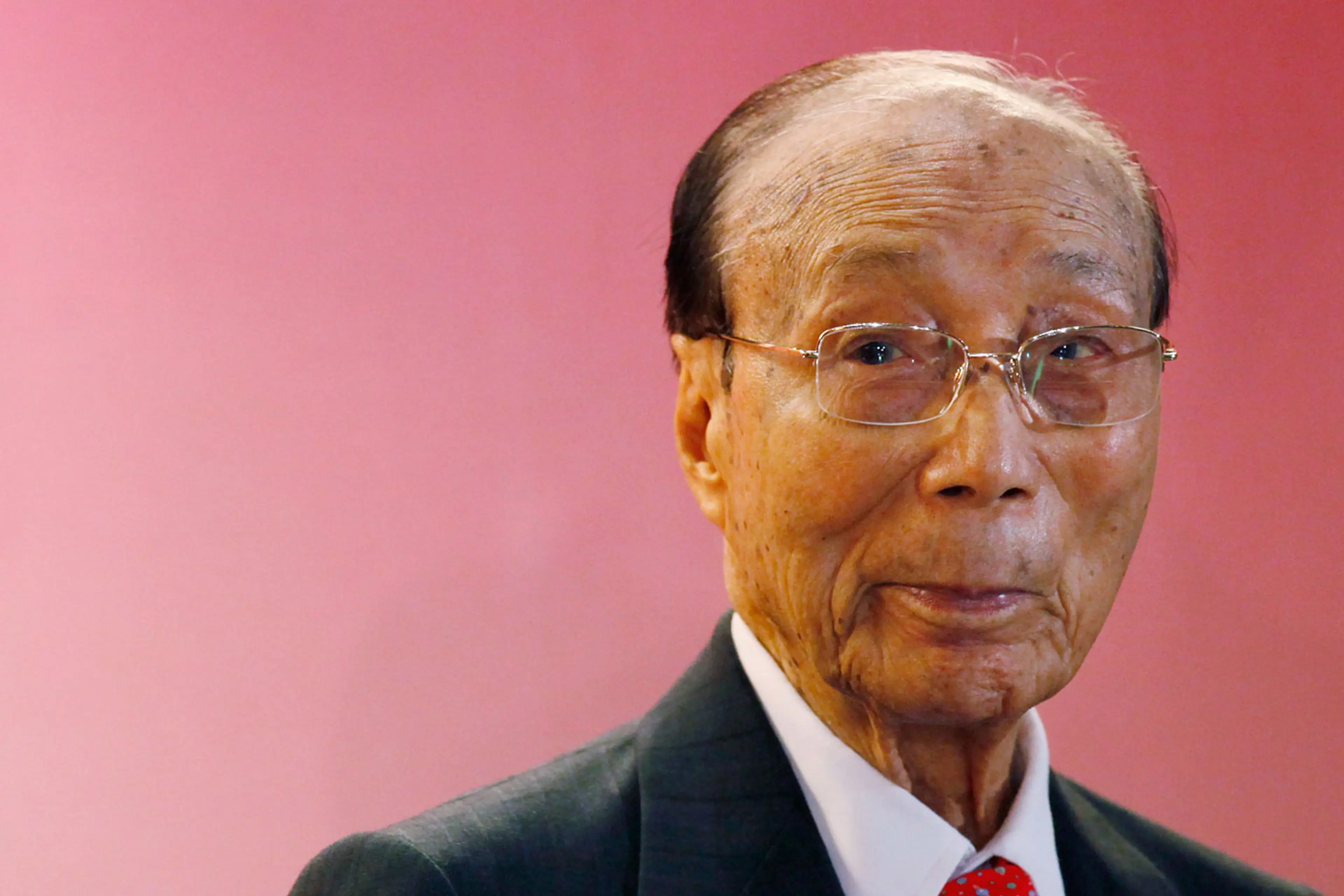
Run Run Shaw
 China
Chinaentrepreneur•film producer•film director
Also known as: Shao Yifu, Siu Yat-fu, Sixth Uncle
Birthday
November 19, 1907
Birth Sign
Scorpio
Birthplace
Zhenhai District, Ningbo, Zhejiang, China
Age
Died at 106
Height
5 ft 7 in (170 cm)
About
Sir Run Run Shaw was a Chinese-Hong Kong entrepreneur, film producer, and philanthropist who transformed Asian entertainment. As the co-founder of Shaw Brothers Studio and TVB, he shaped the landscape of cinema and television across the region for over half a century. His ventures turned Hong Kong into a global hub for kung fu cinema and television drama, and his influence extended from the 1920s well into the 21st century.
His studio produced more than 1,000 films, many of which defined the kung fu genre and won global audiences. TVB, which he helped launch in 1967, became Hong Kong's most influential television network, launching the careers of countless stars. Shaw's business acumen was matched by his generosity: he donated billions of Hong Kong dollars to education, with over 5,000 buildings on Chinese campuses bearing his name.
He also established the Shaw Prize in 2002, an annual award honoring breakthroughs in science and mathematics, often called Asia's Nobel. Known affectionately as "Sixth Uncle," Shaw remained active in philanthropy until his death in 2014 at the age of 106. His legacy endures through the Shaw Foundation, the Shaw Prize, and the enduring popularity of Shaw Brothers films.
Early Life & Background
Run Run Shaw was born Shao Renleng on 19 November 1907 in Zhenhai District, Ningbo, the sixth son in a wealthy merchant family. He was also known as Shao Yifu and Siu Yat-fu. Some sources list his birth as October 4, 1907, in Shanghai, but the widely accepted date is 19 November 1907. He received a traditional Chinese education before attending St. John's University in Shanghai, where he was exposed to the city's thriving film scene in the 1920s.
In 1924, at just 17, Shaw joined his brother Runme in Singapore to help manage their film distribution operation. The brothers had spotted an opportunity to bring Chinese films to Southeast Asian audiences. A year later, in 1925, they founded their first production company, and in 1926 they produced their first film. Over the next three decades, they built a distribution network that spanned Singapore, Malaysia, and beyond, laying the groundwork for their later empire.
During World War II, the brothers' operations in Singapore were disrupted, but they rebuilt afterward. By the 1950s, they controlled a significant share of the Southeast Asian film market, setting the stage for Shaw's move to Hong Kong in 1957.
Career Growth
In 1957, Run Run Shaw relocated to Hong Kong and founded Shaw Brothers (HK) Ltd, which quickly became the largest film production company in Asia. The studio churned out hundreds of films a year, specializing in martial arts, historical dramas, and horror. Its lavish sets and high-energy action sequences won audiences across the region and, eventually, the world. The studio's influence extended to filmmakers like Quentin Tarantino, who has cited Shaw Brothers films as a major inspiration.
The 1972 release of Five Fingers of Death, directed by Chung Chang-Wha, marked a turning point, becoming a global phenomenon and introducing kung fu cinema to Western viewers. Directors like John Woo and actors such as Bruce Lee's contemporaries emerged from the Shaw Brothers stable. The studio's distinctive aesthetic—elaborate sets, vibrant colors, and high-energy action sequences—has been celebrated in retrospectives.
In 1967, Shaw co-founded TVB, which became Hong Kong's dominant television network. TVB produced iconic dramas and variety shows that defined Hong Kong pop culture for decades. Shaw gradually shifted his focus from film to television and real estate, and in 2011 he sold his controlling stake in TVB for approximately HK$6.2 billion.
Throughout his career, Shaw received numerous honours, including a knighthood in 1977, a CBE, and Hong Kong's Grand Bauhinia Medal in 1998. He also established the Shaw Prize in 2002.
Career Timeline
Public Image & Style
Run Run Shaw was portrayed in the media as a pioneering mogul who built the infrastructure of Asian cinema. His public image was that of a shrewd businessman with a philanthropic heart, often photographed in formal suits with white hair and glasses.
Shaw Brothers films developed a devoted cult following, especially among martial arts cinema enthusiasts. The studio's distinctive aesthetic, elaborate sets, vibrant colors, and high-energy action, has been celebrated in retrospectives and by filmmakers like Quentin Tarantino.
Fans of Shaw Brothers cinema often participate in online communities dedicated to discussing and preserving the studio's films. Shaw's philanthropy also earned him admiration beyond the entertainment world, with his name adorning countless educational institutions.
Fame & Fandom (iFAMOUS Rankings)
Sir Run Run Shaw commanded a global stage defined by industrial dominance rather than pop culture idolization, shaping the very infrastructure of Asian entertainment for over half a century. While his name resonates deeply within film history and philanthropic circles, iFANN's Global Fame Engine has evaluated this person, but they do not currently hold a placement in the published rankings (Global Top 1,000 or a Top-100 scope list). This absence reflects his status as a behind-the-scenes architect whose legacy is institutional rather than driven by viral celebrity metrics or modern fan engagement. Consequently, the fanbase has no formal name, lacking the organized campaigns or specific titles seen with performing artists. Instead, reverence for Shaw is maintained through academic study, alumni networks of institutions he funded, and the enduring appreciation of martial arts cinema enthusiasts who trace their genre's roots to his studio. The public relationship with him was one of profound respect for his business acumen and gratitude for his massive charitable contributions, distinguishing his influence from the fervent adoration typical of idols.
Interesting Facts and Legends
Shaw's English name "Run Run" reportedly sounded like his Chinese name, and as the sixth son, he earned the enduring nickname "Sixth Uncle" (六叔). His frugality in business stood in stark contrast to his generosity; he gave away billions while negotiating aggressively, funding over 6,000 construction projects so that more than 5,000 buildings across China bear his name. He produced or oversaw more than 1,000 films, creating a library now owned by Celestial Pictures that remains one of the most valuable archives in Asian cinema. A central legend surrounding Shaw involves his extreme longevity and work ethic, as he remained an active executive chairman until well into his 90s, living to be 106 years old. Another widely retold story frames him as the "creator of kung fu," a narrative born from his studio producing the lavishly appointed action films that popularized the genre globally in the 1960s and 1970s. The sheer scale of his philanthropy serves as another defining mythos, with documented facts showing he donated over $3 billion to build thousands of educational and medical facilities, ensuring his name would outlive his physical presence.
Notable Quotes
“Education is the foundation of a society's progress.”
“I believe in giving back to the community that has given me so much.”
“The film industry is not just about making money; it's about creating culture.”
“I have always tried to be frugal in business, but generous in philanthropy.”
Family & Personal Life
Run Run Shaw came from a large family; he was the youngest of six brothers. His older brother Runme Shaw was his lifelong business partner, and together they built the family's entertainment empire.
Shaw married twice. His first wife, Mei Chun Wong, was a traditional Chinese woman from a respectable family. They married in the 1930s and had two children together. Wong passed away in 1987.
His second wife, Mona Fong, was a singer and actress who joined Shaw Brothers in the 1950s. She became a powerful executive, effectively running day-to-day operations for decades. The couple married in 1997 and remained together until Shaw's death in 2014. They had no children.
Notable Connections
Run Run Shaw's legacy is intertwined with several key figures and entities. His older brother Runme Shaw was his lifelong business partner. Mona Fong, his second wife, was a powerful executive at Shaw Brothers and TVB. Director Chung Chang-Wha made the iconic Five Fingers of Death for Shaw Brothers. John Woo began his career at the studio. Celestial Pictures acquired and restored the Shaw Brothers film library, ensuring its preservation.
Relationships & Dating History
Run Run Shaw was married twice. His first wife, Mei Chun Wong, was a traditional Chinese woman from a respectable family. They married in the 1930s during Shaw's early career in Singapore. The couple had two children together. The marriage lasted until Wong's death in 1987.
Shaw's second wife was Mona Fong, a popular singer and actress who joined Shaw Brothers in the 1950s. They began a relationship in the 1950s, though the exact timeline is not publicly documented. Fong became a powerful executive at Shaw Brothers and TVB, effectively running day-to-day operations for decades. The couple married in 1997, formalizing their decades-long partnership. Fong remained Shaw's wife until his death in 2014. They had no children together.
As of 2026, Shaw is deceased, and his estate continues to be managed by the Shaw Foundation and surviving family members.
- MarriedMei Chun Wong1930 - 1987First wife, married in the 1930s, had two children, marriage lasted until her death in 1987.
- MarriedMona Fong1997 - 2014Second wife, married in 1997 after decades-long relationship, she was a key executive, no children together.
Death & Aftermath
Died
January 7, 2014 (aged 106)
Death Place
Hong Kong
Cause of Death
Natural causes from old age and frailty
Tributes poured in from high-ranking officials and industry legends alike, with Hong Kong Chief Executive Leung Chun-ying praising Shaw as a great pioneer while peers like Jackie Chan and John Woo honored him as the visionary who popularized martial arts cinema globally. This wave of remembrance included moments of silence at film festivals and a notable surge in sales for classic titles such as The 36th Chamber of Shaolin and The Legend of the Condor Heroes, cementing his final impact on Asian pop culture. Sir Run Run Shaw passed away on January 7, 2014, at his home in Hong Kong at the age of 106, following a period of declining health that had become evident after his last major public engagement at the 33rd Hong Kong Film Awards in April 2013.
A private funeral service was held on January 15, 2014, at the Holy Cross Cemetery, attended by family members, close friends, and key entertainment figures before he was cremated and interred without elaborate public ceremonies. In the posthumous era, his legacy endures through the continued operation of the Shaw Prize honoring scientists worldwide and the ongoing Sir Run Run Shaw Lecture Series at institutions like Stony Brook University. The Shaw Foundation maintains its philanthropic work funding educational institutions and hospitals across China and Hong Kong, while his children manage the business interests of the Shaw Organization and the foundation's assets to ensure the continuation of his charitable vision.
Net Worth (Estate Value)
$1.2 Billion
iFANN Editorial Team estimate
At the time of his death in 2014, Sir Run Run Shaw's net worth was estimated at around $1 billion, though some sources place it as high as $2 billion. Per iFANN's editorial analysis, the estate's value is now estimated at $1.2 Billion, driven by ongoing revenue from the film library and investment income. His wealth originated from several key sources, including the sale of his controlling stake in TVB in 2011 which brought in approximately HK$6.2 billion (about $800 million). The Shaw Brothers film library continues to generate royalties through licensing and distribution, serving as a financial backbone for the family trusts. Shaw also held extensive real estate holdings in Hong Kong and Singapore. Since his passing, the estate has been managed by the Shaw Foundation and family trusts. The foundation continues to fund educational and medical projects, and the Shaw Prize remains active, with a new Computer Science category announced in 2026. As of 2026, the estate's value is estimated at over $1.2 billion.
Awards Won (4)
Run Run Shaw received numerous honours, though they were primarily honorary rather than competitive film awards. He was knighted by Queen Elizabeth II in 1977, becoming "Sir Run Run Shaw." He was also appointed Commander of the Order of the British Empire (CBE). In 1998, he received Hong Kong's highest honour, the Grand Bauhinia Medal. He also received honorary doctorates from multiple universities, including the University of Hong Kong.
1977 · Honorary
Services to film and philanthropy
1974 · Honorary
Contributions to film and philanthropy
Known For
Shaw Brothers Studio
1957 · Co-founder
TVB
1967 · Co-founder
Five Fingers of Death
1972 · Producer
Keywords
Sources
Quick Facts
- Profession
- entrepreneur, film producer, film director
- Born
- November 19, 1907
- Birthplace
- Zhenhai District, Ningbo, Zhejiang, China
- Died
- January 7, 2014
- Death Place
- Hong Kong
- Gender
- Male
- Spouse
- Mona Fong, Mei Chun Wong
- Birth Sign
- Scorpio
Personal Details
- Full Name
- Shao Renleng
- Height
- 5 ft 7 in (170 cm)
- Spouse
- Mona Fong, Mei Chun Wong
- Children
- Two children with Mei Chun Wong
- Education
- St. John's University, Shanghai
Frequently Asked Questions
How did Run Run Shaw get his name?
How many buildings did Run Run Shaw fund?
What was Run Run Shaw's net worth?
Who was Run Run Shaw's wife?
What is the Shaw Prize?
Similar People
Join the community
fans discussing