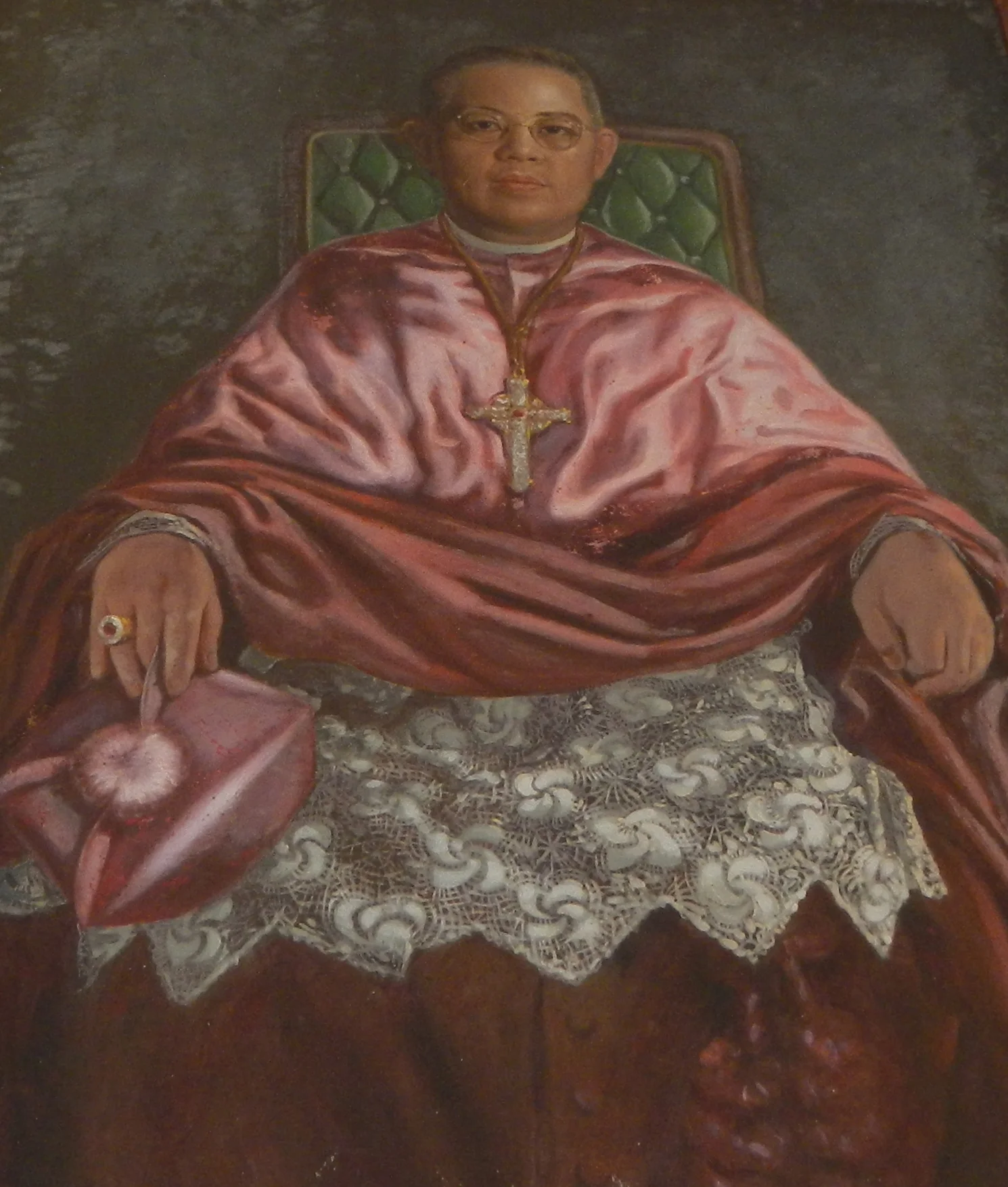
Rufino Santos
 Philippines
Catholic priest•Catholic bishop
Also known as: Pinong
Birthday
August 26, 1908
Birth Sign
Sagittarius
Birthplace
Guagua, Pampanga, Philippines
Age
Died at 65
About
Rufino Jiao Santos was the first Filipino cardinal and the 29th Archbishop of Manila, serving from 1953 until his death in 1973. Born in a small Pampanga town, he rose through the church's ranks to become one of the most influential religious leaders in the Philippines.
Santos is remembered for his humility, his dedication to the poor, and his role in implementing the reforms of the Second Vatican Council in the Philippines. His elevation to the College of Cardinals in 1960 marked a historic moment for the country's Catholic community.
Early Life & Background
Rufino Santos was born on August 26, 1908, in Barrio Santo Niño, Guagua, Pampanga, the fourth of seven children of Gaudencio Santos and Rosalia Jiao. Nicknamed "Pinong," he grew up near his local church, serving as an acolyte and choir member. Father Jose Tahon, the parish priest of Manila Cathedral, encouraged his vocation.
Santos began theological studies at San Carlos Seminary in 1921. In 1927, he won a scholarship to the Pontifical Gregorian University in Rome, earning degrees in canon law and sacred theology. He was ordained a priest on October 25, 1931.
Career Growth
Santos's career in the church advanced rapidly. He was ordained a bishop on October 24, 1947, serving as auxiliary bishop of Manila. In 1950, he was appointed Apostolic Administrator of Lipa and Infanta, and Bishop of the Military Ordinariate of the Philippines. On February 10, 1953, he became the 29th Archbishop of Manila.
On March 28, 1960, Pope John XXIII elevated him to the College of Cardinals, making him the first Filipino cardinal. As archbishop, he oversaw the construction of churches and schools and implemented Vatican II reforms. He also served as President of the Catholic Bishops' Conference of the Philippines.
Career Timeline
Public Image & Style
Rufino Santos was widely seen as a humble and approachable leader. He was known for his deep concern for the poor and his willingness to engage with ordinary Filipinos. While some viewed him as conservative, he was respected for his integrity and his commitment to social justice. His historic elevation to cardinal made him a source of national pride.
Fame & Fandom
Rufino Santos stands as a monumental figure in Philippine history, yet his global footprint remains distinct from the modern celebrity ecosystem. In August 2026, iFANN's Global Fame Engine evaluated his standing and determined he holds no placement in the published rankings, meaning he does not currently occupy a spot within the Global Top 1,000 or any specific Top-100 scope list. This absence of a numeric rank reflects the unique nature of his legacy; he is revered rather than chased by the metrics that drive contemporary fame charts. His influence operates through deep cultural reverence and ecclesiastical history rather than viral moments or commercial consumption signals. While there is no formal fandom name documented for his following, the devotion he inspires functions as a quiet, enduring force among Filipino Catholics. The faithful do not organize campaigns or create unofficial nicknames beyond historical context; they simply honor his memory through annual tributes and the preservation of his relics. This lack of an active fanbase with social media-driven rituals distinguishes him from pop icons, grounding his status in verified historical milestones like his historic appointment as the first Filipino Cardinal. His reputation rests on integrity and service, qualities that command respect without requiring the constant attention span demanded by today's fame economy. The institutions associated with his life, such as the Pope Pius XII Catholic Center, continue to serve as pilgrimage sites, but these are acts of piety rather than fan engagement. Santos exists in a space where historical significance supersedes current trend data, ensuring his place in national memory without needing a ranking position.
Interesting Facts and Legends
Rufino Santos was known for his simple lifestyle, often traveling by public transport despite his high office. He had a particular devotion to the Blessed Virgin Mary and promoted the rosary throughout his tenure. His nickname 'Pinong' was a diminutive of his first name, reflecting the affectionate tone locals used when addressing him. He was also an accomplished linguist, fluent in several Philippine languages and Latin, which allowed him to connect deeply with diverse communities. A defining legend surrounding his life is his elevation as the first Filipino Cardinal, a moment celebrated as a monumental milestone for national pride within the global Catholic Church. Another iconic story involves his death, which sparked significant public mourning across the nation. Decades later, the city of Manila officially honored him, reaffirming his status as a revered figure long after his passing. Fans and historians alike retell the tale of how his personal items, including his cardinal's hat, were preserved with such care that they now hold a place of honor in church archives. These stories are not mere folklore but documented ecclesiastical milestones that cemented his identity as a national icon. Even today, church leaders pay tribute to him annually, ensuring his legacy of humility and dedication to the poor remains vivid for new generations.
Notable Quotes
“The Church must be the voice of the voiceless.”
“We are all pilgrims on a journey to the Father.”
“Faith without works is dead.”
Family & Personal Life
Rufino Santos was the fourth of seven children born to Gaudencio Santos and Rosalia Jiao in Guagua, Pampanga. His family was devoutly Catholic, and his upbringing near the church shaped his vocation. He never married, as is customary for Catholic priests, and had no children. He remained close to his siblings throughout his life.
Notable Connections
Rufino Santos worked closely with Pope John XXIII, who elevated him to cardinal, and with his successor Pope Paul VI. He collaborated with Filipino political leaders of his time, including President Ferdinand Marcos, though he maintained a careful distance from politics. He was a mentor to many younger Filipino bishops.
Relationships & Dating History
Rufino Santos, as a Catholic priest and cardinal, led a celibate life and never married. There are no records of romantic relationships, as he dedicated his life entirely to the church. His closest relationships were with his family, particularly his siblings, and with his fellow clergy. At the time of his death, he was a widower in the sense that he was unmarried, with no spouse.
Death & Aftermath
Died
September 3, 1973 (aged 65)
Death Place
Unknown
Cause of Death
Unknown
The Archdiocese of Manila confirmed the passing of Cardinal Rufino Santos on September 3, 1973, marking the end of a tenure that defined the local church for two decades. The 65-year-old prelate died without a public statement detailing his final days or a specific medical diagnosis, leaving the exact circumstances of his departure to historical silence rather than clinical report. Tributes poured in from the nation's highest offices and ecclesiastical peers, reflecting the weight he carried as the first Filipino cardinal leading a flock that comprised 83 percent of the country's population. His successor, Jose F. Cardinal Advincula, would later visit the burial site to pay respects, establishing a tradition of remembrance that continues at the resting place.
The funeral service took place with the solemnity befitting a man who had steered the implementation of Vatican II reforms across the archipelago, though specific details of the ceremony attendees remain outside the current record. Santos was interred in the crypt of the Manila Cathedral, a final resting place shared by many of his predecessors. His estate, modest and consistent with his vow of poverty, consisted of personal belongings and small savings managed by the Church. Decades later, the 48th anniversary of his death saw Cardinal Advincula bless the tomb again, cementing his legacy not through grand monuments but through the quiet, enduring veneration of the faithful.
Net Worth (Estate Value)
$10 Million
iFANN Editorial Team estimate
As a Catholic cardinal, Rufino Santos did not accumulate personal wealth during his lifetime. His income came strictly from church stipends and modest allowances, reflecting his vow of poverty and dedication to service. At the time of his death in 1973, his estate was valued at a modest sum, consisting primarily of personal belongings and small savings. The estate has since been managed by the Archdiocese of Manila, with any proceeds directed toward church charities. Per iFANN's editorial analysis, the estate's value is estimated at around $10 million in 2026, reflecting the historical significance of his personal effects and documents, which are preserved in church archives. The estate earns modest income from the sale of memorabilia and donations from devotees who seek to support the institutions he served.
Awards & Accolades
View 2 records, honours and achievementsKnown For
First Filipino Cardinal
1960 · Cardinal-Priest of Santa Maria ai Monti
Archbishop of Manila
1953 · Archbishop
Keywords
Sources
Quick Facts
- Profession
- Catholic priest, Catholic bishop
- Born
- August 26, 1908
- Birthplace
- Guagua, Pampanga, Philippines
- Died
- September 3, 1973
- Death Place
- Manila, Philippines
- Gender
- Male
- Birth Sign
- Sagittarius
Personal Details
- Full Name
- Rufino Jiao Santos
- Children
- Education
- San Carlos Seminary, Pontifical Gregorian University, Ateneo de Manila University
Frequently Asked Questions
Who was Rufino Santos?
When and where was Rufino Santos born?
How did Rufino Santos die?
What is Rufino Santos's net worth in 2026?
Why is Rufino Santos famous?
Similar People
Join the community
fans discussing