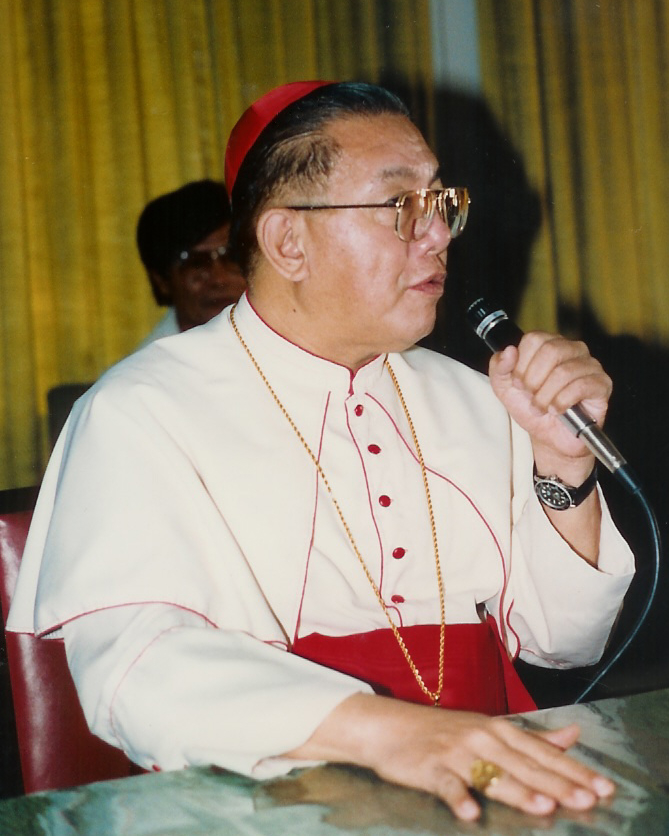
Jaime Sin
 Philippines
Catholic priest•Catholic bishop
Birthday
+1928-08-31
Birth Sign
Sagittarius
Birthplace
Aklan
Age
Died at 76
About
Jaime Lachica Sin was born on August 31, 1928, in New Washington, Aklan, a small town in the Philippines. He became one of the most influential Catholic leaders in the country's modern history, serving as the 30th Archbishop of Manila from 1974 to 2003. Ordained a priest for the Diocese of Capiz, he later became Archbishop of Jaro before being appointed to the Manila see. Pope Paul VI elevated him to cardinal in 1976, a rank he held for nearly three decades. Sin's tenure in Manila unfolded against the backdrop of Ferdinand Marcos's martial law regime. He initially took a cautious approach, but after a military raid on the Sacred Heart Novitiate in Novaliches, he became a vocal critic of the administration. His most defining moment came in 1986, when he used Radio Veritas to urge Filipinos to gather along Epifanio de los Santos Avenue (EDSA) in support of military defectors. That call helped spark the People Power Revolution, which toppled Marcos without a shot fired. In 2001, he again rallied the public during the Second EDSA Revolution, demanding President Joseph Estrada's resignation. Beyond politics, Sin was a builder and a pastor. He helped Trappist monks acquire land for their monastery, established the Domus Mariae Foundation for social housing, and founded the Lorenzo Mission Institute and the Lorenzo Ruiz Mission Society to train seminarians and priests serving Chinese Filipinos. He also hosted Pope John Paul II during his 1981 and 1995 visits to the Philippines, the latter for World Youth Day. His influence extended across four presidential administrations, and he never shied from wielding his moral authority. Sin retired as archbishop on September 15, 2003, and died on June 21, 2005, at age 76. He was given state honors, a fitting tribute for a man who helped shape the nation's democratic destiny. His legacy is not just in the institutions he built or the revolutions he inspired, but in the quiet courage he modeled for millions of Filipinos.
Fame & Fandom
Cardinal Jaime Sin commanded a following that transcended the church, rooting itself in the collective memory of a nation. His supporters were not organized into fan clubs or social media armies but were the Filipino people themselves, who viewed him as a moral compass during their darkest hours. When he spoke on the radio, millions listened with bated breath. The streets of Manila became his congregation during the 1986 People Power Revolution, where unarmed civilians formed a human wall to protect defecting generals after his call. This devotion continued until his death in 2005, when hundreds of thousands lined the avenues to escort his coffin to the Manila Cathedral, treating his passing as a national tragedy. Even decades later, devotees visit his crypt to honor the man who helped topple dictatorships without firing a shot. A new museum opened in 2024 celebrates his life, and in early 2026, the cathedral reopened his resting place for the 40th anniversary of the revolution, proving his status remains undimmed. He is currently recognized as the 77th most famous person in Religious Leaders according to the iFANN Global Fame Rankings, marking a slight shift from his previous standing.
Interesting Facts and Legends
Jaime Sin was born in New Washington, Aklan, and served as the 30th Archbishop of Manila from 1974 to 2003. Pope Paul VI elevated him to cardinal in 1976, a rank he held for nearly three decades. While initially cautious under Ferdinand Marcos's martial law regime, a military raid on the Sacred Heart Novitiate in Novaliches galvanized him into becoming a vocal critic of the government. He founded the Kabalikat ng Mahirap foundation to aid the poor and championed social justice throughout his career. His voice on the radio became legendary, with a story circulating that a single broadcast could mobilize millions. In February 1986, he urged citizens to gather at Epifanio de los Santos Avenue to protect defectors, sparking the peaceful People Power Revolution that ousted Marcos. Eight years later, he played a pivotal role in the 2001 EDSA II Revolution, helping remove President Joseph Estrada from office. Sin died on June 21, 2005, from renal failure. His funeral drew such massive crowds that the procession moved slowly through Manila, with mourners weeping openly along the route.
Death & Aftermath
Died
+2005-06-21 (aged 76)
Death Place
Quezon City, Philippines
Cause of Death
Renal failure complicated by diabetes
Cardinal Jaime Sin spent his final years in the quiet shadow of retirement, having stepped down from the Manila archdiocese in 2003 to honor mandatory church age limits. He passed away on June 21, 2005, at St. Paul Hospital in Quezon City following a long decline marked by renal failure complicated by diabetes. The hospital and his family confirmed the natural causes without dispute or legal inquiry, ending a life that had navigated the Philippines through martial law and two People Power revolutions. Thousands gathered to pay their respects during a funeral service held shortly after his death, honoring the man who stood as a prophetic voice for non-violent democracy.
Tributes poured in from global media outlets and government officials alike, describing him as a key figure who helped oust Ferdinand Marcos and Joseph Estrada. He was laid to rest in the crypt of the Manila Cathedral, where his burial site has since become a pilgrimage destination for those remembering the EDSA revolution. His legacy remains active through annual commemorations of the People Power movement and the dedication of a museum in the Philippines that highlights his lifelong fight against corruption.
Awards & Accolades
Keywords
Quick Facts
- Profession
- Catholic priest, Catholic bishop
- Born
- +1928-08-31
- Birthplace
- Aklan
- Died
- +2005-06-21
- Death Place
- Metro Manila
- Gender
- Male
- Birth Sign
- Sagittarius
Join the community
fans discussing