
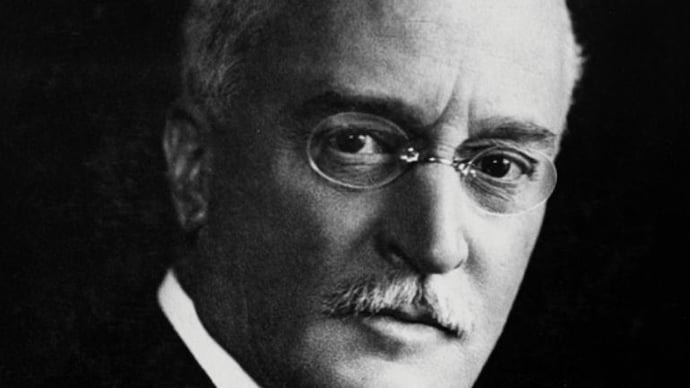
Rudolf Diesel
 Germany
inventor•entrepreneur•engineer
Birthday
March 18, 1858
Birth Sign
Pisces
Birthplace
Paris, France
Age
Died at 55
About
Rudolf Diesel was a German inventor and mechanical engineer. He is famous for designing the compression-ignition internal combustion engine that bears his name. Today, his invention remains a cornerstone of global transportation and industry, powering ships, trucks, trains, and generators worldwide. Diesel's engine achieved a theoretical efficiency of 75 percent, a remarkable figure that dwarfs the 10 percent of contemporary steam engines. Despite his financial difficulties and mysterious death in 1913, his legacy continues to shape the modern world.
Early Life & Background
Rudolf Christian Karl Diesel, a German inventor and mechanical engineer, was born on March 18, 1858, in Paris, France, to Bavarian parents who had settled there. He spent his early childhood in the city, where a pivotal moment in his youth occurred when he saw an early internal combustion engine at the 1867 Paris Exposition. This experience sparked a lifelong fascination with improving engine efficiency. In 1870, when the Franco-Prussian War broke out, his family was forced to flee to London. Young Rudolf, however, was sent to Augsburg, Bavaria, to live with relatives and continue his schooling. He quickly distinguished himself by excelling in mathematics and mechanics, achievements that earned him a scholarship to the prestigious Royal Bavarian Polytechnic in Munich, now known as the Technical University of Munich. There, he further developed his engineering acumen under the tutelage of Professor Carl von Linde, a renowned pioneer in refrigeration technology.
After graduating in 1880, Diesel returned to Paris and began his professional career working for Linde's ice machine company, where he was responsible for designing sophisticated refrigeration systems. Alongside his professional duties, he diligently pursued his personal research, experimenting with heat engines and sketching innovative ideas for various concepts, including a solar-powered air engine. By 1890, his career led him to Berlin, where he took on the role of managing Linde's technical office. However, his private obsession with building a more efficient engine only grew . Driven by a profound desire to surpass the meager 10 percent efficiency of contemporary steam engines, he dedicated several years to perfecting an engine that could operate on a variety of fuels with significantly greater efficiency.
Career Growth
In 1892, Diesel filed a patent for a compression-ignition engine, and by August 1893 he had a prototype running under its own power in Augsburg. The first model was a single 10-foot iron cylinder with a flywheel. Over the next few years, he refined the design, and in 1896 he demonstrated an engine with a theoretical efficiency of 75 percent. The breakthrough came in 1897, when he unveiled a practical 25-horsepower, four-stroke, single-vertical-cylinder engine that ran reliably. By 1898, Diesel was a millionaire, having licensed his patents to manufacturers across Europe and North America. His engines quickly found use in pipelines, power plants, ships, and factories. Diesel also wrote and lectured widely on social and technological topics, advocating for the use of his engine to improve working conditions. He continued to develop variations of the engine until his death in 1913.
Career Timeline
Public Image & Style
Rudolf Diesel is remembered as a brilliant but troubled inventor. In historical accounts, he appears as a serious, formal figure in late-19th-century attire, embodying the image of a German intellectual. Modern media often highlights the mystery of his death, casting him as a tragic genius. Among engineers and historians, he is revered for his technical achievement, while the public associates his name with the durable, efficient engines that power global commerce. There is no fan culture around him, but his birthday is occasionally marked by museums and energy agencies.
Fame & Fandom
For a man who vanished into the English Channel over a century ago, Rudolf Diesel commands a legacy that feels less like fading history and more like a quiet, persistent hum beneath the modern world. While he lacks the frenzied adoration reserved for living pop stars or athletes, his audience is defined by a unique, global devotion to efficiency and engineering prowess. There is no formal name for this collective; fans are simply engineers, historians, and industry veterans who revere the machine that bears his name rather than the man himself. This is not a fandom of billboards or birthday campaigns, but a professional reverence where the invention speaks louder than the biography. The cultural mythology surrounding him remains anchored in the enigma of his final days, transforming a tragic disappearance into an enduring industrial legend that sparks speculation even today.
The scale of his recognition is undeniable, with his influence tracked across media coverage, search trends, and consumption signals worldwide through the iFANN Global Fame Rankings. He currently holds the position of the 21st most famous person in Automotive / Car Culture, a standing that has remained steady since the previous measurement cycle. This placement underscores how deeply his mechanical innovations remain woven into the fabric of transportation and heavy industry, ensuring his name is invoked whenever the mechanics of power are discussed.
Interesting Facts and Legends
Before achieving fame with his compression-ignition engine, Rudolf Diesel experimented with a solar-powered air engine, revealing an early fascination with renewable energy sources. Beyond his technical genius, he was a polymath fluent in multiple languages who wrote extensively on the social implications of technology. Some accounts suggest he suffered near-total blindness following an accident, though this detail lacks widespread corroboration. A favorite fact among biodiesel advocates is that the first successful diesel engine ran on peanut oil rather than petroleum. His life ended in mystery when he disappeared from the steamer Dresden, fueling over a century of debate regarding whether he committed suicide due to financial ruin or was assassinated by foreign intelligence fearing the spread of his technology to Germany.
The story of his death remains the central pillar of his legend. He was last seen walking on the deck of the ship before vanishing without a trace. Only his life jacket and personal effects were found floating nearby, leaving his fate unresolved. This dramatic event has inspired literary works and conspiracy theories, positioning him as a tragic figure whose genius outpaced his ability to secure his own safety. Unlike modern celebrities whose deaths spark immediate public mourning, Diesel's legacy is defined by this cold, unexplained silence at sea.
Notable Quotes
“The engine that I have invented is the most efficient heat engine ever conceived.”
“I have spent my whole life trying to make the world a better place through technology.”
“The diesel engine will free humanity from the drudgery of manual labor.”
Family & Personal Life
Rudolf Diesel was born to German artisans from Bavaria living in Paris. He married Louise Martha Diesel, and together they had three children. The family moved frequently between Paris, Berlin, and London due to Diesel's work. His wife and children were with him during his years of intense engine development in the 1890s. After his death, his family faced financial difficulties, as his later years were marked by debt. Little else is recorded about his parents or siblings in available sources.
Notable Connections
Rudolf Diesel was deeply influenced by Professor Carl von Linde, under whom he studied at Munich and later worked for at the Linde Ice Machine Company. He also drew inspiration from Nicolaus Otto's coal-gas engine, which he saw as a teenager. Diesel's work laid the foundation for modern diesel engine manufacturers like MAN and Caterpillar.
Relationships & Dating History
Rudolf Diesel married Louise Martha Diesel, likely in the 1880s. The couple had three children. Martha remained his spouse until his death in 1913. No other romantic relationships are documented in historical sources. As of his death, Diesel was married.
- MarriedLouise Martha Diesel1885 - 1913They had three children; she became widowed after his death.
Death & Aftermath
Died
September 30, 1913 (aged 55)
Death Place
North Sea
Cause of Death
Suicide by drowning
Rudolf Diesel died on September 30, 1913, aboard the steamship Dresden in the North Sea while traveling from Antwerp to Harwich. The evening before his disappearance, he dined with fellow passengers and retired to his cabin around 10:00 PM, stating he intended to rise early to watch the sunrise. When a crew member checked his quarters at 6:00 AM, the bed was empty and the porthole stood open, with a life preserver floating nearby suggesting he had fallen or jumped into the water. His body was recovered on October 10 by the Dutch trawler Coertsen, identified only through personal effects like a wallet and spectacles case found on the remains.
An autopsy followed this identification, leading authorities to rule the cause of death as suicide by drowning based on the circumstances, though conflicting accounts regarding murder due to financial pressure or patent theft have persisted without ever being confirmed. The engineering community reacted with immediate shock and profound loss, with tributes pouring in from institutions like the British Royal Society and various German technical academies who mourned the inventor of the compression-ignition engine. Because the body was recovered weeks after the event and identification relied solely on matching items, a traditional public funeral never took place, leaving him without a marked grave or formal ceremony.
Posthumous recognition eventually emerged through the establishment of Diesel Engine Day and National Biodiesel Day, which commemorate his birth and contributions annually. Numerous works detailing his life and mysterious end have been published over the years, including Douglas Brunt's The Mysterious Case of Rudolf Diesel, ensuring his story remains part of historical discourse.
Net Worth (Estate Value)
Rudolf Diesel became a millionaire by 1898 after licensing his engine patents to manufacturers across Europe and the United States. His wealth came primarily from patent royalties and consulting fees. However, by 1913 he faced significant financial difficulties, with debts and declining income. No reliable modern estimate of his net worth at death exists, and his estate did not generate posthumous revenue comparable to modern celebrity estates. His invention's value far exceeded his personal wealth.
Awards Won (1)
Rudolf Diesel did not receive major awards during his lifetime, as the Nobel Prize and similar honors were not given for his work. Posthumously, Germany issued a stamp in his honor in 1958. He is widely recognized in engineering and energy history resources.
1958 · Philatelic Recognition
100th Birth Anniversary
Known For
Diesel Engine
1897 · Inventor
Keywords
Sources
Quick Facts
- Profession
- inventor, entrepreneur, engineer
- Born
- +1858-03-18
- Birthplace
- Paris
- Died
- +1913-09-30
- Death Place
- English Channel
- Gender
- Male
- Spouse
- Louise Martha Diesel
- Birth Sign
- Pisces
- Birthplace
- Paris, France
Personal Details
- Full Name
- Rudolf Christian Karl Diesel
- Spouse
- Louise Martha Diesel
- Children
- 3
- Education
- Royal Bavarian Polytechnic of Munich (now Technical University of Munich)
Frequently Asked Questions
Who was Rudolf Diesel?
What did Rudolf Diesel invent?
How did Rudolf Diesel die?
What is Rudolf Diesel's net worth in 2026?
Is the diesel engine still used today?
Similar People
Join the community
fans discussing