 United States
“A triumph of atmosphere and acting, a horror film that works on the nerves rather than the stomach.”
Roger Ebert
Chicago Sun-Times
Part of a Collection
Rosemary's Baby Collection
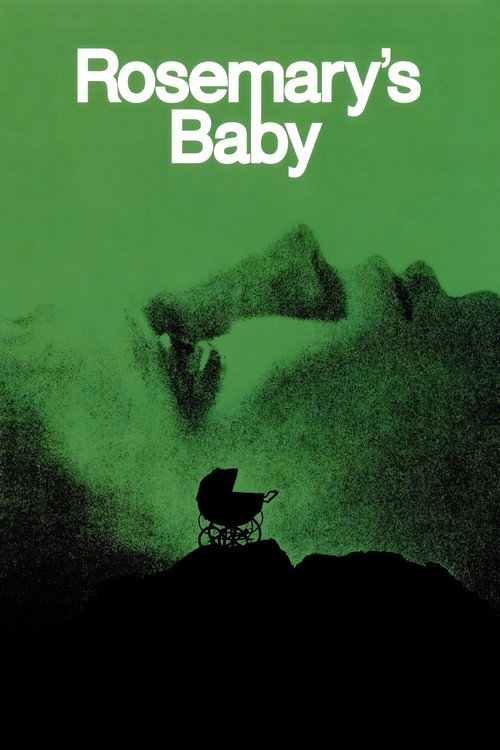
Roman Polanski's Rosemary's Baby arrived in June 1968 with a premise that sounded like pulp: a young wife in a gothic Manhattan apartment building suspects her neighbors are witches. What Polanski did with Ira Levin's bestseller turned it into something far more durable, a horror film built on the texture of everyday domestic life. The paranoia creeps in through the details: a too-friendly neighbor, a husband who stays out late, a doctor who waves off pain.
Mia Farrow plays Rosemary Woodhouse with a fragility that hardens into resolve. She had just come off the whirlwind of her marriage to Frank Sinatra, and the film's production overlapped with the collapse of that relationship. Her performance is the film's engine, a woman whose instincts are correct and whose isolation is the real monster. John Cassavetes, cast against type as the ambitious husband Guy, brings an unnerving casualness to betrayal.
Paramount released the film with a marketing campaign that told audiences not to reveal the ending. That secrecy helped, but what kept the movie alive for more than half a century is its refusal to offer easy comfort. The horror is not in the shadows. It is in the living room, in the neighbors who bring dessert, in the husband who smiles.
Availability and pricing can change. Confirm on the provider's site before purchasing.
Rosemary and Guy Woodhouse sign a lease on apartment 7E at the Bramford, a looming Victorian pile on Manhattan's Upper West Side. The building has a history, and their friend Hutch, played by Maurice Evans, warns them about it. Guy brushes the warnings aside. He is a struggling actor, and the Bramford is cheap, roomy, and close to the theater district. Rosemary wants a baby. Guy says they can start trying once his career picks up.
The couple meets Roman and Minnie Castevet, an older pair who live next door and treat the Woodhouses like long-lost relatives. Minnie, played by Ruth Gordon, is nosy and relentless, forever showing up with a dessert or an opinion. Roman, Sidney Blackmer, is courtly and cryptic. Rosemary finds them intrusive. Guy finds them useful. Roman starts calling Guy for late-night talks, and soon Guy has landed a role in a play after the actor ahead of him conveniently goes blind.
One night Rosemary has a dream so vivid it feels like a memory. A figure with yellow eyes, a smell of sulfur, a bed moving across the room. She wakes with scratches on her back and a story from Guy about a bad night of Chinese food. Weeks later she learns she is pregnant. The Castevets send her to Dr. Sapirstein, Ralph Bellamy, a silver-haired obstetrician who prescribes a daily drink of raw herbs and tells her to ignore the pain.
The pregnancy turns into a slow siege. Rosemary loses weight, her skin goes pale, and she feels a pain that no one will name. Minnie's concoction tastes awful and leaves her foggy. At a party, her old friends notice how sick she looks. Hutch, digging into the Bramford's past, sends her a book about a 19th-century coven and then falls into a coma before they can talk. When he dies, his last words, heard by a nurse, are a warning about Rosemary.
Guy grows colder. He stays out, he lies about where he has been, and he dismisses her fears as hormones. Rosemary starts locking her bedroom door at night. One afternoon she finds the door unlocked and the furniture moved. She begins to suspect that everyone around her, her husband included, is part of something she cannot see. The film builds its dread from the gap between what Rosemary knows and what she can prove.
50th Anniversary Edition Trailer
Critical Consensus
Critics have long treated Polanski's film as a high-water mark for psychological horror. The reviews praise Farrow's performance and the film's refusal to show its monster, while audiences respond to the slow-burn dread and the domestic detail. The rare horror film that plays as well for skeptics as for genre fans.
“A triumph of atmosphere and acting, a horror film that works on the nerves rather than the stomach.”
Roger Ebert
Chicago Sun-Times
“Polanski has created a nightmare that feels all too real, and Mia Farrow gives it a face worth caring about.”
Vincent Canby
The New York Times
“Mia Farrow gives the performance of her career, and the film never lets you off the hook.”
Pauline Kael
The New Yorker
“A chilling, unforgettable piece of filmmaking that turns an apartment building into a trap.”
Variety Staff
Variety
Mia Farrow
Rosemary Woodhouse
John Cassavetes
Guy Woodhouse
Ruth Gordon
Minnie Castevet
Sidney Blackmer
Roman Castevet
Maurice Evans
Hutch
Ralph Bellamy
Dr. Sapirstein
Victoria Vetri
Terry
Patsy Kelly
Laura-Louise
Elisha Cook Jr.
Mr. Nicklas
Emmaline Henry
Elise Dunstan
Charles Grodin
Dr. Hill
Hanna Landy
Grace Cardiff
Director
Roman Polanski
Writers
Roman Polanski, Ira Levin
Composer
Krzysztof Komeda
Cinematographer
William A. Fraker
Producers
William Castle, Robert Evans
Academy Awards (1969)
Best Supporting Actress: Won
Academy Awards (1969)
Best Actress: Nominated
Academy Awards (1969)
Best Adapted Screenplay: Nominated
Golden Globes (1969)
Best Supporting Actress: Won
Golden Globes (1969)
Best Motion Picture - Drama: Nominated
BAFTA Awards (1969)
Best Film: Nominated
BAFTA Awards (1969)
Best Actress: Nominated
Saturn Awards (1973)
Best Horror Film: Won
Join the community
fans discussing