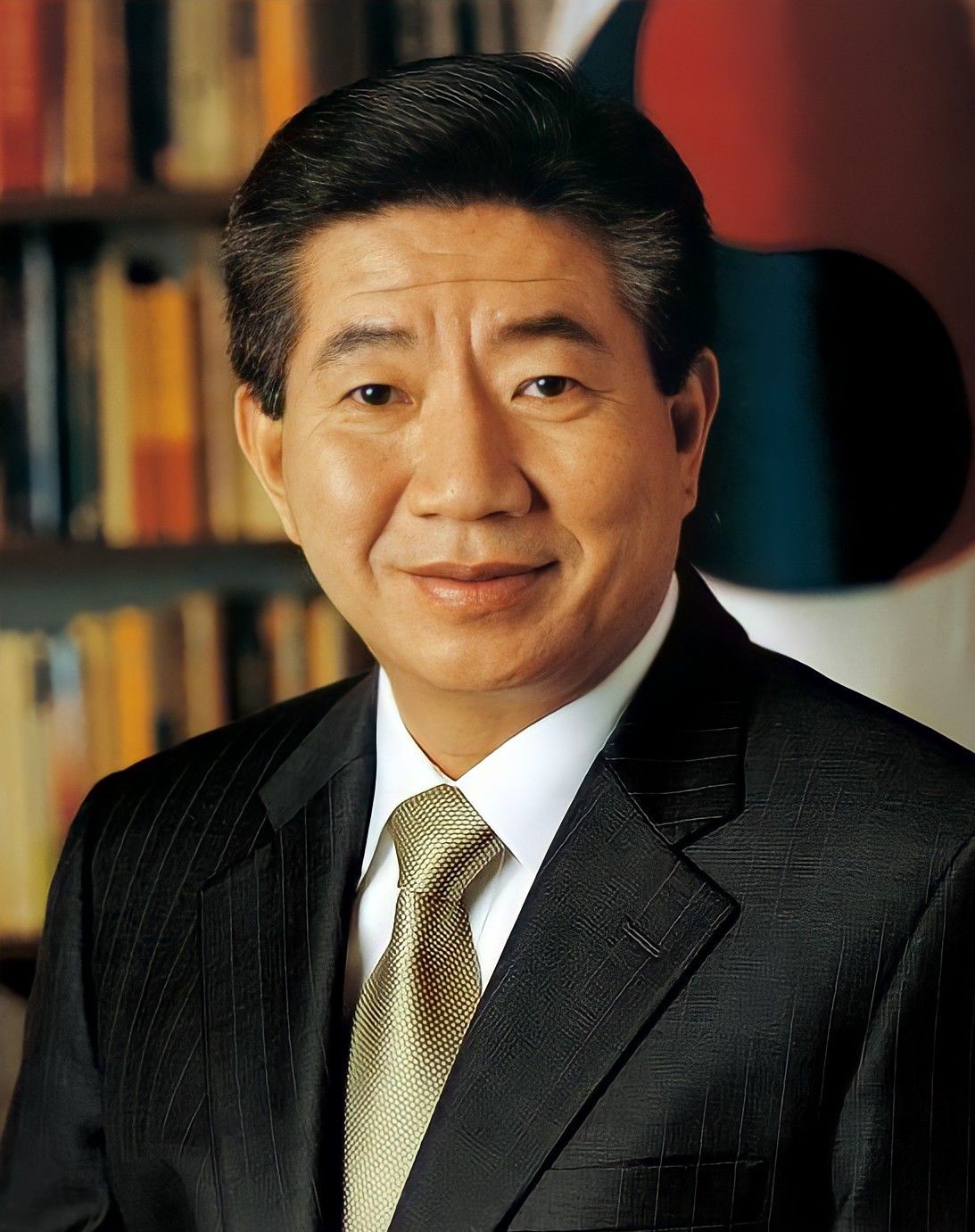
Roh Moo-hyun
 South Korea
Birthday
+1946-09-01
Birth Sign
Virgo
Birthplace
Bongha Village
Age
Died at 62
About
Roh Moo-hyun (1 September 1946 – 23 May 2009) was a South Korean lawyer and politician who served as the ninth president of South Korea from 2003 to 2008. Born in Bongha Village, a small farming community, Roh rose from humble beginnings to become a human rights lawyer, defending student activists against authoritarian regimes. His political career later focused on overcoming regionalism, and he won the presidency with strong support from younger voters, particularly internet users. His election marked the rise of the 386 Generation, former student protesters now in their thirties, who advocated a more conciliatory approach to North Korea. Roh was the first South Korean president born after the end of Japanese colonial rule. During his presidency, South Korea reached its highest ranking on the Reporters Without Borders Press Freedom Index, and the won hit its strongest value against the dollar since 1997. For the first time, the country became the world's 10th largest economy and surpassed $20,000 in nominal GDP per capita. However, Roh faced fierce opposition from the conservative Grand National Party and the media, who often accused him of incompetence. His ambitious plans, such as relocating the capital and forming a coalition with the opposition, stalled. His approval ratings were the lowest average in South Korean history, reflecting public dissatisfaction with economic and diplomatic challenges. After leaving office, Roh returned to Bongha Village, ran a duck farm, and blogged about his daily life. He also created a website called "Democracy 2.0" to foster healthy online discourse. Fourteen months later, he became embroiled in a bribery investigation that drew intense public scrutiny. On 23 May 2009, Roh committed suicide by jumping from a cliff behind his home, leaving a note that read, "There are too many people suffering because of me." His death triggered an outpouring of grief, with about 4 million people visiting his hometown in the following week. The prosecutor general resigned amid public criticism. Posthumously, public opinion shifted, and a 2019 Gallup Korea poll named him the most popular president in South Korean history, a testament to his enduring legacy as a champion of human rights and democracy.
Fame & Fandom
Roh Moo-hyun commands a measured but enduring presence in global historical consciousness, his legacy tracked across media coverage and consumption signals worldwide. According to the iFANN Global Fame Rankings, he holds the position of the 6th most famous person in South Korea, a standing maintained from the previous cycle. His prominence extends beyond national borders, placing him as the 62nd most famous person from South Korea and the 22nd most famous person in East Asia, with both positions holding steady from the prior assessment. These metrics reflect a sustained public interest that transcends his tenure in office. Unlike modern entertainers who cultivate organized fan clubs, Roh Moo-hyun has no formal fandom name; his supporters are best described as a political base rather than a fanbase. This group, largely aligned with the progressive camp and the Democratic Party of Korea, engages in commemorative rituals on the anniversary of his death and defends his image through institutional channels like the Roh Moo-hyun Foundation. Their activities focus on preserving his political vision and opposing narratives that they view as betrayals of his legacy, distinguishing their engagement from the entertainment-driven fandoms found elsewhere.
Interesting Facts and Legends
During his presidency, Roh Moo-hyun became the first South Korean leader to retire to his rural hometown of Bongha Village rather than remaining in Seoul, a choice that reinforced his connection to ordinary citizens. The narrative of his life is defined by a tragic arc, culminating in his suicide on May 23, 2009, following intense pressure from corruption investigations and impeachment proceedings. This event transformed him into a martyr figure for progressives, with the location of his death becoming a focal point for annual commemorations. A recurring story in modern South Korean politics involves the battle to define his "spirit," where factions vie to be recognized as the true heirs to his vision. In May 2026, this legacy was further highlighted when a portrait of Roh painted by former U.S. President George W. Bush was displayed publicly for the first time, underscoring the international dimension of his history. Political opponents have occasionally accused supporters of using his name for strategic advantage, framing such actions as either honoring his memory or exploiting it for partisan gain.
Death & Aftermath
Died
+2009-05-23 (aged 62)
Death Place
Bongha Village, Gimhae, South Gyeongsang Province, South Korea
Cause of Death
Suicide
The South Korean police and Roh Moo-hyun's family announced that the ninth president had taken his own life following an investigation into allegations involving his brother-in-law. The incident occurred on Saturday, May 23, 2009, at approximately 9:30 a.m. local time in Bongha Village, Gimhae, where Roh jumped from a ravine behind his private residence. He had retreated to seclusion after his last public appearance on April 30, 2009, during which he supported Democratic Party candidates in local elections. The official ruling of suicide was established based on the circumstances and statements from the family. Public reaction was immediate and profound, as millions gathered for vigils in Seoul's Gwanghwamun Square and his hometown.
Tributes poured in from political peers, including then-President Lee Myung-bak, who acknowledged Roh's contributions to democracy, while book sales surged significantly in the weeks following the event. Memorial murals were erected across various cities, and the Roh Moo-hyun Memorial Hall was established to serve as a center for his political philosophy. Funeral and memorial services were held on May 25, 2009, in Bongha Village, drawing thousands of attendees including opposition leader Han Myeong-sook. The ceremony featured eulogies and musical performances before Roh was cremated and his ashes interred at the memorial hall. Posthumous honors have continued through the Roh Moo-hyun Foundation, which manages his archives and promotes his ideals.
Awards & Accolades
Keywords
Quick Facts
- Profession
- judge, politician, lawyer
- Born
- +1946-09-01
- Birthplace
- Bongha Village
- Died
- +2009-05-23
- Death Place
- Pusan National University Yangsan Hospital
- Gender
- Male
- Spouse
- Kwon Yang-sook
- Birth Sign
- Virgo
Personal Details
- Spouse
- Kwon Yang-sook
Join the community
fans discussing