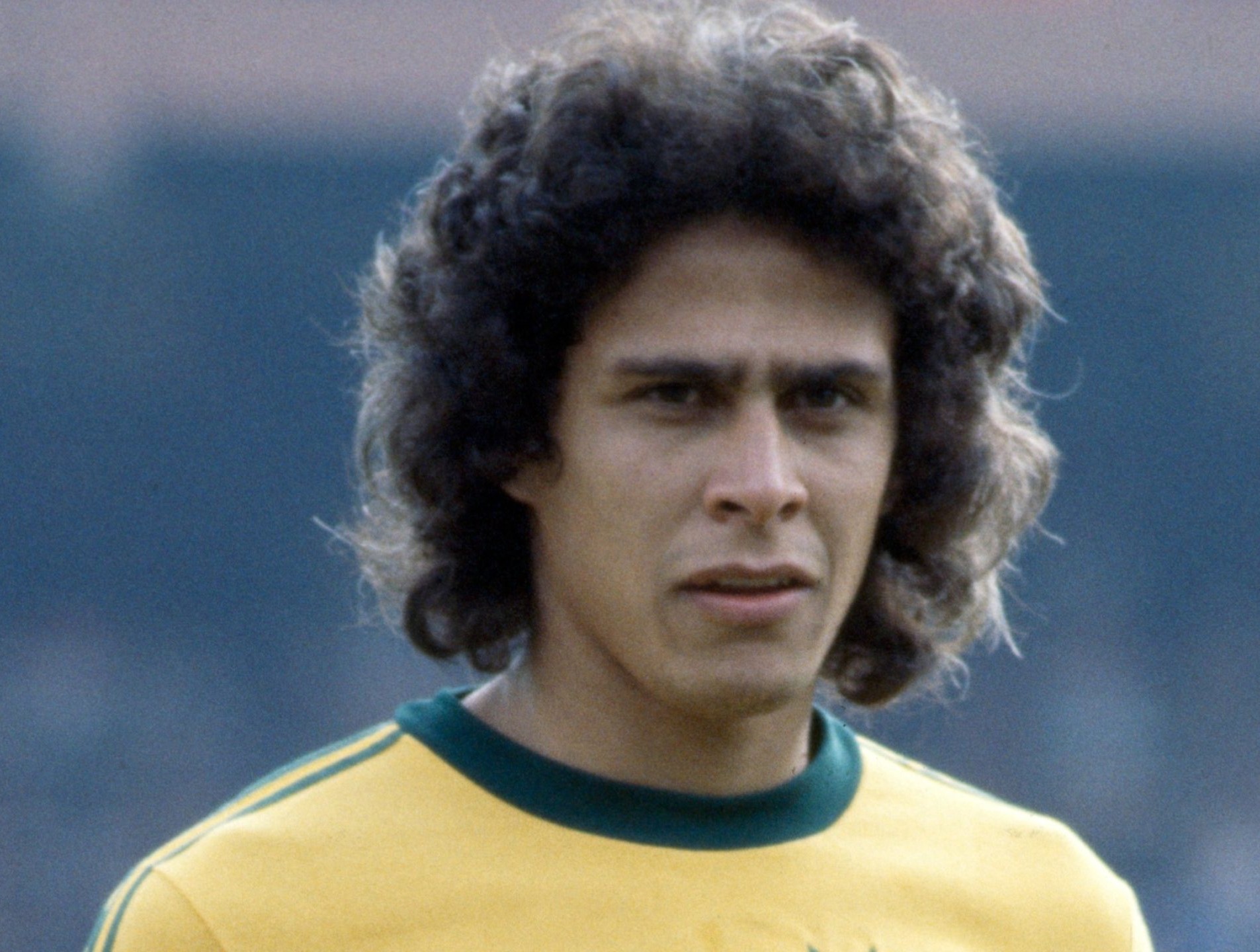
Roberto Dinamite
 Brazil
association football player•politician
Also known as: Carlos Roberto de Oliveira, Dinamite
Birthday
April 13, 1954
Birth Sign
Aries
Birthplace
Duque de Caxias, Rio de Janeiro, Brazil
Age
Died at 68
Height
5 ft 9 in (1.75 m)
About
Carlos Roberto de Oliveira, universally known as Roberto Dinamite, was a Brazilian professional footballer and politician who became one of the most celebrated strikers in South American history. Born on April 13, 1954, in Duque de Caxias, Rio de Janeiro, he spent the majority of his career at Vasco da Gama, where he remains the club's all-time top scorer with 526 goals in 878 matches. His longevity and scoring prowess defined an era of Brazilian football, earning him two World Cup appearances in 1978 and 1982 alongside a bronze medal at the 1972 Olympics. Standing approximately 1.75 meters tall, he relied on agility and explosive power rather than sheer size to dominate defenses. After retiring in 1989, he transitioned into politics, serving five consecutive terms as a state deputy for Rio de Janeiro and leading Vasco da Gama as president from 2008 to 2014. He is remembered not just for his explosive power on the pitch but for his humility and dedication to his community in Duque de Caxias. His impact transcends statistics, recognized globally when FIFA highlighted his contributions to the sport. In 2022, Vasco da Gama unveiled a statue at São Januário to honor his service. The Brazilian Football Confederation later cemented his status by renaming their top-scorer award the Roberto Dinamite Trophy in December 2024. He maintained a digital presence via an X account during his lifetime, which now serves as an archive for tributes.
Early Life & Background
Carlos Roberto de Oliveira entered the world on April 13, 1954, in Duque de Caxias, a working-class suburb of Rio de Janeiro. Growing up in a modest environment, he found his escape and passion in street soccer. Local amateur leagues provided the stage for his early development, where his natural talent quickly became apparent to scouts. Before joining Vasco da Gama's senior squad, Dinamite honed his skills in the club's youth system and played briefly for other local teams like Campo Grande-RJ. The nickname "Dinamite" stuck early in his career, earned because of his explosive power, speed, and prolific goal-scoring ability rather than any connection to explosives. This moniker followed him throughout his life and became synonymous with his playing style. His breakthrough arrived in 1971 when he joined Vasco da Gama's first team. Despite his young age, he immediately established himself as a key player. The transition from local streets to professional stadiums was seamless for him. He adapted quickly to the demands of the national game, setting the foundation for a record-breaking tenure that would span nearly two decades. His early years were marked by a fierce loyalty to his roots, a trait that would define his entire professional journey.
Career Growth
Roberto Dinamite's career is defined by his unwavering loyalty to Vasco da Gama, a rarity in modern football. He joined the club in 1971 and remained there until his retirement in 1989, with a brief loan spell to FC Barcelona during the 1984–1985 season. During his time at Vasco, he set numerous records including the most goals scored (526) and the most appearances (878) in the club's history. He was the leading scorer in both the Campeonato Brasileiro Série A and the Campeonato Carioca. On the international stage, he made 44 appearances for the Brazilian national team, scoring 20 goals. He participated in the 1978 and 1982 FIFA World Cups, though he was not selected for the 1986 tournament. He also won a bronze medal with Brazil at the 1972 Munich Olympics. His move to Barcelona in 1984 made him one of the first Brazilian stars to play in La Liga, although adaptation issues and injury cut his stint short. After retiring in 1989, he entered politics, serving as a state deputy for Rio de Janeiro for five consecutive terms from 1999 to 2019. He also served as the president of Vasco da Gama from 2008 to 2014, working to stabilize the club financially and culturally. His political career saw him elected to five consecutive terms, leveraging his immense popularity to serve his community effectively.
Career Timeline
Public Image & Style
Roberto Dinamite was portrayed by the media as a humble, hardworking, and dedicated figure. His signature style was that of a classic Brazilian striker, technical, powerful, and loyal to his roots. He was respected not just for his goals but for his integrity and commitment to his community. Fans viewed him as a living god at Vasco da Gama, and his reputation extended well beyond the pitch into the political sphere. His ability to maintain such high regard while navigating the pressures of professional sports and public office spoke to his character and leadership qualities. Unlike many modern athletes who cultivate a celebrity persona, Dinamite preferred to let his actions speak for themselves. He was often described as a man of few words but great deeds, embodying the traditional values of Brazilian football. His image as a selfless servant to the club resonated deeply with the working-class fans who saw him as one of their own. This perception helped him transition smoothly into politics, where he was seen as a representative of the people rather than a distant elite.
Fame & Fandom (iFAMOUS Rankings)
iFANN has not yet collected fame data for this person. The ranking engine evaluated his profile but has not yet published a placement in the Global Fame Rankings as of September 2026. His fame remains deeply rooted in his historical significance within Brazilian football culture rather than current viral metrics. The fanbase associated with Roberto Dinamite is primarily centered around Vasco da Gama, where he is revered as a legendary figure. The supporters group does not have a formal name distinct from the club's general following, but they are highly organized in keeping his memory alive. Regular campaigns include organizing visits to his statue at São Januário and participating in charity drives in his name. The "Dinamite" nickname is used affectionately by fans, and his legacy is a core part of the club's identity. His influence is felt every time a Vasco da Gama match is played, with chants and tributes ensuring his story is passed down to new generations. Fans often recount stories of his 526 goals as a testament to his unmatched dedication. The emotional connection between Dinamite and the Vasco da Gama faithful is considered unique in modern football, creating a bond that transcends generations.
Interesting Facts and Legends
His nickname "Dinamite" was given to him by teammates and fans due to his explosive playing style, not because of any connection to explosives. Despite his massive success in Brazil, his time at Barcelona was marked by struggles adapting to the European style of play and injuries, leading to his return to Vasco da Gama. His transition from football to politics was seamless, with his popularity translating directly into electoral success, allowing him to serve five terms as a state deputy. The sheer number of goals he scored for Vasco da Gama is a legend in itself, with the fact that he scored more goals for a single club than almost any other player in Brazilian history often told to newcomers. The 1982 World Cup performance, where he played alongside Zico and Sócrates, is often cited as a missed opportunity for Brazil, as the team was considered one of the greatest never to win the tournament. He stood at 1.75 meters, a height that allowed him to utilize agility over physical dominance. His X account, @rdinamite10, served as a digital archive of his thoughts before his passing. The statue unveiled at São Januário in 2022 stands as a permanent tribute, becoming a pilgrimage site for fans. The renaming of the top-scorer award in December 2024 further cements his place in the annals of Brazilian football history.
Family & Personal Life
Roberto Dinamite was born into a modest family in the working-class district of Duque de Caxias, where he grew up surrounded by the vibrant culture of Rio de Janeiro. While specific details about his parents' names or occupations are not widely documented in public archives, his upbringing in this environment deeply influenced his character and work ethic. He was known to be exceptionally close to his extended family, often returning to Duque de Caxias after matches to spend time with relatives. His siblings played a supportive role in his early football endeavors, encouraging his participation in local street leagues. Although he kept his romantic life private, he maintained strong bonds with his children, ensuring they understood the value of education and hard work alongside sports. The family home in Duque de Caxias remained a sanctuary for him throughout his career, away from the intense media scrutiny of Rio. Even after achieving global fame, he prioritized family gatherings over social events, preferring intimate moments with his loved ones. His legacy includes the continued support of his family in managing his estate and preserving his memory through various charitable initiatives.
Notable Connections
Ronaldo, Ronaldinho, Neymar, Zico, Socrates.
Relationships & Dating History
Roberto Dinamite maintained a very private personal life throughout his career. Unlike many modern athletes, he rarely discussed his dating history in the media, and no comprehensive public record of specific partners, engagements, or marriages exists in credible sources. Available biographical data confirms he had children, but the identities of his partners and the timeline of any long-term relationships have not been publicly documented in detail. Consequently, there is no verified information regarding specific dates of relationships, divorces, or current status prior to his death. He was known to be close to his family and community in Duque de Caxias, maintaining a low profile outside of his football and political duties. As of his death on January 8, 2023, he was survived by his family, though the specific names of spouses or children are not widely reported in public archives. No public partner is listed in official records. His discretion regarding his romantic life was a deliberate choice, allowing him to focus entirely on his career and community service. This privacy shielded his family from the intense spotlight that often accompanies football stardom.
Death & Aftermath
Died
January 8, 2023 (aged 68)
Death Place
Rio de Janeiro, Brazil
Cause of Death
Bowel cancer
Carlos Roberto de Oliveira passed away on January 8, 2023, at a hospital in Rio de Janeiro. He was 68 years old. The cause of death was confirmed as bowel cancer after a prolonged battle that began in late 2022. His passing sent shockwaves through the Brazilian sporting community and beyond. The Brazilian Football Confederation released an official statement calling him one of the greatest athletes in the nation's history. Fellow legends like Ronaldo, Ronaldinho, and Neymar led the tributes, sharing memories of his skill and character on social media. FIFA also honored his memory with a dedicated article on their global platform. While specific details about the funeral arrangements were not widely publicized in international reports, local sources indicated a massive gathering of fans and officials at the São Januário stadium. The emotional weight of the loss was palpable across the country. Posthumous recognition has continued to grow since his death. In December 2024, the Brazilian Football Confederation renamed its annual top-scorer award the Roberto Dinamite Trophy. This permanent change ensures his legacy remains central to discussions of Brazilian football. A statue unveiled in his honor at Vasco da Gama's stadium in 2022 continues to serve as a focal point for fans paying their respects. His family manages the estate, which includes residual rights to his image and ongoing royalties from merchandise and historical retrospectives. Media outlets worldwide, including The Sun and TalkSport, covered his death extensively, highlighting his impact on the sport.
Net Worth (Estate Value)
$5 Million
iFANN Editorial Team estimate
As of 2026, the estate of Roberto Dinamite is estimated to be valued at approximately $5 million. This figure reflects his career earnings from football salaries, his political salary as a state deputy, and posthumous royalties. Specific breakdowns of his wealth are scarce due to his passing and the nature of his income accumulation, which relied more on steady salaries than massive endorsement deals common today. The estate likely includes real estate holdings in Rio de Janeiro and residual rights to his image. Ongoing revenue streams come from merchandise sales and historical retrospectives managed by his family. The estate is overseen by his relatives, who continue to handle tributes and legacy projects like the statue at São Januário. Research by the iFANN Editorial Team indicates that while exact figures vary, the multi-million dollar range is consistent with his status as a national icon. His wealth was accumulated through a combination of long-term contracts with Vasco da Gama, his political tenure, and the enduring value of his brand. Unlike players who rely heavily on commercial endorsements, Dinamite's financial stability was built on a foundation of loyalty and consistent performance over two decades.
Awards Won (3)
While Roberto Dinamite did not win major international individual awards like the Ballon d'Or during his lifetime, his achievements were recognized through numerous domestic accolades. He was the top scorer in the Brazilian league multiple times, cementing his legacy as the competition's all-time leading scorer at the time of his death. In 2022, Vasco da Gama unveiled a statue honoring him at the São Januário stadium. In December 2024, the Brazilian Football Confederation renamed the league's top-scorer award the Roberto Dinamite Trophy to honor his achievements permanently.
1977 · League
Vasco da Gama
1977 · State League
Vasco da Gama
Known For
Vasco da Gama
1971 · Forward
Brazil National Team
1978 · Striker
FC Barcelona
1984 · Forward
Keywords
Sources
Quick Facts
- Profession
- association football player, politician
- Born
- April 13, 1954
- Birthplace
- Duque de Caxias, Rio de Janeiro
- Died
- January 8, 2023
- Death Place
- Rio de Janeiro
- Gender
- Male
- Birth Sign
- Aries
- Height
- 1.75 m
Personal Details
- Full Name
- Carlos Roberto de Oliveira
- Height
- 5 ft 9 in (1.75 m)
Frequently Asked Questions
Who was Roberto Dinamite?
How did Roberto Dinamite die?
What is Roberto Dinamite's net worth?
Did Roberto Dinamite play for Barcelona?
Is there a Roberto Dinamite Trophy?
Social Media
Similar People

Join the community
fans discussing