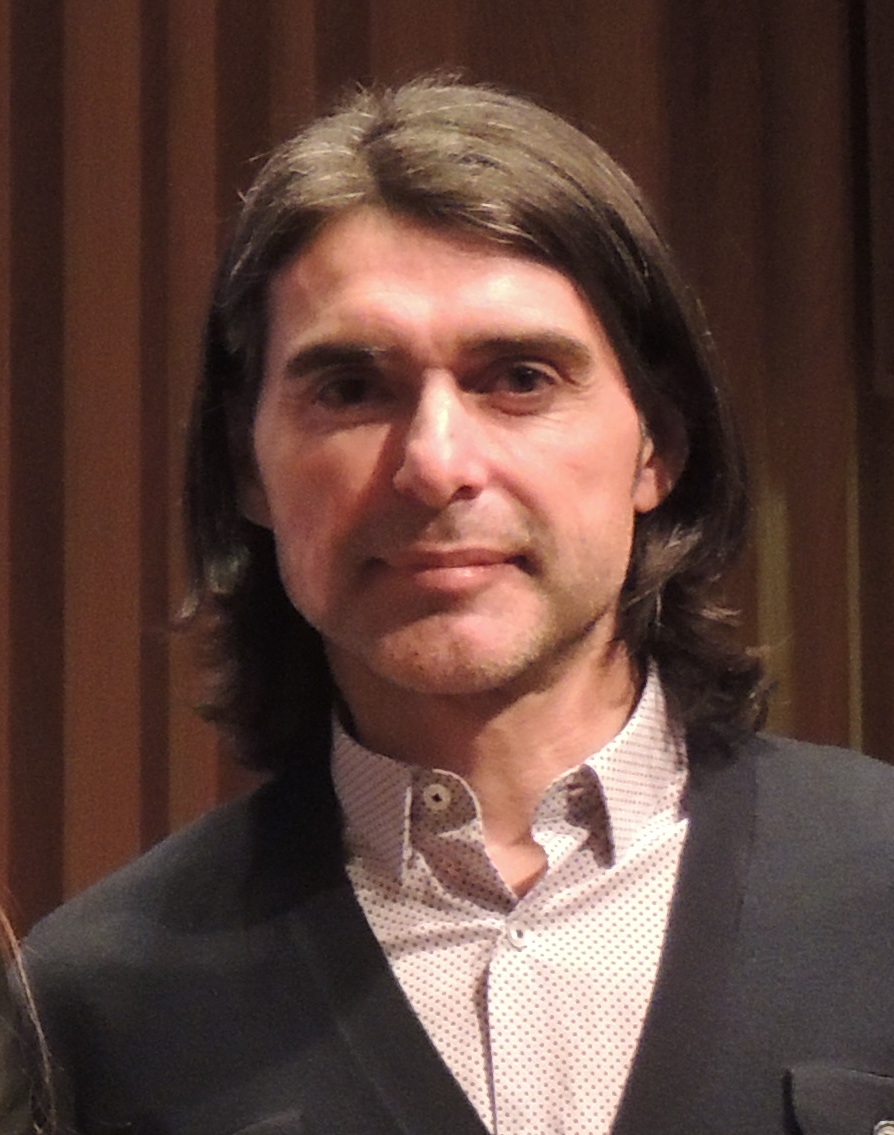
Roberto Ayala
 Argentina
association football player•association football coach
Also known as: El Ratón
Birthday
April 14, 1973
Birth Sign
Aries
Birthplace
Paraná, Entre Ríos Province, Argentina
Age
53 years old
Height
1.77 m (5 ft 10 in)
About
Roberto Fabián Ayala is an Argentine former professional footballer widely regarded as one of the finest centre-backs of his generation. Nicknamed El Ratón for his quickness and tenacity, he stood out despite his relatively short stature, excelling in aerial duels and commanding defenses with tactical intelligence. Over a 20-year career, he played for clubs in Argentina, Spain, and Italy, including River Plate, Valencia, Milan, and Napoli. A leader on and off the pitch, he captained his national team in numerous matches and earned over 100 caps across three World Cups. His trophy cabinet includes top-flight league titles in Spain and Italy, a UEFA Cup, and an Olympic gold medal. After retiring, he transitioned into coaching, currently serving as a field assistant for Argentina's national team and previously managing clubs like Racing Club. He is remembered for his fierce competitiveness, reading of the game, and consistent performances at the highest level, making him a symbol of rugged, intelligent defending in Argentine football.
Early Life & Background
Roberto Ayala was born on 14 April 1973 in Paraná, Entre Ríos Province, Argentina. He is of Basque descent. Growing up, he showed early promise in football and joined the youth academy of Ferro Carril Oeste in Buenos Aires. He made his senior debut for Ferro Carril Oeste in 1991 at age 18, going on to play 73 league matches and scoring one goal over two seasons. His performances caught the attention of River Plate, one of Argentina's biggest clubs, and he transferred there in 1993. At River Plate, he established himself as a commanding defender, making 41 appearances and winning the Argentine Primera División Apertura title in 1994. His solid displays in Argentina paved the way for a move to Europe, and in 1995 he signed with Italian club Napoli. Ayala also represented Argentina at youth levels and won the Pan American Games gold medal in 1995 and the King Fahd Cup (Confederations Cup) that same year, foreshadowing his international success.
Career Growth
Ayala moved to Napoli in 1995, making 87 appearances in Serie A, though the club suffered relegation in 1997–98. He then transferred to AC Milan in 1998, winning the Serie A title in the 1998–99 season. In 2000, he joined Valencia CF, where he reached his peak. At Valencia, he won La Liga titles in 2001–02 and 2003–04, and the UEFA Cup in 2003–04, also winning the UEFA Super Cup in 2004. He reached the UEFA Champions League final in 2000–01, finishing as runner-up. After seven seasons and 187 appearances for Valencia, scoring 9 goals, he moved to Real Zaragoza in 2007, helping the club win promotion back to La Liga in 2009. He returned to Argentina in 2010 to play for Racing Club de Avellaneda, retiring in 2011 after 15 appearances. Internationally, Ayala earned 115 caps for Argentina, scoring 7 goals. He played in the 1998, 2002, and 2006 World Cups, four Copa América tournaments (1995, 1999, 2004, 2007), and two Olympic Games (1996, 2004). He captained Argentina in a record 63 matches, won the Olympic gold medal in 2004, and also won silver at the 1996 Olympics and runner-up in the 2004 and 2007 Copa América. He scored a memorable goal against Brazil in a 2004 World Cup qualifier.
Career Timeline
Public Image & Style
Ayala is revered in Argentine football as a symbol of rugged, intelligent defending. Known for his fierce competitiveness, leadership, and reading of the game, he embodies the garra (grit) associated with Argentine football. His playing style was defined by tactical discipline, strong tackling, and precise passing from the back. He maintained a low public profile compared to many football figures, rarely engaging in controversy or media sensationalism. Fans remember him as a reliable, no-nonsense defender who always gave his all for the shirt. He has no official social media presence and avoids the spotlight, focusing instead on his coaching career. His nickname El Ratón (The Mouse) reflects his quickness and agility, and despite being only 1.77 m tall, he was renowned for his aerial ability, regularly winning headers against much taller opponents.
Fame & Fandom (iFAMOUS Rankings)
Roberto Ayala commands a global profile defined by decades of elite defensive play and recent high-profile controversy. According to the iFANN Global Fame Rankings, he is currently the 29th most famous person from Argentina, a position holding steady from the previous cycle. This placement reflects his enduring recognition as a central figure in Argentine sports history, anchored by his 100+ international caps and top-tier club success across Europe. While his playing career established him as a tactical leader, his contemporary visibility has been sharply recalibrated by events following the 2026 FIFA World Cup final. The fanbase surrounding Ayala does not possess a formal or documented name, operating instead as a general collective of football supporters rather than an organized movement with specific rituals or campaigns. His public narrative has shifted from celebrated athletic achievement to the subject of intense scrutiny regarding a verified disciplinary incident involving post-match altercations, which now serves as the primary point of discussion in media coverage.
Interesting Facts and Legends
Roberto Ayala's nickname El Ratón (The Mouse) originated from his surprising quickness and agility despite standing only 1.77 m tall, a stature that never hindered his renowned aerial dominance against taller opponents. Over a twenty-year senior career, he accumulated 501 league appearances and scored 15 goals for clubs including River Plate, Valencia, Milan, and Napoli. He was a member of the FIFA Century Club, earning over 100 caps for Argentina across three World Cups, where he notably played alongside Lionel Messi in 2006. His career featured partnerships with numerous legends such as David Albelda, Javier Zanetti, Gabriel Batistuta, and Hernán Crespo under coaches like Marcelo Bielsa and Rafa Benítez. A memorable moment from his playing days includes scoring a crucial goal against Brazil during a 2004 World Cup qualifier. In more recent times, a controversial incident has become part of his public record; video footage from July 2026 shows Ayala, then an assistant coach for Argentina, involved in a physical altercation with Spanish midfielder Dani Olmo following the World Cup final. This event led to a formal assault case opened by FIFA and a public apology from Ayala that was rejected by the victim, marking a significant departure from his previously untarnished reputation.
Family & Personal Life
Ayala is married to Verónica, and the couple has four children: Francisco, Sofía, Pilar, and Martina. He keeps his family life relatively private, with few public details about his parents or siblings. The family has lived in Spain and Argentina during his career and post-retirement. Ayala's Basque heritage is part of his family background, though he rarely discusses his ancestry in interviews.
Notable Connections
Ayala played alongside notable teammates at Valencia including David Albelda, Rubén Baraja, Pablo Aimar, and Gaizka Mendieta. For Argentina, he shared the pitch with Javier Zanetti, Juan Sebastián Verón, Gabriel Batistuta, Hernán Crespo, and later Lionel Messi. His coaches included Marcelo Bielsa and José Pekerman for Argentina, and Rafa Benítez at Valencia.
Relationships & Dating History
Ayala has been married to Verónica for many years. The couple has four children together: Francisco, Sofía, Pilar, and Martina. Ayala has kept his romantic life extremely private, and no public records of previous relationships, divorces, or high-profile flings exist in credible sources. As of 2026, he remains married to Verónica, with no indication of separation. His only known long-term relationship is with his wife, whom he married before his peak years at Valencia. The family has resided in Spain and Argentina over the years.
- MarriedVerónicaCurrentAyala is married to Verónica, with whom he has four children. The start year of their marriage is not publicly documented.
Salary, Net Worth In 2026
$10 Million
iFANN Editorial Team estimate
Per iFANN's editorial analysis, Roberto Ayala's net worth stands at $10 Million. This valuation reflects the financial trajectory typical of a top-tier defender who achieved longevity in Spain and Italy. His wealth was primarily generated during his playing career, with peak earnings recorded at Valencia and AC Milan, where he commanded salaries commensurate with elite status in La Liga and Serie A. Endorsement deals secured during his active years contributed to this accumulation, though specific contractual figures remain undisclosed. Following his retirement, Ayala transitioned into coaching and management roles, including service with the Argentina national team, which provides a continuing stream of income. Financial records indicate stability throughout his post-playing life, with no major controversies or legal disputes impacting his assets. The total figure represents the aggregate of his club salaries, performance bonuses, and subsequent professional engagements.
Awards Won (9)
Ayala won two La Liga titles with Valencia (2001–02, 2003–04), the UEFA Cup in 2004, and the Serie A title with AC Milan in 1999. Internationally, he won the Olympic gold medal in 2004, the Pan American Games gold in 1995, and the King Fahd Cup in 1995. He also earned promotion to La Liga with Real Zaragoza in 2009.
2004 · Winner
Valencia CF
2002 · Winner
Valencia CF
2004 · Winner
Valencia CF
Known For
Valencia CF
2000 · Centre-back
Argentina national team
1994 · Captain
AC Milan
1998 · Centre-back
Keywords
Sources
Quick Facts
- Profession
- association football player, association football coach
- Born
- +1973-04-14
- Birthplace
- Paraná
- Gender
- Male
- Birth Sign
- Aries
Personal Details
- Full Name
- Roberto Fabián Ayala
- Height
- 1.77 m (5 ft 10 in)
- Spouse
- Verónica
- Children
- 4: Francisco, Sofía, Pilar, Martina
Frequently Asked Questions
How many goals did Roberto Ayala score?
Is Roberto Ayala married?
What is Roberto Ayala doing now?
How tall is Roberto Ayala?
Why is Roberto Ayala called El Ratón?
Join the community
fans discussing