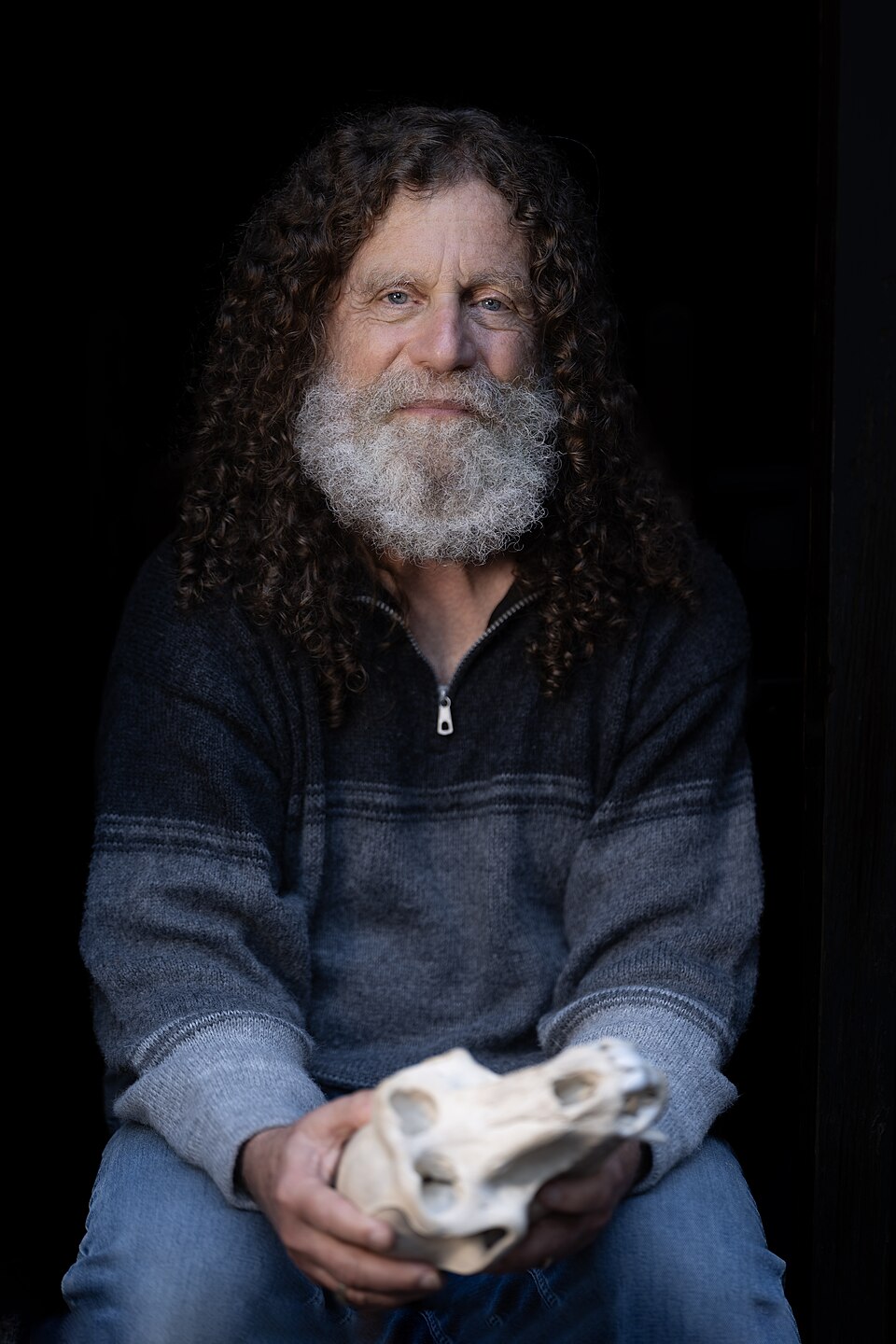
Robert Sapolsky
Awards & Honours
8
Awards Won
6
Honours
3
Rankings
2
Covers
1
Records
Robert Sapolsky's achievements place him among the most celebrated scientists of his era. He received a MacArthur Fellowship in 1987, a rare honor for a young researcher. His book Behave won the Los Angeles Times Book Prize and the Phi Beta Kappa Award in Science. In 2018, TIME named him one of the 100 most influential people. The Society for Neuroscience awarded him its Lifetime Achievement Award in 2024, recognizing his decades of research and public engagement.
Awards
Honours & Distinctions
John A. and Cynthia Fry Gunn Professor at Stanford University
Endowed chair at Stanford.
Research Associate, National Museums of Kenya
Ongoing research affiliation for baboon fieldwork.
Fellow of the American Association for the Advancement of Science
Elected fellow.
Honorary Doctorate
Honorary doctorate for contributions to neuroscience.
Honorary Doctorate
Honorary doctorate for science communication.
MacArthur Fellowship
Genius Grant for research in neuroendocrinology.
Rankings & Lists
TIME 100 Most Influential People
Best Books of the Year
Best Books of the Year
Magazine Covers
TIME Magazine
2018
The Science of Why We Do What We Do
The New York Times Magazine
2017
Robert Sapolsky: The Man Who Thinks We Have No Free Will
Records & Feats
Longest continuous study of a single baboon troop
Sapolsky has studied the same olive baboon troop in the Masai Mara annually since 1978, a record for primate fieldwork.