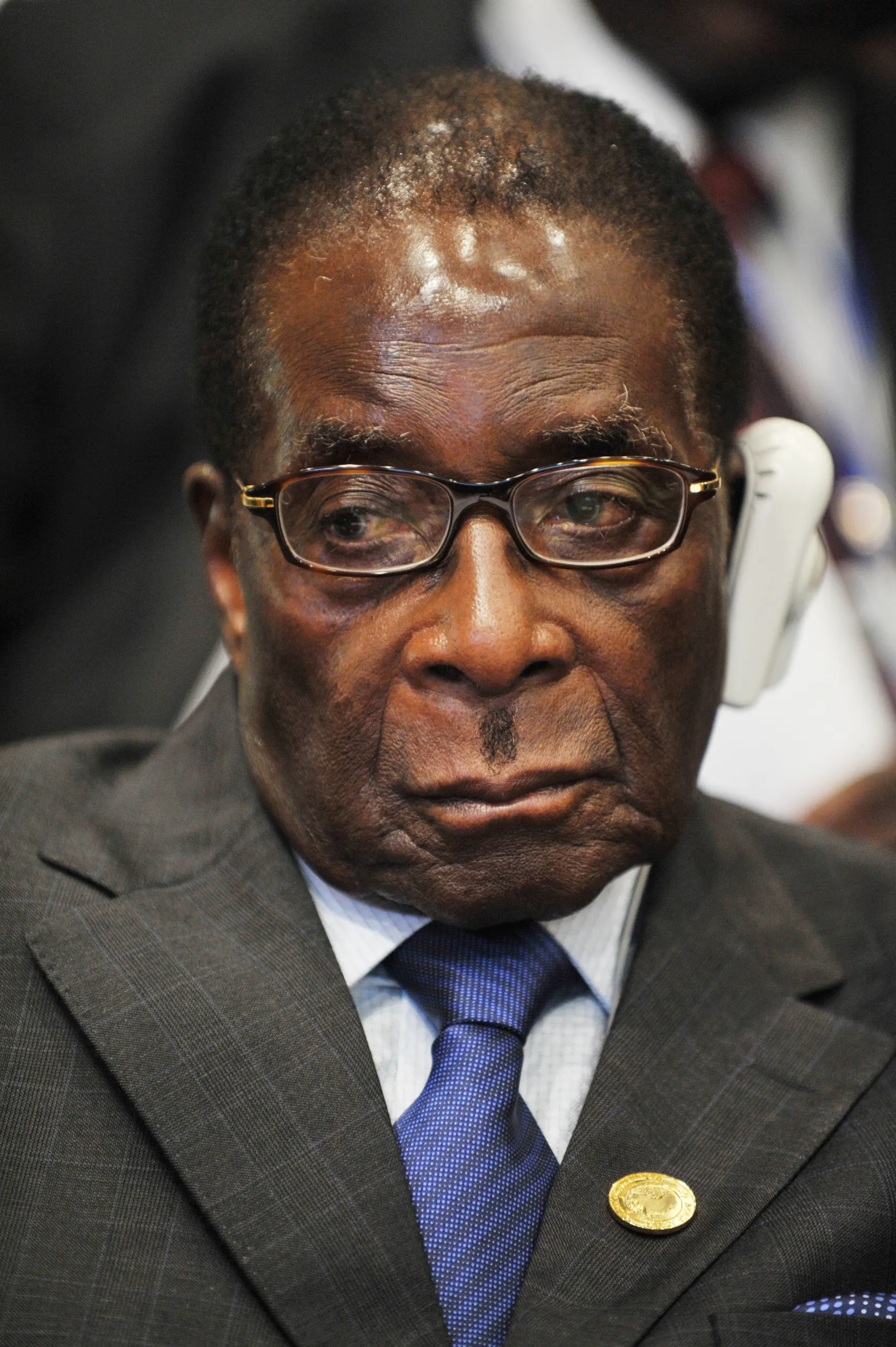
Robert Mugabe
Also known as: Tata, Chigumira, Gushungo
Birthday
February 21, 1924
Birth Sign
Sagittarius
Birthplace
Kutama, Southern Rhodesia
Age
Died at 95
Height
5 ft 9 in (175 cm)
About
Robert Gabriel Mugabe was a Zimbabwean revolutionary and politician who served as the Prime Minister from 1980 to 1987 and President from 1987 until his forced resignation in 2017. Born into a poor Shona family in Kutama, he began his career as a schoolteacher before rising to lead the liberation struggle against white minority rule. His tenure marked a stark duality in African history: early acclaim for securing independence and expanding social services followed by decades of authoritarianism, human rights abuses, and economic collapse.
Mugabe's legacy remains deeply polarized. Supporters credit him with freeing Zimbabwe from colonialism, while critics blame him for orchestrating the Gukurahundi massacres, implementing violent land reforms that destroyed the economy, and presiding over widespread famine. He died in Singapore at the age of 95, leaving behind a complex and contested history that continues to shape Zimbabwean politics today.
Early Life & Background
Robert Gabriel Mugabe entered the world on February 21, 1924, in Kutama, a village in Southern Rhodesia. His father John died when Robert was young, leaving his mother Elizabeth to raise him in poverty. The family lived simply, but Mugabe attended the Catholic mission school at Kutama College where he excelled academically. This education exposed him to Western ideals alongside the harsh realities of colonial oppression, sparking an early interest in politics and religion.
In 1949, he enrolled at the University of Fort Hare in South Africa, one of the few institutions available to black students at the time. There he became involved in anti-apartheid activism and met future political allies. He was expelled in 1950 for participating in a student strike against university administration policies. Although he later completed his degree via correspondence, this period solidified his radical views. In 1953, he moved to the Gold Coast, now Ghana, where he studied at Achimota School and worked as a teacher. This era deepened his Pan-Africanist convictions, inspired by Kwame Nkrumah's leadership. Upon returning to Rhodesia in 1960, he worked as a teacher and trade union official while increasingly aligning with the nationalist struggle against white minority rule.
Career Growth
Mugabe's political ascent began in the 1960s when he joined the National Democratic Party and later the Zimbabwe African People's Union under Joshua Nkomo. Ideological differences led him to form the Zimbabwe African National Union in 1963. In 1964, he was arrested for sedition and imprisoned without trial for ten years. During his incarceration, he continued studying law and politics, further radicalizing his stance. Upon his release in 1974, he fled to Mozambique to assume leadership of ZANU and direct the armed struggle against Ian Smith's Rhodesian government.
The Lancaster House Agreement of 1979 paved the way for free elections in 1980. ZANU won decisively, and Mugabe became the first Prime Minister of independent Zimbabwe on April 18, 1980. In 1987, following the unification of ZANU and ZAPU into ZANU–PF and the abolition of the prime ministerial post, he became President. He consolidated power through constitutional amendments and suppressed opposition parties. His regime faced criticism for the Gukurahundi campaign between 1982 and 1987, a military crackdown in Matabeleland that resulted in the deaths of an estimated 20,000 civilians.
The turning point in his legacy occurred in 2000 with the launch of the Fast Track Land Reform Program. State-sanctioned violence was used to seize commercial farms owned by white minorities, redistributing them to black veterans and party loyalists. While popular among some supporters, this policy devastated agricultural output, triggered hyperinflation exceeding 89 billion percent, and led to widespread famine. Despite re-elections in 2002, 2008, and 2013 marred by fraud and violence, sanctions mounted and the economy collapsed. On November 6, 2017, facing impeachment proceedings within his own party, Mugabe was ousted in a military-backed coup. He resigned on November 21, 2017, ending 37 years in power.
Career Timeline
Public Image & Style
Mugabe's public image is deeply polarized. To supporters he is a liberation hero who freed Zimbabwe from colonial rule. To critics he is a tyrant responsible for economic ruin and human rights abuses. Media portrayals vary from reverent tributes in state-run outlets to scathing condemnations in international press. His rhetoric often emphasized sovereignty, anti-imperialism, and the rights of the marginalized. He frequently appeared in traditional Shona attire or formal Western suits adorned with medals, projecting an image of authority and national pride.
Fame & Fandom
iFANN has not yet collected fame data for this person. While there is no formal fandom name documented in iFANN data, Mugabe maintained a strong base of loyal supporters within Zimbabwe particularly among older generations and members of the ZANU-PF party. These supporters often refer to him as Tata or Chigumira. Fan campaigns include street rallies memorials and the preservation of his legacy in state education. There are no organized fan clubs or charity drives in his name as his legacy is more political than cultural.
Interesting Facts and Legends
Before becoming a dictator, Mugabe was a dedicated teacher who taught English and history at various schools in Southern Rhodesia. He was fluent in Shona, English, and some Portuguese. A stroke in 1993 left him with partial paralysis and speech difficulties, yet he continued to lead the country for another 24 years. An avid cricket fan, he was known to attend matches and even played the sport in his youth. His middle name, Gabriel, was given by his mother, who was a devout Catholic. He often wore traditional Shona attire or formal Western suits adorned with medals during public appearances.
Notable Quotes
“We are determined to defend our sovereignty and our dignity.”
“The land belongs to the people of Zimbabwe.”
“I am not a dictator. I am a liberator.”
“If you want to fight me, come and fight me.”
Family & Personal Life
Mugabe was married twice. His first marriage was to Sally Hayfron, a Ghanaian nurse and fellow activist whom he met in the Gold Coast in the early 1950s. They married in 1961 and had two children: Bheki born in 1961 and Charmaine born in 1965. Sally Mugabe was a prominent figure in her own right, leading the Women's League of ZANU and advocating for women's rights. She died of cancer in 1992. Following her death, Mugabe reportedly suffered a stroke in 1993 which affected his speech and mobility.
His second marriage was to Grace Marufu, whom he met in 1990 while she was working as a secretary in his office. They married in 1996 shortly after the death of his first wife. Grace Mugabe became a powerful political figure, often referred to as First Lady despite not being officially titled as such initially. She rose to prominence in the 2000s leading the war veterans' association and later the ZANU-PF Youth League. Her rise sparked rumors of a succession plan leading to tensions within the party. The couple had three children together: Rudo born in 1993, Chamunorwa born in 1996, and Bomber born in 2001. Grace Mugabe remains active in Zimbabwean politics and business ventures as of 2026.
Notable Connections
Relationships & Dating History
Robert Mugabe was married twice throughout his life. His first marriage was to Sally Hayfron a Ghanaian nurse and fellow activist whom he met in the Gold Coast in the early 1950s. They married in 1961 and had two children: Bheki born in 1961 and Charmaine born in 1965. Sally Mugabe was a prominent figure in her own right leading the Women's League of ZANU and advocating for women's rights. She died of cancer in 1992. Following her death Mugabe reportedly suffered a stroke in 1993 which affected his speech and mobility.
His second marriage was to Grace Marufu whom he met in 1990 while she was working as a secretary in his office. They married in 1996 shortly after the death of his first wife. Grace Mugabe became a powerful political figure often referred to as First Lady despite not being officially titled as such initially. She rose to prominence in the 2000s leading the war veterans' association and later the ZANU-PF Youth League. Her rise sparked rumors of a succession plan leading to tensions within the party. The couple had three children together: Rudo born in 1993 Chamunorwa born in 1996 and Bomber born in 2001. Grace Mugabe remains active in Zimbabwean politics and business ventures as of 2026. As of 2026 Grace Mugabe is widowed.
- MarriedSally Hayfron1961 - 1992Met in Ghana; she was a nurse and activist; they had two children.
- MarriedGrace Marufu1996 - 2019Met while she was his secretary; she became a powerful political figure; they had three children.
Death & Aftermath
Died
September 6, 2019 (aged 95)
Death Place
Singapore
Cause of Death
Complications related to old age
Robert Mugabe spent his final months in a private hospital ward in Singapore, receiving medical care for an unspecified illness that had kept him away from the public eye since his resignation in November 2017. He passed away peacefully on September 6, 2019, at the age of 95, with the Zimbabwean presidency confirming the event. The official statement attributed his death to complications related to old age, a determination relied upon by state broadcasters rather than forensic findings. Public reaction fractured along the lines of his polarizing legacy, with street parties erupting in Harare as citizens celebrated the end of his rule while Western leaders issued mixed statements acknowledging his role in independence before condemning his later human rights abuses and economic mismanagement.
A state funeral held on September 10, 2019, at the National Heroes' Acre in Harare drew thousands of mourners, including former South African President Thabo Mbeki, where military honors and traditional Shona rituals marked his transition from controversial president to posthumous national figure. Mugabe was buried in a private plot within the grounds of the National Heroes' Acre, a site reserved for distinguished national figures, following ceremonies led by current President Emmerson Mnangagwa. Jacob Zuma and various pan-Africanist groups mourned him as a liberation hero during this period.
Net Worth (Estate Value)
$100 Million
iFANN Editorial Team estimate
Estimating Robert Mugabe's net worth is challenging due to the opaque nature of his wealth accumulation and the lack of transparent financial records. Various sources provide estimates ranging from $20 million to $100 million depending on the valuation of frozen overseas accounts and property. Forbes estimated his net worth at $50 million in the 2000s largely derived from state-controlled assets and real estate. Global Witness reported in 2017 that Mugabe and his family controlled assets worth hundreds of millions including luxury properties in London Dubai and Zimbabwe as well as mining interests.
Wealth sources included his high official salary as President control over mining agriculture and manufacturing sectors ownership of luxury homes in Zimbabwe South Africa and abroad investments in construction finance and telecommunications and allegations of embezzlement and kickbacks from state contracts. With the collapse of the Zimbabwean dollar and the seizure of many assets by the new government the liquid value of his estate is likely significantly lower though foreign-held assets may still be substantial. iFANN currently estimates Mugabe's net worth at approximately $100 Million based on available historical data and asset valuations.
Awards Won (5)
Mugabe received numerous honours during his lifetime many awarded by African nations and non-aligned movements reflecting his status as a liberation icon. However he also faced significant condemnation and sanctions from Western nations. Notable awards include the Order of the Republic from Zimbabwe the Order of the Star of Africa from Ghana and the Legion of Merit from the USA which was later revoked in 2003. He also received the Nehru Award for International Understanding from India and the Order of the Nile from Egypt. Many of these awards were stripped or criticized in later years.
1980 · National Honour
Zimbabwe Independence
1984 · Pan-Africanism
Liberation Struggle
Known For
Zimbabwe Independence
1980 · Prime Minister
ZANU Leadership
1975 · Leader
Land Reform Program
2000 · Initiator
Keywords
Sources
Quick Facts
- Profession
- politician
- Born
- February 21, 1924
- Birthplace
- Kutama
- Died
- September 6, 2019
- Death Place
- Singapore
- Gender
- Male
- Spouse
- Grace Mugabe, Sally Mugabe
- Birth Sign
- Sagittarius
Personal Details
- Full Name
- Robert Gabriel Mugabe
- Height
- 5 ft 9 in (175 cm)
- Spouse
- Grace Marufu, Sally Hayfron
- Children
- Bheki, Charmaine, Rudo, Chamunorwa, Bomber
- Education
- Kutama College, University of Fort Hare, Achimota School
Frequently Asked Questions
How did Robert Mugabe die?
Who was Robert Mugabe's wife?
What was Robert Mugabe's net worth?
Why was Robert Mugabe removed from power?
What was the impact of Mugabe's land reform?
Similar People
Join the community
fans discussing