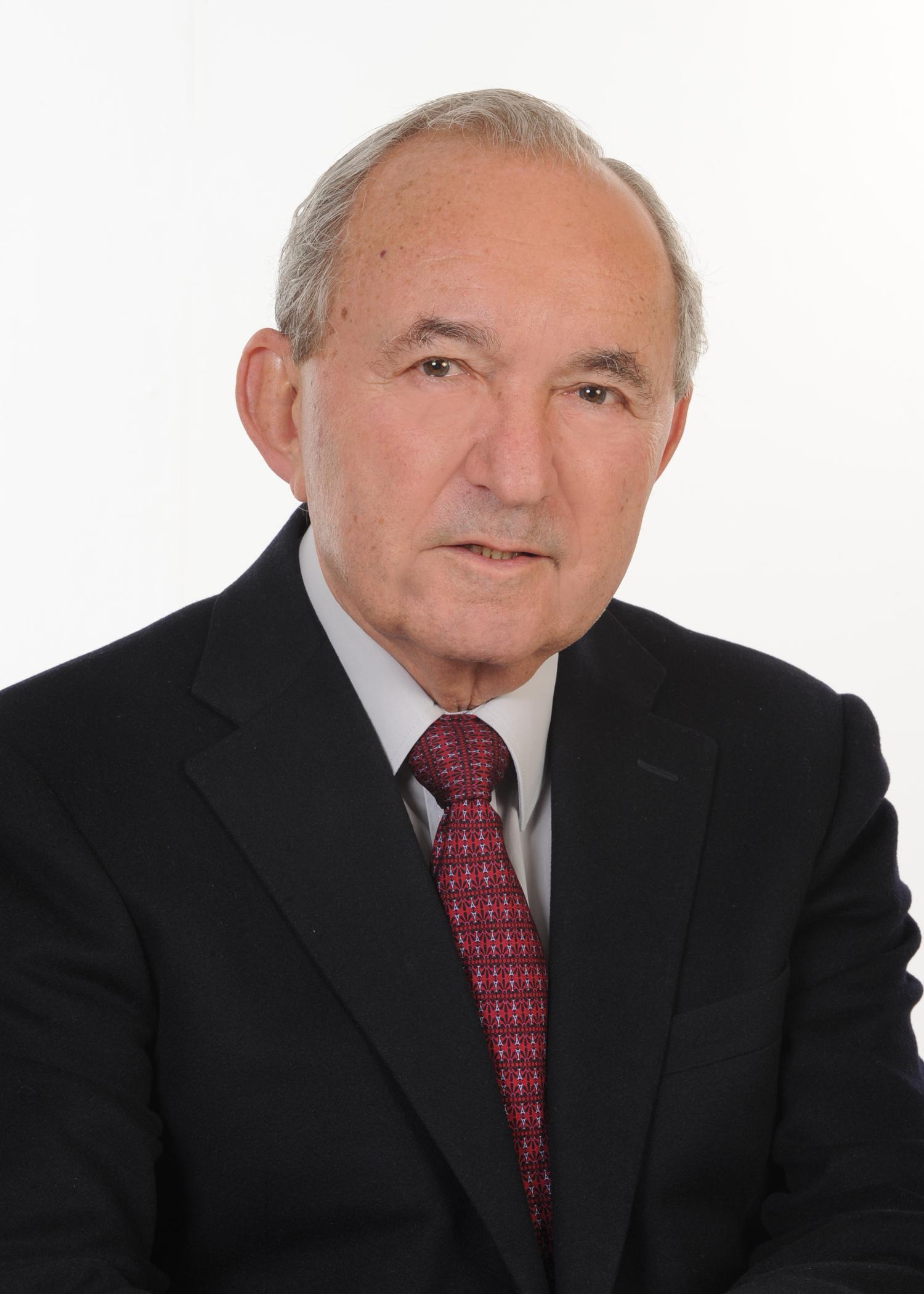
Richard Goldstone
 South Africa
judge•university teacher•lawyer
Birthday
October 26, 1938
Birth Sign
Scorpio
Birthplace
Boksburg, South Africa
Age
88 years old
About
Richard Joseph Goldstone is a South African retired judge, legal scholar, and human rights advocate, born on October 26, 1938, in Boksburg. He is best known for serving as the first chief prosecutor of the United Nations International Criminal Tribunals for the former Yugoslavia and Rwanda, a role that helped define modern international criminal justice.
Goldstone spent 23 years on the South African bench, including nine years as a Justice of the Constitutional Court, where he was nominated by Nelson Mandela. He also led the Goldstone Commission, which investigated political violence during the country's transition from apartheid, and later chaired a UN fact-finding mission on the Gaza War. Currently, he holds the William Hughes Mulligan Professorship at Columbia University and serves as Honorary Chair of the World Justice Project.
His career is marked by a commitment to impartial justice and a willingness to confront difficult truths, even when it meant revising his own conclusions. Goldstone remains active in advocacy for international accountability, and in 2026 he participated in webinars and interviews calling for an international anti-corruption court.
Early Life & Background
Goldstone grew up in Boksburg, a town east of Johannesburg, during the era of legalized racial segregation. His early life was shaped by the apartheid system, which would later influence his judicial philosophy. He studied law and was admitted to the bar in 1963, beginning his career as a commercial lawyer in Johannesburg.
He earned the rank of Senior Counsel in 1976, a mark of distinction in the South African legal profession. In 1980, he was appointed to the Transvaal Provincial Division of the Supreme Court, where he served until 1989. As a liberal judge, he used his position to challenge apartheid laws from within. His rulings on the Group Areas Act, which restricted non-white residency, made the law practically unworkable by limiting evictions and effectively halting prosecutions under it.
From 1985 to 2000, he also served as National President of the National Institute for Crime Prevention and the Rehabilitation of Offenders (NICRO). In 1990, he moved to the Appellate Division, and a year later he was appointed to chair the commission that would bear his name, investigating political violence during the fraught negotiations to end apartheid.
Career Growth
The Goldstone Commission (1991–1994) was his breakthrough moment. Tasked with investigating political violence, Goldstone criticized all factions equally, earning trust from across the political spectrum. Some called him the most trusted man within the white establishment. His work there directly led to his appointment in August 1994 as the first chief prosecutor of the UN International Criminal Tribunals for the former Yugoslavia and Rwanda. In that role, he indicted Bosnian Serb leaders Radovan Karadžić and Ratko Mladić, establishing precedents that shaped international criminal law.
After stepping down in September 1996, he returned to South Africa, where he had already been nominated by President Nelson Mandela to the newly established Constitutional Court. He served there from July 1994 to October 2003. In 2009, he headed a UN Human Rights Council mission to investigate the Gaza War. The report, which suggested potential war crimes by both Israel and Hamas, sparked intense controversy. In April 2011, Goldstone wrote a Washington Post op-ed reconsidering the conclusion that Israel intentionally targeted civilians as a matter of policy, a move that was widely covered and debated.
His later career includes academic work and continued advocacy. In 2018, he was the subject of a biography by Daniel Terris. In 2023, Notre Dame Law School honored him at the Constitutional Court. In March 2026, he participated in JURIST's 30th anniversary webinar series and gave an interview to Follow the Money, calling for an international anti-corruption court.
Career Timeline
Public Image & Style
Goldstone's public image is that of a principled, impartial jurist, committed to human rights and the rule of law. He is widely respected for his role in dismantling apartheid from within the legal system and for helping to establish the modern framework of international criminal prosecution.
Media portrayals emphasize his integrity, his willingness to criticize all factions equally during South Africa's transition, and his intellectual honesty in reconsidering the Gaza report. He has no fandom in the entertainment sense, but he commands significant respect in legal, academic, and human rights communities.
His public appearances are characterized by measured, thoughtful analysis and a clear advocacy for international justice mechanisms. He is often described as a moral compass in the field of international law, and his opinions are sought after by institutions like the World Justice Project and the International Center for Transitional Justice.
Fame & Fandom (iFAMOUS Rankings)
Richard Goldstone does not possess a documented fandom, nor does he have an organized fanbase with a specific name, rituals, or campaigns. Unlike entertainers who cultivate devoted followings, his audience consists of legal scholars, human rights advocates, and international observers who engage with his work through academic discourse rather than celebrity worship. There are no fan clubs, birthday billboards, or charity drives in his name that define a community of fans. The iFANN Global Fame Engine evaluated this profile in August 2026 and determined that Richard Goldstone is currently the subject of evaluation but holds no placement in the published rankings, meaning he is not ranked within the Global Top 1,000 or any Top-100 scope list. This absence of a numeric rank reflects his status as a serious jurist rather than a pop culture figure whose fame fluctuates on consumer signals. While his career has generated immense global attention regarding high-stakes legal proceedings and geopolitical investigations, this attention remains analytical rather than devotional. The scale of his influence is measured in courtrooms and policy papers rather than search trends or media consumption metrics typical of ranked celebrities. His legacy is one of professional integrity and judicial independence, which naturally precludes the formation of a traditional fandom structure. Consequently, there is no official name for his supporters, and no recorded instances of fan-led initiatives or viral moments that would elevate him to a ranked position in the iFANN database.
Interesting Facts and Legends
Goldstone's 2011 recantation of parts of the Gaza report was considered highly unusual for a UN mission head. In September 2019, eleven Palestinian human rights organizations wrote an open letter to him, challenging his revised conclusions. He is the subject of the 2018 biography The Trials of Richard Goldstone by Daniel Terris. He was nominated to the Constitutional Court by Nelson Mandela, a reflection of his role in the anti-apartheid transition. Goldstone has been a judge for 23 years total, with the last nine as a Constitutional Court Justice. He holds the William Hughes Mulligan Professorship at Columbia University. His personal life has remained remarkably private, despite his high-profile career. A central chapter in his legend involves the 2009 United Nations Fact-Finding Mission on the Gaza conflict, commonly known as the "Goldstone Report." This document alleged war crimes by both Israeli forces and Palestinian armed groups, sparking intense global debate. The narrative of his 2011 retraction, where he acknowledged new information suggesting Israeli commanders lacked intent to target civilians, remains a defining moment of intellectual honesty in modern international law. Another verified pillar of his story is his tenure on the South African Constitutional Court from 1994 to 2003, where he presided over cases critical to the nation's transition from apartheid.
Notable Quotes
“We know a lot more today about what happened in the Gaza war of 2008-09 than we did when I chaired the fact-finding mission appointed by the UN Human Rights Council.”
“Civilians were not intentionally targeted [by Israel] as a matter of policy.”
“Kleptocrats too often escape justice, leaving the world's poorest to pay the price.”
Family & Personal Life
Goldstone is married to his wife, Noleen, and they have two daughters. The couple has kept their family life largely out of the public eye, with few details available about their personal history. Goldstone comes from a Jewish family, a background that informed his later work on the Gaza investigation.
He and Noleen have been married for many decades, and she has been a constant presence throughout his career. Their two daughters have also stayed away from the spotlight. Despite the demands of his international work, Goldstone has maintained a stable family life, and no public records suggest any personal turmoil.
Notable Connections
Goldstone's career is intertwined with several key figures. Nelson Mandela nominated him to the Constitutional Court, a significant honor. Daniel Terris wrote his biography, The Trials of Richard Goldstone, in 2018. As UN chief prosecutor, he indicted Radovan Karadžić and Ratko Mladić, whose eventual trials were built on his groundwork. He also holds the William Hughes Mulligan Professorship at Columbia University, named after the late dean.
Relationships & Dating History
Richard Goldstone has maintained a remarkably private personal life. He has been married to his wife, Noleen, for many decades, and they have two daughters. The couple's relationship has remained stable throughout his high-profile career, with no public reports of separation or divorce.
As of 2026, Goldstone is married to Noleen, and they continue to live together. His personal life has never been the subject of tabloid speculation, and he has kept his family out of the spotlight. There are no documented romantic relationships outside his marriage.
- MarriedNoleen GoldstoneCurrentLong-term marriage, with two daughters.
Salary, Net Worth In 2026
Richard Goldstone's net worth is not a matter of public record. As a retired judge and academic, his income has come from judicial salaries, his professorship at Columbia University, and speaking engagements. Unlike entertainers or business figures, his financial affairs have never been the subject of media interest.
His career has been in public service, and his wealth is likely modest compared to private-sector lawyers. In 2026, he remains active in advocacy, but his financial status is not documented. Given the lack of data, it is not possible to provide a reliable figure, and any estimate would be speculative.
Awards Won (1)
Goldstone received the MacArthur Award for International Justice in 2008, recognizing his pivotal role in the development of modern international justice. This prestigious honor, awarded by the John D. and Catherine T. MacArthur Foundation, highlighted his work as chief prosecutor of the UN tribunals and his broader contributions to human rights.
2008 · International Justice
Development of modern international justice
Known For
UN International Criminal Tribunals
1994 · First Chief Prosecutor
Goldstone Commission
1991 · Chair
Constitutional Court of South Africa
1994 · Justice
UN Gaza Fact-Finding Mission
2009 · Head
Keywords
Sources
Quick Facts
- Profession
- judge, university teacher, lawyer
- Born
- October 26, 1938
- Birthplace
- Boksburg, South Africa
- Gender
- Male
- Birth Sign
- Scorpio
Personal Details
- Full Name
- Richard Joseph Goldstone
- Spouse
- Noleen Goldstone
- Children
- Two daughters
Frequently Asked Questions
What is Richard Goldstone known for?
What happened with the Goldstone Report?
Is Richard Goldstone still alive?
How old is Richard Goldstone?
What role did Richard Goldstone play in ending apartheid?
Similar People
Join the community
fans discussing