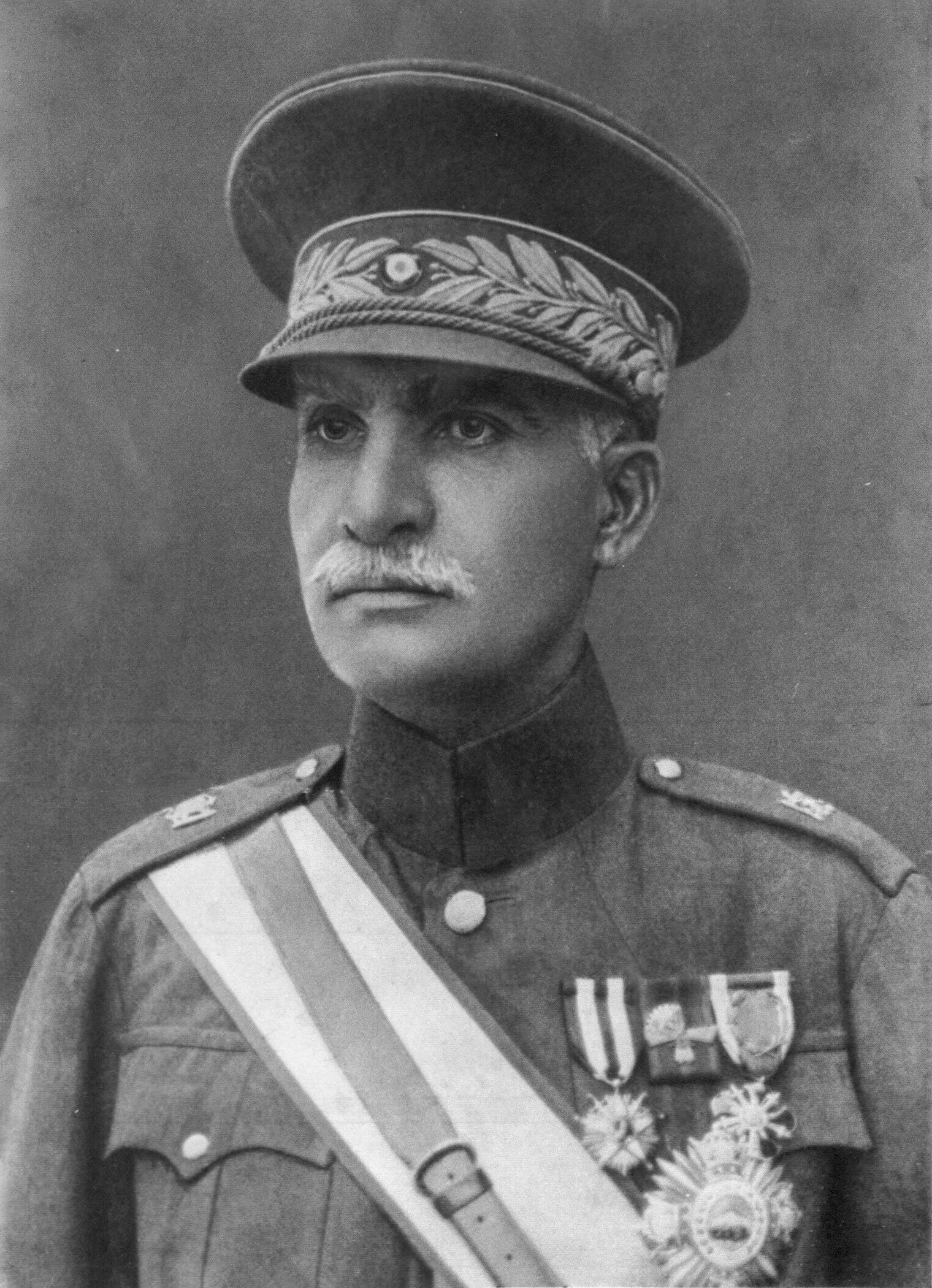
Reza Shah
 Iran
IranBirthday
+1878-03-15
Birth Sign
Pisces
Birthplace
Alasht
Age
Died at 66
About
Reza Shah Pahlavi, born Reza Khan on March 15, 1878, in the small village of Alasht, rose from humble origins to become the founder of Iran's Pahlavi dynasty and its shah from 1925 until his forced abdication in 1941. His path began at age 14 when he joined the Persian Cossack Brigade, a military force with Russian officers. He climbed the ranks steadily, earning a brigadier-general's star by 1921. That same year, he led the entire brigade from Qazvin province into Tehran, seizing the capital and forcing the government's dissolution. He installed Zia ol Din Tabatabaee as prime minister while taking the posts of army commander and war minister for himself. Two years later, with a compliant parliament behind him, Reza Khan became Iran's prime minister. In 1925, the constituent assembly deposed Ahmad Shah, the last Qajar monarch, and amended the 1906 constitution to elect Reza Khan as Shah, marking the start of the Pahlavi era. As shah, Reza Shah pursued an ambitious modernization program. He sought to reduce British and Russian influence by initially courting the United States and Weimar Germany, then shifting to partnerships with Czechoslovakia and Denmark during the 1930s. The Czech industrial firm Škoda Works and the Scandinavian engineering consortium Kampsax played key roles in developing Iran's infrastructure, military, and industry. He built the Trans-Iranian Railway, established a secular education system, and pushed legal and social reforms that often clashed with the Shia clergy. His reign ended abruptly in 1941 when British and Soviet forces invaded Iran during World War II, forcing him to abdicate in favor of his eldest son, Mohammad Reza Shah. He died in exile in Johannesburg, South Africa, on July 26, 1944, at age 66. Reza Shah's legacy remains deeply contested. Supporters credit him with reunifying a fractured nation and laying the groundwork for modern Iran. Critics, especially under the Islamic Republic, point to his authoritarian rule, his failure to lift up the peasantry, and his aggressive Persianization policies that suppressed ethnic minorities through forced detribalization and cultural assimilation. In 1950, Iran's National Consultative Assembly posthumously honored him with the title 'Reza Shah the Great,' a designation that reflects the deep divisions over his rule that persist to this day.
Fame & Fandom
Reza Shah Pahlavi commands a legacy defined not by the fervent rituals of a modern pop culture following, but by the enduring, polarized weight of his historical footprint. There is no formal name for his fanbase; the term "fandom" fits him poorly. Instead, his supporters are monarchists and diaspora communities who view him through the lens of political ideology rather than celebrity worship. These groups do not organize birthday billboards or streaming parties. Their activities center on commemorating his secular reforms and lamenting his forced abdication during World War II. The narrative surrounding him often bleeds into discussions about his grandson, Reza Pahlavi, whose contemporary political struggles in exile have kept the family name in the news. While some reports from 2026 suggest a waning influence for the younger generation, the grandfather remains a towering figure in Iranian nationalist discourse. His story is one of rapid ascent from a village in Alasht to the throne of Tehran, followed by a dramatic fall into exile that cemented his status as a tragic icon. He built a national army, mandated the use of "Iran," and established the University of Tehran, achievements cited by admirers as the foundation of the modern state. Critics, however, remember only the authoritarian methods used to achieve them. This duality ensures he remains a subject of intense debate rather than passive adoration. Despite the absence of a unified fan club, his fame persists across generations and borders. According to the iFANN Global Fame Rankings, Reza Shah is currently the 18th most famous person in Iran. He stands as the 11th most famous person from Iran. Across the broader region, he ranks as the 68th most famous person in Middle East.
Interesting Facts and Legends
Born Reza Khan in 1878, he joined the Persian Cossack Brigade at age 14 before rising to become a brigadier-general by 1921. That same year, he marched his brigade from Qazvin province into Tehran to seize the capital, installing Zia ol Din Tabatabaee as prime minister while taking the posts of army commander and war minister himself. A verified historical moment occurred in 1935 when he ordered foreigners to stop using the term "Persia" and refer to the country as "Iran," a policy that remains a cornerstone of his nationalist legacy. Another pivotal event marked the end of his reign: the Allied invasion in September 1941 forced his abdication and subsequent exile to Mauritius and later South Africa, where he died in 1944. Monarchist folklore often frames this departure as a betrayal by Western powers, fueling resentment that persists in Iranian political memory. Some narratives also conflate his foundational modernization efforts with the "White Revolution" carried out decades later by his son, Mohammad Reza Shah, though the latter was a distinct program. In the modern era, the grandson Reza Pahlavi has generated new lore, including an incident in April 2026 where red-colored liquid was thrown at him in Berlin, symbolizing the volatility faced by the royal lineage.
Death & Aftermath
Died
+1944-07-26 (aged 66)
Death Place
Johannesburg, Gauteng, South Africa
Cause of Death
Tuberculosis
Reza Shah Pahlavi died on July 26, 1944, at the age of 66. He passed away at St. Louis Hospital in Johannesburg, South Africa. The official cause of death was tuberculosis, a condition that had plagued him for years following his abdication and exile. His health had deteriorated significantly after being forced to leave Iran by British and Soviet forces in September 1941, which led to his initial exile to Mauritius before he was moved to Johannesburg under British protection in 1943. However, recent commemorations indicate a lasting legacy: in July 2026, Iranian diaspora groups across three continents gathered to mark the anniversaries of the deaths of both Reza Shah and his son, Mohammad Reza Shah. These events serve as modern tributes rather than immediate reactions in 1944.
The funeral took place shortly after his death in Johannesburg. It was a private affair attended primarily by family members and close associates, as his status as an exiled monarch limited the presence of high-ranking foreign dignitaries or Iranian officials. He was buried in the Zandiyeh Cemetery in Johannesburg, where his tomb remains a site of visitation for some supporters of the Pahlavi dynasty. Posthumously, Reza Shah is remembered as the founder of the modern Pahlavi dynasty and a key figure in Iran's state-building and modernization efforts. Various books, documentaries, and academic conferences have been dedicated to his life and reign, including a 2026 conference on "Iran under Reza Shah" organized by the Austrian Academy of Sciences.
Awards & Accolades
Keywords
Quick Facts
- Profession
- politician, military personnel
- Born
- +1878-03-15
- Birthplace
- Alasht
- Died
- +1944-07-26
- Death Place
- Johannesburg
- Gender
- Male
- Spouse
- Tadj ol-Molouk of Iran, Mariam Savadkukhi, Turan Amirsoleimani, Esmat Dowlatshahi
- Birth Sign
- Pisces
Personal Details
- Spouse
- Tadj ol-Molouk of Iran, Mariam Savadkukhi, Turan Amirsoleimani, Esmat Dowlatshahi
Join the community
fans discussing