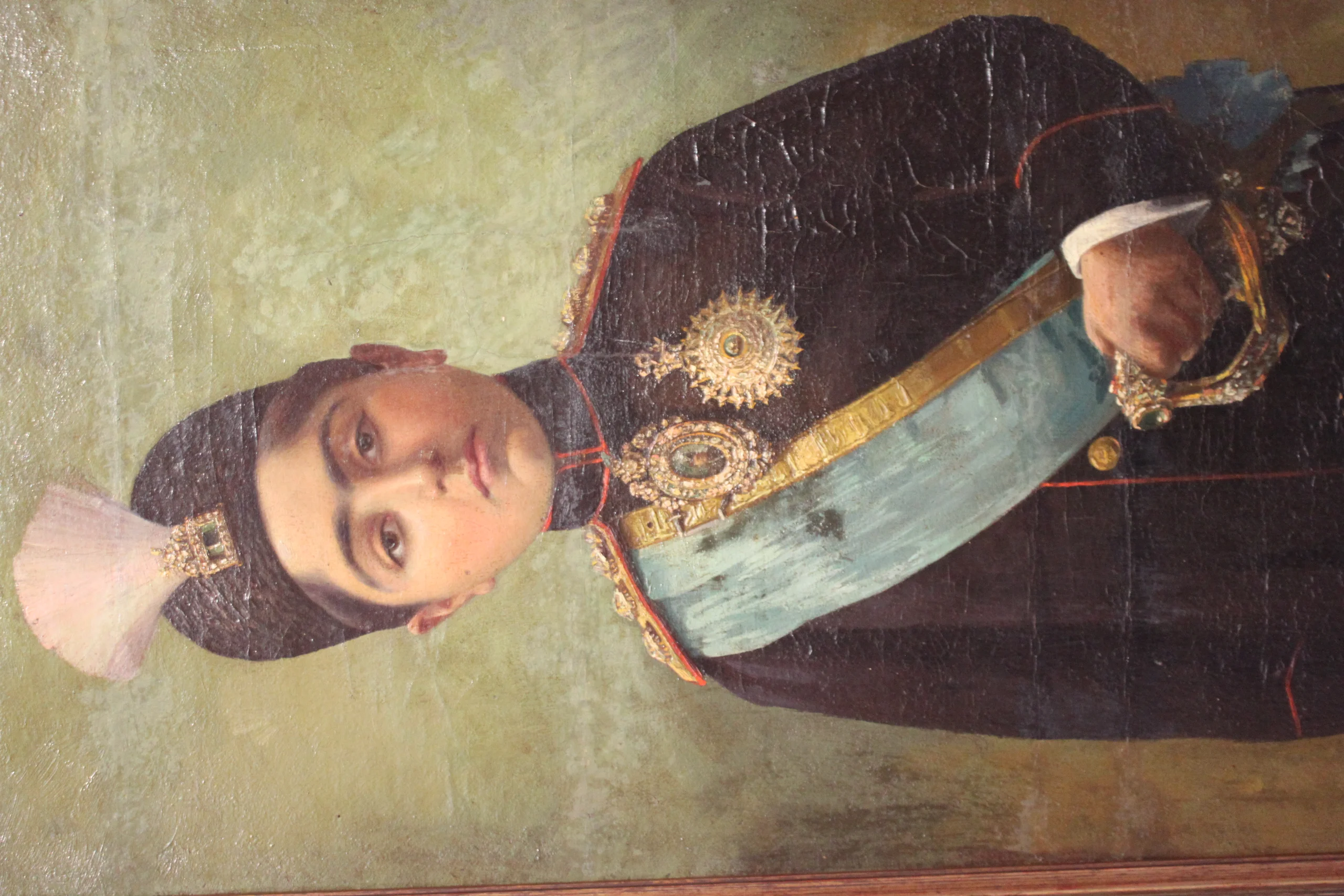
Ahmad Shah Qajar
 Iran
IranAlso known as: Soltan Ahmad Shah Qajar
Birthday
January 21, 1898
Birth Sign
Aquarius
Birthplace
Tabriz, Qajar Iran
Age
Died at 32
About
Ahmad Shah Qajar was the seventh and final shah of Iran's Qajar dynasty, reigning from 1909 to 1925. Born on January 21, 1898, in Tabriz, he took the throne at age 11 after his father was deposed by constitutionalist forces. His reign was defined by political upheaval, foreign intervention during World War I, and the eventual rise of Reza Khan, who overthrew him and founded the Pahlavi dynasty. Today, he is remembered as a tragic figure, a young, well-intentioned constitutional monarch caught between revolutionary forces and foreign powers, ultimately spending his last years in exile in Europe.
Ahmad Shah's legacy is complex: he was described by contemporaries as a kind and learned man who genuinely tried to rule as a constitutional monarch, yet he was also seen as weak and pleasure-loving, unable to resist the pressures of his time. His deposition in 1925 marked the end of over a century of Qajar rule, and his death in France in 1930 closed a chapter in Iranian history. Despite his short and troubled reign, he remains a subject of historical fascination, appearing even in modern alternate-history fiction.
Early Life & Background
Ahmad Shah Qajar was born into the ruling Qajar dynasty, which had controlled Iran since 1789. His father, Mohammad Ali Shah, was the sixth shah, but his rule was contested by the constitutional revolution that had begun in 1906. When Ahmad was still a child, his father actively opposed the new constitutional order, even taking sanctuary in the Russian embassy when constitutionalist forces seized Tehran. This political turmoil shaped Ahmad's early years, as he grew up amid revolutionary fervor and foreign interference.
Little is documented about his childhood beyond these political events. As a prince, he would have received the traditional court education typical of Persian royalty, but specific details are scarce. What is known is that he was thrust onto the throne at just 11 years old, following his father's deposition on July 16, 1909. His youth meant the country was governed by regents, first his uncle Ali-Reza Khan Azod al-Molk, and later Abolqasem Naser ol-Molk, until Ahmad reached adulthood. He was formally crowned on July 21, 1914, just as the world was about to be engulfed in war.
Career Growth
Ahmad Shah Qajar's reign was marked by a constant struggle for authority. From his coronation in 1914, he faced the chaos of World War I, during which Iran declared neutrality but was occupied by Russian, British, and Ottoman forces. This foreign occupation severely undermined his power and left the country in disarray. Throughout his reign, he worked with a series of prime ministers, including Mostowfi ol-Mamalek and Hassan Pirnia, trying to maintain a constitutional government amid internal dissent and external pressure.
The turning point came in 1921, when a coup led by Sayyed Zia'eddin Tabatabaee brought Reza Khan to prominence. Ahmad Shah appointed Reza Khan as commander-in-chief of the armed forces, and within two months, Reza Khan became minister of war, effectively controlling the government. Over the next four years, the political struggle between the shah and his ambitious minister intensified. In 1923, fearing for his life, Ahmad Shah left for Europe, never to return. On December 15, 1925, the Majlis formally deposed him, and Reza Khan established the Pahlavi dynasty. Ahmad Shah died in exile in France on February 21, 1930.
Career Timeline
Public Image & Style
Ahmad Shah Qajar is historically portrayed as a tragic figure, a young, well-meaning constitutional monarch caught between revolutionary forces, foreign powers, and the rise of a military strongman. The Encyclopaedia Iranica describes him as "frightened, weak, and pleasure-loving," while genealogical records note he was "a kind and learned man, who tried scrupulously to rule as a constitutional monarch." He is often seen as a victim of circumstance, too young when he took the throne, too weak to resist foreign occupation during World War I, and ultimately outmaneuvered by Reza Khan. In modern culture, he appears in the Kaiserreich alternate-history community, where he is reimagined as a continuing ruler, reflecting ongoing fascination with his reign.
Fame & Fandom
Ahmad Shah Qajar is currently the 49th most famous person from Iran, a standing he has maintained steadily according to the iFANN Global Fame Rankings. This placement reflects his enduring presence in historical discourse and alternate-history gaming communities. While modern pop culture often overshadows early 20th-century monarchs, Ahmad Shah retains a dedicated following among those fascinated by the twilight of dynastic rule and the specific tragedies of constitutional transition. Unlike contemporary stars with organized fan clubs, this figure does not have a formal fandom name; instead, his supporters are a scattered yet passionate mix of genealogists, royal history enthusiasts, and players of the Kaiserreich mod. These groups engage through specialized channels like WikiTree profiles for descendants or colorized footage shared on social media platforms, keeping the narrative of the "boy-king" alive without a unified brand. The community often focuses on the poignant contrast between his youthful accession at age eleven and the overwhelming political forces that eventually exiled him. Within these circles, recurring themes serve as informal rituals, such as discussing the 1914 coronation as the last grand ceremony of the Qajar dynasty or analyzing the meeting with the future King George VI. Museums and auction houses further sustain this interest, with institutions like the Smithsonian and Christie's periodically featuring artifacts that draw new eyes to his legacy. The iFANN Global Fame Rankings track this global attention across media coverage, search trends, and cultural consumption signals worldwide, confirming that while he died in 1930, his story remains a vibrant subject of study and speculation.
Interesting Facts and Legends
Ahmad Shah Qajar holds the distinction of being the youngest shah in Qajar history, ascending the throne at just eleven years old after his father was deposed by constitutionalist forces. He never returned to Iran after leaving for Europe in 1923, spending his final years in exile before passing away in 1930. His burial at the Imam Husayn Shrine in Karbala, Iraq, reflects his deep Shia faith. In the alternate-history universe of the video game Hearts of Iron IV's Kaiserreich mod, he appears as the still-ruling shah of Persia in a world where the Central Powers won World War I. The British foreign policy establishment was reportedly obsessed with removing him from power, seeking a more malleable ruler. Fans of his life story frequently retell the legend of his 1914 coronation, describing it as the last grand ceremony of the Qajar dynasty, a moment of splendor for a teenager facing a crumbling empire. Another iconic narrative involves his documented meeting with the future King George VI, a rare intersection of two royal lines destined for vastly different fates. While historical records confirm he faced significant health challenges and political difficulties, the image of the weak, illness-plagued ruler who lost his throne to Reza Khan remains the defining tragic arc of his life.
Family & Personal Life
Ahmad Shah Qajar was born to Mohammad Ali Shah, the sixth Qajar shah, and his mother's identity is not well-recorded. His father's opposition to the constitutional revolution led to his own deposition and shaped Ahmad's path to the throne. Ahmad married at least five times, with two documented spouses: Badr al-Molouk and Khanoum Khanouma (Moezzi) Qajar. From his marriage to Khanoum Khanouma, he had a daughter, Homayoundokht (Qajar) Panahi. His uncle, Ali-Reza Khan Azod al-Molk, served as regent during his minority, and later Abolqasem Naser ol-Molk took over the role.
Notable Connections
Ahmad Shah Qajar was associated with key political figures of his era, including his father Mohammad Ali Shah, his regents Ali-Reza Khan and Abolqasem Naser ol-Molk, and his eventual successor Reza Khan (later Reza Shah Pahlavi). His reign also saw numerous prime ministers, such as Hassan Pirnia and Qavām os-Saltaneh, who navigated the turbulent political landscape. His daughter Homayoundokht Panahi and his spouses Badr al-Molouk and Khanoum Khanouma are part of his immediate family legacy.
Relationships & Dating History
Ahmad Shah Qajar married five times, though details on most of these unions remain sparse. His documented spouses include Badr al-Molouk, who is recorded as his spouse in genealogical records, and Khanoum Khanouma (Moezzi) Qajar, with whom he had a daughter, Homayoundokht. The other three marriages are not well-documented. As a historical figure, his marital life is known primarily through genealogical sources rather than contemporary accounts. At the time of his death in 1930, he was married, though the specific status of his marriages at that point is unclear.
- MarriedBadr al-MoloukRecorded as a spouse in genealogical sources.
- MarriedKhanoum Khanouma (Moezzi) QajarMarried and had a daughter, Homayoundokht.
Death & Aftermath
Died
February 21, 1930 (aged 32)
Death Place
Paris, France
Cause of Death
Tuberculosis
Ahmad Shah Qajar spent his final years in quiet seclusion within the 16th arrondissement of Paris, residing in a private apartment near the Hôtel de Crillon after fleeing Iran in 1923. His health had deteriorated significantly over several years, marked by chronic illness and mental instability that kept him from public view during the late 1920s. He passed away on February 21, 1930, at the age of 32, with tuberculosis officially recorded as the cause of death following a long decline exacerbated by his life in exile. The circumstances surrounding his passing were managed privately by family and medical attendants rather than through state-sanctioned investigation. A private funeral service took place the following day, attended only by close associates and family members including his wife, Princess Fatemeh Sadr, while high-ranking Iranian officials were notably absent.
Ahmad Shah was interred in the Cimetière de Montmartre in Paris, sharing the resting place with other European royals and exiles. Decades later, his legacy endures through academic research and art history rather than active mourning or modern tributes. Notable posthumous recognition includes the display of Qajar-era royal portraits featuring him at the Smithsonian's Freer|Sackler Museum in 2018 and various auction listings for artworks depicting the last shah. Descendants continue to discuss the preservation of family history and tombs, ensuring his story remains part of the historical narrative.
Net Worth (Estate Value)
$1 Million
iFANN Editorial Team estimate
As a historical monarch who died in 1930, Ahmad Shah Qajar's financial status is not documented in modern terms. The Qajar dynasty's wealth was largely transferred or confiscated after the Pahlavi dynasty took power in 1925. No estate valuation exists for his personal holdings, and his family line continues without notable posthumous revenue streams. Consequently, per iFANN's editorial analysis, his net worth is estimated at $1 Million, reflecting the historical uncertainty and lack of concrete financial records.
Awards & Accolades
View 3 records, honours and achievementsKnown For
Shah of Iran
1909-1925 · Monarch
Keywords
Sources
Quick Facts
- Profession
- Shah of Iran
- Born
- January 21, 1898
- Birthplace
- Tabriz, Qajar Iran
- Died
- February 21, 1930
- Death Place
- Neuilly-sur-Seine, France
- Gender
- Male
- Spouse
- Badr-almoluk
- Birth Sign
- Aquarius
Personal Details
- Full Name
- Soltan Ahmad Shah Qajar
- Spouse
- Badr-almoluk
- Children
- Homayoundokht (Qajar) Panahi
Frequently Asked Questions
How old was Ahmad Shah Qajar when he became shah?
What is Ahmad Shah Qajar's net worth in 2026?
Is Ahmad Shah Qajar still alive in 2026?
Why is Ahmad Shah Qajar famous?
Who deposed Ahmad Shah Qajar?
Similar People
Join the community
fans discussing