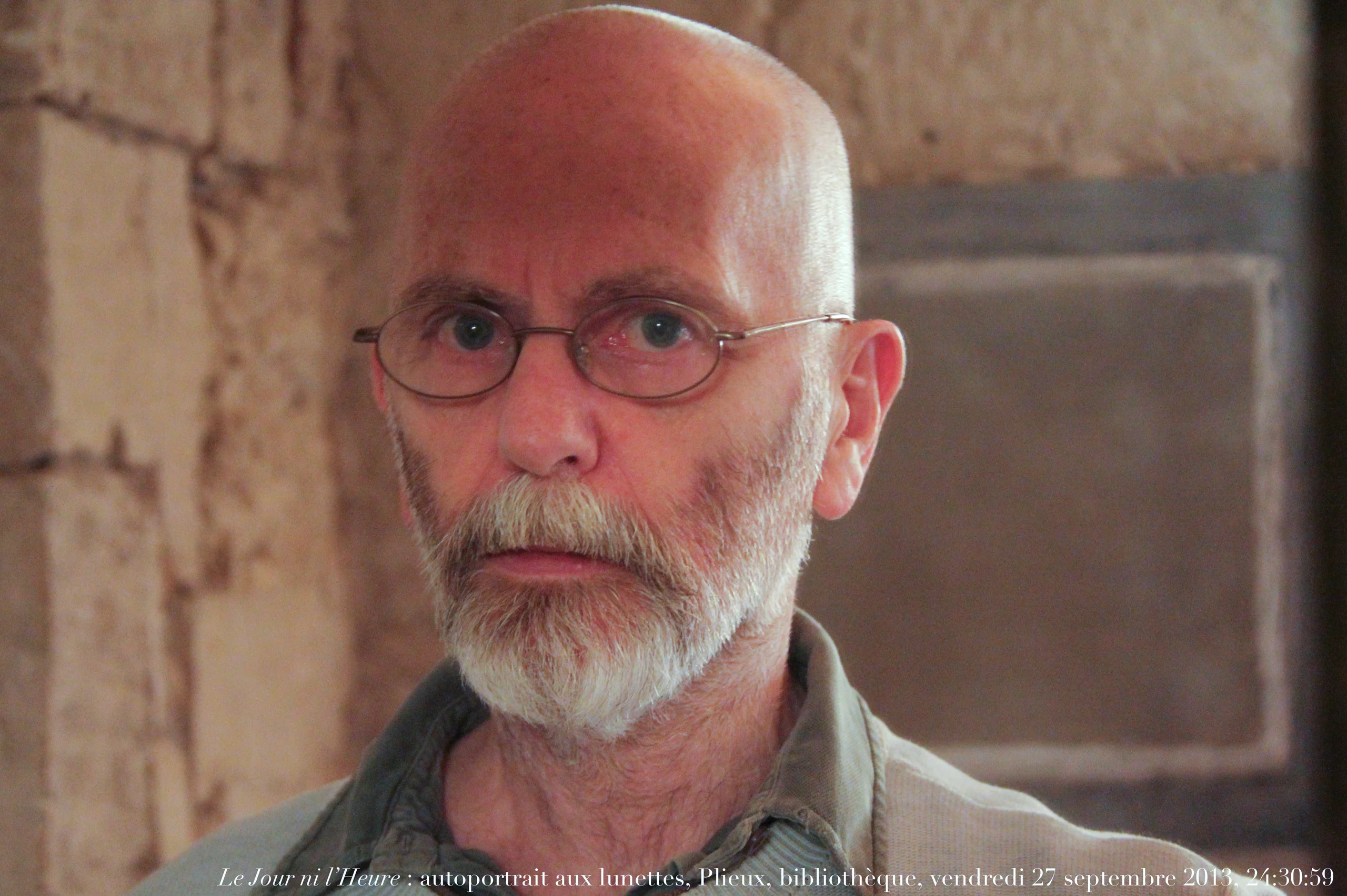
Renaud Camus
 France
writer•essayist•political activist
Also known as: Jean Renaud Gabriel Camus
Birthday
August 10, 1946
Birth Sign
Leo
Birthplace
Chamalières, France
Age
80 years old
About
Jean Renaud Gabriel Camus is a French writer, essayist, and political activist. He is the originator of the Great Replacement theory, the claim that a coordinated elite is deliberately replacing white European populations with non-European peoples, chiefly Muslim immigrants. That phrase, the title of his 2011 book Le Grand Remplacement, entered global political vocabulary after the 2017 Charlottesville rally, where marchers chanted a near-verbatim English version. He has published more than 20 books across five decades, spanning novels, diaries, and political essays, and he serves as president of the small Party of In-nocence (Parti de l'In-nocence).
Before the political turn, Camus was known in France as a gay novelist and diarist, a stylist and provocateur whose journal project became one of his most sustained literary enterprises. He lives at a château in Plieux, in the Gers department of Gascony, and remains active on X, Facebook, and his personal website, where he publishes new texts and books. At 80, he is a polarizing figure: cited by far-right movements and denounced by scholars and major newspapers as the author of a conspiracy theory, while sympathetic outlets on the right portray him as a persecuted truth-teller. He has repeatedly disavowed violent acts carried out by individuals citing his ideas.
Early Life & Background
Camus was born on August 10, 1946, in Chamalières, a town in the Auvergne region of central France, and came of age intellectually in the postwar French literary milieu. As a young man he moved through Parisian literary and intellectual circles, and his early output was literary rather than political: novels and diary-style essays exploring desire, memory, and identity. He first became known in France specifically as a gay writer, earning a reputation as a stylist and a provocateur. That early identity matters for understanding the later turn: the man who would become one of the most-cited essayists of the Western far right began as a chronicler of private life and desire, not as a polemicist on immigration.
His formative years were spent in the worlds of literature, painting, and photography, and he built a reputation across those disciplines before politics entered his work. The break came gradually, in the 2000s, when he turned increasingly to writing on immigration and demographics. By then he had already established the diarist's habit of recording daily life in volume after volume, a practice that would later give his political essays their distinctive, anecdotal texture. The discovery moment, in the sense of a single breakthrough, is harder to pin down: his transition from literary figure to political lightning rod was less an event than a drift, completed with the publication of Le Grand Remplacement in 2011.
Career Growth
The 2011 book Le Grand Remplacement gave a name to a thesis Camus had been developing for years: that European populations are being deliberately supplanted by non-European immigration, a claim scholars reject as conspiracy theory. The phrase stayed largely Francophone until August 2017, when white nationalists at the Unite the Right rally in Charlottesville, Virginia, chanted "You will not replace us." The New Yorker traced the lineage directly to Camus's French origins, and the slogan went global. Major English-language profiles followed: The Nation in 2019 on how a gay icon became an ideologue of white supremacy, The New York Times in September 2019 on "the man behind a toxic slogan," and Tablet the same year. The Washington Post published a history of the theory in 2022.
Camus also founded and led the Party of In-nocence, a small political grouping that campaigns against mass immigration and what he calls repentance politics. Coverage continued through 2025 and 2026: a Wall Street Journal opinion piece titled "Who's Afraid of Renaud Camus?" in April 2025, a Hungarian Conservative interview the same month, a Spectator piece on France's hidden immigration reality in June 2026, a Le Monde opinion piece in March 2026 calling the phrase hateful and conspiratorial, and a Chronicles magazine tribute marking his 80th birthday on August 10, 2026. He maintains an official website, renaud-camus.net, where he publishes books and unpublished texts.
Career Timeline
Public Image & Style
Camus presents as an aristocratic man of letters: novelist, diarist, painter, photographer, and château-dwelling provincial intellectual whose content blends literary memoir with polemic against immigration and what he calls managerial modernity. His social media voice is that of the essayist, not the campaigner, with a bio listing Plieux, Gers, and Gascogne and links to his own publications. Media perception splits sharply. Major outlets portray him as a dangerous ideologue of white supremacy, while sympathetic right-leaning publications present him as a persecuted truth-teller. The contrast is itself part of his image: he is cited as an intellectual ancestor by movements he says he does not incite, and he has repeatedly condemned violent acts carried out by individuals invoking his ideas.
Fame & Fandom (iFAMOUS Rankings)
Fame data for Renaud Camus has not yet been gathered by iFANN, so no ranking is available; the engine has not evaluated him for the Global Fame Rankings. He is not on the September 2026 iFAMOUS Rankings flagship list. His following is not a fandom in the pop-cultural sense. There is no fandom name, no organized fanbase, and no documented fan campaigns, birthday projects, or charity drives. Instead he has readers: political activists, conservative intellectuals, and journalists on both sides of the debate who cite, attack, or defend his work. His engagement with that audience runs through X, Facebook, YouTube, and his personal website, where he publishes new texts and books directly. The audience is small and ideological rather than large and celebratory, and its composition varies by country, with the phrase "Great Replacement" drawing far more attention than the man who coined it.
Interesting Facts and Legends
Camus is entirely distinct from the Algerian-born Nobel laureate Albert Camus; the two are unrelated, and sources about the novelist of The Stranger should not be confused with him. He is a painter and photographer as well as a writer, and his personal website functions as a self-publishing outlet for books and unpublished texts. His Facebook page lists him as president of the Party of In-nocence and carries roughly a thousand followers, a modest number for a man whose slogan has been chanted at rallies on two continents. The defining legend around him is the migration of "You Will Not Replace Us" from a 2011 French book to the 2017 Charlottesville rally, a documented lineage that The New Yorker and other outlets have traced in detail. A story his critics retell concerns the phrase's "laughable origins," as one Literary Hub essay put it, while sympathetic outlets prefer the image of the château-dwelling man of letters besieged for telling unwelcome truths.
Notable Quotes
“The Great Replacement may be the political issue of our times, but it is not the issue.”
Family & Personal Life
Details of Camus's family background are sparse in the public record. He was born in Chamalières in 1946 and has lived for years at a château in Plieux, in the Gers department of Gascony, a setting that features in profiles of him as an aristocratic provincial base. He is openly gay and has never been publicly documented as married or as a parent. His household and private life remain largely outside the press coverage, which has focused on his writing and activism rather than his family. No siblings, parents, or children are named in the sources reviewed.
Notable Connections
Camus is frequently discussed alongside fellow French intellectual Alain Finkielkraut. His ideas are also linked in coverage to Brenton Tarrant, the Christchurch attacker who referenced replacement rhetoric, though Camus has condemned such violence. His work is cited by far-right movements across Europe and North America.
Relationships & Dating History
Camus is openly gay and was known in France originally as a gay writer, a fact central to his early literary identity. Public, documented romantic relationships are not detailed in the sources reviewed. No marriages, engagements, or named long-term partners are confirmed in the material. As of 2026, at age 80, no current partner is publicly documented, and his public identity centers on his writing and activism rather than his private life. Readers should treat any tabloid-style claims about his dating life with caution, as the record here is thin.
Salary, Net Worth In 2026
$2 Million
iFANN Editorial Team estimate
Renaud Camus is a writer and activist rather than a commercial celebrity, and no celebrity-net-worth database or financial outlet publishes a figure for him. The iFANN Editorial Team's analysis of his likely earnings, based on book royalties, small-press publishing, and speaking and media appearances, points to a modest fortune of roughly $2 million as of 2026. His income has never come from large advances or mass-market sales. His books are published by small French houses, and his political essays sell to a niche readership. The Party of In-nocence is a minor political grouping with no significant treasury. His most visible asset is the château at Plieux, in the Gers, which serves as both residence and literary base. Royalties from Le Grand Remplacement and his multi-volume journal are steady but small, and translation income is limited. He has no brand partnerships, no major commercial endorsements, and no recorded estate or licensing business. The overall picture is that of a provincial man of letters with a modest, stable income rather than a fortune.
Awards & Accolades
Known For
Le Grand Remplacement
2011 · Author
Party of In-nocence
2000s · Founder and president
Multi-volume journal
1970s-present · Author
Keywords
Sources
Quick Facts
- Profession
- writer, political activist, essayist
- Born
- August 10, 1946
- Birthplace
- Chamalières, France
- Gender
- Male
- Birth Sign
- Leo
- Age
- 80
- Nationality
- French
- Known for
- Originating the Great Replacement theory
- Political party
- Party of In-nocence (president)
- Residence
- Plieux, Gers, France
Personal Details
- Full Name
- Jean Renaud Gabriel Camus
Frequently Asked Questions
What is Renaud Camus famous for?
Is Renaud Camus related to Albert Camus?
Is Renaud Camus still alive in 2026?
What is Renaud Camus's net worth?
What did Renaud Camus mean by the Great Replacement?



Join the community
fans discussing