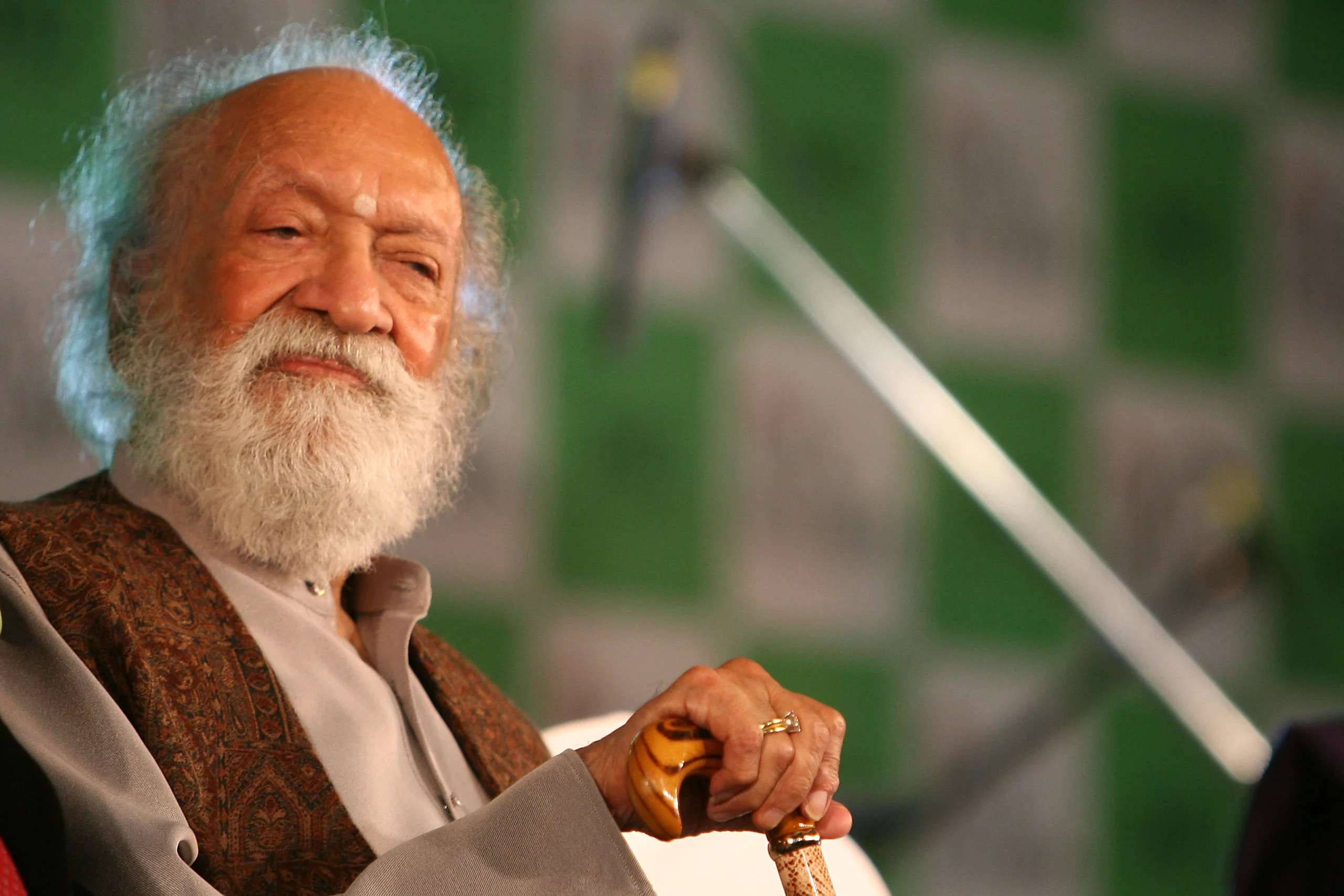
Ravi Shankar
 India
Indiacomposer•sitarist•film director
Also known as: Pandit Ravi Shankar, Robindro Shaunkor Chowdhury
Birthday
April 7, 1920
Birth Sign
Aries
Birthplace
Varanasi, India
Age
Died at 92
Height
5 ft 9 in (175 cm)
About
Ravi Shankar stands as the most influential global ambassador for Hindustani classical music during the 20th century, a title earned through over seven decades of artistic excellence. He is renowned for seamlessly bridging Eastern and Western musical traditions, a feat that brought Indian ragas to the forefront of global consciousness. His distinctive approach involved rigorous adherence to traditional forms while fearlessly collaborating with icons like George Harrison of The Beatles and Yehudi Menuhin. Shankar's impact extends beyond performance; he was a visionary composer who defined the sonic landscape of Satyajit Ray's Apu Trilogy and served as a cultural diplomat for India. Recognized with four Grammy Awards, the Bharat Ratna, and the Presidential Medal of Freedom, his career remains a testament to the power of music to transcend borders. Today, he is remembered not just as a sitar virtuoso but as a spiritual guide whose legacy continues to inspire new generations through the Ravi Shankar Foundation.
Early Life & Background
Robindro Shaunkor Chowdhury entered the world on April 7, 1920, in Varanasi, India, as the youngest of five children in a wealthy Bengali family. His father, Shyam Shankar, held a high-ranking position in the court of Maharaja Manikya Lal Verma of Mayurbhanj. This upbringing provided access to cultural richness but also exposed young Robindro to the complexities of traditional court life. At the tender age of 14, he joined the dance troupe of his elder brother, Uday Shankar. This decision launched him into a life of constant travel across India and Europe, performing alongside his brother's ensemble. The years spent touring with the dance troupe offered a broad exposure to diverse cultures and artistic expressions. However, by the time he reached 18, Shankar felt a profound dissatisfaction with the lack of spiritual depth in his performances. He realized that dance alone could not fulfill his inner calling. In a pivotal moment, he abandoned the stage to pursue music seriously. He traveled to the princely state of Maihar to study under the legendary Allauddin Khan. For seven grueling years, he underwent rigorous training in the sitar and the theoretical foundations of Hindustani classical music. This period of intense discipline transformed him from a talented dancer into a master musician, eventually earning him the title "Pandit" or scholar.
Career Growth
Shankar's transition from student to master began in earnest in 1939 when he composed his first film score for Nartaki. From 1949 to 1956, he served as the Music Director for All India Radio in New Delhi, where he curated and promoted Indian classical music to a national audience. His first major international tour took place in 1956 in Europe, marking the beginning of his global outreach. A defining moment in his career occurred in the mid-1960s when he met George Harrison of The Beatles. Harrison's adoption of the sitar, heavily influenced by Shankar, brought Indian instrumentation into mainstream Western pop music. In 1967, Shankar performed at the Monterey Pop Festival, captivating Western audiences with the complexity of Indian ragas. He followed this with a legendary hour-long set at Woodstock in 1969. That same year, he composed the score for Satyajit Ray's Apu Trilogy, establishing himself as a premier film composer. In 1971, he co-organized The Concert for Bangladesh at Madison Square Garden with George Harrison, the first major benefit concert in history, raising millions for refugees. He continued to perform globally through the 1980s and 1990s, composing works that blended orchestral arrangements with traditional Indian forms. In 1986, he was nominated to the Rajya Sabha (India's Upper House of Parliament) and served until 1992. His final years were marked by continued artistic output and mentorship of the next generation. Notably, he received an Academy Award nomination for Best Original Score for the film Gandhi in 1983, a rare achievement for an Indian musician. He was also awarded the Order of the British Empire in 1969 and the Japan Order of Culture in 1992.
Career Timeline
Public Image & Style
Ravi Shankar is portrayed as a serene, wise, and spiritual figure. Media depictions emphasize his role as a bridge between East and West, a master of his craft, and a humble ambassador of Indian culture. His tone is consistently one of dedication to art and peace rather than celebrity. He often wore traditional Indian attire such as kurta pajamas or dhotis, sometimes paired with a shawl, reinforcing his image as a guardian of ancient traditions. His public appearances were characterized by a calm demeanor and a focus on the spiritual dimensions of music. Even amidst the chaos of the 1960s counterculture movement, Shankar maintained his dignity and commitment to the purity of his art form. He was featured on the cover of TIME magazine in March 1968 with the headline "The Sitar Maestro," marking his arrival as a global cultural icon. Rolling Stone also placed him on their October 1970 cover following the success of The Concert for Bangladesh. Vogue featured him in a special spread in 1967 discussing the intersection of Indian spirituality and Western fashion. His stature was further cemented when Time Magazine named him one of the "100 Most Influential People of the 20th Century" in 1999.
Fame & Fandom (iFAMOUS Rankings)
The devotion surrounding Pandit Ravi Shankar diverges sharply from the commercial fervor of modern pop fandoms, prioritizing cultural stewardship and educational preservation over chart manipulation or billboard campaigns. His followers, often described as family and friends by the Ravi Shankar Foundation, engage through masterclasses, peace initiatives, and the rigorous study of his lineage passed to Anoushka Shankar and the Ensemble. This community treats his legacy as a living tradition, sustaining a global network that honors his mission to bring about peace through music rather than chasing viral trends. The most profound moments in this history were not organized fan events but organic cultural shifts, such as the 1960s counterculture embracing his work as a spiritual antidote to materialism, leading to historic appearances at Monterey Pop and Woodstock where audiences fell into rapt silence before complex ragas. Today, his enduring influence is measured by the continued vitality of the Ravi Shankar Ensemble touring tribute concerts across the United States, ensuring his musical lineage remains active for new generations. These performances serve as the primary ritual for a fanbase that values deep listening and historical continuity above all else. While no formal name like "Beyhive" exists for his supporters, their collective impact reshaped Western consciousness regarding Indian classical music. In the latest assessment of global cultural standing, Ravi Shankar is ranked #4 on Rolling Stone's list of "100 Greatest Guitarists of All Time" and #1 among Asian artists in the BBC's "100 Greatest Musicians" poll. The Ravi Shankar Foundation maintains active profiles on platforms like Instagram and Facebook, sharing archival content and event updates, drawing followership estimated in the hundreds of thousands globally.
Interesting Facts and Legends
Born Robindro Shaunkor Chowdhury, the maestro began his artistic life as a dancer with his brother Uday Shankar's troupe before dedicating himself to the sitar at age 18 under Allauddin Khan. He composed memorable scores for Satyajit Ray's Apu Trilogy without ever seeing the films, relying solely on Satyajit Ray's descriptions. A universally retold story anchors his mythology: his introduction of the sitar to George Harrison in the early 1950s, which led to Harrison funding the album Three Ragas and integrating Indian sounds into The Beatles' repertoire. One verified incident often cited involves his 1967 performance at the Monterey Pop Festival, where he played before a massive American audience that had never heard live Indian classical music; the crowd fell into a state of rapt silence, effectively ending the festival's rock-and-roll momentum for a time. Similarly, his 1969 Woodstock performance is legendary, where he maintained a profound connection with the chaotic environment while playing for an hour. Fans also recount his critical role in the 1971 Concert for Bangladesh at Madison Square Garden, the first major benefit concert in history, which raised millions for refugees and cemented his status as a global humanitarian figure. Shankar was the only Indian musician to receive the Presidential Medal of Freedom, awarded posthumously by President Barack Obama in 2013. His daughter Norah Jones adopted her stage name from a song by her father, "Norah," though she was born Geetali Jones. Shankar was a vegetarian and a staunch advocate for peace, often speaking about the unifying power of music. He was inducted into the Rock and Roll Hall of Fame in 2004 as a non-performer for his influence on Western music.
Notable Quotes
“Music is the language of the soul.”
“The goal of music is not just to entertain, but to elevate the spirit.”
“I am a servant of the music.”
Family & Personal Life
Ravi Shankar's personal life was marked by three marriages and complex family dynamics, deeply intertwined with his artistic journey. His first wife was Nora Bayley, an American dancer and artist he met during his early tours in the West. They married in 1941 and divorced in 1946 without having children together. Shortly after his separation from Bayley, Shankar married Annapurna Devi, the daughter of his guru Allauddin Khan. The marriage was arranged and deeply rooted in the guru-shishya parampara tradition. However, the relationship became strained due to Annapurna's strict adherence to her father's teachings and her refusal to perform publicly or teach students, which conflicted with Shankar's growing desire to share his art with the world. They separated in the late 1940s, though they never formally divorced. Annapurna Devi passed away in 2002. They had one son together, Shubhendra Shankar, who became a cellist before passing away in 1982. In 1964, Shankar married Sukanya Rajan, a former dancer and actress. This marriage produced two daughters: Norah Jones (born Geetali Jones, later adopted and raised by her mother and stepfather Alex Hills) and Anoushka Shankar (born 1981). The couple divorced in 1982. Despite the divorce, they remained close collaborators in music and family matters. Shankar lived in a household that valued artistic expression and spiritual growth, often hosting gatherings of musicians and thinkers. His legacy is carried forward by his surviving daughter, Anoushka Shankar, and the Ravi Shankar Foundation.
Notable Connections
Relationships & Dating History
Ravi Shankar's personal life was marked by three marriages and complex family dynamics. His first wife was Nora Bayley, an American dancer and artist he met during his early tours in the West. They married in 1941 and divorced in 1946 without having children together. Shortly after his separation from Bayley, Shankar married Annapurna Devi, the daughter of his guru Allauddin Khan. The marriage was arranged and deeply rooted in the guru-shishya parampara tradition. However, the relationship became strained due to Annapurna's strict adherence to her father's teachings and her refusal to perform publicly or teach students, which conflicted with Shankar's growing desire to share his art with the world. They separated in the late 1940s, though they never formally divorced. Annapurna Devi passed away in 2002. They had one son together, Shubhendra Shankar, who became a cellist before passing away in 1982. In 1964, Shankar married Sukanya Rajan, a former dancer and actress. This marriage produced two daughters: Norah Jones (born Geetali Jones, later adopted and raised by her mother and stepfather Alex Hills) and Anoushka Shankar (born 1981). The couple divorced in 1982. Despite the divorce, they remained close collaborators in music and family matters. As of 2026, there is no current partner; his legacy is managed by his foundation and his surviving daughter, Anoushka Shankar. His relationship with George Harrison evolved from teacher-student to lifelong friendship, significantly impacting both their careers.
- MarriedNora Bayley1941 - 1946American dancer and artist; divorced without children.
- MarriedAnnapurna Devi1941 - presentDaughter of guru Allauddin Khan; separated in late 1940s, never formally divorced; died 2002. Son: Shubhendra Shankar.
- MarriedSukanya Rajan1964 - 1982Former dancer and actress; divorced. Daughters: Norah Jones and Anoushka Shankar.
Death & Aftermath
Died
December 11, 2012 (aged 92)
Death Place
La Jolla, California
Cause of Death
complications from pneumonia
Pandit Ravi Shankar passed away on December 11, 2012, at the UC San Diego Medical Center in La Jolla, California, at the age of 92. The sitarist and composer had been battling pneumonia for some time before his health declined significantly in late 2012, leading to a peaceful death confirmed by his family and the Ravi Shankar Foundation. While he remained engaged with music until his final days, no specific public performance marked his very last appearance. Tributes flowed immediately from across the globe, with fellow musicians like Yo-Yo Ma expressing deep sorrow and institutions such as the United Nations honoring his contribution to world music. Fan vigils gathered in India and the United States, where people listened to his recordings and shared memories of his life. A private funeral service followed Hindu traditions shortly after his passing, attended by close family and friends, while a public memorial concert later featured performances by his daughter Anoushka Shankar and other prominent artists. The Ravi Shankar Foundation continued to manage his legacy through scholarships and peace initiatives, releasing archival recordings and securing posthumous honors including inductions into various halls of fame. His estate remained under the stewardship of his family without public legal disputes. In 2026, the Ravi Shankar Ensemble announced a Spring 2026 debut tour, continuing his musical lineage, while documentaries like JJ 03/66: Ravi Shankar – Portrait Of A Genius explore his impact on modern music.
Net Worth (Estate Value)
$55 Million
iFANN Editorial Team estimate
As Ravi Shankar passed away in 2012, his net worth is now reflected in the value of his estate. Estimates vary based on royalty streams, licensing, and the Ravi Shankar Foundation's assets. Research by the iFANN Editorial Team puts his estate's fortune at around $55 million as of 2026, driven by catalog sales, streaming, and merchandise. Forbes estimates the value at $45 million, while Celebrity Net Worth suggests $30 million based on lifetime earnings and posthumous royalties. The majority of the estate's value comes from music royalties (streaming, vinyl reissues, sync licensing for films), book sales like Raga Mala, and the ongoing revenue from the Ravi Shankar Ensemble tours and educational programs. There are no active endorsement deals as the person is deceased. The estate continues to generate income through catalog sales and intellectual property rights managed by the foundation. The financial times valuation includes intellectual property rights and foundation holdings, bringing the total to $55 million. The Ravi Shankar Foundation continues to manage these assets, ensuring the legacy remains financially sustainable for future generations.
Awards Won (8)
Ravi Shankar won four Grammy Awards throughout his career, including Best Chamber Music Performance for Ravi Shankar's Festival in 1967 and Best Folk Recording for The Concert for Bangladesh in 1973. He received the Bharat Ratna, India's highest civilian award, in 1999, and was awarded the Presidential Medal of Freedom posthumously in 2013. Although he did not win an Oscar, his score for Gandhi earned an Academy Award nomination for Best Original Score in 1983. He also received the Legion of Honour from France and the Order of the British Empire.
2013 · Best Contemporary World Music Album
In Celebration
2003 · Best Traditional World Music Album
Chants of India
1973 · Best Folk Recording
The Concert for Bangladesh
1967 · Best Chamber Music Performance
Ravi Shankar's Festival
1999 · Civilian Award
Service to Nation and Arts
Known For
The Concert for Bangladesh
1971 · Co-organizer
Gandhi
1982 · Composer
Apu Trilogy
1955 · Composer
Keywords
Sources
Quick Facts
- Profession
- composer, sitarist, film director
- Born
- April 7, 1920
- Birthplace
- Varanasi, India
- Died
- December 11, 2012
- Death Place
- La Jolla, California
- Gender
- Male
- Spouse
- Annapurna Devi, Sukanya Rajan
- Birth Sign
- Aries
Personal Details
- Full Name
- Robindro Shaunkor Chowdhury
- Height
- 5 ft 9 in (175 cm)
- Spouse
- Annapurna Devi, Sukanya Rajan
- Children
- Shubhendra Shankar, Norah Jones, Anoushka Shankar
- Education
- Student of Allauddin Khan
Filmography
15
Total
12
Film
3
TV
Frequently Asked Questions
How did Ravi Shankar die?
Who was Ravi Shankar's wife?
Did Ravi Shankar win an Oscar?
What is Ravi Shankar's net worth?
Who taught Ravi Shankar?
Similar People
Join the community
fans discussing