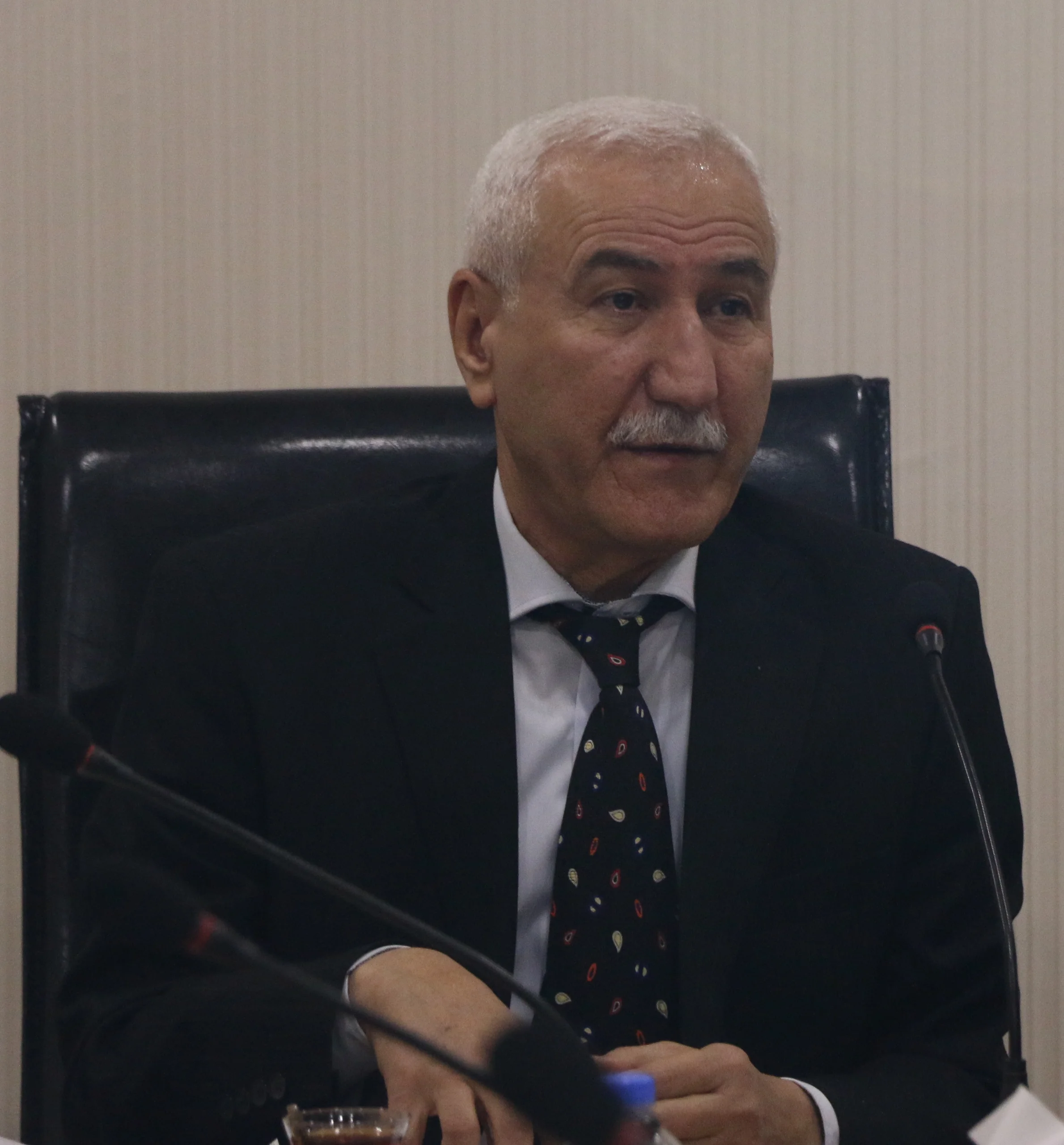
Rauf Rashid Abd al-Rahman
 Iraq
IraqAlso known as: Raouf Abdul Rahman, Ra'uf Raschid Abd ar-Rahman, Rashid Abdulrahman
Birthday
November 13, 1941
Birth Sign
Scorpio
Birthplace
Halabja, Iraq
Age
84 years old
About
Rauf Rashid Abd al-Rahman is an Iraqi judge and lawyer, best known for presiding over the trial of Saddam Hussein. Born in Halabja, he is an ethnic Kurd who spent decades in Iraq's legal system before stepping into the international spotlight in 2006. As chief judge of the Supreme Iraqi Criminal Tribunal, he sentenced the former dictator to death for crimes against humanity, a role that defined his career and placed him at the center of a historic moment in Middle Eastern justice.
Today, Abd al-Rahman lives in seclusion, largely out of public view. His survival has been the subject of persistent rumors, but as of 2026 he is confirmed to be alive and well. His legacy is tied to the Dujail and Anfal trials, where he held accountable those responsible for atrocities against Iraqi civilians, including the chemical attack on his own hometown.
Early Life & Background
Rauf Rashid Abd al-Rahman was born around November 13, 1941, in Halabja, a Kurdish city in northeastern Iraq. Growing up in a region that would later suffer one of the worst chemical weapons attacks in history, he witnessed the tensions between the Kurdish population and the central government. His early life was marked by the political upheaval that defined mid-20th-century Iraq, but details of his childhood remain scarce.
He pursued a career in law, eventually becoming a judge and lawyer within Iraq's judicial system. During the 1980s, he reportedly endured torture at the hands of security forces loyal to Yousef Ali Ghalib, a figure who would later face justice in a genocide trial over which Abd al-Rahman himself would preside. This experience added a deeply personal dimension to his judicial duties decades later.
His professional reputation grew over the years, and by the early 2000s he was a respected figure in Iraqi legal circles. The fall of Saddam Hussein's regime in 2003 opened a new chapter, as Iraq's transitional government sought to bring former officials to trial for their crimes.
Career Growth
Abd al-Rahman's breakthrough came on January 23, 2006, when he was appointed chief judge of the Supreme Iraqi Criminal Tribunal, replacing Rizgar Mohammed Amin just one day before the trial of Saddam Hussein resumed. The Dujail trial, which concerned the 1982 massacre of 148 Shia villagers, became a global spectacle. Under his gavel, the proceedings were marked by confrontational exchanges with Saddam Hussein, who attempted to lecture the judge on legal matters.
On November 5, 2006, Abd al-Rahman sentenced Saddam Hussein to death by hanging. The execution was carried out on December 30, 2006. He also handed down death sentences to Barzan Ibrahim al-Tikriti and Awad Hamed al-Bandar. Beyond the Dujail case, he presided over the Anfal genocide trial, sentencing Yousef Ali Ghalib to death for his role in the campaign against Iraqi Kurds.
Following these historic rulings, Abd al-Rahman withdrew from public life, largely disappearing from view. His whereabouts became a subject of speculation, with false reports of his death circulating in 2014 and 2015. In June 2026, Kurdish outlet Rudaw confirmed he was alive and well, putting an end to years of uncertainty.
Career Timeline
Public Image & Style
Abd al-Rahman's public image is defined almost entirely by his role in the Saddam Hussein trial. He is portrayed in media as a figure of justice who faced down a dictator in the courtroom. Video clips of his exchanges with Saddam Hussein have become widely circulated historical artifacts, with the former president attempting to lecture and intimidate him. His image is particularly significant within Kurdish communities, where he is seen as having delivered justice for atrocities committed against Kurds, including the Halabja chemical attack that personally affected his family. The persistent death rumors and their refutation have also shaped his public narrative, casting him as a figure who survived despite the dangers.
Fame & Fandom
Rauf Rashid Abd al-Rahman commands a unique position in global public consciousness, defined not by pop culture adoration but by the intense gravity of his judicial role. Unlike entertainers with devoted followings, his audience consists of history watchers and political observers who track his survival against assassination rumors. There is no formal fanbase or organized campaign for the judge; his legacy remains rooted in verified legal battles rather than celebrity worship. The most enduring stories surrounding him involve viral courtroom confrontations and the persistent folklore of his death, which have circulated for over a decade. These narratives have cemented his status as a figure of historical significance, yet they lack the ritualistic engagement typical of modern fandoms. His interactions remain strictly professional, limited to high-stakes legal proceedings where he faced down a dictator. Despite this intense scrutiny, the judge has never cultivated a personal brand or engaged in fan service. iFANN's Global Fame Engine has evaluated Rauf Rashid Abd al-Rahman, but he does not currently hold a placement in the published rankings (Global Top 1,000 or a Top-100 scope list).
Interesting Facts and Legends
Rauf Rashid Abd al-Rahman's appointment as chief judge was announced with only one day's notice before the trial resumed. He presided over both the Dujail trial and the Anfal genocide trial, making him central to two of the most significant prosecutions of the post-Saddam era. The man he sentenced for genocide, Yousef Ali Ghalib, had been responsible for torturing Abd al-Rahman himself in the 1980s. His hometown of Halabja was the site of one of the worst chemical weapons attacks in history, killing thousands in 1988. Despite his historic role, he has never given public interviews about his experiences after the trial. Multiple death hoaxes have circulated about him, first in 2014 and again in 2015, all of which were false. A widely retold story from the 2006 Al-Dujail trial features Saddam Hussein attempting to lecture the judge on international law, a moment that became a defining symbol of the conflict. In January 2022, Abd al-Rahman nominated himself as a compromise candidate for the Presidency of Iraq, shifting from a solely judicial figure to a political contender.
Family & Personal Life
Abd al-Rahman is an ethnic Kurd from Halabja, a city that suffered a devastating chemical weapons attack in 1988 ordered by Saddam Hussein's regime. He lost relatives in that attack, a tragedy that shaped his personal and professional life. Public information about his immediate family is extremely limited, as he has maintained a deliberately low profile for security reasons. No confirmed details are available about his marital status, children, or other family members.
Notable Connections
Abd al-Rahman is most closely associated with Saddam Hussein, the former Iraqi president he sentenced to death. He also replaced Rizgar Mohammed Amin as chief judge, a figure who later sought the Iraqi presidency. Barzan Ibrahim al-Tikriti, Saddam's half-brother, clashed with him in court. Yousef Ali Ghalib, sentenced to death for genocide, had previously ordered the torture of Abd al-Rahman.
Relationships & Dating History
Public information about Abd al-Rahman's personal relationships is virtually nonexistent. He has maintained a deliberately low profile, particularly after the Saddam Hussein trial, given the extreme security risks associated with his role. No confirmed details exist regarding his marital status, dating history, or family. As of 2026, his relationship status remains unknown, and he is believed to be living in seclusion for his own safety.
Salary, Net Worth In 2026
$2 Million
iFANN Editorial Team estimate
As of 2026, Rauf Rashid Abd al-Rahman's net worth is estimated at $2 Million. This figure is based on his career as a judge and lawyer in Iraq, where judicial salaries are modest by international standards. Per iFANN's editorial analysis, his income likely derives from his pension and any savings accumulated during his years of service. Given his seclusion, there are no known business ventures or endorsements. The estimate reflects his limited public financial footprint, consistent with a life lived largely out of the spotlight.
Awards & Accolades
Known For
Presiding over the trial of Saddam Hussein
2006 · Chief Judge
Sentencing Saddam Hussein to death
2006 · Chief Judge
Presiding over the Anfal genocide trial
2006-2007 · Chief Judge
Keywords
Sources
Quick Facts
- Profession
- judge, lawyer
- Born
- November 13, 1941
- Birthplace
- Halabja, Iraq
- Gender
- Male
- Nationality
- Iraqi
- Ethnicity
- Kurdish
- Known for
- Presiding over Saddam Hussein's trial
- Status
- Alive as of 2026
Frequently Asked Questions
Is Judge Rauf Rashid Abd al-Rahman dead?
What happened to the judge who sentenced Saddam Hussein to death?
Why did the original judge resign from Saddam Hussein's trial?
Is Rauf Rashid Abd al-Rahman Kurdish?
When did Saddam Hussein's trial take place and what was the outcome?
Join the community
fans discussing