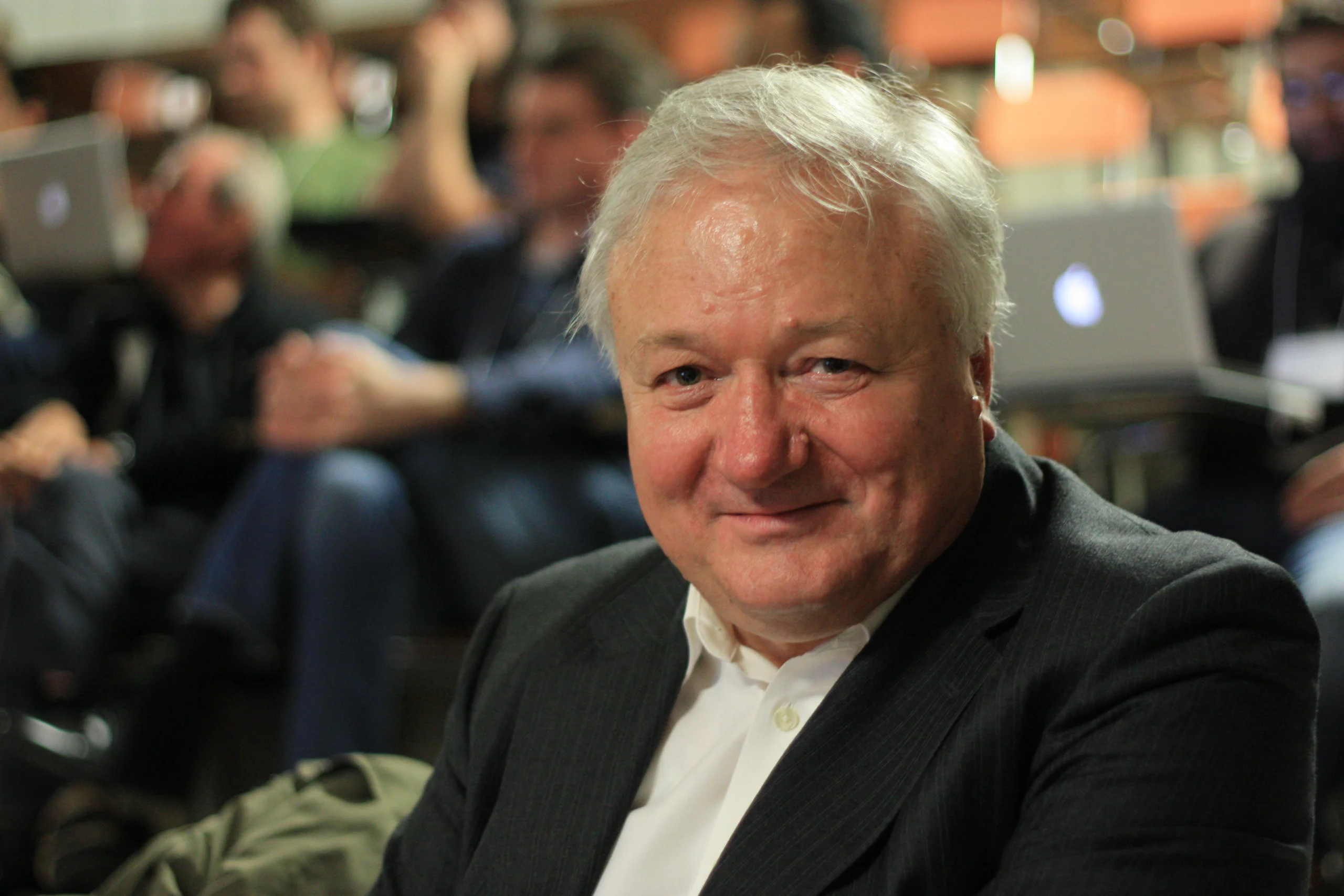
Rashid Sunyaev
 Russia
Also known as: Rashid Alievich Sunyaev
Birthday
March 1, 1943
Birth Sign
Pisces
Birthplace
Tashkent, Uzbekistan
Age
83 years old
About
Rashid Sunyaev is a Russian astrophysicist of Tatar descent, recognized worldwide for his theoretical work in cosmology and high-energy astrophysics. He is a leading figure in the Moscow school of cosmology, with his research repeatedly confirmed by astronomical observations. His work has shaped our understanding of the early universe, black holes, and galaxy clusters.
Sunyaev has held prestigious positions, including chief scientist at the Space Research Institute of the Russian Academy of Sciences since 1992, director of the Max Planck Institute for Astrophysics in Garching, Germany since 1996, and the Maureen and John Hendricks Distinguished Visiting Professor at the Institute for Advanced Study in Princeton since 2010. His contributions have earned him numerous accolades, including the Dirac Medal, the Kyoto Prize, and the King Faisal Prize.
With over 183,000 citations to his work, Sunyaev's influence on modern astrophysics is immense. He continues to be an active researcher, exploring the most energetic processes in the cosmos.
Early Life & Background
Rashid Alievich Sunyaev was born on March 1, 1943, in Tashkent, Uzbekistan, into a Tatar family. From a young age, he showed a strong aptitude for mathematics and physics, which led him to pursue higher education at the Moscow Institute of Physics and Technology (MIPT). He enrolled in 1960 and earned his master's degree in physics in 1966. During his time at MIPT, he was drawn to the theoretical aspects of astrophysics, a field that was rapidly evolving with new discoveries.
After graduating, Sunyaev began his research career at the Space Research Institute of the Russian Academy of Sciences, where he focused on high-energy astrophysics. His early work involved studying the behavior of matter around compact objects like neutron stars and black holes. This period laid the foundation for his later groundbreaking contributions, including the development of the Shakura-Sunyaev model of accretion disks with Nikolai Shakura in 1973.
Sunyaev also became a professor at MIPT in 1974, mentoring a new generation of astrophysicists. His early career was marked by a deep curiosity about the universe's most extreme phenomena, setting the stage for his lifelong research.
Career Growth
Sunyaev's breakthrough came in the early 1970s with his collaboration with Nikolai Shakura on the theory of accretion disks. The Shakura-Sunyaev model, published in 1973, remains a cornerstone in understanding how matter spirals into black holes and neutron stars. Around the same time, he also proposed the Sunyaev-Zeldovich effect, a distortion of the cosmic microwave background caused by hot gas in galaxy clusters. This effect has become a powerful tool for mapping the universe's structure.
In the following decades, Sunyaev's work expanded to include the study of acoustic oscillations in the early universe, which provided key insights into its composition and evolution. His theoretical predictions have been consistently validated by observations from satellites like COBE, WMAP, and Planck.
Sunyaev has also taken on leadership roles, heading the High Energy Astrophysics Department at the Russian Academy of Sciences and, since 1992, serving as chief scientist at the Space Research Institute. In 1996, he became director of the Max Planck Institute for Astrophysics, a position he held for many years, and in 2010 he joined the Institute for Advanced Study in Princeton as a distinguished visiting professor.
His contributions have been recognized with numerous awards, including the 2019 Dirac Medal and Prize, the Kyoto Prize, and the King Faisal Prize. Even in his eighties, Sunyaev remains active in research, continuing to explore the frontiers of cosmology.
Career Timeline
Public Image & Style
In the scientific community, Sunyaev is regarded as a pioneer and a mentor. His public image is that of a dedicated researcher who values collaboration and precision. He is known for his clear and insightful lectures, which have inspired many students. The media often portray him as a modest genius, one who lets his work speak for itself. His name is synonymous with the Sunyaev-Zeldovich effect, a testament to his lasting impact on astrophysics.
Fame & Fandom (iFAMOUS Rankings)
Rashid Sunyaev does not currently hold a placement in the published rankings (Global Top 1,000 or a Top-100 scope list) according to the August 2026 iFANN evaluation. The distinction lies in the nature of his influence; while entertainers drive viral trends, Sunyaev's legacy is anchored in the peer-reviewed validation of complex theories rather than public adulation. His name appears frequently in academic journals and textbooks, yet he lacks a formal fanbase with a specific moniker. There are no organized groups engaging in birthday billboards, subway advertisements, or streaming campaigns in his honor. The audience for his work consists of researchers, students, and enthusiasts of cosmology who engage with his contributions through professional channels rather than social rituals. He has not cultivated a culture of inside jokes or direct fan interactions typical of pop-culture icons. Instead, his presence is felt through the enduring relevance of the Sunyaev-Zeldovich effect, a concept that remains central to modern understanding of the universe. This lack of a traditional fandom reflects a life dedicated to precision and discovery, where the primary reward is the advancement of knowledge rather than the applause of crowds. The absence of a documented fan name confirms that his supporters remain a dispersed community of professionals united by shared intellectual pursuit rather than a unified brand.
Interesting Facts and Legends
Rashid Sunyaev has been honored with a minor planet named after him, asteroid 1858 Sunyaev, which was discovered in 1967. His affable personality and collaborative spirit have long defined his career, often leading him to work alongside scientists from diverse backgrounds. Beyond the laboratory, he has served as a vocal advocate for international scientific cooperation, a role that proved particularly significant during the Cold War era. Despite receiving numerous accolades, he maintains a modest demeanor, frequently crediting his colleagues for their shared successes. The most prominent event in his career is the theoretical prediction of the Sunyaev-Zeldovich effect, a verified milestone describing the distortion of cosmic microwave background radiation caused by high-energy electrons in galaxy clusters. This breakthrough is not merely folklore but a foundational concept confirmed by repeated astronomical observations. His career milestones include prestigious awards such as the Fritz Zwicky Prize, the Kavli Prize, and the King Faisal Prize, all of which recognize his substantial output in physics. These achievements are documented in historical records and peer-reviewed literature rather than anecdotal stories. There are no accounts of disrupted events, on-stage antics, or viral internet moments surrounding his life, as his influence is exerted strictly through his scientific contributions at institutions like the Max Planck Institute for Astrophysics and the Space Research Institute of the Russian Academy of Sciences.
Notable Quotes
“The universe is full of surprises, and we must be ready to be surprised.”
“Science is a collective effort; no one works alone.”
“The Sunyaev-Zeldovich effect is a beautiful example of how theory and observation go hand in hand.”
Family & Personal Life
Details about Sunyaev's family life are scarce, as he has kept his personal matters private. He is known to be married, but his wife's name and profession are not publicly documented. Sunyaev has not shared information about children, and he tends to avoid media attention regarding his home life. His focus has always been on his research and mentoring young scientists.
Notable Connections
Nikolai I. Shakura, his longtime collaborator, co-developed the Shakura-Sunyaev model. Sunyaev has also worked with many other leading astrophysicists, including Rashid Sunyaev's colleague at the Max Planck Institute, and has mentored numerous students who have gone on to make their own contributions to the field.
Relationships & Dating History
Rashid Sunyaev's personal life is largely private, and public records do not detail his romantic relationships. He is believed to be married, but his wife's identity has not been confirmed in any public source. Sunyaev has never been linked to any high-profile relationships, and he has consistently kept his family life out of the spotlight. As of 2026, his relationship status remains unknown, as he has not shared details about his marital status or personal partnerships.
Salary, Net Worth In 2026
$5 Million
iFANN Editorial Team estimate
Per iFANN's editorial analysis, Rashid Sunyaev's net worth is estimated at $5 Million as of 2026. This figure reflects a financial profile built upon a distinguished academic career rather than commercial enterprise. His income stems primarily from salaries held at prestigious institutions, including the Max Planck Institute and the Russian Academy of Sciences. Substantial prize money from honors such as the Dirac Medal and the Kyoto Prize has further contributed to his assets. While he has likely earned supplementary income from speaking engagements and book royalties, there is no evidence of involvement in commercial ventures or business investments. His financial standing illustrates a life prioritized toward scientific dedication over personal wealth accumulation, aligning with his reputation as a modest genius who lets his work speak for itself.
Awards Won (3)
Rashid Sunyaev has received some of the most prestigious awards in astrophysics. He won the Dirac Medal and Prize in 2019, the Kyoto Prize in 2011, and the King Faisal Prize in 2009. He is also a Fellow of the Royal Society, a rare honor for a non-British scientist. These awards recognize his groundbreaking work in cosmology and high-energy astrophysics.
2019 · Physics
Contributions to astrophysics and cosmology
2011 · Basic Sciences
Pioneering contributions to cosmology and high-energy astrophysics
Known For
Sunyaev-Zeldovich effect
1972 · Co-discoverer
Shakura-Sunyaev model
1973 · Co-developer
Cosmic microwave background studies
· Theorist
Keywords
Sources
Quick Facts
- Profession
- astrophysicist
- Born
- March 1, 1943
- Birthplace
- Tashkent, Uzbekistan
- Gender
- Male
- Birth Sign
- Pisces
Personal Details
- Full Name
- Rashid Alievich Sunyaev
- Education
- Moscow Institute of Physics and Technology (MIPT), master's degree, 1966
Frequently Asked Questions
What is Rashid Sunyaev known for?
Where was Rashid Sunyaev born?
What is the Sunyaev-Zeldovich effect?
What are Rashid Sunyaev's major affiliations?
When did Rashid Sunyaev receive the Dirac Medal?
Similar People
Join the community
fans discussing