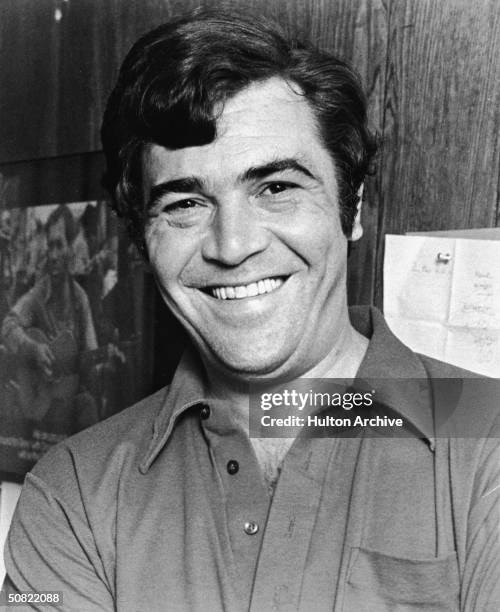
Ralph Bakshi
 Israel
film director•screenwriter•film producer
Birthday
October 29, 1938
Birth Sign
Scorpio
Birthplace
Haifa, British Mandate for Palestine (now Israel)
Age
87 years old
About
Ralph Bakshi, born October 29, 1938, in Haifa, is an American animator and filmmaker who carved a defiant path through the animation industry. In the 1970s, he became the face of adult-oriented, independent animation, challenging the Disney-dominated mainstream with gritty, fantastical stories. Over his career, he directed nine theatrical feature films between 1972 and 1994, writing five of them, and worked extensively in television as a director, writer, producer, and animator.
Bakshi started at Terrytoons as a cel polisher, working his way up to animator and director. He moved to Paramount Pictures' animation division in 1967 and founded Bakshi Productions a year later. His big break came through producer Steve Krantz: Fritz the Cat (1972), based on Robert Crumb's comic strip, became the first animated film to receive an X rating and remains the most successful independent animated feature ever. Over the next 11 years, Bakshi directed seven more animated features, including Wizards (1977), The Lord of the Rings (1978), American Pop (1981), and Fire and Ice (1983). These films blended urban drama with fantasy, often pushing boundaries with their adult themes and visual styles.
After a stint on television with Mighty Mouse: The New Adventures (1987-1989), Bakshi returned to features with Cool World (1992). The film was heavily rewritten during production and received poor reviews, marking his last theatrical feature to date. He later directed the live-action Cool and the Crazy (1994) and the anthology series Spicy City (1997). In the 2000s, Bakshi focused on fine art and painting, co-founding the Bakshi School of Animation with his son Eddie and Jess Gorell in 2003. His accolades include the 1980 Golden Gryphon for The Lord of the Rings at the Giffoni Film Festival, the 1988 Annie Award for Distinguished Contribution to the Art of Animation, and the 2003 Maverick Tribute Award at the Cinequest Film Festival.
Early Life & Background
Ralph Bakshi grew up in the Brownsville neighborhood of Brooklyn, a tough, low-income area. His family, Krymchak Jewish immigrants from what is now Israel, moved to the U.S. when he was a year old. In 1947, they relocated to Foggy Bottom, Washington D.C., where Bakshi was the only white child in an all-Black school during segregation. Police forcibly removed him, and the family returned to Brooklyn. That experience shaped his outsider perspective.
At 15, Bakshi stole a copy of Gene Byrne's A Complete Guide to Cartooning from a public library and devoured it. He attended Thomas Jefferson High School but was transferred to the High School of Industrial Arts after a food fight. There, he studied under Charles Allen, a Black cartoonist who taught him about the real world. Bakshi graduated in 1957 with an award in cartooning.
At 18, he started at Terrytoons as a cel polisher, removing grit from animation cells. Production manager Frank Schudde noticed his attention to detail and promoted him to cel painter. Bakshi practiced nights and weekends, quickly advancing to inker and then animator. He worked on shows like Mighty Mouse, Heckle & Jeckle, and Deputy Dawg (1960-1961), learning from veterans Gene Deitch, Jim Tyer, and Connie Rasinski.
Career Growth
Bakshi's breakthrough came in 1972 with Fritz the Cat, the first animated feature to receive an X rating. Based on Robert Crumb's underground comic, the film was produced by Steve Krantz and became the most successful independent animated feature ever made. It established Bakshi as a provocateur who could blend adult themes with animation.
He followed with Heavy Traffic (1973), which screened at the Museum of Modern Art and introduced his signature mix of live action, animation, and still photo backdrops. In 1975, Coonskin sparked protests and censorship battles for its racial themes. Bakshi then turned to fantasy: Wizards (1977) was his first film to extensively use rotoscoping, and The Lord of the Rings (1978) became a landmark adaptation, winning the Golden Gryphon in 1980 and later inspiring Peter Jackson's live-action trilogy.
The 1980s brought American Pop (1981), a musical drama tracing four generations of a Russian Jewish immigrant family, and Fire and Ice (1983), a collaboration with fantasy artist Frank Frazetta. From 1987 to 1989, Bakshi revitalized the character in Mighty Mouse: The New Adventures, a series that gave unprecedented creative freedom to storyboard artists and influenced the 1990s animation renaissance. After the commercial failure of Cool World (1992), which was heavily rewritten by the studio, Bakshi directed the live-action Cool and the Crazy (1994) and the adult anthology Spicy City (1997) for HBO. Since the 2000s, he has focused on fine art and painting, and co-founded the Bakshi School of Animation in 2003.
Career Timeline
Public Image & Style
Ralph Bakshi is often called the bad boy of animation, a label he earned by breaking Disney's monopoly on what animation could be. His films are gritty, unpolished, and urban, mixing live action with animation and rotoscoping. They tackle adult themes like sexuality, racism, poverty, and drug use. Media portrayals cast him as a defiant rebel who brought independent, adult-oriented animation to the mainstream. The Internet and DVD releases introduced his work to new generations, and retrospectives at venues like the American Cinematheque have kept his legacy alive. Fans admire his autobiographical approach, drawing from his Brownsville upbringing, and his willingness to push boundaries.
Fame & Fandom (iFAMOUS Rankings)
Ralph Bakshi's legacy is sustained by a dedicated community of collectors and critics who actively champion his restored works, particularly the 1978 adaptation of The Lord of the Rings and the cult classic Fritz the Cat. This fanbase lacks a single official moniker like Trekkies, instead coalescing around shared reverence for adult animation and gritty fantasy. Their influence manifests in tangible actions: funding the 2026 4K restoration of Fire and Ice, driving sales of original art on eBay, and sparking debates over whether Peter Jackson's sanitized trilogy betrayed Tolkien's darker vision. Fans treat Bakshi not just as an animator but as a rebellious pioneer whose unfinished masterpiece remains a touchstone for artistic integrity versus corporate interference.
iFANN's Global Fame Engine has evaluated Ralph Bakshi, but he does not currently hold a placement in the published rankings (Global Top 1,000 or a Top-100 scope list). While his cultural footprint remains massive within niche circles and among animation historians, this specific evaluation indicates no current numerical standing in the global hierarchy. The absence of a formal rank reflects a status that transcends simple metrics; it is defined by enduring respect rather than viral spikes. His audience continues to engage through annual retrospectives and direct interactions on social media, keeping the mythos of the 'unfinished genius' alive without needing a headline number to validate his impact.
Interesting Facts and Legends
Ralph Bakshi hails from a Krymchak Jewish family originally from Crimea. At age eight, he witnessed a mob hit in Brownsville, an early exposure to urban grit that would later define his visual style. He once saved his job at a paper mill by retrieving a single extreme drawing from a conveyor belt after his animation materials were mistakenly sent there. Bakshi famously described Walt Disney as having such a hold on America that he was like Adolf Hitler regarding control over animation. His film Fritz the Cat remains the most successful independent animated feature ever made. Early in his career, he contributed to the 1960s Spider-Man television series and Rocket Robin Hood.
A defining legend surrounding Bakshi involves his 1978 adaptation of The Lord of the Rings. Studio executives forced him to cut the film short at the Battle of Helm's Deep, leaving the story unresolved and creating a unique piece of cinematic folklore where a generation waited for a conclusion that never came. Another persistent story concerns his unfiltered criticism of Peter Jackson's trilogy. As of 2026, Bakshi maintains that Jackson's version sanitized Tolkien's darker themes, reinforcing his reputation as an uncompromising artist who refuses to bow to popular opinion.
Notable Quotes
“I never felt poor a day in Brownsville, even though I was dirt poor.”
“I'll let the guys perform and you know what they perform above... they can't believe that they're free.”
“Disney had such a hold on the mind of America. They were Adolf Hitler.”
“The structure of Hollywood had become very strong there was no way in. My freedom I had in the 1970s I took for granted.”
Family & Personal Life
Bakshi was born to Krymchak Jewish parents who immigrated to the U.S. when he was a year old. His father's name is listed as Eliezar Bakshi. He has a sister. Bakshi married his first wife, Elaine, around 1959; they had a son, Mark, before divorcing. On August 18, 1968, he married Liz Bakshi. They have three children: Preston, Mark (from his first marriage, raised by Liz), and Eddie. Eddie later co-founded the Bakshi School of Animation with his father in 2003. Bakshi and Liz reside in New Mexico.
Notable Connections
Bakshi collaborated frequently with producer Steve Krantz, who produced Fritz the Cat and other films. He worked with underground comic artist Robert Crumb on Fritz the Cat and fantasy artist Frank Frazetta on Fire and Ice. At Terrytoons, mentors Gene Deitch and Connie Rasinski shaped his early career. His teacher at the High School of Industrial Arts, Charles Allen, a Black cartoonist, influenced his worldview. Bakshi's son Eddie and Jess Gorell co-founded the Bakshi School of Animation with him.
Relationships & Dating History
Bakshi married his first wife, Elaine, around 1959 when he was 21. They had a son, Mark, a year later. The marriage became strained due to Bakshi's long working hours and constant absence from home. He created the comic strip Dum Dum And Dee Dee as a way to cope with the troubled marriage. They eventually divorced.
On August 18, 1968, Bakshi married Liz Bakshi. They have been together for over 50 years. Liz raised Mark from Bakshi's first marriage as her own. Together they have two more sons: Preston and Eddie. Eddie later co-founded the Bakshi School of Animation with his father. As of 2026, Bakshi remains married to Liz, and they live in New Mexico.
- MarriedElaine1959 - 1968Married around 1959; had a son, Mark; divorced before 1968 due to Bakshi's work hours.
- MarriedLiz Bakshi1968 - presentCurrentMarried August 18, 1968; raised Mark from Bakshi's first marriage; had sons Preston and Eddie.
Salary, Net Worth In 2026
$10 Million
iFANN Editorial Team estimate
Per iFANN's editorial analysis, Ralph Bakshi's net worth stands at $10 million as of 2026. This financial standing stems from a prolific career spanning film direction, screenwriting, and production. Between 1972 and 1994, he directed nine theatrical features, anchored by the enduring success of Fritz the Cat, which holds the title of the most successful independent animated feature ever produced. His television portfolio includes notable runs on Mighty Mouse: The New Adventures and Spicy City. During the 2000s, Bakshi pivoted toward fine art, generating revenue by selling paintings through galleries. He also established the Bakshi School of Animation in 2003, creating an additional income stream through education. Ongoing residuals from DVD and streaming releases, alongside licensing deals for his extensive film catalog, continue to bolster his wealth. The total figure reflects modest growth driven by sustained interest in his unique filmography and artwork.
Awards Won (3)
Ralph Bakshi won the Golden Gryphon at the Giffoni Film Festival in 1980 for The Lord of the Rings. He received the Annie Award for Distinguished Contribution to the Art of Animation in 1988. In 2003, he was honored with the Maverick Tribute Award at the Cinequest Film Festival.
2003 · Lifetime Achievement
Career
1988 · Distinguished Contribution to the Art of Animation
Career
Known For
Fritz the Cat
1972 · Director
The Lord of the Rings
1978 · Director
Wizards
1977 · Director
Mighty Mouse: The New Adventures
1987 · Director, Producer
Cool World
1992 · Director
Keywords
Sources
Quick Facts
- Profession
- film director, screenwriter, film producer
- Born
- +1938-10-29
- Birthplace
- Haifa
- Gender
- Male
- Spouse
- Liz Bakshi
- Birth Sign
- Scorpio
Personal Details
- Full Name
- Ralph Bakshi
- Spouse
- Liz Bakshi
- Children
- Preston Bakshi, Mark Bakshi, Eddie Bakshi
- Education
- High School of Industrial Arts (graduated 1957)
Frequently Asked Questions
Is Ralph Bakshi still alive?
Did Ralph Bakshi finish The Lord of the Rings?
Why did Ralph Bakshi stop making movies?
What was the first X-rated animated movie?
Did Ralph Bakshi inspire Peter Jackson?
Similar People
Join the community
fans discussing