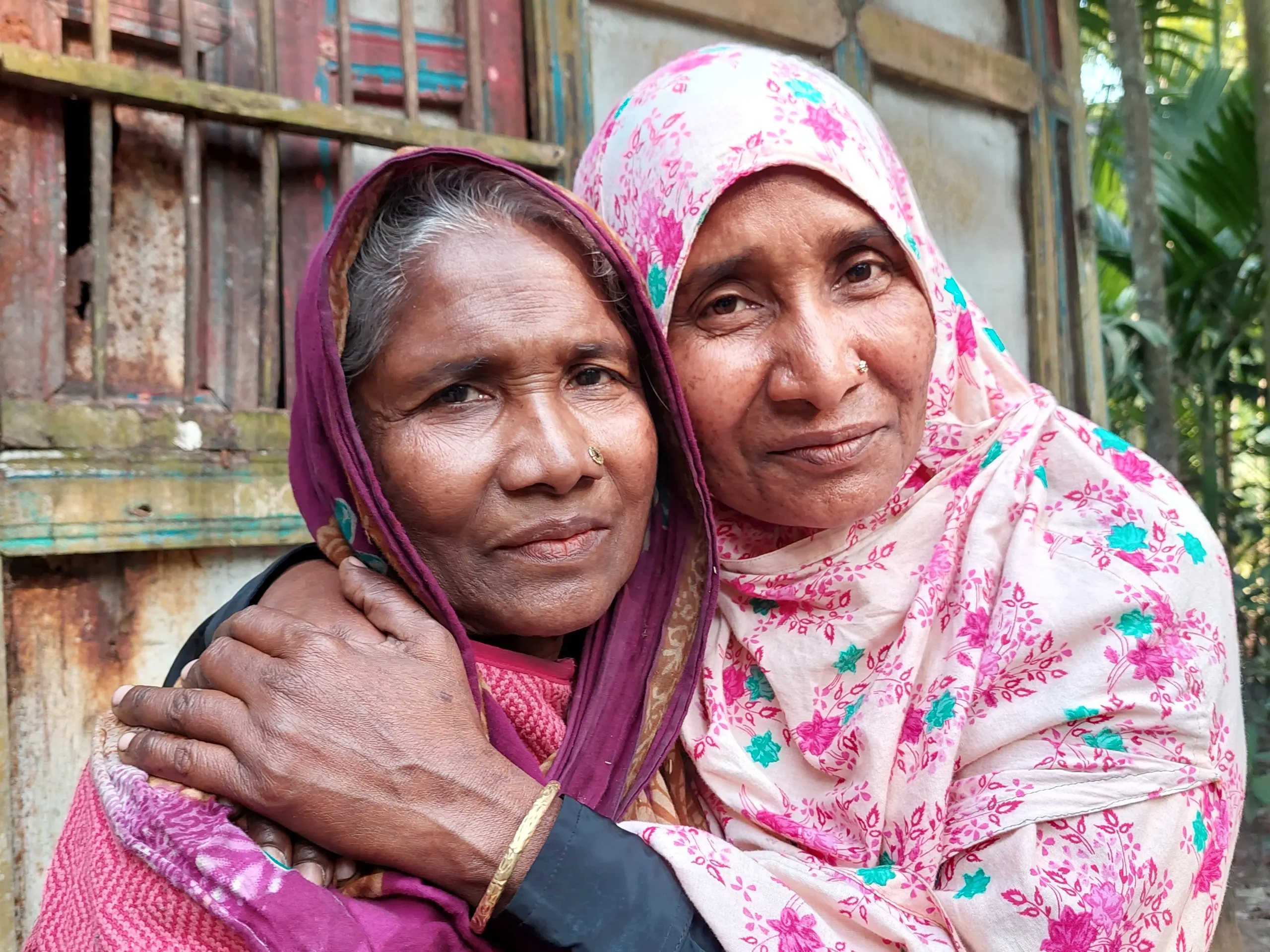
Rahima Banu
 Bangladesh
Last known survivor of naturally occurring Variola major smallpox
Also known as: Rahima Banu Begum
Birthday
October 16, 1972
Birth Sign
Libra
Birthplace
Kuralia village, Bhola Island, Bangladesh
Age
53 years old
About
Rahima Banu Begum is a Bangladeshi woman who holds a singular place in medical history as the last person on Earth to contract naturally occurring Variola major smallpox, the deadliest form of the disease. Born on October 16, 1972, in a remote village on Bhola Island, her case in October 1975 marked the final chapter of a pathogen that had killed hundreds of millions over centuries. Today she lives quietly in rural Bangladesh, her face and body still bearing the permanent scars of that infection.
Her survival and the successful containment of her case helped prove that global smallpox eradication was achievable, leading to the World Health Assembly declaring the world free of smallpox on May 8, 1980. That declaration stands as one of public health's greatest triumphs. Banu's story continues to be told in medical journals, museum exhibits, and major media outlets like NPR and The Atlantic, where she is remembered not as a celebrity but as a living symbol of what coordinated vaccination and surveillance can accomplish.
Early Life & Background
Rahima Banu was born into extreme rural poverty in Kuralia, a village on Bhola Island in the Barisal District of Bangladesh. Her father, Mohammad Rahmatullah, worked as a day laborer, and the family lived in a makeshift hut with a thatched roof, with no electricity or running water. Her mother, Roushanara Begum, cared for Rahima and her siblings at home. The island was so remote that it was accessible only by boat, and modern healthcare was essentially nonexistent in the community.
In mid-October 1975, a young health worker named Akhtaruzzaman was conducting house-to-house searches for smallpox cases. On October 16, two days after Rahima's third birthday, he spotted the toddler with a rash on her face, arms, and legs. Recognizing the telltale pustules of smallpox, he immediately alerted authorities. A WHO surveillance team confirmed the diagnosis, and the case was officially recorded that same day. It was the last time anyone would be diagnosed with naturally occurring Variola major anywhere on the planet.
Career Growth
Rahima Banu never had a conventional career, but her place in history was secured the moment her case was confirmed. The WHO and Bangladeshi health authorities launched an extraordinary containment operation, vaccinating and monitoring everyone within a 1.5-mile radius of her home. They visited 54,000 households, vaccinated 18,000 people, and placed 2,000 under strict surveillance, with a security cordon around the zone. The effort cost roughly $100,000 and involved health workers traveling by boat and foot, plus a helicopter bringing supplies. It succeeded in preventing any further spread.
After her recovery, Banu lived a quiet, private life. In 2005, on the 30th anniversary of her case, a photographer tracked her down and documented her as an adult, still bearing the visible scars. In 2022, physician-journalist Céline Gounder interviewed her for NPR and The Atlantic, drawing parallels between smallpox eradication and the COVID-19 pandemic response. Those interviews brought her story to a new generation, and she remains a powerful symbol of what global cooperation can achieve.
Career Timeline
Public Image & Style
Rahima Banu has no fandom in the entertainment sense. Her public image is that of a symbol of triumph over disease. Media portrayals consistently frame her as a humble, dignified figure who bears the physical scars of history, a living testament to the power of vaccination and global health cooperation. The 1975 photograph of her in her mother's arms is one of the most reproduced images in medical history. Her story is told with reverence in public health circles, and she is referenced in CDC and WHO historical materials. There is no official fandom name or fan culture; her significance is historical and medical rather than cultural.
Fame & Fandom
Rahima Banu occupies a unique space in global recognition, not as an entertainer or celebrity, but as the final natural victim of Variola major smallpox. Her story is one of profound historical weight rather than cultural stardom, anchoring her significance in the triumph of public health over a centuries-old plague. While she commands immense reverence within medical and scientific communities, her standing in broader fame metrics reflects this specific, singular role. The iFANN Global Fame Engine has evaluated her profile and determined that Rahima Banu does not currently hold a placement in the published rankings (Global Top 1,000 or a Top-100 scope list). This evaluation confirms she does not hold a numbered position in the current published rankings, a status consistent with figures whose fame derives from historical documentation rather than active media consumption. Unlike pop stars or athletes who drive search volume through new releases or performances, her visibility remains steady and rooted in educational contexts. There is no documented fandom name associated with her; no organized group of supporters, fan rituals, or charitable drives exist under a specific banner. She does not interact with followers, nor has she cultivated a following through personal appearances or digital engagement. Her audience consists of historians, students, and public health professionals who study the eradication of smallpox. The absence of a fanbase is not a lack of interest but a reflection of her nature as a subject of medical history. While crowds once rallied around vaccination campaigns she symbolized, there are no viral moments, stage appearances, or legendary anecdotes involving fans gathering to celebrate her life. Her legacy is preserved in archives and textbooks, where her image serves as a visual record of the disease's end rather than a symbol for a modern subculture.
Interesting Facts and Legends
Her case occurred exactly three years to the day after her birth on October 16, 1975, marking a precise anniversary of her infection. The massive containment effort required searching 54,000 households and vaccinating 18,000 people to isolate the virus. Bhola Island's remote location, accessible only by boat, presented significant logistical challenges for the medical teams responding to her illness. Although Variola major was the deadliest strain, milder cases of Variola minor persisted briefly in Somalia before the final certification. The Global Commission officially certified the eradication of smallpox on December 9, 1979, just over four years after her recovery. A photograph taken in 2000 showing a grown Rahima Banu holding her own child stands as a powerful visual narrative of survival against a disease that had killed millions. Decades later, pockmarks from the infection remained clearly visible in photography from 2005, serving as permanent physical evidence of her ordeal. The 1975 image of her as a toddler in her mother's arms remains one of the most reproduced photographs in medical history, often used to illustrate the final chapter of smallpox.
Family & Personal Life
Rahima Banu's parents, Mohammad Rahmatullah and Roushanara Begum, were poor farmers on Bhola Island. Her mother was photographed holding her in the iconic 1975 image that circulated worldwide. Banu married in her late teens or early twenties and has children, though her husband's name is not widely recorded in English-language sources. As of the 2005 documentation, she was living with her family in the Bhola region, still in poverty. Her family's story is one of survival and quiet resilience, a reminder that the end of smallpox came to the most remote corners of the world.
Notable Connections
Rahima Banu's story is intertwined with several key figures. Akhtaruzzaman, the health worker who discovered her case on October 16, 1975, set off the final eradication effort. Céline Gounder, a physician-journalist, interviewed her in 2022 and brought her story to modern audiences. Dr. Halfdan Mahler, WHO Director-General, announced the eradication of Variola major in 1977. Her mother, Roushanara Begum, is remembered in the iconic 1975 photograph. These individuals, along with countless health workers, played roles in ending smallpox, and Banu's case remains the anchor of that achievement.
Relationships & Dating History
Rahima Banu's dating history is not publicly documented, as she is a historical medical figure rather than a public celebrity. She married in her late teens or early twenties and has children, but the details of her courtship, wedding date, and marriage timeline are not recorded in available sources. Based on the most recent interviews from 2022, she is married and living in rural Bangladesh. No information suggests any separation, divorce, or widowhood. As of 2026, her marital status is presumed married, though no new reporting has confirmed her status since the 2022 interviews.
- MarriedUnknown (husband)1990 - presentCurrentMarried in her late teens or early twenties; husband's name not widely recorded.
Salary, Net Worth In 2026
$0
iFANN Editorial Team estimate
Per iFANN's editorial analysis, Rahima Banu has a net worth of $0. She is not a celebrity or business figure and lives in poverty in rural Bangladesh. She does not earn royalties or licensing income from her image or story, as the photographs of her are in the public domain or held by archives. Her financial situation is presumed to be minimal based on all available reporting. As of 2026, she remains a private individual whose historical significance far outweighs any financial wealth.
Awards & Accolades
View 9 records, honours and achievementsKnown For
Last known case of naturally occurring Variola major smallpox
1975 · Patient
Keywords
Sources
Quick Facts
- Born
- October 16, 1972
- Birthplace
- Kuralia, Bhola Island, Bangladesh
- Gender
- Female
- Birth Sign
- Libra
- Last case of
- Naturally occurring Variola major smallpox
- Age at diagnosis
- 3 years old
- Eradication declared
- May 8, 1980
Personal Details
- Full Name
- Rahima Banu Begum
- Children
- Yes (names not publicly documented)
Frequently Asked Questions
Is Rahima Banu still alive?
What happened to Rahima Banu?
How old was Rahima Banu when she got smallpox?
Is Rahima Banu married?
Why is Rahima Banu important?
Join the community
fans discussing