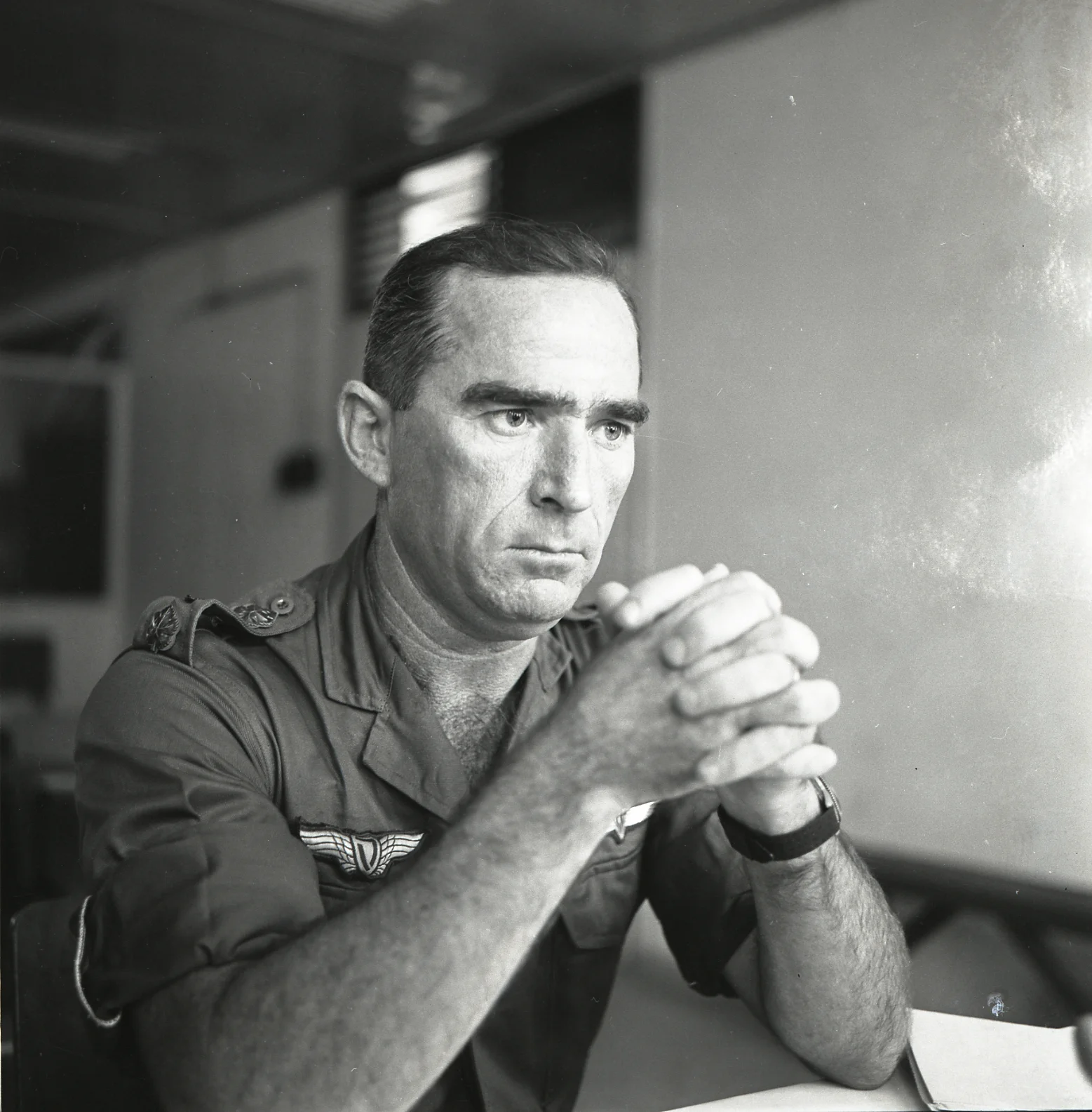
Rafael Eitan
 Israel
Also known as: Raful, Raphul
Birthday
January 11, 1929
Birth Sign
Capricorn
Birthplace
Tel Adashim, Palestine
Age
Died at 75
About
Rafael Eitan was an Israeli military officer and politician who served as the 11th Chief of Staff of the Israel Defense Forces from 1978 to 1983. Known by his nickname "Raful," he was a decorated soldier whose career spanned Israel's formative wars, from the 1948 War of Independence to the 1982 Lebanon War. After retiring from the military, he entered politics, founding the Tzomet party and serving as Minister of Agriculture and Deputy Prime Minister.
Eitan was renowned for his blunt, no-nonsense manner and his deep connection to the land, having grown up on a farming moshav. His tenure as Chief of Staff was marked by the peace treaty with Egypt and the controversial invasion of Lebanon. He died in 2004 at age 75 in a drowning accident at the Port of Ashdod, leaving behind a legacy as a plain-spoken soldier and statesman.
Early Life & Background
Rafael Eitan was born on January 11, 1929, in Tel Adashim, a farming moshav in the Jezreel Valley of northern Palestine. His mother's family had arrived during the First Aliyah, part of the early wave of Jewish immigration. Growing up in an agricultural community shaped his lifelong bond with the land, a theme that would later define his political career.
As a young man, Eitan joined the Palmach, the elite strike force of the pre-state Jewish community. He fought in the 1948 Arab-Israeli War, where he began building a reputation for personal bravery and physical toughness. In the 1956 Suez Crisis, he commanded paratroopers, and during the 1967 Six-Day War, he played a significant role on the battlefield. His early career was marked by a famously blunt speaking style that set him apart from more diplomatic officers.
Eitan's rise through the ranks was steady, and by the mid-1970s he was a senior commander, known for his hands-on approach and willingness to lead from the front. His agricultural roots remained central to his identity, even as he climbed the military hierarchy.
Career Growth
Eitan was appointed the 11th Chief of Staff of the Israel Defense Forces in 1978, a position he held until 1983. His tenure was defined by two major events: overseeing the implementation of the peace treaty with Egypt in 1979 and commanding the 1982 Lebanon War. He was also in office during the 1981 bombing of Iraq's Osirak nuclear reactor, an operation he oversaw. He became the first Israeli chief of staff to visit the United States in an official capacity.
The 1982 Lebanon War remains a controversial chapter. A 2014 Haaretz investigation revealed that Eitan, along with Prime Minister Menachem Begin and Defense Minister Ariel Sharon, had deceived cabinet members about the war's scope and objectives. Eitan later said Israel should "wash away the sins" of the war, a remark that drew criticism.
After retiring from the military in 1983, Eitan entered politics. He won a Knesset seat in 1984 as head of the Tzomet party, which he had founded. He served as Minister of Agriculture and later as Deputy Prime Minister. His political platform was hawkish and pragmatic, opposing territorial compromise with the Palestinians. He remained a Knesset member for several terms into the 1990s.
Career Timeline
Public Image & Style
Eitan was known for his blunt, unpolished speaking style, a stark contrast to the diplomatic language typical of senior military and political figures. The Los Angeles Times described him as "hard-line" and noted his opposition to "any compromise with the Palestinians." His agricultural roots were a defining part of his image, and he maintained a connection to farming throughout his life. The IDF's official profile praised him as "a commander, role-model and educator," reflecting the respect he commanded among soldiers. However, his legacy is complicated by the 1982 Lebanon War, with some critics calling him "the mastermind" of the invasion.
Fame & Fandom (iFAMOUS Rankings)
Rafael Eitan commanded a legacy defined by military service and political leadership rather than the organized adulation typical of pop culture figures. His public standing rests on his tenure as the 11th Chief of Staff of the Israel Defense Forces and his subsequent role in national politics, where he was known for a blunt demeanor and deep agricultural roots. There is no formal fandom name associated with his memory; the audience that remembers him consists of those who view his life through the lens of civic duty and historical impact rather than celebrity worship. His connection to the land and his controversial decisions during the Lebanon War remain subjects of serious discussion among historians and citizens alike, but these engagements lack the structure of fan rituals or dedicated campaigns. While some conflate his story with that of the Mossad agent Rafi Eitan, the general's specific narrative focuses on the Osirak raid and his eventual death at sea, events that cemented his place in the national consciousness without generating a global entertainment following. Despite the absence of a structured fanbase, his influence persists in the collective memory of the nation. According to the iFANN Global Fame Rankings, Rafael Eitan is currently the 86th most famous person in Israel, a position holding steady from the previous cycle.
Interesting Facts and Legends
Rafael Eitan retained the nickname "Raful" throughout his life, using it even in official capacities. An avid farmer at heart, he frequently returned to his agricultural roots between his duties in the military and government. Despite a tough exterior, he possessed a surprising literary side and wrote poetry. He remained a staunch advocate for rural development, championing policies that aided farming communities. One of his favorite sayings was "The land is everything," reflecting his profound connection to the soil. Historical accounts often highlight his role in the planning of the 1981 bombing of Iraq's Osirak nuclear reactor, an operation viewed as a defining moment of decisive command. The 1982 invasion of Lebanon also stands as a legendary, albeit controversial, chapter of his career. A tragic end marked his final days when he drowned after being swept away by a giant wave while working on a breakwater in Ashdod. These events form the core of his enduring legend.
Notable Quotes
“We must wash away the sins of the Lebanon War.”
“The land is everything.”
Family & Personal Life
Eitan was married and had children, though details about his family are scarce in public records. His upbringing in Tel Adashim, where his mother's family had settled during the First Aliyah, instilled in him a strong sense of community and agricultural values. He often spoke about the importance of family and the land, themes that carried into his political work. His personal life remained private, and he did not seek public attention for his family.
Notable Connections
Eitan worked closely with Prime Minister Menachem Begin and Defense Minister Ariel Sharon during the 1982 Lebanon War. His professional network included fellow IDF officers and political allies in the Tzomet party. He was also commemorated in the Israel Mint's Chiefs of Staff medal series, alongside other IDF leaders.
Relationships & Dating History
Public documentation of Eitan's romantic relationships is extremely limited. He was married and had a family, but the names of his spouses and the dates of his marriages are not detailed in available sources. His private life was not a subject of public fascination during his lifetime, and no high-profile romantic relationships, divorces, or scandals are documented. As of his death in 2004, he was a widower or married man, though sources do not specify his marital status at the time of his passing. His legacy is defined entirely by his military and political career rather than his personal relationships.
Death & Aftermath
Died
November 23, 2004 (aged 75)
Death Place
Ashdod, Israel
Cause of Death
Accidental drowning
Rafael Eitan, the 11th Chief of Staff of the Israel Defense Forces (IDF) and former Minister of Agriculture and Environment, died on November 23, 2004, at the age of 75. The death occurred in Ashdod, Israel. According to multiple sources, including The New York Times, Al Jazeera, and The Guardian, Eitan drowned after being swept into stormy seas while walking along the port. The cause of death was officially ruled as drowning. This determination was established through immediate circumstances reported by witnesses and subsequent confirmation by family and medical authorities., the event was widely reported as an accidental drowning resulting from high waves and strong currents at the port. There are no disputed accounts regarding the manner of death in the available records; all sources consistently describe it as an accident during a walk near the water.
Eitan's death elicited significant tributes from Israeli institutions and peers. He was described by the IDF as an "inspiration to many soldiers and citizens" and a "commander, role-model and educator." As the architect of the 1982 Lebanon War, he remained a polarizing but prominent figure; however, his passing was met with official mourning. While specific details on fan vigils, chart surges, or memorial murals are not present in the search data, the coverage by major outlets like The New York Times, The Guardian, and Al Jazeera highlights the national significance of his loss. The Jewish Virtual Library noted his service as IDF Chief of Staff (1978, 1983) and government minister, underscoring his status as a key historical figure whose death marked the end of an era for the first generation of Israeli generals.
Following his death, Eitan was commemorated through various honors, including the issuance of an official commemorative medal in 2006/5766 by the Israel Coins and Medals Corp., marking him as the first in their "Chiefs of Staff" series. A 2006 book titled Israel Washes Away the Sins of Former Army Chief of Staff Rafael Eitan was published, analyzing his legacy and the controversies surrounding the 1982 invasion of Lebanon.
Net Worth (Estate Value)
$1 Million
iFANN Editorial Team estimate
Rafael Eitan's net worth at the time of his death in 2004 was modest, reflecting a career defined by public service rather than commercial accumulation. Per iFANN's editorial analysis, the total value of his estate is estimated at $1 Million. His income derived primarily from his salary and pension as an IDF officer and subsequent government roles, with no documented commercial ventures or significant private investments augmenting these funds. The estate's precise valuation remains undisclosed to the public, and there are no known posthumous earnings from book deals or licensing rights. His legacy endures as a historical figure whose financial footprint was secondary to his political and military impact.
Awards Won (1)
Eitan received numerous commendations for battlefield bravery throughout his military career, though specific medal names are not itemized in available sources. His elevation to Chief of Staff was the pinnacle of military distinction in Israel. In 2006, the Israel Mint issued an official medal in his honor as part of a Chiefs of Staff series, a posthumous recognition of his service.
2006 · Military Honor
Service as Chief of Staff
Known For
Chief of Staff of the Israel Defense Forces
1978-1983 · 11th Chief of Staff
1982 Lebanon War
1982 · Commander
Minister of Agriculture
1980s-1990s · Minister
Keywords
Sources
Quick Facts
- Profession
- Military officer, politician
- Born
- January 11, 1929
- Birthplace
- Tel Adashim, Palestine
- Died
- November 23, 2004
- Death Place
- Port of Ashdod
- Gender
- Male
- Birth Sign
- Capricorn
Personal Details
- Full Name
- Rafael Eitan
Frequently Asked Questions
How did Rafael Eitan die?
Was Rafael Eitan the same person as Rafi Eitan, the Mossad spy?
What was Rafael Eitan's role in the 1982 Lebanon War?
What political positions did Rafael Eitan hold?
When was Rafael Eitan born and where?
Similar People
Join the community
fans discussing