
Queen of Sheba
Also known as: Bilqis, Makeda, Queen of Saba
Birthday
-950
Birth Sign
Capricorn
Birthplace
Kingdom of Saba
Age
Unknown
About
Bilqis ruled the ancient kingdom of Sheba, a wealthy realm located in what is now southern Yemen. While historians place her life around the tenth century BCE, no physical evidence confirms her existence beyond the written word. The story begins when she hears of King Solomon's wisdom and travels with a massive caravan to test him. She arrives bearing spices, gold, and precious stones, hoping to see if his reputation matches reality. Their meeting became the foundation for centuries of storytelling that stretched from West Asia to Northeast Africa.
In Islamic tradition she is known as Bilqis, while Ethiopian lore calls her Makeda. Her reign spanned a period of immense trade wealth along the incense routes connecting Africa and Asia. Though her actual biography is obscured by myth, her image as a wise and powerful queen has persisted for over three millennia across multiple cultures and religions.
Early Life & Background
The origins of the Queen of Sheba are rooted in the ancient Kingdom of Saba, a civilization that flourished in what is today southern Yemen or northern Ethiopia. Historical consensus places her reign between 950 and 925 BCE, though some traditions push the date back to 1000 BCE. The exact location of her birth remains a subject of debate between scholars, with strong arguments favoring both Sana'a in Yemen and Axum in Ethiopia. Early life details are shrouded in legend; the Ethiopian epic Kebra Nagast claims she was born to a royal lineage but cursed with a hairy leg or webbed foot, which led to her being hidden away until she met King Solomon.
There are no records of her formal education or childhood upbringing, as these details were not preserved in the ancient texts that mention her. Her early years are defined by her role as a monarch ruling a major trade hub responsible for the lucrative spice and incense routes. Unlike modern figures who rise to fame through media or performance, her status was inherited and maintained through the economic power of her kingdom. The narrative of her youth focuses less on personal growth and more on the accumulation of wealth and the preparation for a diplomatic encounter that would define her legacy.
Career Growth
The defining moment of her reign occurred when she traveled to Jerusalem to meet King Solomon. According to 1 Kings 10 and 2 Chronicles 9, she arrived with a massive caravan carrying 120 talents of gold, vast quantities of spices, and precious stones. The purpose of this visit was to test Solomon's wisdom with hard questions. Impressed by his answers and the splendor of his court, she declared, "The report I heard in my own country about your achievements and your wisdom is true... You are greater than the report I heard." This meeting resulted in a mutual exchange of gifts: Solomon gave her everything she desired, while she gave him 120 talents of gold and a huge amount of spices.
In the Islamic tradition found in the Quran, specifically Surah An-Naml, the story expands to include a narrative where Solomon tests her through a glass floor he believes is water, revealing her legs and proving her humanity before she converts to monotheism. In the Ethiopian tradition, the encounter results in a romantic union, producing a son, Menelik I, who became the first Emperor of Ethiopia and brought the Ark of the Covenant to Axum. Her influence extended far beyond her lifetime, shaping the founding myths of the Ethiopian monarchy and serving as a central figure in Abrahamic religious teachings.
Career Timeline
Public Image & Style
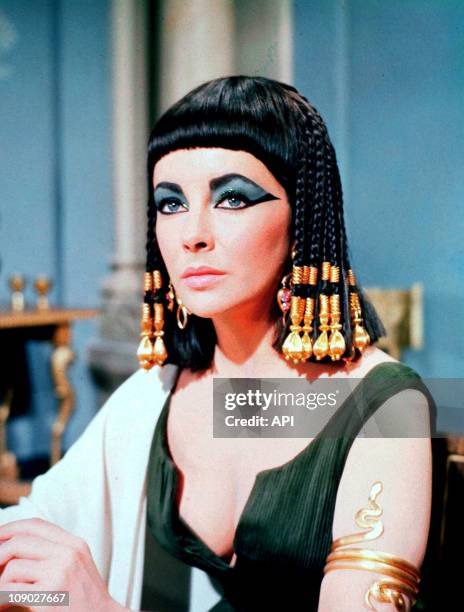
She is universally revered as a symbol of wisdom, wealth, and female leadership in antiquity. Her public image is one of regal authority, often depicted adorned with gold and jewels, accompanied by a retinue of servants and camels. In religious contexts, she represents the seeker of truth who travels great distances to learn from a superior mind. Different cultures have shaped her visual identity to match their own aesthetics; she appears as a dark-skinned African queen in Ethiopian iconography, a veiled ruler in Islamic art, and a fair-skinned noblewoman in medieval European paintings. Despite these variations, the core of her image remains consistent: a powerful monarch who valued knowledge above material gain.
Fame & Fandom (iFAMOUS Rankings)
iFANN has not yet collected fame data for this person. She does not appear in the September 2026 iFAMOUS Rankings flagship list. While there is no organized fandom in the modern sense with fan clubs or hashtags, she possesses a massive global devotional following among believers in the Abrahamic faiths. Devotees of Ethiopian Orthodox Christianity, Jews, and Muslims revere her as a pivotal figure in their religious histories. The Sigd festival in Ethiopia celebrates the giving of the Torah and is linked to her heritage. Modern movements often cite her as a symbol of female empowerment and African royalty. Her legacy continues to inspire artistic works, including a spoken-word poetry album titled A Toxic Love featuring artists Chante Moore and Lil Ronnie released in late 2026.
Interesting Facts and Legends
Her full name varies significantly depending on the cultural tradition. In the Hebrew Bible, she is simply referred to as the "Queen of Sheba." In Arabic Islamic tradition, she is named Bilqis. In the Ethiopian national epic, the Kebra Nagast, she is known as Makeda. Artistic depictions of her vary wildly across history; Ethiopian tradition portrays her as a dark-skinned African woman, while Western medieval art often depicted her as a European noblewoman with fair skin. Islamic art frequently shows her with veils and regal attire. No physical description exists in reliable historical sources regarding her height or build. Jesus mentioned her in the Gospels (Matthew 12:42, Luke 11:31) as a witness against his generation, stating that she will rise up at the judgment to condemn the people of his generation because she traveled far to hear Solomon's wisdom.
Notable Quotes
“The report I heard in my own country about your achievements and your wisdom is true. But I did not believe the reports until I came and saw with my own eyes... You are greater than the report I heard.”
“My Lord! Indeed I have wronged myself, and I submit [in submission] to Allah, Lord of the worlds.”
Family & Personal Life
The Queen of Sheba's family life is primarily defined by her relationship with King Solomon and their son, Menelik I. In the Ethiopian tradition, Menelik I became the first Emperor of Ethiopia and the founder of the Solomonic dynasty. He is credited with bringing the Ark of the Covenant to Axum, establishing a direct link between the monarchy of Ethiopia and the biblical lineage. There are no credible historical or mythological accounts of other romantic partners or spouses prior to Solomon. Any claims of flings or marriages before this union are speculative folklore without textual basis. Her legacy lives on through the Ethiopian imperial line, which claimed descent from her bloodline for centuries.
Notable Connections
Relationships & Dating History
The Queen of Sheba's relationships are central to her mythology, though they lack the documented dating history of modern celebrities. Her most significant connection was with King Solomon. Described in the Bible, Quran, and Kebra Nagast as a pivotal relationship, it began when she traveled to Jerusalem to test his wisdom. In the biblical text, it is a diplomatic meeting, while in the Kebra Nagast, it is a romantic and sexual union. They had a son, Menelik I, in Ethiopian tradition. There are no credible historical or mythological accounts of other romantic partners. Any claims of flings or marriages prior to Solomon are speculative folklore without textual basis. As a figure from antiquity, she died in the 10th century BCE, leaving her status as widowed or deceased depending on the interpretation of the timeline.
- MarriedKing Solomon-950 - -925Met in Jerusalem to test his wisdom; in Ethiopian tradition, they had a son, Menelik I.
Death & Aftermath
Died
-925
Death Place
Kingdom of Saba (likely modern-day Yemen or Ethiopia)
Cause of Death
Unknown
Ancient chronicles like 1 Kings and 2 Chronicles detail her visit to King Solomon but fall silent on the specifics of her end, leaving scholars to rely on tradition rather than forensic fact. Her reign likely concluded sometime around the tenth century BCE within the wealthy kingdom of Saba, though the exact location of her burial remains lost to the shifting sands of southern Yemen or the highlands of Ethiopia. Instead of a single funeral, her memory was preserved through centuries of oral storytelling and religious reverence across Judaism, Christianity, and Islam. These traditions transformed her life into a moral parable about wisdom and faith, ensuring her legacy endured long after the physical monarch faded from history. Later generations would craft elaborate legends identifying her as Makeda in Ethiopian lore, weaving tales of her lineage that outlived the political structures of her own era.
Net Worth (Estate Value)
$0
iFANN Editorial Team estimate
As an ancient monarch who lived over three thousand years ago, the concept of net worth does not apply in the modern financial sense. There are no salary figures, business ventures, or real estate holdings to quantify. Her wealth was measured in the resources of her kingdom, specifically the control of the incense and spice trade routes. Ancient records mention her bringing 120 talents of gold to Jerusalem, a sum that represented a significant portion of the region's monetary value at the time. The economic impact of her reign is reflected in the archaeological record of the Kingdom of Saba, which reveals sophisticated irrigation systems and monumental architecture funded by trade profits. Today, her "value" is cultural and spiritual rather than monetary, influencing billions of people through religious texts and historical narratives.
Awards & Accolades
View 5 records, honours and achievementsKnown For
Biblical Account
-950 · Monarch
Quranic Narrative
-950 · Convert
Kebra Nagast
14th Century · Makeda
Keywords
Sources
Quick Facts
- Profession
- religious leader, monarch
- Born
- -950
- Died
- -925
- Gender
- Female
- Kingdom
- Saba
Personal Details
- Spouse
- King Solomon
- Children
- Menelik I
- Education
- Unknown
Frequently Asked Questions
What was the Queen of Sheba known for?
What ethnicity was the Queen of Sheba?
What did Jesus say about the Queen of Sheba?
How did the Queen of Sheba die?
Is the Queen of Sheba real?
Similar People
Join the community
fans discussing