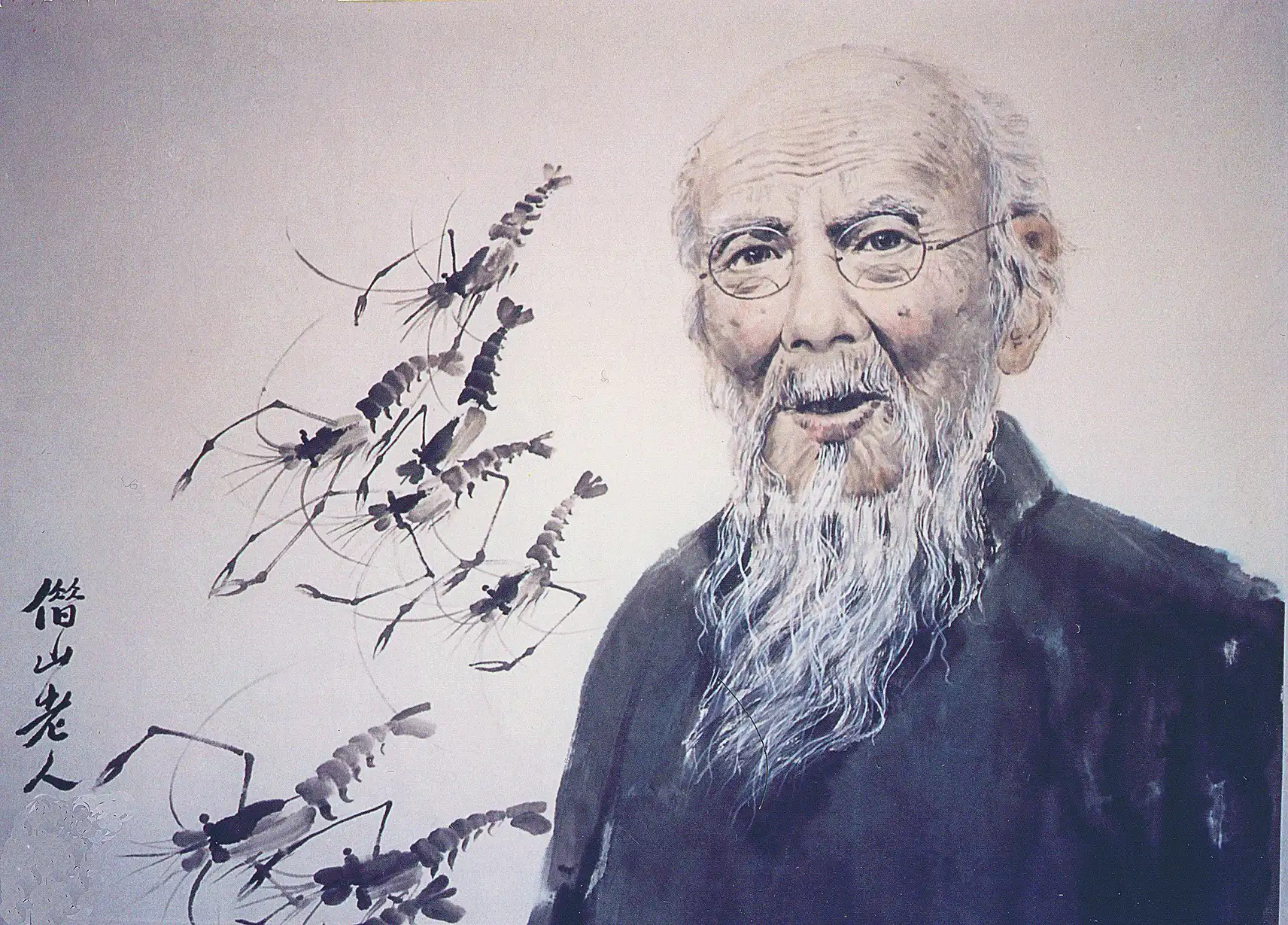
Qi Baishi
 China
ChinaAlso known as: Pai-shih, White Stone, The people's artist, The carpenter turned master
Birthday
January 1, 1864
Birth Sign
Capricorn
Birthplace
Xiangtan County, Hunan, China
Age
Died at 93
About
Qi Baishi was a Chinese painter, seal carver, and poet, widely regarded as one of the most important figures in modern Chinese art. Born in 1864 in Hunan, he rose from peasant roots to become a master of ink painting, celebrated for his playful depictions of shrimp, birds, and insects. His work bridges traditional Chinese aesthetics with a fresh, accessible charm, earning him the nickname "the people's artist."
His paintings are known for their economy of brushwork and a philosophy of "likeness and unlikeness," capturing the essence of his subjects rather than exact detail. He was also a prolific seal carver, calling himself "the rich man of three hundred stone seals." In 1953, he was elected president of the China Artists Association, cementing his status as a leading cultural figure. He died in Beijing in 1957, leaving behind a vast body of work that continues to inspire and delight audiences worldwide.
Early Life & Background
Qi Baishi was born on January 1, 1864, in Xiangtan County, Hunan, into a poor farming family. His birth name was Qi Chunzhi, and he later adopted the art name "Baishi" (White Stone). His formal education was minimal; he worked as a carpenter in his youth, which is why he is often called "the carpenter turned master." His artistic awakening came when he discovered the Manual of the Mustard Seed Garden, a painting manual that sparked his imagination. Largely self-taught, he practiced poetry, calligraphy, painting, and seal carving.
After turning 40, he embarked on extensive travels across China, absorbing the landscapes and rural life that would later fill his canvases. In 1917, he settled in Beijing, where he became a central figure in the city's art scene and refined his landscape painting into a mature collection.
Career Growth
Qi Baishi's breakthrough came after he settled in Beijing in 1917, where he developed his signature style. His subjects ranged from animals and scenery to figures, toys, and vegetables, but he is best known for his lively shrimp, birds, and mice. He believed paintings should exist "between likeness and unlikeness," a principle that gave his work its distinctive charm.
In 1953, he was elected president of the China Artists Association, a recognition of his influence. Posthumously, his market value has soared. In December 2017, a 12-panel set of his ink-brush paintings sold for approximately $141 million at Poly Auction Beijing, setting a record for a Chinese artist. His works continue to fetch high prices at Sotheby's and Christie's. Major exhibitions include Qi Baishi: Inspiration in Ink at the Museum of Fine Arts, Boston, and the Asian Art Museum in San Francisco, as well as the touring From Carpenter to Master: The Painting of Qi Baishi.
Career Timeline
Public Image & Style
Qi Baishi is publicly portrayed as "the people's artist", a self-taught master who rose from peasant poverty to become one of China's most beloved painters. His signature style is characterized by playful, whimsical depictions of rural life and animals, rendered with bold yet minimalist brushwork. Media portrayals emphasize his humble origins and his role as a modernizer of traditional Chinese ink painting. His works enjoy enduring popularity in China and internationally.
Fame & Fandom (iFAMOUS Rankings)
Qi Baishi commands a global audience of art historians, collectors, and cultural enthusiasts who engage with his legacy through museums and auction houses rather than digital campaigns. The iFANN Global Fame Engine evaluated this figure in August 2026 and determined that he does not currently hold a placement in the published rankings, including the Global Top 1,000 or any Top-100 scope list. While his historical influence remains profound, no specific numeric rank or score is assigned at this time. The public engagement surrounding him is retrospective and institutional, driven by exhibitions such as Qi Baishi: Inspiration in Ink and the enduring market value of his ink paintings. There is no documented name for his fanbase; admirers are generally identified by their roles as scholars, curators, or buyers rather than by a collective title. This absence of a formal fandom distinguishes his modern reception from contemporary celebrities who maintain organized communities and interactive rituals. His presence is felt primarily in the financial records of high-value auctions and the educational materials of institutions preserving Chinese artistic heritage.
Interesting Facts and Legends
Qi Baishi was one of the most prolific painters of insects in Chinese art history and mastered seal carving to the point where he dubbed himself "the rich man of three hundred stone seals." His most iconic subject was the shrimp, rendered with astonishing vitality through masterful ink control that captured translucency and movement with minimal strokes. He excelled in all four traditional Chinese arts: poetry, calligraphy, painting, and seal carving. A central narrative in his biography details his rise from a peasant family in Xiangtan to becoming one of the most celebrated figures in modern Chinese painting, often referred to as the "Picasso of China" to underscore his role in modernizing traditional ink painting. Another recurring theme involves his dual identity as an artist and an entomologist, noted for applying extreme precision to small creatures alongside bold landscapes. These stories form the foundation of his mythology, elevating humble subjects like crickets and vegetables into high art without the need for viral performance moments or crowd disruptions typical of modern entertainment lore.
Notable Quotes
“Paintings should be something between likeness and unlikeness.”
“I am the rich man of three hundred stone seals.”
Family & Personal Life
Qi Baishi was born into a peasant family in Xiangtan, Hunan. His parents were poor farmers, and he had minimal formal schooling. He was married and had children, though specific details are not well-documented. He mentored Hu Jieqing, the wife of writer Lao She, and was associated with fellow artist Chen Banding.
Notable Connections
Relationships & Dating History
Death & Aftermath
Died
September 16, 1957 (aged 93)
Death Place
Beijing, China
Cause of Death
Unknown
By the mid-1950s, Qi Baishi had settled in Beijing as an elder statesman of the Chinese art world, continuing his work as a painter and seal carver well into his ninth decade. On September 16, 1957, at the age of ninety-three, he passed away in the capital city where he had spent his final years. Tributes from peers and institutions immediately following his passing are not detailed in the provided biographical summaries, though his status as a foundational figure in modern Chinese painting remained unchallenged. Details regarding the specific nature of his funeral service, the location of his burial, or the attendees present at his memorial remain undocumented in the current text.
His legacy has since been preserved through major retrospective exhibitions such as "Qi Baishi: Inspiration in Ink" at the Museum of Fine Arts Boston and the Asian Art Museum. Posthumously, his market value has continued to rise significantly, with a twelve-panel set of ink-brush paintings achieving a record price of $141 million at Poly Auction Beijing in December 2017. He is frequently cited in contemporary discourse as the "Picasso of China," reflecting his enduring influence on global perceptions of modern Chinese art.
Net Worth (Estate Value)
$170 Million
iFANN Editorial Team estimate
As a deceased artist. Research by the iFANN Editorial Team puts the total estimated value of his estate at $170 Million. His works have achieved extraordinary auction prices, including a record-breaking $141 million for a 12-panel set in 2017. The estate's revenue sources include posthumous auction sales of original works, licensing of his imagery, museum exhibitions, and scholarly publications. The exact current estate value is not publicly disclosed.
Awards Won (1)
Qi Baishi's most significant formal honour was his election as president of the China Artists Association in 1953. His legacy has been honoured through major museum exhibitions, including Qi Baishi: Inspiration in Ink at the Museum of Fine Arts, Boston, and the Asian Art Museum in San Francisco.
1953 · Leadership
Lifetime achievement
Known For
Shrimp paintings
· Artist
Ink and watercolor works
· Artist
Keywords
Sources
Quick Facts
- Profession
- painter, seal carver, poet
- Born
- January 1, 1864
- Birthplace
- Xiangtan County, Hunan, China
- Died
- September 16, 1957
- Death Place
- Beijing, China
- Gender
- Male
- Birth Sign
- Capricorn
- Net Worth
- $170 Million
Personal Details
- Full Name
- Qi Chunzhi
- Education
- Self-taught; minimal formal schooling
Frequently Asked Questions
What is Qi Baishi famous for?
How did Qi Baishi learn to paint?
How much is Qi Baishi's art worth?
When did Qi Baishi die?
What is Qi Baishi's most famous painting?
Similar People
Join the community
fans discussing