Pipilotti Rist
 Switzerland
Also known as: Elisabeth Rist, Elisabeth Charlotte Rist, Pipilotti Elisabeth Rist
Birthday
June 21, 1962
Birth Sign
Cancer
Birthplace
Grabs, Switzerland
Age
64 years old
About
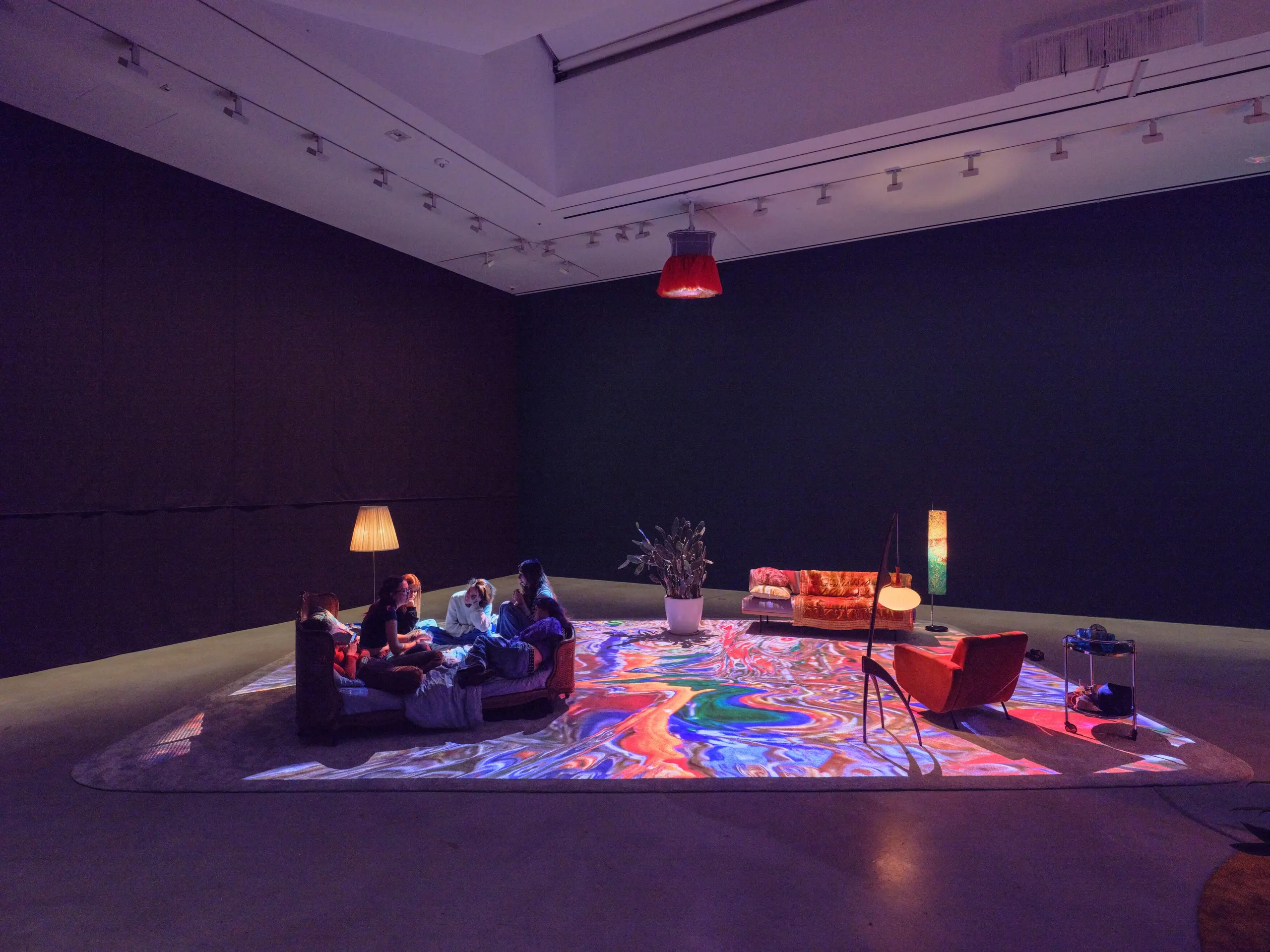
Pipilotti Rist is a Swiss visual artist whose immersive video installations have redefined how audiences experience moving images in gallery spaces. Born Elisabeth Rist, she adopted the nickname Pipilotti as a child, and her work often blends vibrant, saturated projections with sculptural elements, soundscapes, and even furniture. Her pieces are known for their playful yet profound exploration of the human body, perception, and the relationship between interior and exterior worlds.
Since the mid-1980s, Rist has been a central figure in international contemporary art, with major exhibitions at institutions like the Museum of Modern Art, the Guggenheim, and the Los Angeles Museum of Contemporary Art. Her work is held in prestigious collections worldwide, and she continues to create large-scale installations that invite viewers to lie down, wander, and lose themselves in color and motion. As of 2026, she remains an active and influential voice in the art world, pushing the boundaries of what video art can be.
Early Life & Background
Pipilotti Rist was born on June 21, 1962, in Grabs, a small town in the Swiss Rhine Valley. Growing up in this scenic region, she developed an early fascination with the natural world and the moving image. As a child, she was nicknamed Pipilotti, a name that stuck and later became her professional identity.
Rist's formal artistic training began at the Institute of Applied Arts in Vienna, where she studied from 1982 to 1986. There, she experimented with various media, but it was video that captured her imagination. She then moved to Basel, Switzerland, to attend the Basel School of Design, where she honed her skills in video production. During this period, she also became involved in the feminist art movement, which deeply influenced her thematic concerns.
After completing her studies, Rist co-founded the feminist video group Les Reines prochaines in 1988. This collective produced experimental videos that challenged traditional representations of women. Her early works, such as the short video 'I'm Not the Girl Who Misses Much' (1986), already displayed her signature blend of pop culture, bodily imagery, and subversive humor. These formative years laid the groundwork for her later groundbreaking installations, as she developed a unique visual language that would set her apart in the art world.
Career Growth
Pipilotti Rist's breakthrough came in the late 1990s when she began creating large-scale video installations that enveloped viewers in immersive environments. Her 1997 work Ever Is Over All became iconic: it features a woman gleefully smashing car windows with a flower, set to a hypnotic soundtrack. This piece, along with others like Sip My Ocean (1996) and Pixel Pills (2015), showcased her ability to merge the digital with the organic, creating spaces that feel both fantastical and deeply personal.
Her installations often incorporate everyday objects, such as furniture, clothing, and even plants, blurring the line between art and life. In 2016, the Los Angeles Museum of Contemporary Art mounted the first West Coast survey of her work, titled 'Pipilotti Rist: Pixel Forest,' which drew large crowds and critical acclaim. She has also exhibited at the Venice Biennale, the Whitney Biennial, and numerous international venues.
Beyond museums, Rist has collaborated with architects and musicians, and her work has been commissioned for public spaces. She continues to push the boundaries of video art, experimenting with new technologies like virtual reality. Her influence is evident in a younger generation of artists who create immersive, sensory installations, and she remains a sought-after figure in the contemporary art scene.
Career Timeline
Public Image & Style
Pipilotti Rist is widely regarded as a pioneer of immersive video art, a reputation built on her ability to transform sterile gallery spaces into dreamlike, sensory playgrounds. Her signature style features saturated colors, slow-motion imagery, and a playful juxtaposition of the natural and the technological. Critics often praise her work for its accessibility, as viewers are encouraged to lie on pillows, touch screens, and become part of the art itself.
Media portrayals frequently highlight her as a leading Swiss media artist, and she has been featured in major art publications like Artforum and Frieze. Her fandom, while niche, is fiercely devoted, with attendees of her exhibitions often describing them as transcendent experiences. Rist's social media presence, particularly her studio's Instagram, offers a more personal look at her process, endearing her to a younger generation of art lovers.
She is also known for her feminist perspective, which she communicates through her art rather than overt activism. Her work challenges traditional notions of the female gaze and celebrates the body in all its forms, resonating with audiences who value inclusivity and emotional depth.
Fame & Fandom (iFAMOUS Rankings)
Pipilotti Rist commands a specialized global attention rooted in the contemporary art world rather than mass pop culture, with her influence extending through museum exhibitions, academic circles, and critical discourse. Despite this significant standing, iFANN's Global Fame Engine has evaluated this person, but they do not currently hold a placement in the published rankings such as the Global Top 1,000 or any Top-100 scope list. Consequently, no specific ordinal rank or score is assigned at this time. Her audience consists primarily of art critics, curators, students, and gallery-goers who engage with her work through institutional settings rather than forming a traditional fanbase with organized campaigns or rituals. There is no documented name for her supporters, reflecting the nature of her practice which prioritizes immersive, solitary experiences over direct celebrity interaction. While she maintains a professional Instagram presence to showcase current exhibitions like Your Eye Is My Island, this serves as an artist portfolio rather than a hub for fan-driven projects or chart pushes. The cultural mythology surrounding her is anchored in artistic breakthroughs, most notably her 1997 video installation Ever Is Over All, where she depicted smashing car windows with a flower, transforming destructive impulses into cathartic gestures. This imagery later influenced Beyoncé's Hold Up music video, a connection validated by Rist herself during discussions on the tenth anniversary of Lemonade. Her work continues to draw attention public attention in digital spaces, such as when Smashed Faces dominated a Midnight Moment exhibition in 2026, proving the enduring power of her sensory installations.
Interesting Facts and Legends
Pipilotti Rist adopted her childhood nickname professionally in the 1980s after a mispronunciation of her birth name, Elisabeth. She frequently collaborates with her husband, composer Carlos Verdaguer, to integrate soundscapes into her installations. In a 2018 interview, she described her works as compact handbags containing painting, technology, music, poetry, and premonitions of death and sex. Her approach to nudity presents the female body as natural and unapologetic, often citing the Swiss Alps as a major visual influence. A widely retold story in her career involves her 1997 piece Ever Is Over All, depicting a woman cheerfully smashing car windows with a giant red flower, an act that became one of the most iconic images in contemporary video art history. This imagery gained further legend status by directly inspiring Beyoncé's 2016 Hold Up music video, a connection Rist confirmed in recent years. Another notable moment occurred in 2026 when her work Smashed Faces dominated a Midnight Moment exhibition, demonstrating the lasting impact of her subversive visuals. Her studio Instagram account shares behind-the-scenes glimpses with approximately 75,000 followers, reinforcing her philosophy that art should be wild and friendly.
Notable Quotes
“I want to be wild and friendly.”
“Video installations are like compact handbags that can contain everything.”
“The body is the first interface we have with the world.”
“I like to make art that you can feel with your whole body, not just your eyes.”
“My work is about giving permission to be vulnerable.”
Family & Personal Life
Pipilotti Rist is married to Carlos Verdaguer, a Spanish artist and composer who has collaborated on the soundtracks for many of her installations. The couple met in the early 1990s and have two children together. The family resides in Zurich, Switzerland, where Rist maintains her studio.
Rist has spoken about the importance of balancing her family life with her demanding career, often involving her children in her creative process. She has credited her family for keeping her grounded and inspiring her to explore themes of intimacy and connection in her work. Despite her international fame, she prefers to keep her personal life private, sharing only occasional glimpses on social media.
Notable Connections
Relationships & Dating History
Pipilotti Rist has been married to Carlos Verdaguer, a Spanish artist and composer, for over two decades. The couple met in the early 1990s and have collaborated on numerous projects, with Verdaguer creating soundtracks for her installations. They have two children together.
Rist rarely discusses her personal life in interviews, but she has mentioned that her family is a source of inspiration. As of 2026, she remains married to Verdaguer, and the couple lives in Zurich, Switzerland.
- MarriedCarlos Verdaguer1995 - presentCurrentMet in the early 1990s and married; they have two children and collaborate on art projects.
Salary, Net Worth In 2026
$5 Million
iFANN Editorial Team estimate
iFANN currently estimates Pipilotti Rist's net worth to be around $5 million as of 2026. Her financial portfolio is built primarily on the sale of artworks held in major collections worldwide, with limited edition prints and video installations fetching significant prices at auction. Additional income derives from commissioned works for public spaces and various brand collaborations. High-profile exhibitions, such as Pixel Forest at MOCA, have drawn large audiences, contributing to her consistent presence in the art market. While her exact earnings remain private, the stability of her sales and commissions suggests a growing and secure financial foundation.
Awards Won (2)
Pipilotti Rist has received several prestigious awards for her contributions to video art, though a comprehensive list is not publicly documented. She was honored with the Zurich Art Prize in 2011 and the Wolfgang Hahn Prize in 2015, both recognizing her innovative installations.
2011 · Lifetime Achievement
Overall artistic contribution
2015 · Art Prize
Overall artistic contribution
Known For
Ever Is Over All
1997 · Video installation
Sip My Ocean
1996 · Video installation
Pixel Forest
2016 · Exhibition
Keywords
Sources
Quick Facts
- Profession
- Visual artist
- Born
- June 21, 1962
- Birthplace
- Grabs, Switzerland
- Gender
- Female
- Birth Sign
- Cancer
- Spouse
- Carlos Verdaguer
- Children
- 2
Personal Details
- Full Name
- Elisabeth Rist
- Spouse
- Carlos Verdaguer
- Children
- 2
Frequently Asked Questions
Who is Pipilotti Rist?
What is Pipilotti Rist's net worth in 2026?
Is Pipilotti Rist still active in 2026?
What are Pipilotti Rist's most famous works?
How does Pipilotti Rist create her installations?
Social Media
Similar People
Join the community
fans discussing