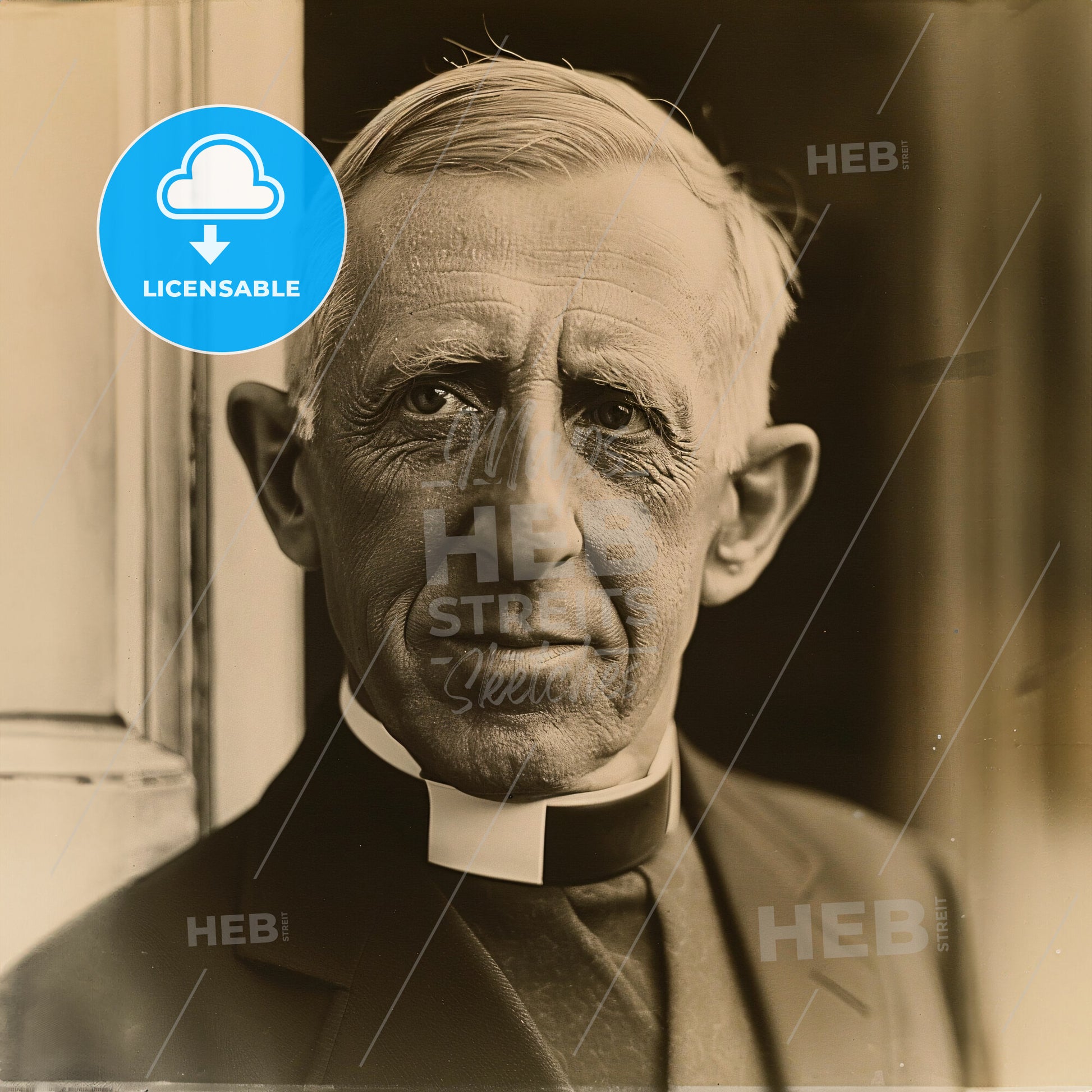
Pierre Teilhard de Chardin
 France
paleontologist•writer•paleoanthropologist
Also known as: Teilhard de Chardin, P. Teilhard de Chardin
Birthday
May 1, 1881
Birth Sign
Taurus
Birthplace
Château of Sarcenat, Auvergne, France
Age
Died at 73
About
Pierre Teilhard de Chardin was a French Jesuit priest, paleontologist, and philosopher who dedicated his life to reconciling the scientific theory of evolution with Christian theology. Born on May 1, 1881, at the Château of Sarcenat in the Auvergne region, he entered the Society of Jesus at age eighteen and was ordained a priest in 1911. His career as a scientist took shape during two decades of fieldwork in Asia, where he played a pivotal role in identifying the fossils of Peking Man (*Homo erectus*) at the Zhoukoudian cave complex near Beijing. This discovery revolutionized the understanding of human evolution and established him as a respected figure in paleoanthropology.
Teilhard's intellectual legacy extends far beyond the fossil record. He developed a sweeping evolutionary worldview that merged Henri Bergson's philosophy with Christian mysticism, proposing that the universe is evolving toward a final point of consciousness known as the Omega Point. He also co-developed the concept of the noosphere with Vladimir Vernadsky, envisioning a sphere of human thought enveloping the Earth. Despite facing ecclesiastical censure that forbade him from publishing his major works during his lifetime, he continued writing in secret. Manuscripts like The Phenomenon of Man and The Divine Milieu were smuggled out of France and published posthumously, eventually gaining favorable recognition from later popes.
Early Life & Background
Teilhard grew up as the youngest of twelve children in a devout Catholic family, where a profound connection to nature defined his childhood. Even as a boy, he felt a dual pull toward scientific inquiry and religious devotion, a tension that would shape his entire existence. He pursued rigorous education at the Jesuit College in Clermont-Ferrand, studying mathematics and physics before entering the novitiate at the age of eighteen in 1899. His path to ordination was not merely academic but deeply spiritual, preparing him for a life that would bridge the gap between faith and empirical science.
The outbreak of World War I interrupted his early theological studies and thrust him into the brutal reality of combat. Serving as an ambulance driver for the French army, he witnessed the horrors of trench warfare firsthand and suffered injuries that left lasting physical scars. These traumatic experiences profoundly influenced his spiritual writings, particularly The Divine Milieu, as he began to conceptualize the unity of matter and spirit amidst suffering. It was during this period of war that he started formulating the philosophical ideas that would later define his controversial legacy, setting the stage for his future work in China.
Career Growth
Following the war, Teilhard's scientific career flourished when he traveled to China in 1923 to participate in excavations at the Zhoukoudian cave complex. There, he identified fossils of Peking Man, a discovery that reshaped the study of human evolution and cemented his reputation as a leading paleoanthropologist. From the 1920s through the 1940s, he conducted extensive geological and archaeological surveys across China, Mongolia, and India, contributing significantly to the understanding of Asian prehistory.
His intellectual contributions, however, brought him into conflict with Church authorities. In 1926, he was ordered by his superiors to cease teaching and writing on evolutionary topics due to their perceived contradiction with doctrine. Consequently, he spent the latter part of his life in relative exile, first in China and later in New York City, forbidden from publishing under his own name. Despite these restrictions, he continued to write prolifically in secret. After his death in 1955, his manuscripts were smuggled out and published, sparking global interest. The ban on his works was officially lifted following the Second Vatican Council (1962–1965), allowing his synthesis of faith and science to be fully appreciated by the Catholic Church and the broader academic community.
Career Timeline
Public Image & Style
Teilhard de Chardin presents a unique public image as both a man of science and a mystic. His persona is defined by the tension between rigorous empirical research and profound spiritual vision. Media and academic portrayals often highlight his status as an "exiled visionary," a brilliant thinker silenced by the institution he served yet continuing to write in secret. His aesthetic presence in historical accounts suggests a man of average height and quiet demeanor, focused intensely on his work. The tone of his public perception shifted over time, moving from controversy and suspicion to admiration and reverence, particularly after the lifting of the Vatican ban on his works.
Fame & Fandom (iFAMOUS Rankings)
The audience surrounding Pierre Teilhard de Chardin operates without the rituals, commercial campaigns, or organized fandom structures typical of modern celebrity culture. His legacy is sustained not by fan clubs or social media movements but by theologians, scientists, and philosophers who treat his writings as primary texts for intellectual and spiritual inquiry. Unlike pop icons who generate viral moments or stadium-sized gatherings, Teilhard's influence remains confined to scholarly study, liturgical reflection, and the publication of his works in academic circles. The narrative of the exiled visionary persists as a verified historical biography rather than a constructed legend, defined by his secret manuscripts and eventual posthumous vindication within the Church. While recent media projects like the 2026 film Teilhard: Visionary Scientist and PBS documentaries have renewed interest in his concepts of the Omega Point, these efforts reflect academic engagement rather than fan-driven hype. No formal name exists for his followers, and no documented instances of crowds fainting or public adoration characterize his reception. iFANN has evaluated this figure within its Global Fame Engine, yet he does not currently hold a placement in the published rankings (Global Top 1,000 or a Top-100 scope list).
Interesting Facts and Legends
Teilhard de Chardin was one of the few scientists of his time to publicly embrace evolution while maintaining a devout Catholic faith. He coined the term "cosmic Christ" to describe the idea that Christ is present throughout the evolutionary process of the universe. A skilled photographer and artist, he often sketched the landscapes and fossils he encountered during his expeditions, capturing the beauty of the natural world he studied so closely. Another notable fact is his close intellectual collaboration with Russian geochemist Vladimir Vernadsky, with whom he developed the concept of the noosphere. His famous quote, "We are not human beings having a spiritual experience. We are spiritual beings having a human experience," has become widely cited in discussions about the intersection of spirituality and biology.
Notable Quotes
“Love is a sacred reserve of energy.”
“We are not human beings having a spiritual experience. We are spiritual beings having a human experience.”
Family & Personal Life
Born into a large family as the youngest of twelve children, Teilhard grew up in the Château of Sarcenat in the Auvergne region of France. His upbringing was steeped in Catholic tradition, which instilled in him a deep sense of faith alongside his curiosity about the natural world. As a member of the Society of Jesus, he took vows of poverty, chastity, and obedience, meaning he lived a celibate life dedicated entirely to his vocation. He never married, nor did he have children. His personal relationships were primarily intellectual and spiritual, centered around his correspondence with fellow thinkers and scientists rather than romantic partnerships.
Notable Connections
Vladimir Vernadsky, Henri Bergson, Pope John Paul II, Pope Benedict XVI, Pope Francis
Relationships & Dating History
Pierre Teilhard de Chardin remained a celibate Jesuit priest throughout his entire life. As a member of the Society of Jesus, he took vows of poverty, chastity, and obedience. Consequently, there are no romantic relationships, marriages, dating histories, or children to report. He did not marry, nor was he ever engaged. His relationships were primarily intellectual and spiritual collaborations with other thinkers, scientists, and fellow Jesuits, such as his correspondence with Vladimir Vernadsky, with whom he co-developed the concept of the noosphere. His life was dedicated entirely to his vocation, his scientific research, and his philosophical writings. He never had a public dating history, as his commitment to the priesthood precluded such activities. His status at the time of death was that of a single, celibate priest.
Death & Aftermath
Died
April 10, 1955 (aged 73)
Death Place
New York City
Cause of Death
Complications from heart failure
The posthumous rehabilitation of Pierre Teilhard de Chardin culminated in 2014 when the Vatican lifted the remaining bans on his works, fully restoring his reputation after nearly a century of ecclesiastical restriction. This final act followed decades of growing academic interest that began with the publication of his manuscripts in English in 1965 and the establishment of the Teilhard de Chardin Society in 1968. Teilhard passed away on April 10, 1955, at the Jesuit House of Studies in the Bronx, New York City, where he had resided under house arrest for years due to restrictions imposed by his superiors regarding his writings.
He was 73 years old at the time of his death, which occurred following a period of declining health and resulted from a heart attack. The event was a sudden natural occurrence within the residential setting of the college, attended only by his fellow Jesuits and close associates such as Father Robert Speaight. The funeral service held shortly after his death was a private ceremony at the Church of St. Ignatius Loyola in New York City, attended primarily by members of the American Jesuit community. No major public figures or high-ranking Vatican officials participated in the service, reflecting the tension between Teilhard and Church leadership during his life.
Following the service, he was cremated, and his ashes were interred at the Sacred Heart Monastery cemetery in Wicomico, Maryland. The handling of his literary estate remained a joint responsibility of his family and the Jesuit Order, who preserved his unpublished manuscripts under strict editorial supervision before releasing them to the public.
Net Worth (Estate Value)
$0
iFANN Editorial Team estimate
As a deceased religious figure who took a vow of poverty, Pierre Teilhard de Chardin left no personal fortune or estate value in the traditional sense. His wealth is measured solely in the enduring value of his intellectual property and the cultural impact of his writings. The Society of Jesus managed the publication of his manuscripts for decades, generating revenue through book sales and licensing deals. Today, his legacy continues to generate economic activity through the continuous publication of his works, documentaries, and academic studies. There is no public financial data regarding a personal estate valuation, as he owned no real estate or business ventures in his own name. The economic impact of his legacy is sustained by publishers and institutions rather than a personal estate management structure. iFANN Editorial Team estimates his posthumous estate value at $0, reflecting his lifelong commitment to poverty and lack of personal assets.
Awards & Accolades
View 2 records, honours and achievementsKnown For
The Phenomenon of Man
1955 · Author
The Divine Milieu
1957 · Author
Peking Man Fossils
1923 · Paleontologist
Keywords
Sources
Quick Facts
- Profession
- paleontologist, writer, paleoanthropologist
- Born
- May 1, 1881
- Birthplace
- Château of Sarcenat, Auvergne, France
- Died
- April 10, 1955
- Death Place
- New York City
- Gender
- Male
- Birth Sign
- Taurus
Personal Details
- Full Name
- Pierre Teilhard de Chardin
- Children
- Education
- Jesuit College in Clermont-Ferrand; Novitiate of the Society of Jesus
Frequently Asked Questions
Who was Pierre Teilhard de Chardin?
Did Pierre Teilhard de Chardin have children?
What caused Pierre Teilhard de Chardin's death?
Where is Pierre Teilhard de Chardin buried?
Why was Pierre Teilhard de Chardin controversial?
Similar People
Join the community
fans discussing