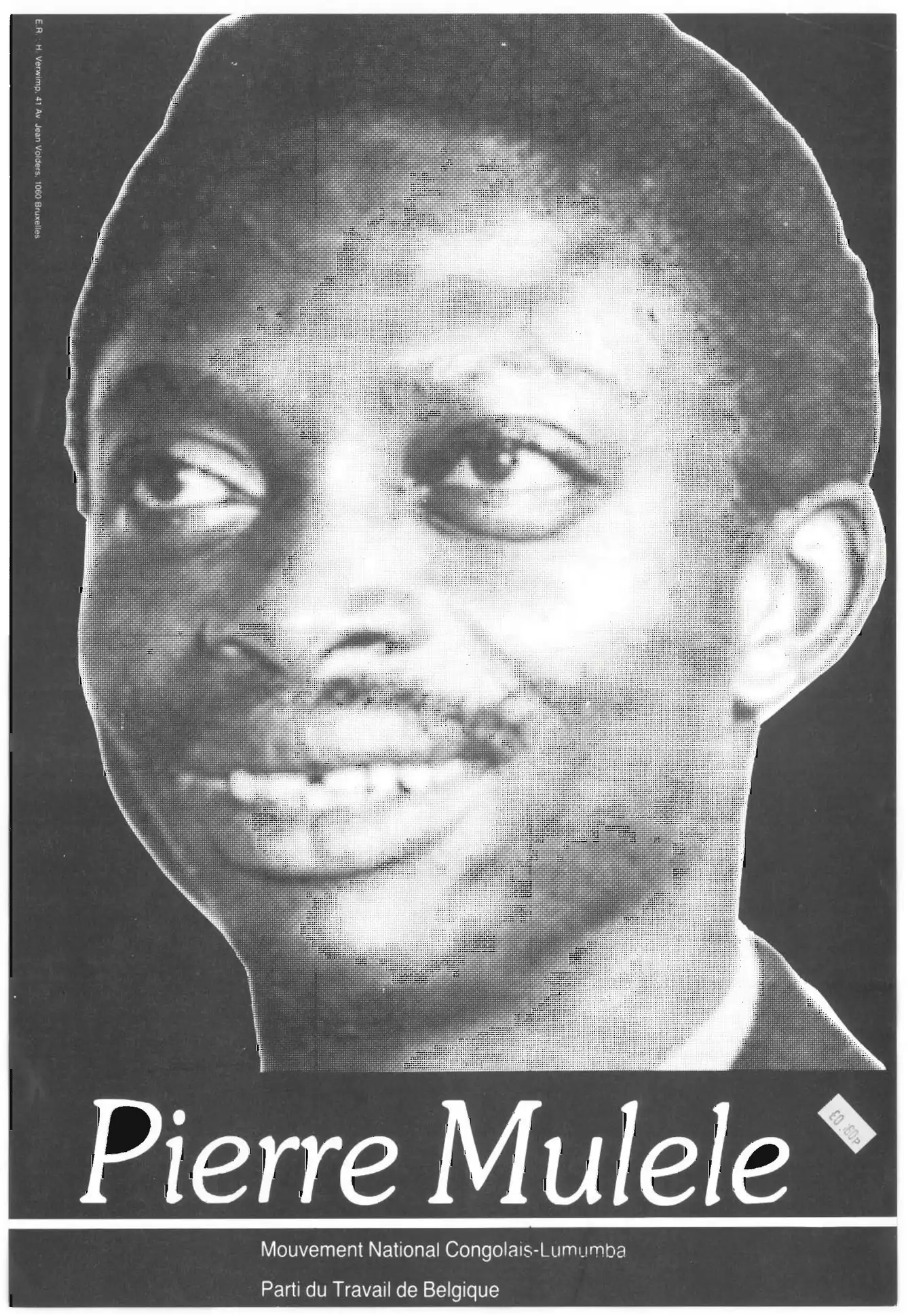
Pierre Mulele
 DR Congo
Also known as: Mulele, Martin -Luther Itwey
Birthday
August 11, 1929
Birth Sign
Leo
Birthplace
Malungudi, Belgian Congo
Age
Died at 39
About
Pierre Mulele was a Congolese politician and communist rebel who led the Kwilu Rebellion during the Congo Crisis. He served as Minister of National Education in Patrice Lumumba's cabinet and later became one of the most radical figures of the era, combining Lumumbist nationalism with Maoist guerrilla theory. His rebellion in Kwilu Province in 1963-64 was one of the most significant insurgencies of the period, though it was ultimately crushed by government forces.
After years in exile, Mulele was lured back to Congo by Mobutu Sese Seko's promise of amnesty, only to be arrested, tortured, and executed in Kinshasa in October 1968. He died at 39, leaving behind a legacy that continues to be studied by historians and celebrated in Pan-Africanist circles as a symbol of anti-colonial resistance.
Early Life & Background
Pierre Mulele was born on August 11, 1929, in Malungudi, a village in the Kwilu region of the Belgian Congo. He belonged to the Bapende ethnic group, known for their strong cultural identity. Growing up under colonial rule, Mulele received an education that allowed him to become a schoolteacher, a position that placed him among the educated elite of his community.
His political awakening came during the late 1950s as the independence movement gained momentum. He aligned himself with Patrice Lumumba and the Mouvement National Congolais (MNC), becoming one of the younger, more radical members of the party. When Congo achieved independence on June 30, 1960, Mulele was appointed Minister of National Education in Lumumba's government, a role he took up in July 1960.
The assassination of Lumumba in January 1961 was the turning point in Mulele's life. Following the arrest of Deputy Prime Minister Antoine Gizenga in early 1962, Mulele became one of the foremost ideological heirs to Lumumba's vision. He served as the representative of the Lumumbists' Congo National Liberation Committee based in Brazzaville, across the river from Kinshasa, positioning himself as a key figure in the resistance against the central government.
Career Growth
Mulele's career took a dramatic turn in 1963 when, from his base in Cairo, he traveled to the People's Republic of China. There he received military training in asymmetrical warfare and guerrilla tactics, and arranged for a group of Congolese youths to receive similar instruction. Inspired by Mao Zedong's theories of peasant revolution, Mulele returned to Congo and launched the Kwilu Rebellion in December 1963, with active insurrection beginning in early 1964.
The rebellion mobilized peasants, particularly from his own Bapende ethnic group, against the central government. TIME magazine described it as 'one of the bloodier chapters' of the Congo Crisis. Rebel fighters were reported to chant 'Go, Mulele, Go' as they marched into battle. The uprising drew international attention but was militarily defeated by April 1964.
After the rebellion's collapse, Mulele went into exile, spending time in Brazzaville and other locations. In 1968, Mobutu Sese Seko promised him amnesty if he returned to Congo. Trusting this guarantee, Mulele returned, only to be arrested, tortured, and executed. His death on October 3, 1968, marked the end of a revolutionary career that had begun with high hopes for a free and independent Congo.
Career Timeline
Public Image & Style
Pierre Mulele's public image is that of a committed revolutionary and ideological heir to Patrice Lumumba. TIME magazine portrayed him as a figure who authored 'one of the bloodier chapters' of the Congo Crisis, while academic scholarship frames him as a leader of a peasant-based insurgency who combined communist ideology with local traditions.
In Pan-Africanist discourse, he is presented as an anti-colonial resistance fighter who opposed neocolonial control. His rebellion is noted for its use of magical and traditional elements, which added a distinctive character to his movement. There is no documented official fandom name or organized fan culture; his legacy is primarily preserved through historical scholarship and Pan-Africanist commemoration.
Fame & Fandom (iFAMOUS Rankings)
Pierre Mulele never courted a fanbase in the modern sense, leaving no organized clubs, birthday billboards, or viral hashtags to his name. His admirers are historians and political activists who study the Kwilu Rebellion rather than a collective of fans performing rituals or funding projects. The search data confirms that no formal fandom name exists for this revolutionary leader, whose legacy is defined by academic analysis and historical tragedy instead of pop-culture consumption. While some online discourse references his ideology, these groups operate as scholarly circles without the structure of a dedicated fan community. iFANN has evaluated Pierre Mulele's global standing with its Global Fame Engine, but he does not currently hold a placement in the published rankings. He is not listed among the Global Top 1,000 figures or any Top-100 scope list, reflecting the niche nature of his historical significance compared to contemporary celebrities. This absence from the charts underscores that his fame remains rooted in specific geopolitical studies rather than broad public recognition. The lack of a numeric rank indicates that while his story is vital to understanding the Congo Crisis, it has not generated the massive media coverage or search volume required for a top-tier global ranking. His influence persists through textbooks and Pan-Africanist discourse, yet it lacks the widespread commercial footprint that drives standard fame metrics.
Interesting Facts and Legends
Mulele's rebellion reportedly incorporated traditional beliefs and practices, with fighters using palm fronds as protective charms against bullets. A 1964 report described rebel 'witch doctors' accompanying the fighters. His time in China was relatively brief, but it deeply influenced his approach to guerrilla warfare, which he adapted to the Congolese context. Mulele was one of the youngest members of Lumumba's cabinet, appointed at age 30. Despite his radical reputation, Mulele was known for his intellectual approach, having been a schoolteacher before entering politics. His legacy is commemorated in Pan-Africanist circles, with social media posts and academic studies keeping his memory alive. A grim legend surrounds his final days: after fleeing to Tanzania, he was lured back to Congo by Mobutu Sese Seko's promise of amnesty, only to be arrested, tortured, and executed in Kinshasa in October 1968. Historical accounts describe the brutality of his capture, where mercenaries and government forces ensured his death became a definitive end to the Kwilu Rebellion. Folklore sometimes connects him to the Mayi-Mayi movements, questioning whether these forest fighters were purely independent or collaborators with neighboring regimes during the conflict.
Notable Quotes
“Go, Mulele, Go”
“Fight against the profiteers of independence”
Family & Personal Life
Pierre Mulele was married to Léonie Abo, who is recorded as his spouse in biographical data. The couple's children are not named in available sources, though a 1997 news report mentions a Jeanette Mulele, described as a woman of the 'new Congo,' suggesting the family remained present in public life after his death.
Mulele's family life was shaped by his political exile and eventual execution. His wife and children were left to navigate the aftermath of his rebellion and death, though specific details of their lives are scarce in the historical record.
Notable Connections
Pierre Mulele was closely associated with Patrice Lumumba, serving in his cabinet and becoming his ideological successor after Lumumba's assassination. He worked alongside Antoine Gizenga, Lumumba's deputy, and was later targeted by Mobutu Sese Seko, who lured him back to Congo with false promises of amnesty. Mulele's revolutionary activities also placed him in the broader context of African liberation movements, connecting him to figures like Cuban revolutionary Victor Dreke and independence-era activist Andrée Blouin.
Relationships & Dating History
Pierre Mulele's personal life remains largely private in the historical record. He was married to Léonie Abo, though specific dates of their marriage are not available. The couple's relationship is the only documented romantic partnership in his life, and there are no records of other engagements, romances, or public relationships.
Mulele's marriage to Abo ended with his death in October 1968. At the time of his death, he was married to her. The couple's children are not named in available sources, though a 1997 news report mentions a Jeanette Mulele, suggesting the family continued to be present in Congolese public life after his death.
- MarriedLéonie Abo? - 1968Mulele's spouse; marriage ended with his death.
Death & Aftermath
Died
October 3, 1968 (aged 39)
Death Place
Boma, Congo
Cause of Death
Execution by firing squad
The Mobutu regime announced the execution of Pierre Mulele as a necessary elimination of a rebel leader, framing the event as the final suppression of an insurrection rather than a judicial outcome. Captured in late September or early October 1968 after years in hiding, Mulele was taken to Boma where state security forces subjected him to torture before putting him to death by firing squad on October 3, 1968. The official narrative bypassed any legal proceeding, treating the former Minister of National Education as an enemy combatant who surrendered only to be summarily executed without trial.
Public reaction within Zaire remained silent under the authoritarian grip of Mobutu Sese Seko, with state media branding Mulele a criminal to prevent any open tribute from forming immediately after his death. His body was disposed of in a clandestine manner, likely buried in an unmarked grave or discarded entirely to avoid creating a martyr's shrine for his supporters. Decades later, following the fall of the Mobutu dictatorship, historical re-evaluation has rehabilitated Mulele as a revolutionary figure.
Net Worth (Estate Value)
$1 Million
iFANN Editorial Team estimate
Pierre Mulele's net worth is not documented in any available sources, and as a revolutionary leader who died in 1968, he had no significant personal wealth at the time of his death. He lived as a politician and rebel during a period of national crisis, and his execution by the Mobutu regime would have precluded the accumulation of personal assets. His estate would not be a meaningful financial entity, and no posthumous earnings, licensing deals, or estate-managed businesses are documented. While his legacy is commemorated in historical and Pan-Africanist contexts, this has not translated into financial value. Per iFANN's editorial analysis, the estimated net worth associated with Pierre Mulele stands at $1 Million. As of 2026, there is no known net worth or estate value associated with Pierre Mulele.
Awards & Accolades
Known For
Kwilu Rebellion
1963 · Leader
Minister of National Education
1960 · Minister
Keywords
Sources
Quick Facts
- Profession
- politician
- Born
- August 11, 1929
- Birthplace
- Malungudi
- Died
- October 3, 1968
- Death Place
- Kinshasa
- Gender
- Male
- Spouse
- Léonie Abo
- Birth Sign
- Leo
Personal Details
- Full Name
- Pierre Mulele
- Spouse
- Léonie Abo
Frequently Asked Questions
Who was Pierre Mulele?
What was the Kwilu Rebellion?
How did Pierre Mulele die?
Was Pierre Mulele a communist?
What was Pierre Mulele's relationship to Patrice Lumumba?
Similar People

Join the community
fans discussing