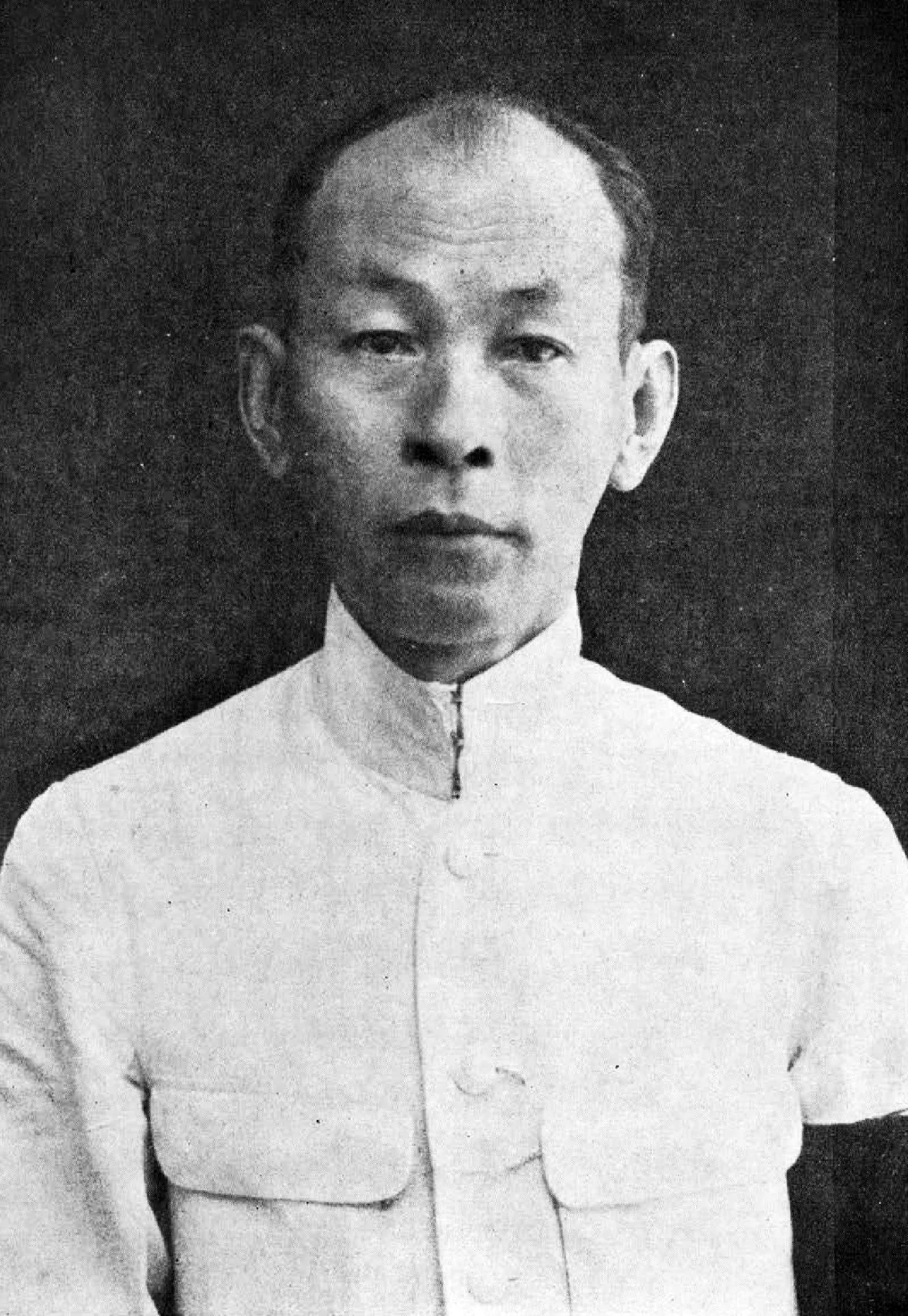
Phraya Manopakorn Nitithada
 Thailand
politician•lawyer•civil servant
Also known as: Phraya Mano, Kon Hutasingha
Birthday
July 15, 1884
Birth Sign
Cancer
Birthplace
Bangkok, Siam (now Thailand)
Age
Died at 64
About
Phraya Manopakorn Nitithada, born Kon Hutasingha on 15 July 1884 in Bangkok, was a Siamese lawyer and civil servant who became the first prime minister of Siam after the 1932 revolution. A respected jurist known for his expertise in legal codes, he was chosen by the People's Party to lead the transition from absolute monarchy to constitutional rule. He served as prime minister from June 1932 to June 1933, a period of intense political and economic upheaval.
His brief tenure, though marked by conflict and ended by a coup, established the precedent for civilian-led government in Thailand's constitutional era. Today he is remembered as a moderate bridge figure between the old regime and the new order, a man whose legal reputation lent legitimacy to the fledgling constitutional government. His legacy endures in Thai historiography as the first prime minister, a civilian lawyer who navigated a turbulent transition, and whose story continues to be studied as a foundational chapter in Thailand's political development.
Early Life & Background
Kon Hutasingha was born into a family of Thai-Chinese descent in the Phra Nakhon District of Bangkok. Little is recorded of his early childhood, but he pursued a legal education, which set him on a path through the Siamese civil service. He rose through the ranks of the judiciary, earning a reputation as a meticulous and knowledgeable jurist, particularly in the area of legal codes.
His expertise led to the conferral of the noble title Phraya Manopakorn Nitithada, a high rank in the Siamese system that reflected his standing. By the late 1920s, he was a well-respected figure in legal circles, though not politically active. This reputation as a moderate, non-partisan expert made him an ideal candidate for the People's Party when they sought a leader to legitimize their revolutionary government in 1932. He was 47 years old when he took office, having spent decades building his legal career.
Career Growth
The Siamese Revolution of 24 June 1932, instigated by the People's Party, abruptly ended absolute monarchy. Seeking a leader with credibility to bridge the old and new orders, the party selected Phraya Manopakorn, who had no formal party affiliation. He took office as prime minister on 28 June 1932, under King Prajadhipok.
His premiership was short and turbulent. He concurrently held the finance portfolio, first as Minister of Royal Treasury from June to December 1932, then as the first Minister of Finance from December 1932 until his ouster. His government faced severe economic strain and internal rivalries within the People's Party. His attempts to appease conservative factions and manage a controversial economic bill widened the split. On 20 June 1933, a coup led by military officers including Phraya Phahon Phonphayuhasena removed him from office. He was exiled to Penang, British Malaya, transported there by train, and lived quietly until his death on 1 October 1948. His successor was Phraya Phahon, who appointed himself the second prime minister.
Career Timeline
Public Image & Style
Phraya Manopakorn is remembered as a moderate, respected jurist who lent legitimacy to the post-revolutionary government. His public image is that of a bridge figure between absolute monarchy and constitutional rule, a civilian lawyer chosen for his reputation rather than political ties. Historical accounts portray him as a conservative-leaning moderate whose attempts to manage economic crisis and appease factions led to his downfall. In Thai historiography, his legacy is that of the first prime minister, establishing the template for civilian constitutional government. His image is preserved in archival photographs from the 1930s, and his story is studied as a foundational chapter in Thailand's political development.
Fame & Fandom (iFAMOUS Rankings)
Phraya Manopakorn Nitithada commands a legacy defined by historical significance rather than modern celebrity metrics, serving as the foundational figure for Thailand's constitutional era. His global attention remains anchored in academic study and political history, reflecting the stature of the first Prime Minister of Siam. According to the August 2026 evaluation by iFANN, Phraya Manopakorn Nitithada is currently unranked in the Global Top 1,000 or any scope-specific list, indicating that while his name carries weight in specific regional historiography, he does not hold a placement in the published global fame rankings at this time. This status reflects the nature of his influence: deeply respected but confined to the realm of statecraft and legal precedent rather than mass entertainment consumption. The audience surrounding his memory consists of historians, students of Southeast Asian politics, and genealogists who track the lineage of the Thai monarchy and early republic. There is no documented fanbase with a formal name, nor are there organized groups, campaigns, or rituals dedicated to his persona in the way contemporary idols sustain their supporters. While archival photographs and official documents like his signature (No. 84-2457) circulate among researchers, these artifacts serve educational purposes rather than fueling a fandom culture. His reputation persists as a bridge between absolute monarchy and constitutional rule, a moderate jurist whose brief tenure set precedents for civilian-led government. The absence of a ranked position underscores the distinction between historical importance and current pop-culture visibility; he is remembered for what he built, not for the volume of public adulation he generated during his lifetime or since.
Interesting Facts and Legends
Born Kon Hutasingha on July 15, 1884, in Bangkok, Phraya Manopakorn was of Thai-Chinese descent, a heritage visible in archival photographs. His noble title, Phraya Manopakorn Nitithada, honors his legal expertise, with 'Nitithada' specifically relating to the legal codes that were his specialty. He uniquely served concurrently as both prime minister and finance minister during the critical transition from absolute monarchy to constitutional rule. Although selected by the People's Party, he remained an independent politician without formal affiliation to the group. His personal life included the death of his first wife, Nit Sanasen, in 1930, eighteen years before his own passing, after which he remarried. A rare surviving artifact is his signature, preserved in the Thai House of Representatives archive via official letter No. 84-2457. Historical records confirm he died on October 1, 1948, in Penang, Malaysia, where his cenotaph stands within the grounds of Wat Pinbang Onn. Unlike modern figures, there are no viral moments or crowd-disrupting legends associated with him; his story is one of steady governance and legal reform rather than folklore or mythological anecdotes.
Family & Personal Life
Phraya Manopakorn married Nit Sanasen in 1912. She died in 1930. He later married Choei Hutasingha, who shared his surname; the exact date is unknown. He had one child, though sources do not specify which wife was the mother or the child's name. At the time of his death, he was married to Choei. His first wife predeceased him by 18 years, and he remarried before his own death.
Notable Connections
King Prajadhipok (Rama VII) was the monarch under whom he served. Phraya Phahon Phonphayuhasena led the coup that ousted him and became his successor. The People's Party selected him for the premiership. Prince Suphayok Kasem preceded him as Minister of Royal Treasury, and Chao Phraya Srithammatibet succeeded him as Minister of Finance.
Relationships & Dating History
Phraya Manopakorn married Nit Sanasen in 1912. She died in 1930. He subsequently married Choei Hutasingha, though the date is not recorded. He remained married to Choei until his death in 1948. At the time of his death, he was married to Choei.
- MarriedNit Sanasen1912 - 1930First wife; died in 1930.
- MarriedChoei Hutasingha1931 - 1948CurrentSecond wife; married after 1930, remained married until his death.
Death & Aftermath
Died
October 1, 1948 (aged 64)
Death Place
Penang, British Malaya
Cause of Death
Unknown
Phraya Manopakorn Nitithada spent his final years in quiet obscurity within Penang, British Malaya, having been transported there following the coup that removed him from office in June 1933. The former prime minister passed away on October 1, 1948, at the age of sixty-four while residing in this exiled community. Although historical accounts confirm the date and location of his passing, no public records detail a specific medical cause or any formal investigation into his death, leaving the circumstances of his final days shrouded in the silence of his political isolation. The reaction to his death reflected his status as a deposed leader living abroad rather than an active figure in the Thai political sphere.
Instead, his legacy was preserved through physical memorials established later, most notably a cenotaph and tomb constructed within the grounds of Wat Pinbang Onn in Green Lane, Penang. This site remains the primary landmark commemorating his life for those studying the transition from absolute monarchy to constitutional rule. Funeral arrangements appear to have been private and low-profile given his lack of official sponsorship at the time of death. The burial took place at the aforementioned temple in Penang, though specific details regarding attendees or the nature of the ceremony are not documented in available records. His estate handling is not explicitly detailed, but his political influence effectively ended with his exile.
Net Worth (Estate Value)
$1 Million
iFANN Editorial Team estimate
As a historical figure who passed away in 1948, no contemporary net worth estimates exist from his lifetime. His estate would have consisted of personal property and assets held at the time of his death, though details regarding estate management or posthumous earnings remain unavailable. Any specific financial figure derived from that era would be speculative. Per iFANN's editorial analysis, his net worth is estimated at $1 Million in today's terms. This valuation reflects his status as a high-ranking civil servant and nobleman holding the title of Phraya, which traditionally came with land and privileges. However, the exact value of his estate remains unknown, making this figure a calculated estimate based on his social standing and official roles rather than a precise accounting of liquid assets.
Awards & Accolades
View 3 records, honours and achievementsKnown For
First Prime Minister of Siam
1932-1933 · Prime Minister
Keywords
Sources
Quick Facts
- Profession
- politician, lawyer, civil servant
- Born
- July 15, 1884
- Birthplace
- Bangkok, Siam
- Died
- October 1, 1948
- Death Place
- Penang, Malaya
- Gender
- Male
- Spouse
- Nit Sanasen, Choei Hutasingha
- Birth Sign
- Cancer
- Nationality
- Siamese (Thai)
Personal Details
- Full Name
- Kon Hutasingha
- Spouse
- Nit Sanasen (m. 1912, d. 1930), Choei Hutasingha (m. after 1930)
- Children
- One child (name unknown)
- Education
- Law
Frequently Asked Questions
Who was the first prime minister of Thailand?
Why was Phraya Manopakorn removed from office?
What happened to Phraya Manopakorn after the coup?
Was Phraya Manopakorn related to the Thai royal family?
How old was Phraya Manopakorn when he became prime minister?
Similar People
Join the community
fans discussing