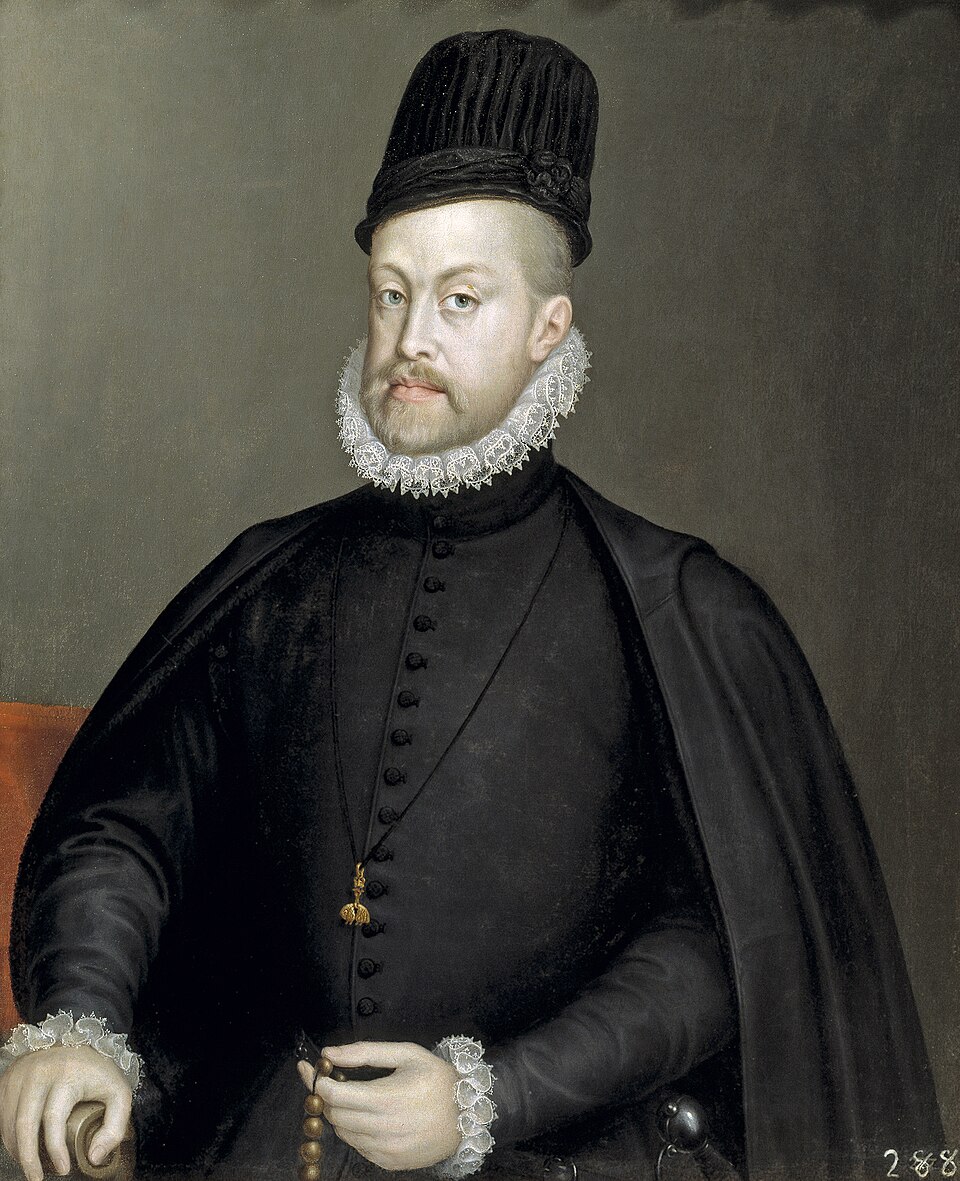
Philip II of Spain
 Spain
SpainKing of Spain•Portugal•Naples•and Sicily; Duke of Milan; ruler of the Netherlands
Also known as: Felipe II, Philip II, Philip I of Portugal
Birthday
May 21, 1527
Birth Sign
Gemini
Birthplace
Palacio de Pimentel, Valladolid, Castile, Spain
Age
Died at 71
About
Philip II of Spain was the ruler of the Spanish Empire at its zenith, a man whose dominion stretched across Europe and the Americas. Born in 1527, he inherited the throne from his father, Emperor Charles V, in 1556, and for over four decades he governed a vast realm that included Spain, Portugal, Naples, Sicily, the Netherlands, and territories in the New World. His reign is synonymous with the Spanish Golden Age, a period of extraordinary cultural achievement, yet it was also marked by religious conflict, military ambition, and financial strain.
Philip was a devout Catholic and saw himself as the defender of the faith against Ottoman expansion and Protestant heresy. His victories at Lepanto and his role in the French Wars of Religion earned him the respect of Catholic Europe, while his failed invasion of England with the Spanish Armada in 1588 became a defining setback. He was a bureaucratic monarch, ruling from his desk at El Escorial, where he built a monastery-palace that remains a symbol of his reign. Today, he is remembered as a complex figure: a pious, hardworking king whose legacy is debated by historians.
Early Life & Background
Philip was born at the Palacio de Pimentel in Valladolid on May 21, 1527, the only surviving son of Charles V and Isabella of Portugal. His mother, who died when he was twelve, instilled in him a deep religious faith and a love of the arts, particularly music and the guitar. He was raised primarily in Spain, absorbing a Castilian identity that would define him. His father, often absent on campaigns, sent him secret memoranda advising caution and distrust of advisers.
His education was humanist in nature, overseen by the future archbishop of Toledo, Juan Martínez Siliceo. He studied Latin, French, Portuguese, and some Italian, and developed a passion for collecting books, art, and relics. He was introverted and emotionally reserved from an early age, showing the traits that would mark his rule. At sixteen, in 1543, he was made regent of the Spanish heartlands, and his father gradually handed over responsibilities: the duchy of Milan in 1540, Naples and Sicily in 1554, the Netherlands in 1555, and finally the kingdoms of Spain and the overseas empire in 1556.
Career Growth
Philip's reign from 1556 to 1598 saw Spain reach the height of its power. He centralized the government in Madrid and built an administrative machinery that spanned the globe. In 1557, he won a victory over the French at Saint-Quentin, though the sight of the battlefield gave him a permanent distaste for war. He organized the Holy League in 1560, which led to the decisive naval victory at Lepanto in 1571, halting Ottoman expansion into Europe.
In 1580, he seized the Portuguese throne, uniting the Iberian Peninsula under his rule. He completed El Escorial in 1584, a monumental complex that served as palace, monastery, and royal burial site. However, his reign was also marred by the long and costly revolt of the Netherlands, which began in 1566 and was never fully suppressed. His attempt to invade England with the Spanish Armada in 1588 ended in disaster, with more than a third of his fleet lost. Despite these setbacks, Spain experienced a cultural flourishing during his rule, and he remained a staunch defender of Catholicism until his death in 1598.
Career Timeline
Public Image & Style
Philip II was a bureaucrat king, more comfortable with paperwork than with the battlefield. He ruled from his desk at El Escorial, where he spent hours reading and writing reports. He dressed tastefully and was always courteous, but his demeanor was often described as grim and controlling. He trusted only a small circle of advisers and was deeply suspicious of others.
His historical image has been shaped by the Spanish Black Legend, fueled by his enemies, which painted him as a fanatical tyrant. Later historians have offered more nuanced views, with some emphasizing his piety and sense of duty. A court historian once remarked that 'his smile and his dagger were very close,' capturing the duality of his character. Despite the controversies, his reign remains a subject of fascination, and his reputation is still debated.
Fame & Fandom
Philip II of Spain remains a towering figure in historical memory, though his modern audience consists not of screaming crowds or organized fan clubs, but of historians and students who dissect his reign with intense scrutiny. Unlike contemporary celebrities, he cultivated no fandom name, nor did his subjects engage in the rituals of adoration we see today; instead, his legacy is defined by the enduring scholarly debate over whether he was the prudent architect of an empire or its imprudent destroyer. The stories that persist are not viral moments but verified historical narratives, such as the catastrophic failure of the Spanish Armada or the secret layers hidden within portraits of his marriage to Mary Tudor, which continue to fuel academic discourse centuries after his death.
His influence stretches across media coverage, search trends, and cultural consumption signals worldwide, securing his place in global consciousness long after the fall of his dynasty. According to the iFANN Global Fame Rankings, Philip II of Spain is currently the 47th most famous person in Spain, a position holding steady from the previous cycle. He also ranks as the 64th most famous person from Spain, maintaining that same standing without fluctuation. These placements reflect a consistent level of attention driven by his status as a central character in the narrative of the Spanish Golden Age and the complexities of early modern European politics.
Interesting Facts and Legends
Philip II maintained a strict daily routine that followed a rigid timetable, setting great store by health and cleanliness while rejecting the hunt for the solitude of his desk. He collected relics and mechanical instruments at El Escorial, where he ruled as a bureaucrat king rather than a battlefield commander. Despite his power, he refused to delegate authority, trusting only a small circle of advisers and taking his father Charles V's advice to rule with 'piety, patience, modesty, and distrust' to heart. His court painter Sofonisba Anguissola captured his likeness, even as he ignored propaganda that painted him as a tyrant.
Historical lore often flips between viewing him as the Prudent King and the Imprudent King, a dichotomy highlighted when recent analyses suggest his micromanagement led to the disastrous Spanish Armada. A persistent mythos describes him as a grim, distrustful monarch who worked himself to death writing thousands of letters. Another enduring story concerns the secrets allegedly hidden behind his marriage to Mary Tudor, revealed through artistic interpretation. While he never interacted with the public like a modern celebrity, discussions in 2026 about the Spanish Crown Jewels and resistance against his rule in colonial Panama keep his complex legacy alive in contemporary conversation.
Notable Quotes
“Piety, patience, modesty, and distrust.”
“I have never enjoyed war, but I have never avoided it when it was necessary.”
“It is better to lose a kingdom than to commit a sin.”
Family & Personal Life
Philip was the only surviving son of Charles V and Isabella of Portugal. He had two sisters, Maria and Joanna, who both became empresses. His mother died in 1539, and his father was often away, leaving Philip to be raised by governesses and tutors. He married four times, each union a political alliance. His first wife, Maria Manuela of Portugal, was his cousin and died in 1545 after giving birth to Don Carlos. His second wife, Mary I of England, died childless in 1558. His third wife, Elisabeth of Valois, bore him two daughters, including Isabel Clara Eugenia, before her death in 1568. His fourth wife, Anna of Austria, was his niece and gave him his heir, Philip III, before dying in 1580.
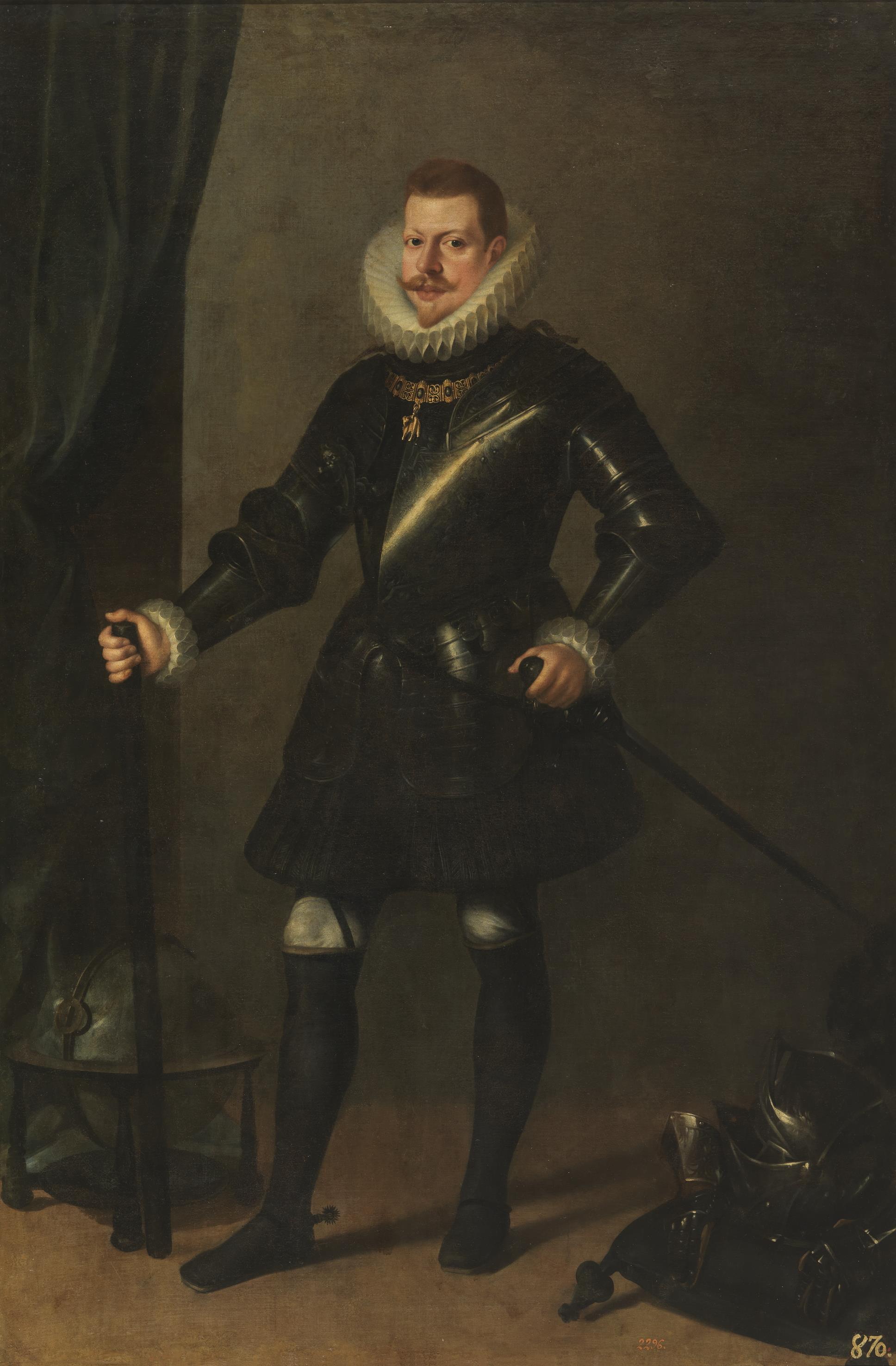
Philip was a devoted father to his daughters, but his relationship with his eldest son, Don Carlos, was troubled. Don Carlos suffered from mental instability and was ultimately confined by his father until his death in 1568. Philip's only surviving son to reach adulthood was Philip III, who succeeded him.
Notable Connections
Relationships & Dating History
Philip II married four times, each union a political alliance. His first wife, Maria Manuela of Portugal, was his cousin; they married in 1543, and she died in 1545 shortly after giving birth to their son, Don Carlos. His second marriage, to Mary I of England in 1554, was intended to restore Catholicism in England, but it produced no children and ended with Mary's death in 1558. His third wife, Elisabeth of Valois, married in 1559, bore him two daughters, including Isabel Clara Eugenia, before dying in 1568. His fourth and final wife, Anna of Austria, was his niece; they married in 1570, and she gave him his heir, Philip III, before her death in 1580. Philip was widowed four times and never remarried.
His relationships were marked by duty rather than romance, and his marriages were often strained by political pressures. His eldest son, Don Carlos, had a troubled relationship with his father, leading to his confinement and death in 1568.
- MarriedMaria Manuela of Portugal1543 - 1545His first cousin; she died days after giving birth to their son, Don Carlos.
- MarriedMary I of England1554 - 1558Marriage intended to restore Catholicism in England; produced no children.
- MarriedElisabeth of Valois1559 - 1568Daughter of Henry II of France; they had two daughters, including Isabel Clara Eugenia.
- MarriedAnna of Austria1570 - 1580His niece; mother of Philip III.
Death & Aftermath
Died
September 13, 1598 (aged 71)
Death Place
San Lorenzo de El Escorial, Sierra de Guadarrama, Spain
Cause of Death
Complications from gout and abdominal abscess
The news of Philip II's passing rippled through his vast dominions, sparking immediate and profound mourning across Spain, Portugal, Naples, Sicily, and the Netherlands. Church bells tolled in major cities while temporary altars rose for special masses, reflecting the deep reverence accorded to the Prudent King and defender of the faith. His final days had been spent largely bedridden at the Royal Monastery of San Lorenzo de El Escorial, where he retreated after presiding over the Cortes earlier that year to finalize succession matters. Suffering for months from a debilitating combination of gout and an abdominal abscess, the king was unable to walk before succumbing to severe infections and gangrene that developed in his legs and abdomen.
The funeral was a private affair attended by high-ranking clergy, court members, and his son, the future Philip III, with the body interred in the Royal Pantheon of Kings within the basilica of the monastery. Habsburg tradition dictated entombment rather than cremation, cementing the site as his final resting place. Posthumously, his legacy endured through artistic commissions and academic studies like Infanta by Magdalena S. Sánchez, while his estate passed smoothly to Philip III under established inheritance laws to maintain the Iberian Union.
Net Worth (Estate Value)
As a 16th-century monarch, Philip II's wealth was tied to the vast resources of the Spanish Empire. During his reign, Spain received millions in gold and silver from the Americas, which funded his wars and building projects. However, the immense costs of his military campaigns and the revolt in the Netherlands led to repeated bankruptcies, with the crown declaring bankruptcy four times, including in 1596.
At his death in 1598, the empire remained vast, but the treasury was strained. His estate included the royal palaces, El Escorial, and numerous works of art. The true value of his holdings is difficult to estimate in modern terms, but his territorial and resource wealth made him one of the most powerful rulers of his era.
Awards & Accolades
View 2 records, honours and achievementsKnown For
Battle of Lepanto
1571 · King of Spain
Spanish Armada
1588 · King of Spain
El Escorial
1584 · Patron
King of Portugal
1580 · King
Keywords
Sources
Quick Facts
- Profession
- Monarch
- Born
- May 21, 1527
- Birthplace
- Valladolid, Spain
- Died
- September 13, 1598
- Death Place
- El Escorial, Spain
- Gender
- Male
- Spouse
- Maria Manuela of Portugal, Mary I of England, Elisabeth of Valois, Anna of Austria
- Birth Sign
- Gemini
- Reign
- 1556-1598
- Dynasty
- Habsburg
Personal Details
- Full Name
- Felipe II de Habsburgo
- Spouse
- Maria Manuela of Portugal, Mary I of England, Elisabeth of Valois, Anna of Austria
- Children
- Don Carlos, Isabel Clara Eugenia, Catalina Micaela, Philip III, Diego, Maria
- Education
- Tutored by Juan Martínez Siliceo; humanist education including Latin, French, Portuguese, and Italian
Frequently Asked Questions
How many wives did Philip II of Spain have?
Why is Philip II of Spain famous?
How did Philip II of Spain die?
Was Philip II of Spain related to Queen Elizabeth I?
What happened to Philip II's son Don Carlos?
Similar People
Join the community
fans discussing