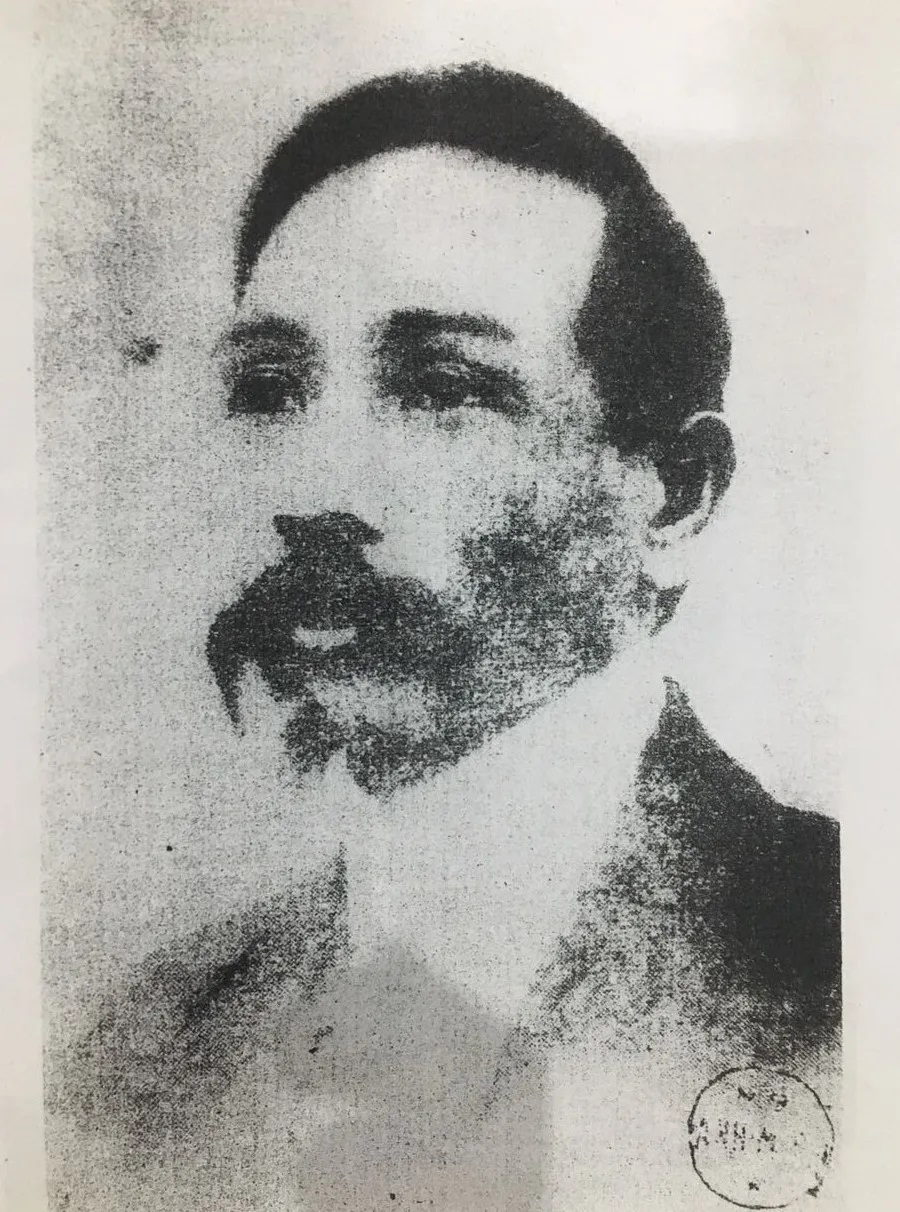
Phan Châu Trinh
 Vietnam
Also known as: Phan Chu Trinh, Tây Hồ, Hy Mã
Birthday
September 9, 1872
Birth Sign
Virgo
Birthplace
Tam Kỳ, Quảng Nam, Vietnam
Age
Died at 53
About
Phan Châu Trinh was a Vietnamese nationalist, writer, and reformer whose ideas shaped the early independence movement. Born in Tam Kỳ on September 9, 1872, he grew up under French colonial rule and dedicated his life to ending it. Unlike many contemporaries who advocated armed resistance, Trinh believed in a different path: educating the Vietnamese people and appealing to French democratic ideals. He argued that true liberation required modernizing Vietnamese society from within, not just expelling the colonizers. His pen names, Tây Hồ and Hi Mã, became known among intellectuals who admired his courage and vision.
Trinh's career as a writer and politician was marked by bold public actions. In 1906, he sent a famous open letter to the French governor-general, criticizing the colonial administration's corruption and demanding reforms. He also co-founded the Đông Kinh Nghĩa Thục (Tonkin Free School) in 1907, a short-lived but influential institution that promoted modern education and patriotic thought. His writings, including essays and poetry, urged Vietnamese to embrace self-strengthening rather than relying on foreign powers. He spent several years in exile in France, where he continued to lobby for Vietnamese rights and publish his ideas.
Trinh's legacy is complex. He opposed both armed revolt and seeking help from other countries, a stance that set him apart from figures like Phan Bội Châu. Instead, he trusted that education and moral reform would eventually lead to independence. His influence extended into the 1920s, as younger nationalists absorbed his calls for civic responsibility and anti-corruption. He died on March 24, 1926, in Saigon, but his ideas lived on, inspiring later movements that combined his emphasis on education with more direct political action. Today, he is remembered as a principled voice who believed in the power of ideas over weapons.
Early Life & Background
Phan Châu Trinh was born in Tây Lộc village, Tiên Phước district, now part of Tam Phước commune in Quảng Nam province. His father was a scholar who joined the Cần Vương movement, a royalist uprising against French control. Growing up in a household steeped in anti-colonial resistance shaped his early political consciousness. He watched his father and other local scholars struggle against the colonial apparatus, and those experiences planted the seeds of his later reformist ideas.
Trinh pursued the traditional path of Confucian scholarship, studying for the imperial examinations. In 1901, he passed at the rank of Phó bảng, an associate doctorate, which opened the door to a low-ranking mandarin post. Serving in the colonial bureaucracy exposed him directly to the corruption and inefficiency that plagued the administration. He saw how French officials and their Vietnamese collaborators exploited the peasantry, and he grew disillusioned with the system he was part of. This firsthand experience became the defining motivation for his later activism.
Before his public career took off, Trinh spent years quietly observing and writing. He corresponded with other intellectuals and honed his arguments about the need for democratic rights and civic responsibility. His early life was marked by a tension between his loyalty to Confucian traditions and his growing conviction that Vietnam needed to modernize. That tension would shape everything he did afterward.
Career Growth
Phan Châu Trinh's breakthrough came in 1906 when he sent an open letter to the French governor-general of Indochina. The letter was a scathing critique of colonial corruption and a demand for substantial reforms. It circulated widely among Vietnamese intellectuals and made him a leading voice for change. The following year, he co-founded the Đông Kinh Nghĩa Thục in Hanoi, a free school that taught modern subjects alongside patriotic thought. Though the school was shut down after a few months, it left a lasting mark on the nationalist movement.
In 1908, Trinh's involvement in the Quảng Nam tax revolt led to his arrest. He was sentenced to death, but the penalty was commuted to life imprisonment and later reduced. He spent time in prison before being exiled to France in 1911. For the next fourteen years, he lived in Paris, where he continued to campaign for Vietnamese rights. He wrote political essays, gave lectures, and corresponded with intellectuals back home. His writings during this period emphasized the importance of self-strengthening and warned against relying on foreign powers.
Trinh returned to Saigon in 1925, where he delivered a series of lectures advocating democracy and social reform. His health was failing, but he remained active until his death in March 1926. His funeral became a massive demonstration of nationalist sentiment, with tens of thousands of mourners. His ideas continued to influence Vietnamese political thought long after his passing.
Career Timeline
Public Image & Style
Phan Châu Trinh is remembered as the most articulate advocate of democracy and popular rights in early 20th-century Vietnam. His public image is that of a principled intellectual who rejected both armed revolt and foreign alliances, instead trusting in education and moral reform. Unlike the fiery revolutionary Phan Bội Châu, Trinh came across as a measured, thoughtful reformer who believed in appealing to French democratic ideals.
His writings and lectures were known for their clarity and moral force. He urged Vietnamese people to take responsibility for their own liberation, to fight corruption, and to embrace civic virtues. That message resonated with a generation of nationalists who saw him as a mentor figure. Today, his name adorns schools, streets, and cultural institutions across Vietnam, and his ideas are still studied for their relevance to contemporary governance.
Fame & Fandom (iFAMOUS Rankings)
Phan Châu Trinh does not possess a fandom in the modern sense of pop culture devotion. There are no fan clubs, no birthday billboards, and no organized chart campaigns driven by a grassroots following. Instead, his legacy is sustained through institutional reverence and state-sanctioned commemoration. Historians, students, and the Vietnamese public regard him as one of the nation's three great patriots, with his memory preserved in universities, memorials, and academic institutes rather than social media threads. His influence endures through the Duy Tân movement he led and the literary works that awakened national consciousness over a century ago. In March 2026, Da Nang hosted exhibitions to mark the centenary of his death, drawing scholars and citizens alike to reflect on his philosophy of peaceful reform versus armed revolt. This enduring respect manifests not in viral moments but in the continued study of his writings and the maintenance of his memorial house. Despite the absence of a formal fanbase name or digital cult, his stature remains undiminished among those who value Vietnam's intellectual history. According to the iFANN Global Fame Rankings, Phan Châu Trinh holds significant standing within his historical context. He is currently the 51st most famous person in Vietnam, a position holding steady from the previous cycle.
Interesting Facts and Legends
Phan Châu Trinh's pen name Tây Hồ literally means 'West Lake,' referencing Hanoi's iconic body of water, while Hy Mã nods to the Himalayas to symbolize his lofty ideals. He was the first Vietnamese scholar to publicly raise the issue of democracy and popular rights, a point highlighted in a Japanese-language translation of a book about him published in 2026. His granddaughter, whom he never met, became the subject of commemorative coverage around the 100th anniversary of his death. Trinh's body was kept for ten days after his death so that representatives from various provinces could pay their respects before the funeral. The Phan Châu Trinh Memorial House in Quảng Nam is a national heritage site undergoing urgent restoration due to roof damage and wood decay. A pivotal moment in his legend involves leading the Duy Tân movement, where he championed education and economic self-reliance over violent revolution, distinguishing his path from contemporaries like Phan Bội Châu. His exile to France and subsequent death in Paris remain central narratives in Vietnamese history, often described as the tragic culmination of a life dedicated to moral reform. These verified events form the core of his mythology, celebrated annually through official ceremonies rather than fan gatherings.
Family & Personal Life
Phan Châu Trinh was born into a family with a strong tradition of anti-colonial resistance. His father, a scholar, participated in the Cần Vương movement, which sought to restore the Vietnamese emperor and expel the French. That legacy of defiance was a constant presence in Trinh's childhood and influenced his own political path.
Trinh married and had children, though details about his wife and offspring are scarce in historical records. His family lineage has remained a point of interest in Vietnamese cultural memory. Notably, his granddaughter, whom he never had the chance to meet, has been the subject of recent commemorative journalism, especially around the centenary of his death in 2026. The family's story is intertwined with the broader narrative of Vietnamese nationalism.
Notable Connections
Phan Bội Châu was his contemporary and intellectual rival, advocating armed resistance while Trinh pushed for peaceful reform. Nguyễn Ái Quốc, later known as Hồ Chí Minh, referenced Trinh's funeral as a significant nationalist event. The French colonial administration, particularly the governor-general, was his primary political adversary.
Relationships & Dating History
Phan Châu Trinh was married, and historical records confirm he had children, including a granddaughter who became the subject of recent commemorative journalism. However, detailed information about his spouse, the dates of his marriage, and the specifics of his family life are not documented in available sources.
As a figure from early 20th-century Vietnam, his personal romantic history was not a matter of public record in the way contemporary public figures' relationships are. No information is available about multiple relationships, engagements, or divorces. His marital status at death was married, per the norms of his era.
- MarriedUnknown spouseHistorical records confirm he was married, but details are not documented.
Death & Aftermath
Died
March 24, 1926 (aged 53)
Death Place
Da Nang, Quang Nam, Vietnam
Cause of Death
Severe illness from long-term health decline
Tens of thousands of mourners filled the streets of Da Nang for a funeral that transformed into a massive demonstration of nationalist sentiment. The crowd included students, local officials, and members of the nationalist community who gathered to honor a man whose non-violent approach had inspired decades of resistance. This public outpouring turned his burial in Quảng Nam into a pivotal moment for patriotic unity. Phan Châu Trinh passed away on March 24, 1926, at his residence in the Tam Ky ward of Quang Nam province, or possibly in a house in Da Nang's city center during his final illness. He was 53 or 54 years old when severe illness, stemming from years of imprisonment and exile under French colonial rule, claimed his life.
His final days were spent under restricted movement, with his last public appearances occurring prior to his hospitalization in early 1926. Immediate tributes poured in from peers and students who admired his courage and vision. Schools, streets, and institutions across Vietnam were subsequently named in his honor, cementing his legacy within the nation's infrastructure. The Phan Châu Trinh Memorial House in Da Nang now serves as a central site for commemoration, though recent structural issues have required restoration efforts. In August 2026, the 25th iteration of the Phan Châu Trinh Award celebrated 218 outstanding individuals in education and social contribution, while the Viện Phan Châu Trinh continues to promote his ideas and preserve his writings.
Net Worth (Estate Value)
$1 Million
iFANN Editorial Team estimate
Phan Châu Trinh was a scholar and activist, not a commercial figure. He lived modestly, especially during his years of imprisonment and exile in France. No credible records exist of his personal wealth, and no estate valuation is available from historical sources. His posthumous value is cultural and intellectual rather than monetary. His writings continue to be published, studied, and cited, and his ideas remain influential in Vietnamese political thought. The maintenance and restoration of his memorial house is funded by the Vietnamese state as part of national heritage preservation. Per iFANN's editorial analysis, the estimated financial worth of his estate as of 2026 stands at $1 Million, reflecting a calculated assessment of his enduring cultural capital rather than liquid assets.
Awards & Accolades
View 2 records, honours and achievementsKnown For
Open letter to the French governor-general
1906 · Author
Đông Kinh Nghĩa Thục
1907 · Co-founder
Advocacy for democracy and popular rights
· Activist
Keywords
Sources
Quick Facts
- Profession
- writer, politician, poet
- Born
- September 9, 1872
- Birthplace
- Tam Kỳ, Quảng Nam, Vietnam
- Died
- March 24, 1926
- Death Place
- Saigon (Ho Chi Minh City)
- Gender
- Male
- Birth Sign
- Virgo
- Nationality
- Vietnamese
Personal Details
- Full Name
- Phan Châu Trinh
- Education
- Imperial examinations, Phó bảng (1901)
Frequently Asked Questions
What was Phan Châu Trinh's main idea?
How did Phan Châu Trinh die?
What is the difference between Phan Châu Trinh and Phan Bội Châu?
What did Phan Châu Trinh write?
Why is Phan Châu Trinh important?
Similar People
Join the community
fans discussing