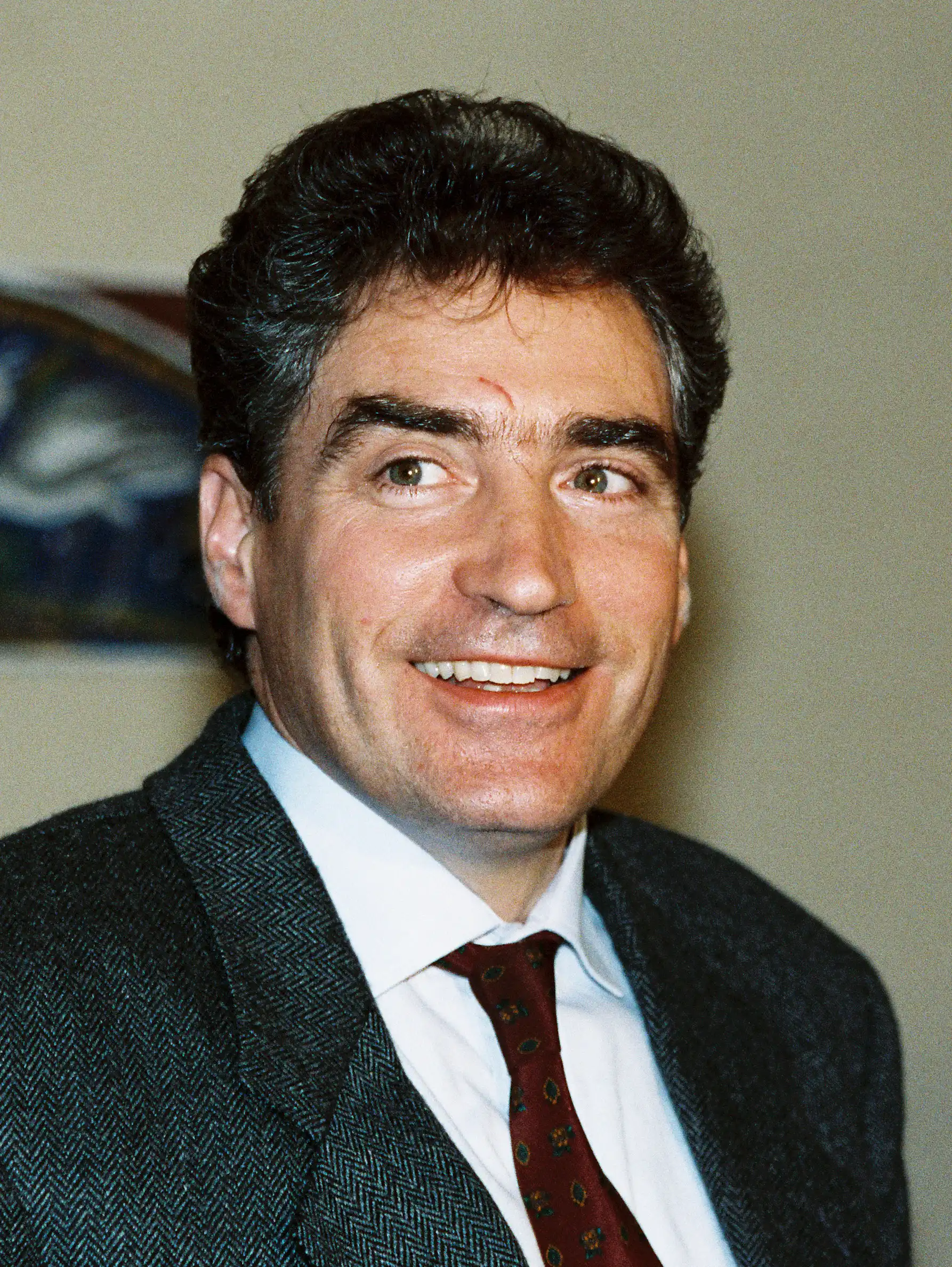
Petre Roman
 Romania
Birthday
July 22, 1946
Birth Sign
Cancer
Birthplace
Bucharest, Romania
Age
80 years old
About
Petre Roman is a Romanian engineer, academic, and politician who served as Prime Minister of Romania from December 1989 to November 1991, the first head of government since 1945 not affiliated with the communist party. He later held the roles of President of the Senate from 1996 to 1999 and Minister of Foreign Affairs from 1999 to 2000. As of 2026, Roman resides in Switzerland, where he serves as the President of the Swiss UMEF University of Applied Sciences in Geneva, while remaining an active voice in international diplomacy and climate policy.
Roman's political journey has been marked by ideological shifts across the spectrum, from socialist roots to liberal and social-liberal affiliations. He has been a member of the Club of Madrid, an organization of over 80 former democratic heads of state. In 2022, he emigrated to Switzerland to lead UMEF, focusing on academia and global policy discussions, including artificial intelligence and climate change.
Early Life & Background
Born on July 22, 1946, in Bucharest, Petre Roman grew up under communist rule. His father, a prominent figure in the Romanian Communist Party, was executed in 1946, leaving the family in a precarious position. Roman pursued engineering at the Politehnica University of Bucharest, graduating with a degree that would earn him the nickname "the engineer prime minister." He then worked as a researcher and professor, specializing in computer science and automation, before entering politics.
In the late 1980s, Roman was drawn into the intellectual circles advocating reform within the communist system. He joined the National Salvation Front (FSN) following the fall of Nicolae Ceaușescu in December 1989, transitioning from academia to high-level governance. His technical background distinguished him from many of his contemporaries, and he quickly rose to prominence within the FSN.
Career Growth
Roman's rise was meteoric. On December 26, 1989, he was appointed Deputy Prime Minister, and just days later, he was sworn in as Prime Minister. His tenure was marked by attempts to steer Romania toward a market economy and democratic institutions, but it was fraught with instability. His government was brought down by the Mineriads, violent interventions by miners led by Miron Cozma in September 1991, which protested against economic reforms.
After leaving the premiership, Roman remained a key figure in the FSN and later the Democratic Party (PD). He served as President of the Senate from 1996 to 1999, and as Minister of Foreign Affairs from 1999 to 2000, playing a crucial role in Romania's early diplomatic outreach toward the European Union and NATO. In 2003, he left the PD to found the Democratic Force (FD), positioning himself as a centrist liberal. He returned to parliament in 2012 as a member of the National Liberal Party (PNL), but his seat was suspended in 2015 by the National Integrity Agency due to incompatibility charges. The Court of Appeals overturned the ruling in 2016, restoring his position.
In 2020, Roman briefly joined Ilan Laufer's Social Liberal Platform before aligning with the Social Democratic Party (PSD), winning a seat on the General Council of Bucharest. He resigned shortly after. In 2022, he emigrated to Switzerland to become President of the Swiss UMEF University of Applied Sciences, shifting his focus to academia and international policy. As of 2026, he remains active as an academic leader and public commentator, frequently speaking on global issues such as artificial intelligence and climate change.
Career Timeline
Public Image & Style
Roman is often portrayed as a complex figure, a technocrat who rose to power during a revolution. Media descriptions vary from seeing him as a visionary democrat to a controversial figure implicated in the violence of the early 1990s. His style is generally described as formal and intellectual, consistent with his background as an engineer and academic. He does not maintain a prominent personal social media presence, relying instead on institutional channels and press releases.
Fame & Fandom
Petre Roman is currently evaluated by the iFANN Global Fame Engine but holds no placement in the published rankings, including the Global Top 1,000 or any scope-specific lists. The system has assessed his profile without assigning a numeric rank or score, reflecting his status as a figure of historical and political significance rather than contemporary mass-market celebrity. While his career spans high office as Romania's first non-communist Prime Minister and leadership roles in academia and diplomacy, he does not appear on current fame charts that prioritize entertainment figures, athletes, or viral personalities. His public footprint remains anchored in institutional history and legal proceedings rather than fluctuating popularity metrics. Regarding his audience, there is no documented fandom name associated with Petre Roman. The available data confirms an absence of organized fanbases, official campaigns, or ritualistic engagement typical of pop culture icons. He does not maintain a presence where fans gather to celebrate birthdays, commission billboards, or circulate inside jokes. Interactions are strictly limited to formal political discourse, academic lectures, and international summits, devoid of the performative elements that generate celebrity worship. No fan-funded projects or dedicated online communities exist under a specific banner for him. His legacy is preserved through historical records and ongoing legal narratives rather than the mythological storytelling found in entertainment spheres. Crowds do not disrupt events due to his personal charisma, nor do supporters engage in rituals of adoration. The narrative surrounding him is one of serious accountability and historical controversy, characterized by the weight of political decisions made during a turbulent transition period rather than the lightness of fan devotion.
Interesting Facts and Legends
Petre Roman stands unique among post-WWII Romanian leaders for holding a doctorate in engineering and working as a scientist before ascending to the premiership. He is among the few Eastern European figures to be a prominent member of the Club of Madrid. Throughout his career, he navigated ideological shifts from socialist roots to liberal identification, later experimenting with social liberalism and alliances with social democrats. He has authored books on political and technological subjects, reflecting his dual expertise in engineering and governance. A central event defining his legacy is the 1990 Mineriada, where miners were brought into Bucharest to crush student protests, resulting in violence and deaths; this incident led to formal indictments against him regarding crimes against humanity. Another significant chapter involves his role in the immediate aftermath of the 1989 revolution, marking the transition from dictatorship to democracy while maintaining continuity in certain power structures. In recent years, he has become a figure in international anti-regime movements, addressing summits regarding Iran where he forecasted the fall of the Iranian regime, alongside advocating for a global AI treaty.
Notable Quotes
“The revolution was a gift to the Romanian people, but the path to freedom required difficult choices.”
“We must establish a global AI treaty now. Innovation cannot come at the cost of human security.”
“The Iranian resistance will prevail for the benefit of all mankind.”
Family & Personal Life
Petre Roman's father, Valter Roman, was a Hungarian-Romanian communist activist and writer, who died when Petre was just a child. His mother, Hortensia, was of Romanian descent. Roman has been married twice. His first marriage was to Mioara Roman, with whom he had children. Following his divorce, he married Silvia Chifiriuc on June 2, 2009. As of 2026, the couple resides primarily in Switzerland, where Roman leads the UMEF university.
Notable Connections
Petre Roman has been associated with several key political figures. Miron Cozma, the miners' leader, whose intervention ended his premiership. Ion Iliescu, former President of Romania, with whom he was indicted in the 1990 protest trials. His wife, Silvia Chifiriuc, and first wife, Mioara Roman. Radu Vasile, under whom he served as Foreign Minister.
Relationships & Dating History
Petre Roman has been married twice. His first marriage was to Mioara Roman, with whom he had children. Following his divorce, he married Silvia Chifiriuc on June 2, 2009. As of 2026, he is married to Silvia Chifiriuc, and the couple resides primarily in Switzerland.
- MarriedMioara RomanFirst wife, with whom he had children.
- MarriedSilvia Chifiriuc2009 - presentCurrentMarried on June 2, 2009.
Salary, Net Worth In 2026
$10 Million
iFANN Editorial Team estimate
Per iFANN's editorial analysis, Petre Roman's net worth is estimated at $10 Million as of 2026. His income primarily stems from his academic salary serving as President of the Swiss UMEF University, supplemented by potential book royalties and fees from speaking engagements. Unlike entertainers, his wealth is not derived from commercial endorsements or box office receipts. He may also hold investments in real estate, a common practice among Romanian elites.
Awards & Accolades
View 1 records, honours and achievementsKnown For
Prime Minister of Romania
1989 · Prime Minister
President of the Senate
1996 · Senate President
Minister of Foreign Affairs
1999 · Minister
Keywords
Sources
Quick Facts
- Profession
- politician, engineer, diplomat
- Born
- July 22, 1946
- Birthplace
- Bucharest, Romania
- Gender
- Male
- Spouse
- Silvia Chifiriuc
- Birth Sign
- Cancer
Personal Details
- Full Name
- Petre Roman
- Spouse
- Silvia Chifiriuc
- Education
- Politehnica University of Bucharest (engineering)
Frequently Asked Questions
Who is Petre Roman?
Is Petre Roman still alive?
What happened to Petre Roman's government?
Has Petre Roman faced legal trouble recently?
Where does Petre Roman live now?
Similar People
Join the community
fans discussing