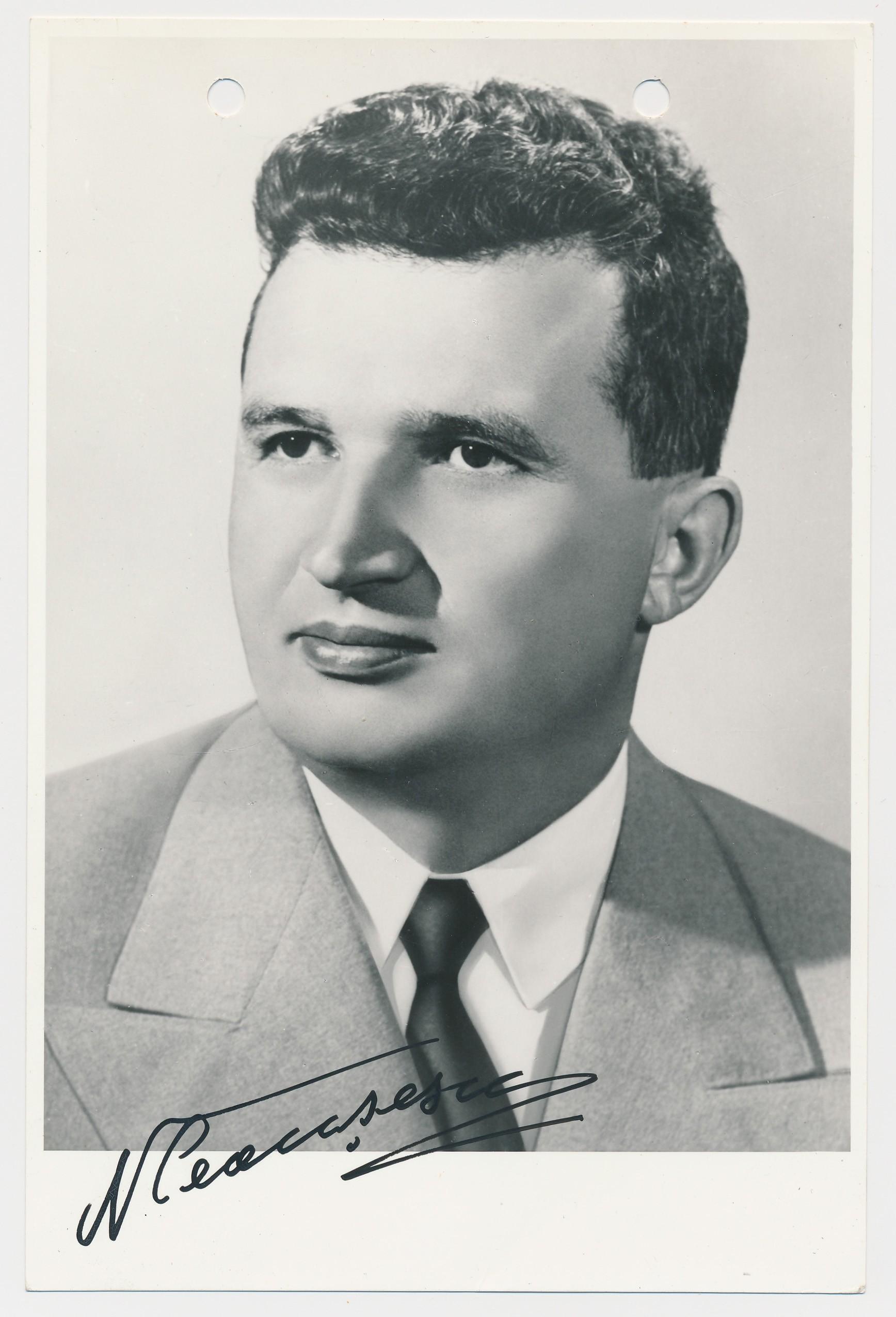
Nicolae Ceaușescu
 Romania
politician•military leader•president of Romania
Birthday
January 26, 1918
Birth Sign
Aquarius
Birthplace
Scornicești, Romania
Age
Died at 71
About
Nicolae Ceaușescu was a Romanian communist politician who ruled the country with an iron fist for more than two decades. He served as general secretary of the Romanian Communist Party from 1965 and as president from 1974 until his dramatic downfall in 1989. His name remains synonymous with authoritarianism in Eastern Europe, a figure whose policies and personality cult left a deep scar on Romanian society.
Ceaușescu's regime was defined by a stark contrast: early gestures toward independence from Moscow and a brief period of relative openness, followed by a slide into totalitarian control. The Securitate secret police enforced surveillance and repression, while an aggressive industrialization program, meant to modernize Romania, came at a huge human cost. By the 1980s, harsh austerity measures to repay foreign debt had plunged ordinary citizens into poverty, with rationed food and heating.
The Romanian Revolution of December 1989 brought a swift and bloody end to his rule. After a mass uprising, Ceaușescu and his wife Elena were captured, tried in a summary military court, and executed by firing squad on Christmas Day. His death marked the end of 42 years of communist rule in Romania, yet his legacy remains complicated; some Romanians still view his era with a degree of nostalgia, as surveys have shown.
Early Life & Background
Born into a poor peasant family in the village of Scornicești, Olt County, on January 26, 1918, Nicolae Ceaușescu grew up in a world of rural hardship. His father, Ion, worked as a farmer and shoemaker, and had been conscripted into the Austro-Hungarian army during World War I. The young Nicolae spent his early years as a shepherd, tending flocks in the countryside, before moving to Bucharest to apprentice as a machinist.
Formal education played little part in his upbringing. He left school at age 12 to take up factory work, and it was in the industrial quarters of Bucharest that he encountered communist ideas. At just 14, he joined the Romanian Communist Youth Movement, and two years later, in 1933, he became a member of the Romanian Communist Party. This marked the beginning of a life dedicated to political activism.
Throughout the late 1930s, Ceaușescu was repeatedly arrested for his underground activities, which included distributing leaflets and organizing strikes. He spent time in Jilava and Văcărești prisons, experiences that hardened his resolve and earned him a reputation as a disciplined, loyal party militant. These years of imprisonment forged his character and set the stage for his rapid rise once the communists took power after World War II.
Career Growth
Ceaușescu's political ascent began in earnest after the 1944 royal coup that toppled the pro-Nazi government. Released from prison, he quickly climbed the ranks of the Romanian Communist Party under the mentorship of Gheorghe Gheorghiu-Dej. By 1952 he was a deputy prime minister, and two years later he entered the Politburo, the party's inner circle.
When Gheorghiu-Dej died in 1965, Ceaușescu succeeded him as general secretary, becoming the country's de facto ruler. In August 1968, he made a bold move that would define his early years in power: he publicly condemned the Soviet-led invasion of Czechoslovakia. This stance won him admiration in the West and among non-aligned nations, and for a time he was seen as a reforming, independent-minded communist.
That image did not last. In 1971, after a trip to China and North Korea, he issued the July Theses, a set of measures that tightened ideological control and intensified his personality cult. He became president of the State Council in 1967 and then president of the Republic in 1974, concentrating power in his own hands. The 1980s brought severe economic mismanagement as he pursued a policy of paying off Romania's foreign debt at any cost. This led to austerity, food shortages, and energy rationing that devastated the population. His refusal to reform eventually triggered the 1989 revolution that ended his rule.
Career Timeline
Public Image & Style
In the eyes of the world, Nicolae Ceaușescu became the archetype of the megalomaniac dictator. His public persona was built on a carefully crafted image of omnipotence: he appeared in heavy military uniforms adorned with medals, his stern face framed by a distinctive mustache, and his speeches were delivered with a messianic fervor. The media, both domestic and international, portrayed him as a tyrant whose obsession with power led to the suffering of millions.
His style of governance, marked by grandiosity and isolation, extended to his personal aesthetic. He favored opulent settings and surrounded himself with sycophants. In the West, he was initially seen as a maverick communist, but this perception eroded as reports of human rights abuses and the brutal repression of the Securitate emerged. Today, his image is overwhelmingly negative, a symbol of totalitarian excess and the dangers of unchecked power.
Fame & Fandom
As of the September 2026 rankings, iFANN has not yet collected fame data for Nicolae Ceaușescu. He is not currently ranked on the Global Fame Rankings, which measure worldwide attention across public signals such as Wikipedia readership and global search interest. This absence reflects his status as a historical figure rather than a contemporary public presence.
There is no organized fandom for Ceaușescu in the traditional sense. While academic communities and history enthusiasts study his regime, and a small minority of neo-communist groups express nostalgia for the era, there is no fanbase with a name or rituals. In Romania, the name Ceaușescu is generally used pejoratively, a shorthand for authoritarianism and economic hardship. The few who look back fondly on his rule tend to cite a perceived stability or industrial progress, but they do not form a cohesive community or engage in fan activities.
Interesting Facts and Legends
Ceaușescu had a notable collection of Rolex watches, a detail that resurfaced in 2026 discussions about communist leaders and luxury goods. During a 1978 state visit to Britain, Queen Elizabeth II reportedly hid behind a bush to avoid meeting him, a story that gained renewed attention decades later. He spoke fluent French and Russian, skills that aided his diplomatic engagements but did little to soften his image.
A persistent legend claims he held a Guinness World Record for having the most children among world leaders, but this is a misconception; he had two sons. Another story, often retold, involves his final speech on December 21, 1989, when he tried to rally the crowd in Bucharest but was met with boos and jeers, a moment that became an iconic symbol of the regime's collapse.
His rural electrification and collectivization programs, sometimes romanticized as modernizing efforts, actually destroyed many traditional villages and were widely resented.
Notable Quotes
“We will not allow anyone to interfere in our internal affairs.”
“The party is the brain of the nation.”
“The people are with me.”
Family & Personal Life
Nicolae Ceaușescu married Elena Petrescu in 1947, a fellow communist activist he had met in Bucharest's youth movement. Elena, who later took his surname, became a powerful figure in her own right, serving as a vice president of the Great National Assembly and a member of the Politburo. Their partnership was one of mutual dependence, with Elena often acting as his chief enforcer and advisor.
The couple had two sons: Valentin, born in 1948, and Nicu, born in 1951. Both were given positions of influence within the party apparatus, reflecting the nepotism that characterized the regime. Valentin, a physicist, later became a dissenting voice, while Nicu, known for a playboy lifestyle, held a series of party posts. The family lived in an opulent palace in Bucharest, a stark contrast to the poverty endured by most Romanians under their rule.
Notable Connections
Nicolae Ceaușescu's life was intertwined with a small circle of political figures. His wife, Elena Ceaușescu, was his closest ally and co-ruler. His predecessor, Gheorghe Gheorghiu-Dej, served as his mentor. Ion Iliescu, who led the National Salvation Front, succeeded him after the revolution. His sons, Valentin and Nicu, were also part of the regime's inner circle.
Relationships & Dating History
Nicolae Ceaușescu's only documented relationship was with his wife, Elena Petrescu. They met in Bucharest while both were active in the communist youth movement, and they married in 1947. Their partnership was both personal and political, as Elena became a powerful figure in her own right, serving as a vice president of the Great National Assembly and a member of the Politburo.
The couple had two sons, Valentin and Nicu, and remained inseparable until their deaths. They were executed together on December 25, 1989, after a summary trial. At the time of his death, Ceaușescu was married to Elena, who died alongside him.
- MarriedElena Ceaușescu1947 - 1989Met in the communist youth movement; married in 1947; executed together in 1989.
Death & Aftermath
Died
December 25, 1989 (aged 71)
Death Place
Târgoviște, Romania
Cause of Death
Execution by firing squad
The National Salvation Front announced on December 25, 1989, that Nicolae Ceaușescu and his wife Elena had been executed following a summary trial conducted by a special military tribunal. The proceedings took place at the Târgoviște military barracks roughly 30 kilometers north of Bucharest, where the former president was shot by a firing squad commanded by Colonel Ionel Boiangiu after less than two hours of deliberation on charges including genocide and undermining the national economy. The event concluded the brief period of unrest that began with his final public address on December 21, which failed to quell the Romanian Revolution before he fled by helicopter on December 22 and was captured later that day.
Official records state both were killed simultaneously, though disputed accounts persist regarding the exact number of bullets fired or whether Elena Ceaușescu remained conscious during the second volley. Public reaction was marked by immediate celebration rather than mourning, as crowds gathered in Bucharest to destroy statues and remove his name from institutions while the new regime broadcast the trial live without legal counsel for the defendants. Posthumous releases include historical documentaries and books analyzing his regime, foundations, or honors have been bestowed upon him, and the state seized all assets immediately following the revolution.
Net Worth (Estate Value)
$0
iFANN Editorial Team estimate
As a deceased dictator whose assets were seized by the state, Nicolae Ceaușescu has no net worth in 2026. The Romanian state confiscated all personal and state property immediately after the 1989 revolution, liquidating or destroying the family's wealth. There is no active estate managing his legacy financially, as the government nationalized everything.
Posthumously, there are no earnings from licensing, royalties, or merchandise. Any books or documentaries about him are owned by publishers or production companies, not by a Ceaușescu estate. The family members, Valentin and Nicu, faced prosecution after the revolution and lived in relative obscurity, without significant public wealth. iFANN's editorial research finds no financial footprint for the Ceaușescu name in the modern era.
Awards Won (3)
Ceaușescu did not win international artistic or humanitarian awards. Instead, he bestowed numerous titles upon himself and his wife as part of his personality cult, including Hero of Socialist Romania and the Order of the Victory of Socialism. He also received honorary doctorates and foreign orders from aligned nations.
1981 · Self-awarded
Self
1968 · Self-awarded
Self
1971 · Self-awarded
Self
Known For
General Secretary of the Romanian Communist Party
1965 · Leader
President of Romania
1974 · Head of State
Keywords
Sources
Quick Facts
- Profession
- politician, military leader, president of Romania
- Born
- January 26, 1918
- Birthplace
- Scornicești, Romania
- Died
- December 25, 1989
- Death Place
- Târgoviște, Romania
- Gender
- Male
- Spouse
- Elena Ceaușescu
- Birth Sign
- Aquarius
Personal Details
- Full Name
- Nicolae Eremia Ceaușescu
- Spouse
- Elena Ceaușescu
- Children
- Valentin Ceaușescu, Nicu Ceaușescu
Frequently Asked Questions
How did Nicolae Ceaușescu die?
Who was Nicolae Ceaușescu's wife?
Why did people hate Ceaușescu?
Did Ceaușescu really condemn the Soviet invasion?
Is there a Ceaușescu estate today?
Join the community
fans discussing