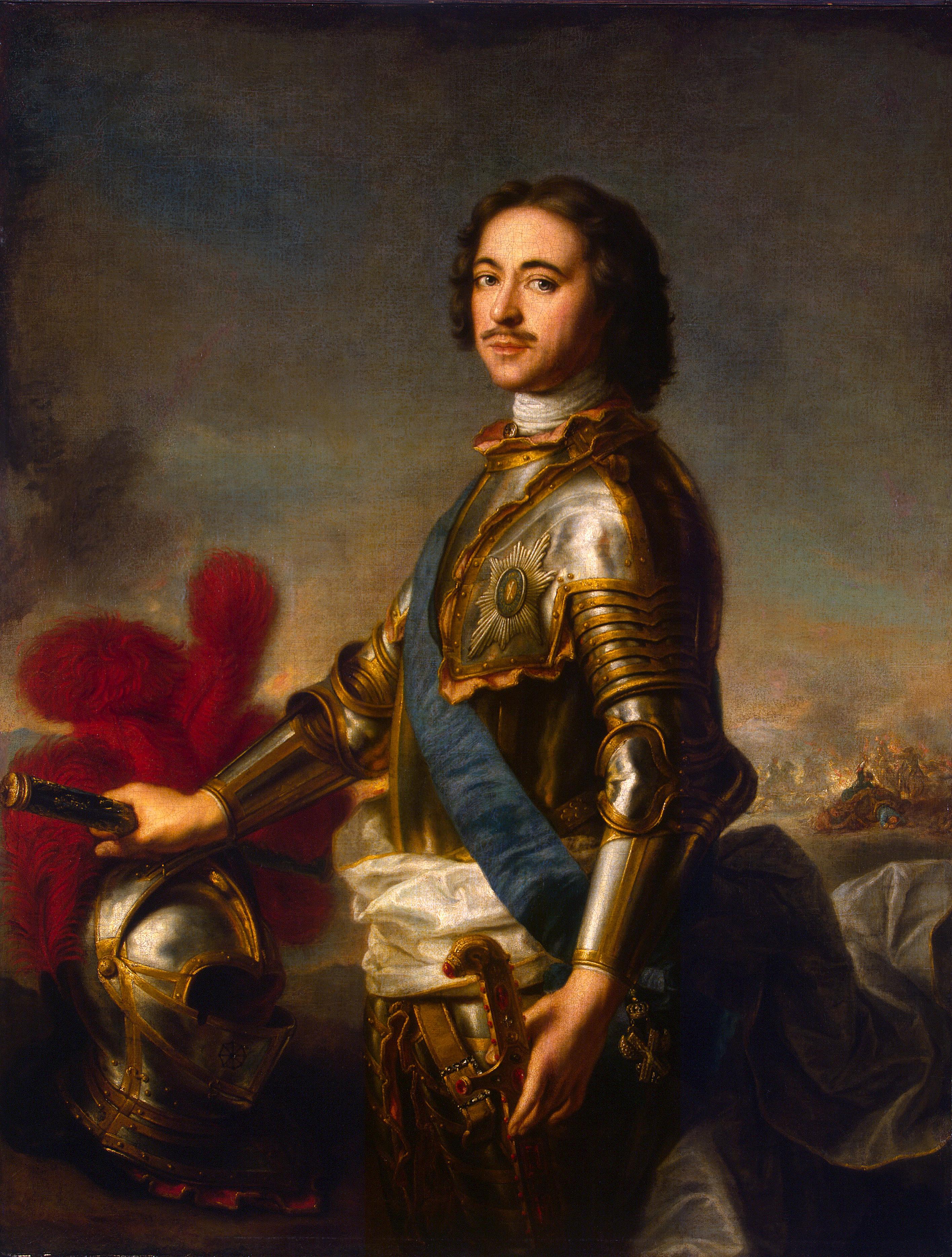
Peter the Great
 Russia
Birthday
+1672-05-30
Birth Sign
Sagittarius
Birthplace
Moscow
Age
Died at 52
About
Born in Moscow in 1672, Peter I, known to history as Peter the Great, was Tsar of all Russia and later its first Emperor. He began his reign in 1682, initially ruling alongside his half-brother Ivan V. Peter was a hands-on ruler, an autocrat who aimed to build a more organized and effective state. His personal interests even extended to carpentry, a testament to his practical approach to leadership. He passed away in 1725, after a transformative period for Russia.
Fame & Fandom
Peter the Great commanded a global attention that has persisted for three centuries, maintaining a steady presence in historical consciousness and modern cultural discourse. According to the iFANN Global Fame Rankings, he is currently ranked as the 16th most famous person from Russia, a position holding steady from the previous cycle. This placement reflects his enduring status as a transformative figure whose influence extends far beyond the borders of his empire. The rankings track global attention across media coverage, search activity, and consumption signals worldwide, ensuring that historical figures with lasting impact are accurately positioned alongside contemporary icons. Despite the passage of time, his name remains instantly recognizable to audiences globally, securing his place in the upper echelons of Russian historical notoriety. Regarding his fanbase, there is no formal or informal fandom name documented for Peter the Great. As a historical monarch who died nearly 300 years ago, he lacks a living community of organized supporters, fan campaigns, or ritualistic gatherings typical of modern celebrity culture. His legacy is maintained through academic study, museum visits, and political appropriation rather than the reciprocal engagement seen in contemporary fandoms.
Interesting Facts and Legends
Born in Moscow in 1672, Peter I began his reign in 1682, ruling initially alongside his half-brother Ivan V before becoming the first Emperor of Russia. He was known for his hands-on approach to leadership, which included a personal interest in carpentry and shipbuilding. Peter passed away in 1725 after overseeing a transformative period for the nation. A widely retold story from his youth describes his "Grand Embassy" to Western Europe, where he traveled incognito as a sailor named "Peter Mikhailov" to learn shipbuilding and engineering firsthand. This journey highlighted his rejection of traditional isolationism and his commitment to modernization. Another defining narrative involves the founding of St. Petersburg in 1703; legend holds that he laid the first stone himself on a swampy island in the Neva River, defying nature to create a "window to the West." Historical accounts also note that at age ten, Peter personally witnessed the brutal Streltsy uprising, an event that instilled in him a lifelong hatred of Moscow and drove him to move the capital. In modern times, his legacy has been invoked by political figures such as Vladimir Putin, who compared himself to Peter in the context of reclaiming Russian lands.
Death & Aftermath
Died
+1725-01-28 (aged 52)
Death Place
St. Petersburg, Russia
Cause of Death
Reported as urinary retention and subsequent gangrene
Peter the Great spent his final days in St. Petersburg, confined to the Winter Palace after suffering from severe urinary retention that escalated into systemic infection. By late January 1725, the ruler's inability to urinate led to gangrene, and despite medical interventions by court physicians, his condition deteriorated rapidly until he passed away on January 28, 1725. The cause was established through physician reports and family testimony rather than a modern autopsy. His death triggered immediate state-ordered funerals and public prayers across the Russian Empire, while peers and officials expressed grief through eulogies emphasizing his role as the Father of the Nation.
The funeral service took place shortly after his passing at the Peter and Paul Cathedral, where his coffin was interred in the crypt alongside other Romanov tsars amidst elaborate religious rites attended by Empress Catherine I and foreign diplomats. Succession was secured immediately when Catherine I ascended the throne later that same day. Posthumously, his legacy has been honored through extensive historical works like Robert K. Massie's biography Peter the Great: His Life and World, and cultural tributes ranging from the Bronze Horseman statue to modern exhibitions such as Treasures of the Kremlin: From Peter the Great to Catherine the Great.
Awards & Accolades
Keywords
Quick Facts
- Profession
- ruler, statesperson, carpenter
- Born
- +1672-05-30
- Birthplace
- Moscow
- Died
- +1725-01-28
- Death Place
- Saint Petersburg
- Gender
- Male
- Spouse
- Eudoxia Lopukhina, Catherine I of Russia
- Birth Sign
- Sagittarius
Personal Details
- Spouse
- Eudoxia Lopukhina, Catherine I of Russia
Join the community
fans discussing