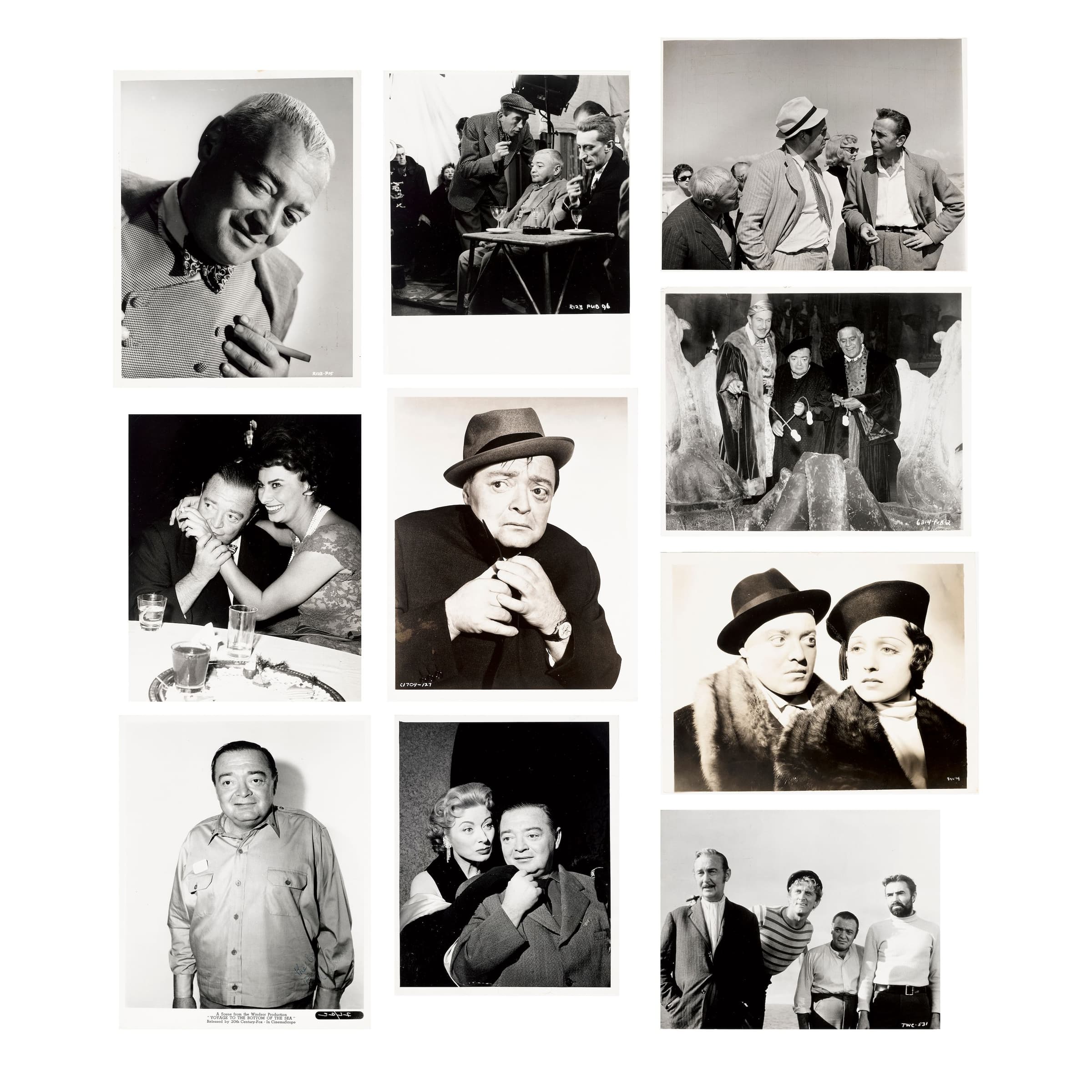
Peter Lorre
film actor•film director•character actor
Also known as: László Löwenstein, Peter Lorre Sr.
Birthday
June 26, 1904
Birth Sign
Sagittarius
Birthplace
Ružomberok, Hungary (then Rózsahegy)
Age
Died at 59
Height
5 ft 7 in (1.70 m)
About
Peter Lorre (born László Löwenstein) was a Hungarian-American actor whose career spanned from the silent era in Europe to the golden age of Hollywood. He became one of cinema's most iconic character performers, known for his distinctive high-pitched voice, large expressive eyes, and ability to portray sinister yet sympathetic characters. His career began in Vienna before he moved to Germany, where he achieved international stardom with Fritz Lang's M in 1931. After fleeing Nazi Germany due to his Jewish heritage, he settled in the United States in 1935.
In Hollywood, Lorre faced significant typecasting as foreign villains or psychopaths, a role he often found frustrating but mastered with incredible nuance. Despite never winning an Academy Award, his impact on film noir and horror is immeasurable. He appeared in classics like The Maltese Falcon, Casablanca, and Arsenic and Old Lace. His unique presence made him a favorite among directors like Alfred Hitchcock and John Huston. He passed away in 1964, leaving behind a rich legacy of memorable performances that continue to influence actors today.
Early Life & Background
László Löwenstein was born on June 26, 1904, in Ružomberok, then part of the Austro-Hungarian Empire. He grew up in a wealthy Jewish family; his father owned a successful textile factory, and his mother came from a banking background. Despite this privileged upbringing, his childhood was marked by a severe stutter that caused him significant social anxiety and withdrawal. This speech impediment initially steered him away from public performance, yet acting remained a persistent passion.
Against his parents' wishes, he enrolled in the Academy of Dramatic Arts in Vienna. His early stage career was fraught with failure, as he was frequently fired from productions due to nervousness and an inability to memorize lines. It took years of intense self-study and therapy to overcome his stutter. By the late 1920s, he had transformed himself into a compelling performer on the German stage in Berlin. His breakthrough came not through traditional leading roles but through his uncanny ability to convey psychological tension and unease, setting the stage for his future as a master of suspense.
Career Growth
Lorre's trajectory shifted dramatically when he moved to Germany in the late 1920s. His first major role was in Max Reinhardt's production of The Merchant of Venice, but it was his chilling performance as Hans Beckert, a child murderer, in Fritz Lang's 1931 masterpiece M that launched him to international fame. The film caused a sensation in the Weimar Republic and established him as a master of psychological horror. Following the rise of the Nazi Party, Lorre fled Germany in 1933 due to his Jewish heritage, moving briefly to Paris before traveling to London.
His English-language debut in Alfred Hitchcock's The Man Who Knew Too Much (1934) introduced him to British audiences and caught the attention of Hollywood studios. By 1935, he had signed a contract with Warner Bros. Initially cast almost exclusively as villainous foreign spies, he frustratedly accepted these roles because they kept him working. Key milestones include starring as Dr. Gogol in Mad Love (1935), playing the detective Mr. Moto in a series of B-movies from 1937 to 1939, and delivering a celebrated performance as Joel Cairo in John Huston's The Maltese Falcon (1941). He also appeared in Michael Curtiz's Casablanca (1942) and Jonathan Brewster in Arsenic and Old Lace (1944). In 1954, he became the first actor to portray James Bond villain Le Chiffre in a TV adaptation of Casino Royale and starred as Captain Nemo in Disney's 20,000 Leagues Under the Sea. His final major project was directing and starring in Roger Corman's The Comedy of Terrors in 1963.
Career Timeline
Public Image & Style
Publicly, Peter Lorre was defined by his distinct appearance: large expressive eyes, a prominent nose, and a wiry frame. He projected a mix of menace and vulnerability, often playing characters who were outwardly weak but inwardly dangerous. His accent, a blend of Hungarian and German influences, added to his exotic and unsettling aura. Media portrayals emphasized his "sinister" nature, but behind the scenes, he was known to be a gentle, humorous man. His ability to turn perceived weaknesses like his stutter into strengths made him a fascinating subject for audiences and critics alike.
Fame & Fandom (iFAMOUS Rankings)
iFANN has not yet collected fame data for this person. While there are no formal rankings in current global databases, Lorre's cultural footprint remains immense among film historians and noir enthusiasts. He does not have a formally documented fandom name, but dedicated fans often celebrate his birthday on June 26 with online tributes and screenings of his work. Notable fan campaigns have focused on the restoration of his films, such as the 2017 restoration of M, which garnered significant attention. His legacy is further cemented by frequent appearances in parodies and homages in pop culture, from The Simpsons to Family Guy.
Interesting Facts and Legends
Peter Lorre was a talented poet who wrote verses throughout his life and often recited them at parties. He was a close friend of Orson Welles and appeared in several of his radio broadcasts. Despite playing menacing characters on screen, he was known to be a gentle, humorous man who loved music and poetry. He was the first actor to play a James Bond villain, predating Sean Connery's famous portrayal by over a decade. His heavy smoking and drinking habits in later years likely contributed to his health issues. Fans sometimes refer to themselves as "Lorreologists," celebrating his birthday with online tributes and screenings.
Notable Quotes
“The world is a stage, and we are all players, but some of us are written to play the villain.”
“Acting is not about being someone else; it's about finding the truth in yourself and letting it out.”
Family & Personal Life
Lorre was born into a wealthy Jewish family in Hungary. His father, Sándor Löwenstein, owned a textile factory, and his mother, Anna Kohn, was the daughter of a banker. He had a complex personal life marked by three marriages. His first wife was Annemarie Brenning, an Austrian actress he met in Vienna; they divorced around 1930. He married Celia Lovsky, a fellow actress, in 1931 in Berlin, but they separated in 1934. His third and final marriage was to Kaaren Verne, a Swedish actress whom he met in Hollywood in the mid-1930s. They married in 1937 and stayed together until his death in 1964. The couple had one son, Peter Lorre Jr., born in 1939. Verne was a supportive partner who helped manage his career and personal affairs during his later years.
Notable Connections
Fritz Lang, Alfred Hitchcock, John Huston, Michael Curtiz, Humphrey Bogart, Sydney Greenstreet, Katharine Hepburn, Ingrid Bergman, Kaaren Verne, Peter Lorre Jr.
Relationships & Dating History
Peter Lorre was married three times throughout his life. His first marriage was to Annemarie Brenning, an Austrian actress he met in Vienna during his early stage career. They married in the late 1920s, but the union ended in divorce around 1930, likely due to the political turmoil in Europe and the strain of his rising career in Germany. No children were reported from this marriage.
In 1931, while living in Berlin, Lorre married Celia Lovsky, a fellow actress and close friend. Their relationship was intense and passionate but also turbulent. They divorced in 1934, shortly before Lorre fled to the United States. There are no widely documented children from this marriage. His third and final marriage was to Kaaren Verne, a Swedish actress he met in Hollywood in the mid-1930s. They married in 1937 and remained together until Lorre's death in 1964. The couple had one son, Peter Lorre Jr., born in 1939. Verne was a supportive partner who helped manage Lorre's career and personal affairs during his later years. Their marriage was considered stable and loving, providing Lorre with a sense of domestic peace amidst his chaotic professional life.
- MarriedAnnemarie Brenning1928 - 1930Met in Vienna; marriage ended due to political turmoil and career strain.
- MarriedCelia Lovsky1931 - 1934Intense relationship in Berlin; divorced before moving to the US.
- MarriedKaaren Verne1937 - 1964Final marriage; lasted until his death; had one son together.
Death & Aftermath
Died
March 23, 1964 (aged 59)
Death Place
Los Angeles, California, USA
Cause of Death
Heart attack
Peter Lorre died on March 23, 1964, at the age of 59 in Los Angeles, California. The official cause was a massive heart attack that struck him while he was resting at his home. He had been suffering from various health issues in his later years, including heavy smoking and drinking habits that likely contributed to his declining physical condition. His death came just as he was wrapping up work on Roger Corman's The Comedy of Terrors, leaving behind a legacy of over 100 films.
The news of his passing sent shockwaves through the Hollywood community. Tributes poured in from former collaborators who remembered him not just as a screen villain but as a gentle, witty man with a deep love for poetry and music. Humphrey Bogart, his frequent co-star, spoke fondly of their time together, highlighting Lorre's ability to bring humanity to even the darkest roles. Friends and colleagues organized a private funeral service in Los Angeles, attended by family members and close industry friends.
In the decades following his death, Lorre's estate has remained active and valuable. Managed primarily by his son, Peter Lorre Jr., the estate continues to generate revenue through royalties from classic films like M, The Maltese Falcon, and Casablanca. Licensing deals for his likeness have kept his image relevant in documentaries, video games, and merchandise. Posthumous releases and digital restorations of his work ensure that new generations of viewers discover his unique talent. His influence on the horror and film noir genres remains profound, with countless actors citing him as a primary inspiration for their own performances.
Net Worth (Estate Value)
$1 Million
iFANN Editorial Team estimate
Peter Lorre passed away in 1964, so his net worth reflects the value of his estate rather than current earnings. At the time of his death, his wealth was estimated at approximately $500,000, derived from his steady work in Hollywood films and television appearances. Today, the iFANN Editorial Team estimates the estate's value at around $1 million. The estate generates revenue through ongoing royalties from the distribution of classic films like M, The Maltese Falcon, Casablanca, and Arsenic and Old Lace. Licensing deals for his likeness continue to provide income for merchandise, documentaries, and video games. Posthumous releases and digital restorations of his films also contribute to the estate's financial stability. The estate is managed by his son, Peter Lorre Jr., and professional managers who oversee intellectual property rights and licensing agreements.
Awards Won (1)
Peter Lorre never won a competitive Academy Award, though he was nominated for Best Supporting Actor for The Maltese Falcon (1941). He received a star on the Hollywood Walk of Fame on February 8, 1960, in recognition of his contributions to the motion picture industry. In 2017, The Daily Telegraph named him one of the best actors never to have received an Academy Award nomination. He is frequently cited in lists of "Greatest Villains" and "Best Character Actors" by publications such as Empire, Rolling Stone, and Sight & Sound.
1960 · Motion Pictures
General Contribution
Known For
M
1931 · Hans Beckert
The Maltese Falcon
1941 · Joel Cairo
Casablanca
1942 · Ugarte
Arsenic and Old Lace
1944 · Jonathan Brewster
20,000 Leagues Under the Sea
1954 · Captain Nemo
Keywords
Sources
Quick Facts
- Profession
- film actor, film director, character actor
- Born
- June 26, 1904
- Birthplace
- Ružomberok, Hungary
- Died
- March 23, 1964
- Death Place
- Los Angeles, California
- Gender
- Male
- Spouse
- Kaaren Verne, Celia Lovsky, Annemarie Brenning
- Birth Sign
- Sagittarius
Personal Details
- Full Name
- László Löwenstein
- Height
- 5 ft 7 in (1.70 m)
- Spouse
- Kaaren Verne, Celia Lovsky, Annemarie Brenning
- Children
- Peter Lorre Jr.
- Education
- Academy of Dramatic Arts, Vienna
Filmography
108
Total
95
Film
13
TV
Frequently Asked Questions
What was Peter Lorre's real name?
Did Peter Lorre win an Oscar?
Who was Peter Lorre's last wife?
What is Peter Lorre's most famous role?
How did Peter Lorre die?
Join the community
fans discussing