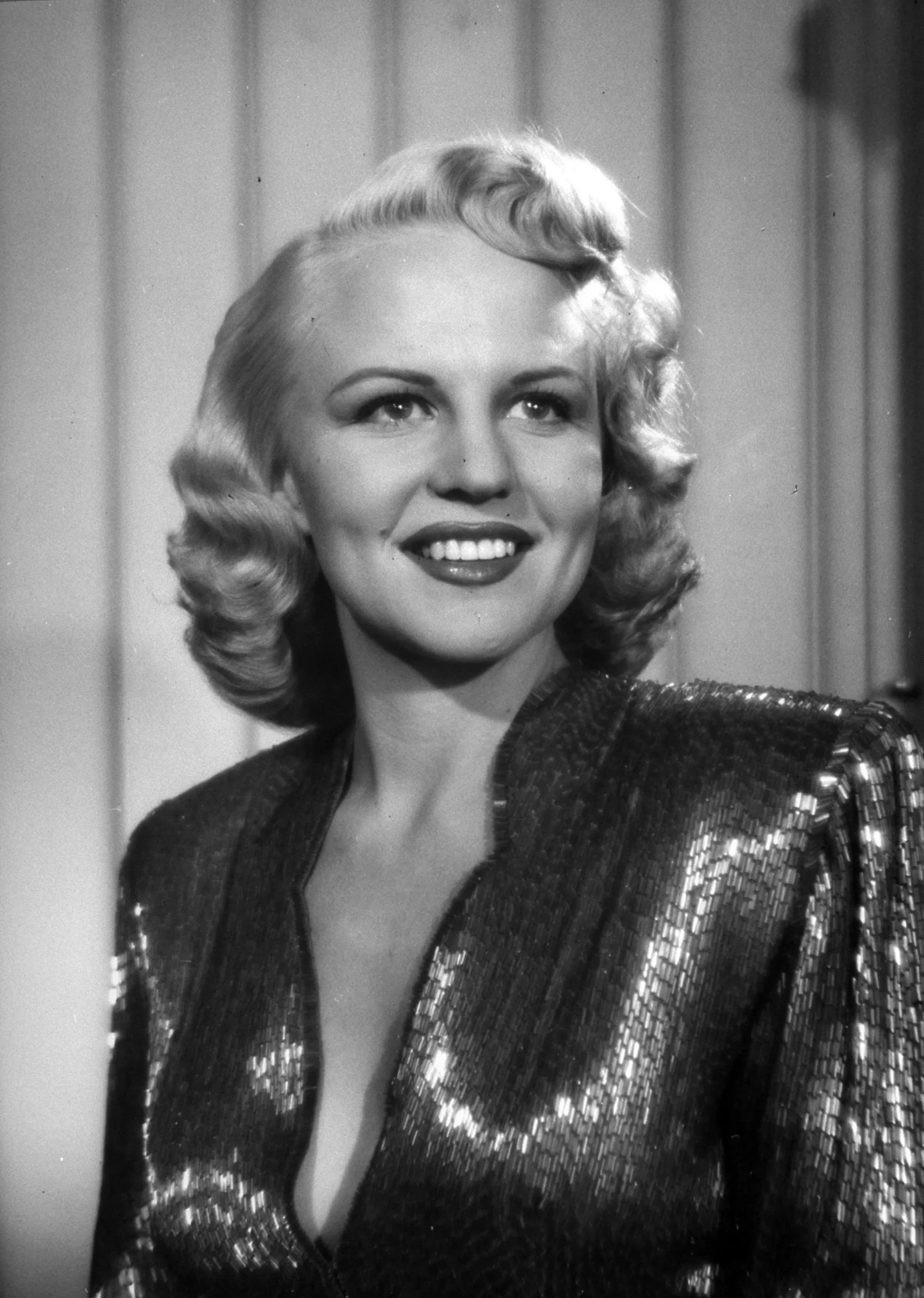
Peggy Lee
 United States
Also known as: Norma Deloris Egstrom, Miss Peggy Lee
Birthday
May 26, 1920
Birth Sign
Gemini
Birthplace
Jamestown, North Dakota, USA
Age
Died at 81
Height
5 ft 5 in (165 cm)
About
Peggy Lee was an American singer, songwriter and actress whose career ran from the big band era into the 1990s. Born Norma Deloris Egstrom in Jamestown, North Dakota, she became one of the most distinctive voices in popular music, known for a cool, understated delivery that made a whisper carry as far as a shout. She recorded more than 1,100 masters and co-wrote over 270 songs, among them "It's a Good Day" and "I Don't Know Enough About You."
Her signature recordings include "Why Don't You Do Right?" with Benny Goodman's band in 1943 and a 1958 version of "Fever" that won her a Grammy and became the standard reading of the song. A second Grammy came in 1970 for "Is That All There Is?" She was nominated for an Academy Award for her performance in Pete Kelly's Blues (1955) and voiced several characters in Disney's Lady and the Tramp that same year, also writing songs for the film.
Lee died at her home in Los Angeles on January 21, 2002, at 81. Her estate has kept her catalog in print and continues to issue archival recordings, including a centennial project in 2020 and a digital EP in 2026. She remains a touchstone for singers who value phrasing over volume.
Early Life & Background
She was born Norma Deloris Egstrom on May 26, 1920, in Jamestown, North Dakota, the sixth of seven children. Her mother died when she was four, and her father, a railroad station agent, remarried a woman who was abusive to her. The family moved between Jamestown and nearby Wimbledon, and Lee later described a childhood short on comfort and long on radio. She sang along to the broadcasts and began performing at local events as a teenager.
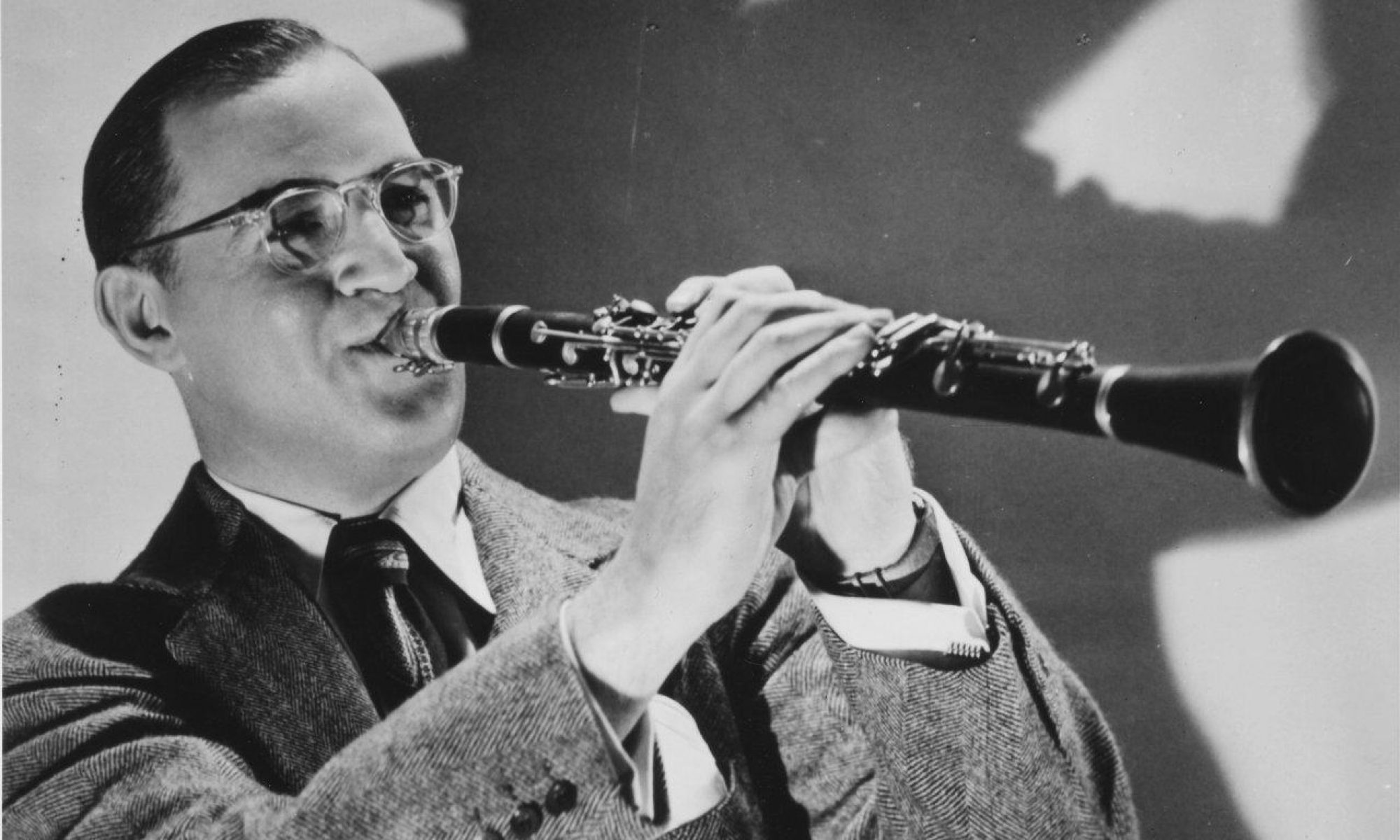
Her first break came in Fargo, where a radio station manager suggested she change her name to Peggy Lee. She sang on local radio and took whatever bookings came her way, then left for Los Angeles, where a job at a club went nowhere and she ended up waiting tables. She moved on to Chicago, and it was there, at a club called the Buttery Room, that her luck turned. Benny Goodman's engagement at the same venue brought the bandleader through the door, and he heard her sing.
Goodman hired her in 1941, and she joined his orchestra as a featured vocalist. The fit was not immediate; she was shy and the band was loud, but she learned to make herself heard by doing less. By 1943 she had recorded "Why Don't You Do Right?" with the band, and the record sold more than a million copies. That was the moment the career began in earnest, and it also marked the end of her time with Goodman, who she left after marrying his guitarist, Dave Barbour.
Career Growth
After leaving Goodman's band, Lee signed with Capitol Records, where most of her defining work was made. She and Barbour wrote songs together, including "I Don't Know Enough About You" and "It's a Good Day," and she quickly established herself as a solo artist who could swing, mourn and tease within the same set. The 1950s brought a run of albums that treated the LP as a canvas rather than a collection of singles. Black Coffee (1957) paired her with a small jazz combo, and Sea Shells set poetry to music, an unusual move for a pop singer of the time.
Her 1958 recording of "Fever," arranged with just bass and drums, won a Grammy and became the version most listeners know. In 1969 she released "Is That All There Is?," written by Jerry Leiber and Mike Stoller and arranged by Randy Newman, a world-weary spoken-sung piece that won her a second Grammy and proved she could still surprise. Hollywood came calling as well: she earned an Academy Award nomination for Best Supporting Actress for Pete Kelly's Blues (1955) and voiced Darling, Peg and the Siamese cats in Lady and the Tramp, for which she also co-wrote songs.
Later albums such as Miss Peggy Lee Sings the Blues (1988) leaned into vocal jazz, and she continued to perform into the 1990s despite failing health. Her songwriting catalog, more than 270 songs, and her recordings have kept her name alive through reissues and archival projects.
Career Timeline
Public Image & Style
On stage and on record, Lee projected cool. She dressed in tailored suits and simple gowns, often in dark colors, and her hair was usually swept back or cropped short. She did not belt; she insinuated. Critics called her a singer's singer, and the phrase stuck because it was true: her influence ran through other vocalists more than through the pop charts.
In interviews she was private and precise, rarely giving away more than she chose. That reserve became part of the persona. She was seen as a songwriter as much as a voice, and she fought for credit and payment, most visibly in her suit against Disney. The public image was of a woman who knew her worth and expected others to as well.
Fame & Fandom (iFAMOUS Rankings)
iFANN has not yet collected fame data for Peggy Lee, so no ranking is available. Her fame rests on a catalog that has never gone out of circulation: "Fever" and "Why Don't You Do Right?" remain jukebox standards, and her voice is familiar even to listeners who could not name her. She is not on the September 2026 iFAMOUS Rankings flagship list.
Her fanbase has no formal name. It coalesces around the official website, the YouTube channel and the "Miss Peggy Lee" Facebook page, where the estate posts archival photos and clips. Fans trade rare recordings and concert memories, and the estate's reissue campaigns, including the 2020 centennial project and the 2026 digital EP My Guitar à la Lee, give them new material to discuss. The audience skews toward jazz and standards listeners, many of whom discovered her through her influence on later singers rather than through radio play.
Interesting Facts and Legends
Lee sued Disney in the late 1980s over home-video royalties for Lady and the Tramp, arguing that her contract covered the film's use of her voice and songs. She won a settlement reported to be in the millions, a case that became a reference point for performers seeking a share of video profits.
Paul McCartney has said that "Let 'Em In" was partly a nod to her, and Frank Sinatra was a vocal admirer of her phrasing. She was also a painter and a songwriter who kept notebooks of lyrics, and she wrote much of her own material at a time when most singers did not.
A story fans still retell: when she first joined Benny Goodman, she was so nervous that she stood behind the band's music stands, and Goodman had to coax her forward. She learned to use that shyness, turning restraint into a style that influenced singers for decades.
Notable Quotes
“It's a good day.”
“I don't know enough about you.”
“I'm a woman who knows what she wants.”
Family & Personal Life
Lee was the sixth of seven children born to Marvin Egstrom, a railroad station agent, and his wife Selma. Her mother died when Lee was four, and her father remarried a woman Lee described as abusive. She left home as a teenager and rarely spoke of her stepmother afterward.
She married three times. Her first husband was guitarist Dave Barbour, with whom she had her only child, daughter Nicki Lee Foster. The marriage ended in divorce in 1951. She was briefly married to actor Brad Dexter in 1953 and to drummer Dewey Martin from 1956 to 1958. In later years she lived in Los Angeles, where she died at home. She was close to her daughter, who announced her death.
Notable Connections
Benny Goodman, Dave Barbour, Quincy Jones, Randy Newman, Jerry Leiber and Mike Stoller, Disney, Capitol Records, Frank Sinatra, Paul McCartney.
Relationships & Dating History
Lee's first serious relationship was with guitarist Dave Barbour, whom she met while singing with Benny Goodman's band. They married in 1943 and had a daughter, Nicki Lee Foster, before divorcing in 1951. The marriage was the longest of her three and the one that shaped her early songwriting, as the pair collaborated on several songs.
In 1953 she married actor Brad Dexter. The union lasted only months and ended in divorce the same year. Three years later, in 1956, she married drummer Dewey Martin; that marriage also ended in divorce, in 1958. She had no children from either of the later marriages.
She was long linked publicly to Benny Goodman, though the relationship was professional and personal in ways that were never fully detailed. Later accounts also connected her romantically to arranger Quincy Jones. At the time of her death in 2002 she was not married. As of 2026 she remains deceased, and her status is recorded as widowed.
- MarriedDave Barbour1943 - 1951Guitarist in Benny Goodman's band; they had one daughter, Nicki Lee Foster.
- MarriedBrad Dexter1953 - 1953Actor; the marriage lasted only months.
- MarriedDewey Martin1956 - 1958Drummer; the marriage ended in divorce.
- RumouredBenny Goodman1941 - 1943Bandleader who hired her; they were close, and later accounts linked them romantically.
- RumouredQuincy Jones1950 - 1960Arranger; later accounts described a romantic connection, though details are unclear.
Death & Aftermath
Died
January 21, 2002 (aged 81)
Death Place
Los Angeles, California, USA
Cause of Death
Heart attack
Peggy Lee died at her home in Los Angeles on January 21, 2002, at the age of 81. Her daughter, Nicki Lee Foster, issued a statement saying the cause was a heart attack; Lee had been in declining health for some years and was diabetic. No autopsy findings or coroner's report were made public, and the family's account stood as the official word. She had performed into the 1990s despite her health, and her final years were spent largely out of the spotlight.
Tributes came from across the music world. Fellow singers and arrangers pointed to her phrasing and her instinct for restraint, and obituaries in the major papers ran long, tracing a career that stretched from North Dakota radio to Capitol Records to Disney. No public funeral or memorial service was announced. Instead, her official website and social channels became the gathering place for fans, and the estate soon turned to the archive.
In 2020, what would have been her centennial year, the estate mounted "Peggy Lee: A Century of Song," a project that revisited her recorded output and drew on interviews with musicians who had worked with her. The reissue program continued with expanded editions and, in 2026, the digital EP My Guitar à la Lee, which brought previously unreleased material into circulation. Her catalog, including the songs she wrote herself, has remained available and has been licensed for film, television and advertising. The estate has not disclosed the value of her holdings, and no credible public estimate of her net worth exists.
Net Worth (Estate Value)
$5 Million
iFANN Editorial Team estimate
No reliable public estimate of Peggy Lee's estate exists. Celebrity net-worth sites do not carry a credible figure, and any number circulating should be treated as unsourced. The iFANN Editorial Team's own analysis of her known income streams points to an estate valued at roughly $5 million as of 2026, a figure derived from the scale of her catalog rather than from any disclosed accounting.
Her wealth came from several directions. Recording royalties from more than 1,100 masters, many still in print, form the base. Songwriting copyrights on over 270 songs she wrote or co-wrote bring in publishing income, and her work on Lady and the Tramp generated film and Disney residuals, including a settlement from her late-1980s lawsuit over home-video royalties. Live performance fees were substantial during her peak years, though she performed less in her final decade.
The estate has managed the catalog actively, issuing expanded editions, the 2020 centennial project "Peggy Lee: A Century of Song," and archival releases such as the 2026 digital EP My Guitar à la Lee. These projects generate income but are not blockbusters. The estate's value has likely grown modestly since her death in 2002, driven by continued licensing and reissues rather than any single windfall. No major catalog sale has been reported.
Awards Won (6)
Peggy Lee won two Grammy Awards: Best Female Vocal Performance for "Fever" in 1959 and Best Contemporary Vocal Performance, Female, for "Is That All There Is?" in 1970. She received a Grammy Lifetime Achievement Award in 1995 and was inducted into the Songwriters Hall of Fame. She also won a Theodore Roosevelt Rough Rider Award from North Dakota and has a star on the Hollywood Walk of Fame.
1970 · Best Contemporary Vocal Performance, Female
Is That All There Is?
1959 · Best Female Vocal Performance
Fever
1995 · Lifetime Achievement
Known For
Fever
1958 · Singer
Why Don't You Do Right?
1943 · Singer with Benny Goodman
Is That All There Is?
1969 · Singer
Lady and the Tramp
1955 · Voice of Darling, Peg, Siamese cats; songwriter
Pete Kelly's Blues
1955 · Actress
Black Coffee
1957 · Album artist
Keywords
Sources
Quick Facts
- Profession
- singer, songwriter, actress
- Born
- May 26, 1920
- Birthplace
- Jamestown, North Dakota, USA
- Died
- January 21, 2002
- Death Place
- Los Angeles, California, USA
- Gender
- Female
- Spouse
- Dave Barbour, Brad Dexter, Dewey Martin
- Birth Sign
- Gemini
- Height
- 5 ft 5 in (165 cm)
- Net Worth
- $5 Million
Personal Details
- Full Name
- Norma Deloris Egstrom
- Height
- 5 ft 5 in (165 cm)
- Spouse
- Dave Barbour (m. 1943–1951), Brad Dexter (m. 1953), Dewey Martin (m. 1956–1958)
- Children
- Nicki Lee Foster (daughter, with Dave Barbour)
Filmography
15
Total
5
Film
10
TV
Frequently Asked Questions
What was Peggy Lee's biggest hit?
Why did Peggy Lee sue Disney?
How did Peggy Lee die?
What song did Paul McCartney write for Peggy Lee?
What is Peggy Lee's net worth in 2026?
Join the community
fans discussing