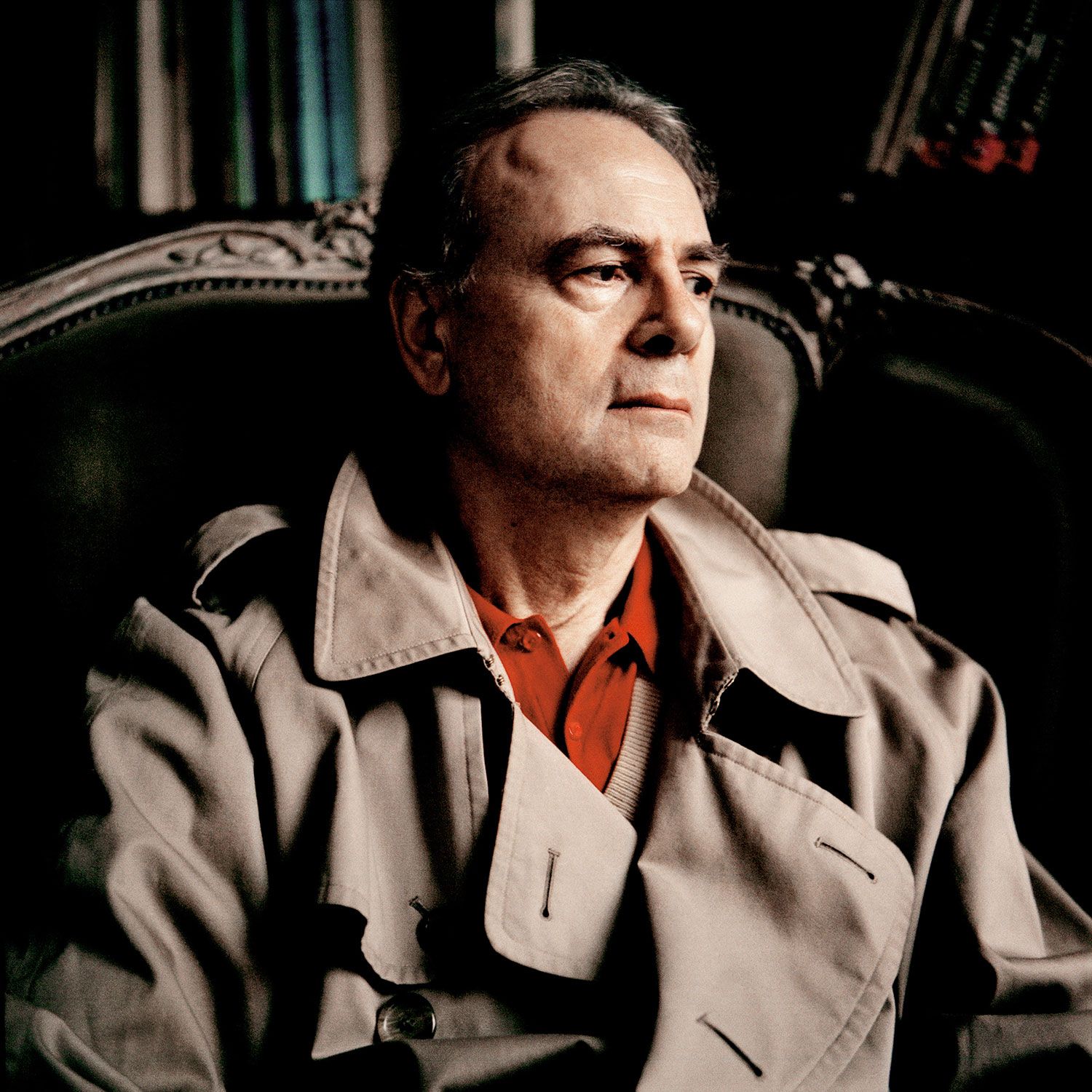
Patrick Modiano
 France
Also known as: Jean Patrick Modiano
Birthday
July 30, 1945
Birth Sign
Leo
Birthplace
Boulogne-Billancourt, France
Age
81 years old
About
Patrick Modiano is a French novelist and the recipient of the 2014 Nobel Prize in Literature. Born Jean Patrick Modiano on July 30, 1945, in Boulogne-Billancourt, a suburb of Paris, he is celebrated for his spare, atmospheric prose that circles themes of memory, identity, and the lingering shadows of World War II. His work, often described as autofiction, blends autobiography with historical fiction, creating a haunting literary cartography of occupied Paris.
Modiano has published over forty books, many of which explore the elusive nature of the past through narrators who wander the city searching for lost people and fragmented truths. His breakthrough came early with La Place de l'Étoile in 1968, followed by the Prix Goncourt-winning Rue des Boutiques Obscures in 1978. The Nobel Prize in 2014 brought his work to a global audience, and his books are now translated into more than thirty languages. He continues to live and write in Paris, maintaining a fiercely private public persona that contrasts with the intimate, probing nature of his fiction.
Early Life & Background
Patrick Modiano's early life was marked by instability and loss. He spent his first four years with his Flemish maternal grandparents in Belgium, speaking only Flemish at the start of his life, a remarkable fact for someone who would become a French writer. His younger brother Rudy was born in 1947, and his death at age ten in 1957 from blood poisoning was a devastating blow that shaped Modiano's tragic worldview. Between 1967 and 1982, he dedicated all his writing to his brother's memory.
His father, Albert Modiano, was largely absent, a shadowy figure whom Patrick heard unpleasant stories about. When Patrick was stranded in Paris during the Algerian war and called his father for help, his father instead reported him to the police. His mother, a Belgian actress, traveled frequently, and after Rudy's death, Patrick was sent to live with strangers and attend mediocre prep schools, from which he often ran away. At age fifteen, in August 1960, he ran away to London.
Back in Paris, he studied at the prestigious Lycée Henri IV, where he took private geometry lessons from the experimental writer Raymond Queneau. Queneau became his mentor and introduced him to the literary world. At the Lycée in 1965, he met Michel Courson, a classmate who described Modiano as "six and a half feet tall, pale, emaciated, and high-strung." Unlike his peers absorbed in sex, rock and roll, and revolution, Modiano preferred prewar singers like Luis Mariano and Irène de Trébert. He never attended demonstrations. Reflecting on his early career choice, Modiano said, "I never thought of doing anything else. I had no diploma, no definitive goal to achieve. But it is tough for a young writer to begin so early."
Career Growth
Modiano's literary career took off in 1968 with the publication of his first novel, La Place de l'Étoile, at age twenty-two. The novel's daring treatment of collaboration, Jewish identity, and postwar reckoning immediately earned critical attention. Its protagonist, a Jewish collaborator, was possibly based on Modiano's father, who was so upset about the book that he tried to purchase all available copies.
His third novel, Les Boulevards de ceinture, won the Grand Prix du roman de l'Académie française in 1972. In 1974, he collaborated with filmmaker Louis Malle on the screenplay for Lacombe Lucien, a controversial film about a French collaborator during the Occupation. The same year, his first daughter, Zina, was born. In 1978, his second daughter, Marie, arrived, and in November of that year, he was awarded the Prix Goncourt for Rue des Boutiques Obscures, a thriller in which a man searches for his own identity.
In 1988, while flicking through old newspapers, Modiano read a Paris-Soir from December 1941 with a missing person's report about a girl called Dora Bruder. He spent years tracking her down, finally writing the book Dora Bruder in 1996. The Nobel Prize in Literature came in 2014, with the Swedish Academy citing "the art of memory with which he has evoked the most ungraspable human destinies and uncovered the life-world of the occupation." Over his career, he has published more than forty books, with works translated into over thirty languages.
Career Timeline
Public Image & Style
Patrick Modiano is known for being intensely private and reserved, shunning the spotlight even after winning the Nobel Prize. His distinctive style features spare prose, atmospheric detail, and a quiet investigative tone. His narrators often wander through Paris in search of lost people, fragmented pasts, or elusive truths, blending autobiography and fiction in what critics describe as "a literary cartography of memory." Because of his obsession with the past, he has been compared to Marcel Proust, though their styles and concerns differ significantly.
Fans of Modiano appreciate his ability to evoke the atmosphere of occupied Paris and the moral complexities of that era. He has no official fandom name or organized fan culture, but his Nobel win introduced his work to a wider international audience. He maintains no personal social media presence, consistent with his private nature. His official website, maintained at lereseaumodiano.blogspot.com, serves as a resource for readers.
Fame & Fandom (iFAMOUS Rankings)
Patrick Modiano commands a readership defined by quiet reverence rather than chaotic adoration. His audience does not gather in streets to catch a glimpse of the author, nor do they organize fan campaigns or erect billboards for his birthday. Instead, the community exists within the pages of his novels and the margins of literary criticism. Fans are drawn to the melancholy atmosphere of occupied Paris and the fragmented nature of memory that permeates his work. The most enduring story shared among newcomers is not a viral moment or a scandalous rumor, but the intellectual journey of understanding how Modiano maps the shadows of World War II through autofiction. While a niche commercial interest occasionally surfaces, such as a perfume inspired by his latest novel, it remains a curiosity rather than a movement. There is no formal name for this collective; the fanbase operates as a scattered network of individuals united by a love for spare prose and historical investigation. Modiano himself has rarely engaged with this dynamic, preferring the solitude that fuels his writing. He became a prisoner of his memories of Paris, granting few interviews and shunning the spotlight even after global recognition. This reclusiveness only deepens the mystique surrounding his legacy. The iFANN Global Fame Engine has evaluated Patrick Modiano's standing across the world. Despite his profound impact on literature, he currently holds no placement in the published rankings, including the Global Top 1,000 or any Top-100 scope list. This absence from the charts reflects his unique position as an author whose fame is measured in critical acclaim rather than mass-market metrics.
Interesting Facts and Legends
Patrick Modiano spoke only Flemish until age four, having been raised by his Flemish grandparents. He was known to play a clever trick on booksellers: he would offer three books for sale, placing a book with a forged signature of the author in the middle, as if unaware of its value. The bookseller would hastily close the deal, believing they were taking advantage of him, but the opposite was true. As his friend Courson said, "With Patrick, everything is camouflage." His relationship to his half-Jewishness is complex. He has earned a place in the canon of Holocaust literature, yet his characters are rarely identified as Jews, and he doesn't identify as one either. Early in his career, he probed his fraught heritage through a fascination with the Gestapo and writers on the French far right, such as Pierre Drieu La Rochelle and the Hussards, a fixation rarely mentioned in popular reviews. Before the Nobel Prize, most of his novels had not been translated into English. He has also written a children's book, Catherine Certitude. The defining legend of his public life centers on the 2014 Nobel Prize in Literature. Critics celebrated him as a modern Proust for capturing the elusive nature of memory and the haunting atmosphere of occupied Paris. Stories fans still retell focus on how he turned the city itself into a character, wandering its streets to uncover lost people and fragmented truths.
Notable Quotes
“I never thought of doing anything else. I had no diploma, no definitive goal to achieve. But it is tough for a young writer to begin so early.”
“Really, I prefer not to read my early books. Not that I don't like them, but I don't recognize myself anymore, like an old actor watching himself as a young leading man.”
Family & Personal Life
Patrick Modiano's parents were Albert Modiano, a businessman of Jewish-Italian descent from the prominent Modiano family of Thessaloniki, and Louisa Colpeyn, a Flemish actress from Belgium. They met in occupied Paris during World War II and began their relationship semi-clandestinely, separating shortly after Patrick's birth. Albert had refused to wear the yellow badge that Jews were required to wear and narrowly avoided deportation after being picked up in February 1942.
Patrick's younger brother Rudy was born on October 5, 1947, and died at age ten in 1957 from blood poisoning. Patrick dedicated all his writing to his brother between 1967 and 1982. He is married to Dominique Zehrfuss, with whom he co-authored Une aventure de Choura in 1986. They have two daughters: Zina, born October 22, 1974, and Marie, born September 1, 1978. The family lives in Paris.
Notable Connections
Raymond Queneau, the experimental writer, was Modiano's geometry teacher and mentor, introducing him to the literary world. Louis Malle, the film director, collaborated with Modiano on the screenplay for Lacombe Lucien. Michel Courson, a classmate at Lycée Henri-IV, became a long-time friend. His wife, Dominique Zehrfuss, co-authored Une aventure de Choura with him.
Relationships & Dating History
Patrick Modiano has been married to Dominique Zehrfuss for many years. They married sometime before 1974, and their collaboration extends to writing, as they co-authored Une aventure de Choura in 1986. The couple has two daughters, Zina and Marie. As of 2026, they remain married, and there is no information suggesting separation or divorce.
Modiano is intensely private, so little is known about his personal life beyond his marriage. There are no public records of other significant relationships.
- MarriedDominique Zehrfuss1974 - presentCurrentMarried since before 1974; co-authored Une aventure de Choura together.
Salary, Net Worth In 2026
$10 Million
iFANN Editorial Team estimate
iFANN currently estimates Patrick Modiano's net worth at $10 Million as of 2026. His primary income comes from book royalties, which have increased substantially since his 2014 Nobel Prize win. His works are translated into more than thirty languages, expanding his royalty base across international markets. Before the Nobel, most of his novels had not been translated into English, but the prize changed that, opening up a much larger English-speaking readership. In addition to royalties, Modiano has earned income from film adaptations and screenwriting, notably his collaboration with Louis Malle on Lacombe Lucien. He has also received several major literary prizes, including the Prix Goncourt and the Austrian State Prize, which often come with monetary awards. While he leads a modest, private life in Paris, his financial standing reflects the enduring value of his literary work.
Awards Won (5)
Patrick Modiano has won some of the most prestigious awards in literature. In 1972, his novel Les Boulevards de ceinture earned the Grand Prix du roman de l'Académie française. Six years later, Rue des Boutiques Obscures won the Prix Goncourt, France's top literary honor. In 2010, he received the Prix mondial Cino Del Duca for lifetime achievement, and in 2012, the Austrian State Prize for European Literature. The pinnacle came in 2014 with the Nobel Prize in Literature.
2014 · Literature
Lifetime achievement
2012 · Literature
Lifetime achievement
Known For
Rue des Boutiques Obscures
1978 · Author
Dora Bruder
1996 · Author
La Place de l'Étoile
1968 · Author
Lacombe Lucien
1974 · Screenwriter
Keywords
Sources
Quick Facts
- Profession
- French novelist, screenwriter
- Born
- July 30, 1945
- Birthplace
- Boulogne-Billancourt, France
- Gender
- Male
- Spouse
- Dominique Zehrfuss
- Birth Sign
- Leo
- Children
- Zina Modiano, Marie Modiano
- Education
- Lycée Henri IV, Paris
Personal Details
- Full Name
- Jean Patrick Modiano
- Spouse
- Dominique Zehrfuss
- Children
- Zina Modiano, Marie Modiano
- Education
- Lycée Henri IV, Paris
Filmography
1
Total
1
Film
0
TV
Frequently Asked Questions
Is Patrick Modiano still alive?
Why did Patrick Modiano win the Nobel Prize?
Is Patrick Modiano married?
What is Patrick Modiano's most famous book?
How many books has Patrick Modiano written?
Similar People
Join the community
fans discussing