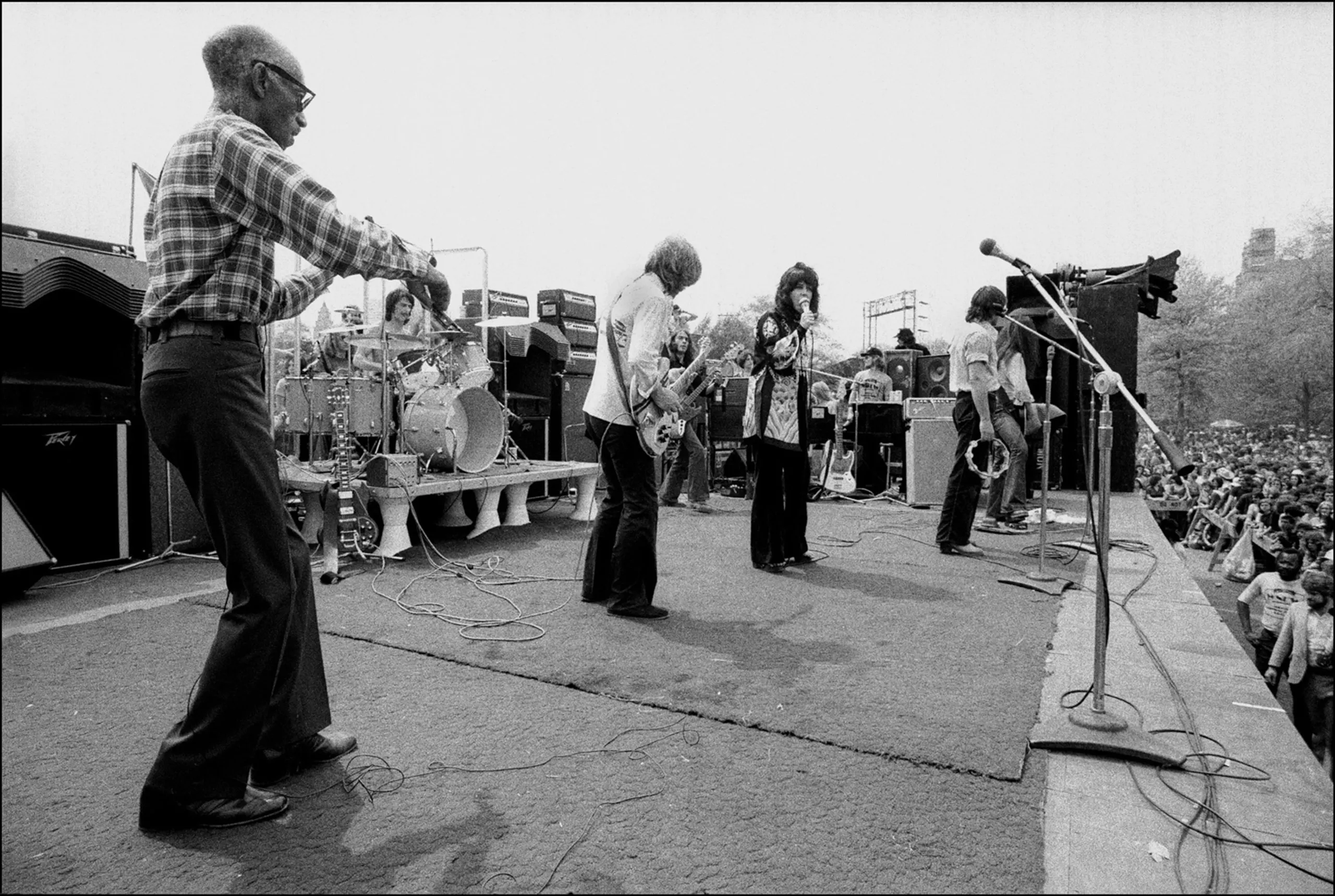
Papa John Creach
Member of Jefferson Airplane
Also known as: John Henry Creach, John Creach, Papa John
Birthday
May 28, 1917
Birth Sign
Sagittarius
Birthplace
Beaver Falls, Pennsylvania
Age
Died at 76
About
John Henry Creach (May 28, 1917 – February 22, 1994), better known as Papa John Creach, was an American blues violinist who also played classical, jazz, R&B, pop and acid rock music. Early in his career, he performed as a journeyman musician with Louis Armstrong, Fats Waller, Stuff Smith, Charlie Christian, Big Joe Turner, T-Bone Walker, Nat King Cole and Roy Milton.
Following his rediscovery by drummer Joey Covington in 1967, he fronted a variety of bands including Zulu and Midnight Sun in addition to playing with Jefferson Airplane, Hot Tuna, Jefferson Starship, the San Francisco All-Stars, Dinosaurs and Steve Taylor. Creach recorded a number of solo albums and guested at several Grateful Dead and Charlie Daniels Band concerts. He was a regular guest at the early annual Volunteer Jams hosted by Charlie Daniels, which exposed him to a new audience receptive to fiddle players.
Early Life & Background
Born on May 28, 1917, in Beaver Falls, Pennsylvania, John Henry Creach grew up in a steel town where working-class roots deeply influenced his musical development. While formal education details remain scarce, his training came from immersion in the touring circuits of the 1930s rather than conservatories. By his teenage years, he was already performing professionally, displaying a prodigious talent that allowed him to navigate complex musical landscapes with ease.
His apprenticeship under legends like Louis Armstrong and Fats Waller served as his primary schooling. During the 1930s and 1940s, he toured with some of the most influential names in jazz and blues history, including Stuff Smith, Charlie Christian, Big Joe Turner, and T-Bone Walker. This period established him as a versatile virtuoso capable of switching seamlessly between classical, jazz, and R&B styles. Despite his growing reputation, he remained a sideman during this era, a common trajectory for Black musicians of his generation who often faced marginalization despite their skill.
By the 1950s and early 1960s, Creach had largely faded from the mainstream spotlight, working as a session musician and occasional bandleader. He continued to perform locally but did not achieve widespread fame until his unexpected rediscovery in the vibrant music scene of San Francisco. Before this breakthrough, he had spent decades honing his craft in the shadows of the industry giants he once backed, waiting for a moment where his unique sound would find a new home.
Career Growth
The pivotal moment of Creach's career arrived in 1967 when Jefferson Airplane drummer Joey Covington spotted him playing in a local San Francisco club. Covington recognized the unique potential of an electric fiddle in the psychedelic rock scene and invited Creach to join the band. This move made him the first prominent blues violinist to join a major psychedelic rock group, fundamentally altering the sonic texture of the era.
Creach appeared on the album Long John Silver (1972) and contributed to the live recording Thirty Seconds Over Winterland (recorded 1968, released 1973). His energetic performances at the Winterland Ballroom became legendary, particularly his self-deprecating humor about his age while delivering high-energy rock sets. After leaving Jefferson Airplane, he became a core member of Hot Tuna, the blues-rock side project of Jorma Kaukonen and Jack Casady, touring extensively throughout the 1970s and 1980s.
He also joined Jefferson Starship, appearing on albums such as Red Octopus (1975). In addition to his work with these major groups, Creach fronted his own bands, including Zulu and Midnight Sun. He was a frequent guest on Grateful Dead shows and a regular at the Volunteer Jams hosted by Charlie Daniels, where he introduced his fiddle to country and bluegrass fans. His later years saw him releasing solo albums and maintaining a reputation as a beloved elder statesman of the San Francisco music scene until his death in 1994.
Career Timeline
Public Image & Style
Papa John Creach cultivated a persona of humble authenticity and approachable wisdom. Known for his stage presence as an older man playing high-energy rock, he often engaged in self-deprecating humor about his age, which endeared him to younger audiences. His style blended the traditional dress of a blues musician with the electric intensity of a rock star. Media perception focused on his role as a bridge between generations, highlighting his ability to command a stage with the energy of a much younger performer despite being in his 50s and 60s. He was viewed not as a celebrity seeking fame, but as a dedicated artist preserving the blues tradition within a modern context.
Fame & Fandom (iFAMOUS Rankings)
iFANN has evaluated Papa John Creach but he currently holds no placement in the Global Top 1,000 or any scope-specific rankings. His legacy is defined not by chaotic fan mythology or organized campaigns, but by the enduring respect of the communities surrounding the bands he joined, such as Hot Tuna and Jefferson Starship. Unlike major pop icons who command formalized fanbases with specific names, Creach did not cultivate an official fandom dedicated solely to his person; the fanbase has no formal name. The audience interaction that persists today is retrospective and community-driven, often centered on the broader groups rather than Creach himself. One notable moment of connection occurred at Winterland Ballroom, where the musician humorously addressed the crowd regarding his age, asking, "What's this old man doing up there playing?" This self-deprecating wit highlighted his approachable nature and served as a primary example of how he engaged with listeners without relying on manufactured celebrity status.
The cultural narrative surrounding Creach focuses on his historical significance as the first prominent blues violinist in a major psychedelic rock band. His entry into Jefferson Airplane via drummer Joey Covington marked a pivotal moment in music history, blending the acoustic roots of the blues with the electric energy of the 1970s scene. Since his passing in 1994, the memory of his contributions has been kept alive through reissues of recordings like Thirty Seconds Over Winterland and ongoing tours by his former collaborators. The official Jefferson Airplane channels continue to honor him with respectful remembrances, ensuring that his influence on genre-blending sound remains a vital part of the era's story.
Interesting Facts and Legends
Papa John Creach was one of the few musicians to play with Louis Armstrong in the 1930s and Jefferson Airplane in the 1960s, spanning nearly the entire history of American popular music. His nickname "Papa John" was given to him early in his career, possibly derived from his father or a moniker used in the blues circuit, though the exact origin is not definitively documented. At the Winterland Ballroom, he famously asked the crowd, "What's this old man doing up there playing?" This self-deprecating joke became a defining anecdote of his personality and his rapport with the counterculture crowd. He was celebrated for blending traditional blues with modern rock energy, a feat considered highly unusual for a man in his 50s at the time. His work is frequently cited in discussions about the evolution of the electric fiddle in rock music.
Notable Quotes
“What's this old man doing up there playing?”
“Creach often spoke about the joy of playing and the importance of keeping the blues tradition alive in a rock setting.”
Family & Personal Life
Detailed public records regarding Papa John Creach's romantic life, marriages, or children are virtually non-existent. Unlike many of his contemporaries who were frequently in the tabloids, Creach maintained a low profile regarding his private affairs. There are no credible sources documenting any marriages, engagements, or long-term relationships. No children have been publicly attributed to him. Given his age and the era in which he lived, it is possible he had a family that chose to remain out of the public eye, or he may have remained single. As of his death in 1994, there is no record of a spouse or partner.
Notable Connections
Relationships & Dating History
Detailed public records regarding Papa John Creach's romantic life, marriages, or children are virtually non-existent. Unlike many of his contemporaries who were frequently in the tabloids, Creach maintained a low profile regarding his private affairs. There are no credible sources documenting any marriages, engagements, or long-term relationships. No children have been publicly attributed to him. Given his age and the era in which he lived, it is possible he had a family that chose to remain out of the public eye, or he may have remained single. As of his death in 1994, there is no record of a spouse or partner. Consequently, his dating history remains unconfirmed and undocumented in available biographical sources.
Death & Aftermath
Died
February 22, 1994 (aged 76)
Death Place
Los Angeles, California
Cause of Death
Natural causes
John Henry Creach passed away on February 22, 1994, at the age of 76 in Los Angeles, California. The cause of death was reported as natural causes, consistent with his advanced age and lack of public reports regarding accidents or foul play. His death marked the end of a nearly seven-decade career that had bridged the gap between traditional acoustic blues and the electric psychedelic rock of the late 1960s.
The music community reacted with immediate respect and remembrance. The New York Times published a detailed obituary on February 23, 1994, praising his versatility across jazz, R&B, pop, and acid rock. Peers like Keb' Mo', who had played guitar alongside him in the early 1970s, spoke fondly of his mentorship and unique ability to blend genres. Tributes poured in from the Jefferson Airplane family and the broader San Francisco music scene, celebrating him as an elder statesman who brought authentic blues energy to rock stages.
Details regarding his funeral service were not widely publicized in available records, though he was laid to rest in the West Coast area where he spent much of his later life. Posthumously, his legacy has been preserved through reissues of his recordings. Rhino Records included his contributions on the 2024 reissue of Dragon Fly, ensuring new listeners could hear his electric fiddle work. Royalties from albums like Long John Silver and Thirty Seconds Over Winterland continue to generate revenue for his estate, managed by his heirs. His induction into the National Fiddler Hall of Fame stands as a permanent testament to his technical mastery and historical significance in American music.
Net Worth (Estate Value)
$500 Thousand
iFANN Editorial Team estimate
As a musician who died in 1994, Papa John Creach left behind an estate managed posthumously. Specific net worth figures for 2026 are not publicly tracked by celebrity finance outlets because his income streams were modest compared to modern pop stars. Research by the iFANN Editorial Team puts his estate value at around $500 Thousand. Revenue continues to be generated through streaming services like Spotify and Apple Music, vinyl reissues, and licensing deals for his recordings with Jefferson Airplane and Hot Tuna.
Posthumous earnings come primarily from royalties on albums like Thirty Seconds Over Winterland, Long John Silver, and various Hot Tuna releases. Discogs and other retailers continue to sell his physical media. The management of his estate is not publicly disclosed, but it is likely handled by his heirs or a designated executor, given the lack of corporate estate management typical of modern superstars. The estate's financial trajectory remains stable due to the enduring interest in the San Francisco Sound and the catalog's availability on digital platforms.
Awards Won (2)
While Creach did not win mainstream commercial awards like Grammys or Oscars during his lifetime, he received significant recognition within the fiddle and blues communities. He won a W.C. Handy Award for his contributions to the genre and was inducted into the National Fiddler Hall of Fame, cementing his legacy as one of the most important fiddle players in American history.
1970 · Blues Music Awards
Lifetime Achievement
1985 · Hall of Fame
Lifetime Achievement
Known For
Long John Silver
1972 · Violinist
Thirty Seconds Over Winterland
1973 · Violinist
Red Octopus
1975 · Violinist
Keywords
Sources
Quick Facts
- Profession
- musician, fiddler
- Born
- May 28, 1917
- Birthplace
- Beaver Falls, Pennsylvania
- Died
- February 22, 1994
- Death Place
- Los Angeles, California
- Gender
- Male
- Birth Sign
- Sagittarius
Personal Details
- Full Name
- John Henry Creach
- Children
Frequently Asked Questions
Who was Papa John Creach?
Did Papa John Creach have any children?
What album did Papa John Creach play on with Jefferson Airplane?
How did Papa John Creach die?
Was Papa John Creach a member of the Grateful Dead?
Similar People
Join the community
fans discussing