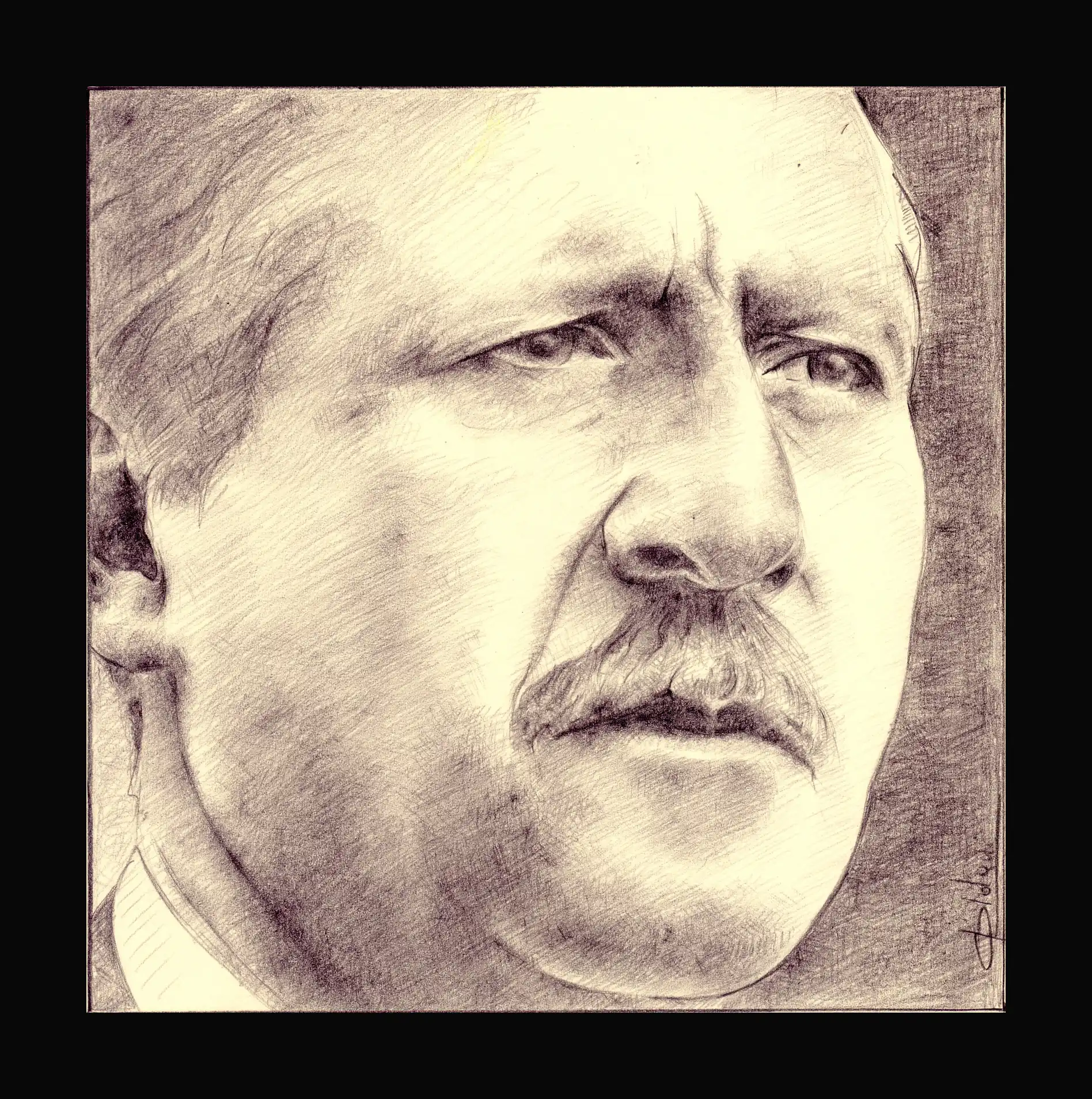
Paolo Borsellino
Birthday
January 19, 1940
Birth Sign
Capricorn
Birthplace
Palermo, Sicily
Age
Died at 52
About
Paolo Emanuele Borsellino was an Italian judge and prosecuting magistrate whose life and death became the defining symbol of Italy's struggle against the Sicilian Mafia. Born on January 19, 1940, in Palermo, he dedicated his career to dismantling the power structures of Cosa Nostra, a mission that ultimately cost him his life at the age of 52. Alongside his close friend Giovanni Falcone, another magistrate from their hometown, Borsellino built a legal strategy that challenged the organization's power structure head-on.
The duo achieved their most significant victory during the Maxi Trial between 1986 and 1987. This massive prosecution resulted in hundreds of convictions and dealt a severe blow to Mafia operations across Sicily. Their work earned them the Gold Medal for Civil Valor, Italy's highest civilian honor, for their tireless efforts against corruption and violence. Despite their success, the threat they posed to criminal networks remained acute. On July 19, 1992, just five months after Falcone's death, assassins detonated a car bomb filled with explosives near Via D'Amelio in Palermo. The attack killed Borsellino instantly as he rushed toward his mother's house, ending his life at age 52.
Early Life & Background
Borsellino was born into a working-class family in the Kalsa district of Palermo, a neighborhood where Mafia influence was pervasive and often intertwined with daily life. He was the son of a railway worker and a housewife who raised him with a strong sense of justice that stood in stark contrast to the criminal culture surrounding him. His upbringing instilled in him a deep commitment to public service rather than personal gain.
He attended the Liceo Classico "Pietro Giannone" in Palermo before enrolling in the University of Palermo to study law. After graduating in 1964, he began his legal career driven by a desire to serve the public good. His early assignments took him to Agrigento and other southern Italian cities, where he gained a reputation for rigor and independence. These formative years allowed him to hone the meticulous investigative style that would later define his approach to organized crime.
His path shifted significantly when he joined the "Antimafia Pool" (Pool Antimafia) in Palermo in the mid-1980s. Working alongside Giovanni Falcone, Borsellino pioneered a new investigative strategy that focused on the internal hierarchy of the Mafia rather than just individual crimes. This collaborative approach laid the groundwork for the historic Maxi Trial, setting the stage for his eventual role as one of Italy's most prominent anti-mafia magistrates.
Career Growth
Borsellino's career reached its zenith during the Maxi Trial, held between 1986 and 1987. He played a pivotal role in organizing evidence and prosecuting over 475 defendants, including top bosses like Salvatore Riina. The trial resulted in hundreds of convictions and effectively decapitated the leadership of the Sicilian Mafia, marking the first major legal victory against the organization. For this work, Borsellino and Falcone were awarded the Gold Medal for Civil Valor.
Following the Maxi Trial, Borsellino continued to lead investigations into money laundering, political corruption, and state collusion with the Mafia. In 1991, he was appointed as the Director of the Department of Criminal Affairs within the Ministry of Justice, a role that placed him at the center of national anti-mafia policy. Despite his success, the threat level remained critical. In May 1992, Giovanni Falcone was assassinated by a car bomb on the Capaci highway. Just five months later, on July 19, 1992, Borsellino met the same fate.
Career Timeline
Public Image & Style
Borsellino was perceived as a man of few words with a serious demeanor, often seen in formal judicial attire. His public persona was defined by his unwavering commitment to the rule of law and his refusal to be intimidated by threats. Media portrayals emphasize his courage and the quiet dignity with which he faced danger. He is remembered not as a celebrity but as a steadfast magistrate who embodied the values of democracy and justice in the face of overwhelming violence.
Fame & Fandom (iFAMOUS Rankings)
iFANN has not yet collected fame data for this person. He is not featured on the September 2026 iFAMOUS Rankings flagship list. While there is no formal fandom name documented in the research, the public reaction to his death created a massive, unified movement of citizens who viewed him as a martyr for justice. Millions of Italians participated in vigils and protests following his assassination, demonstrating a collective devotion to the ideals he represented. His story continues to inspire activists and legal professionals globally, serving as a powerful symbol of resistance against organized crime.
Interesting Facts and Legends
Borsellino was a devout Catholic who often prayed before entering court to seek guidance for his difficult cases. He was known for his meticulous note-taking habits and famously refused to use bodyguards unless absolutely necessary, a decision that some biographers argue contributed to his vulnerability. The phrase "Io non ho paura" (I am not afraid), which he said in an interview shortly before his death, has become a rallying cry for anti-mafia activists and was later used as the title of a book and documentary series about his life. His sister established the Fondazione Paolo e Rita Borsellino to continue his work in promoting legal education and cultural initiatives against the Mafia.
Notable Quotes
“I am not a hero. I am a judge. My job is to apply the law.”
“Io non ho paura" (I am not afraid)”
“The Mafia is not a monster, it is a company. And companies can be destroyed.”
Family & Personal Life
Borsellino lived primarily with his mother, Agata, whom he cared for deeply until her death. He never married and had no children, dedicating his entire life to his professional duty. His personal life was entirely subsumed by his fight against organized crime, and he famously stated, "I am not a hero, I am a judge." His lack of a traditional family life has often been noted by biographers as a testament to the total sacrifice required for his mission. His sister, Rita, later established the foundation that bears their names to keep his legacy alive.
Notable Connections
Relationships & Dating History
Paolo Borsellino was a man of few words regarding his private life, and there is no public record of romantic relationships, dating history, or marriages. He lived primarily with his mother, Agata, whom he cared for deeply until her death. He never married and had no children. His personal life was entirely subsumed by his professional duty; he famously stated, "I am not a hero, I am a judge." His lack of a traditional family life has often been noted by biographers as a testament to the total sacrifice required for his fight against organized crime. As of 2026, he remains deceased, and no posthumous romantic partnerships exist.
Death & Aftermath
Died
July 19, 1992 (aged 52)
Death Place
Palermo, Sicily
Cause of Death
Car bomb explosion
On July 19, 1992, at 5:35 PM, a massive car bomb detonated outside the apartment building on Via D'Amelio in Palermo where Paolo Borsellino's mother lived. The device, packed with roughly 40 kilograms of TNT and hidden inside a white Renault 85, was triggered remotely as the judge arrived to visit her. The blast killed Borsellino instantly along with five members of his police escort: Agostino Catalano, Vito Schifani, Rocco Dicillo, Antonio Montinaro, and Claudio Traina.
Italian judicial authorities immediately identified the Corleonese faction of the Sicilian Mafia, led by Salvatore Riina, as the perpetrators. The murder came exactly 57 days after the assassination of Borsellino's close friend and colleague Giovanni Falcone, plunging Italy into a period of intense national crisis. This dual tragedy sparked the "Falcone-Borsellino effect," a wave of public outrage that saw millions of Italians take to the streets in spontaneous protests demanding an end to Mafia impunity.
The funeral procession drew hundreds of thousands of mourners, including President Francesco Cossiga and Prime Minister Giulio Andreotti. The six victims were buried together in a single grave at the Santa Maria di Gesù cemetery, symbolizing their shared sacrifice. In the years following the attack, extensive legal proceedings resulted in the conviction of key Mafia figures, though the disappearance of Borsellino's "red notebook", allegedly containing evidence of high-level state collusion, remains a subject of ongoing investigation and conspiracy theories. His legacy lives on through the Fondazione Paolo e Rita Borsellino and numerous cultural tributes dedicated to his fight for justice.
Net Worth (Estate Value)
$0
iFANN Editorial Team estimate
As a civil servant and judge, Paolo Borsellino did not accumulate significant personal wealth. His net worth at the time of his death was modest, consistent with the salary of a senior Italian magistrate. There are no public records of business ventures, real estate holdings beyond his mother's home, or investment portfolios. Consequently, there is no "estate value" in the traditional celebrity sense. Any financial assets related to his name are managed by his family and the Fondazione Paolo e Rita Borsellino, which relies on donations and grants rather than commercial exploitation. Posthumous revenues from books or films about his life go to the foundation or his family, but these do not constitute a personal estate net worth. Research by the iFANN Editorial Team puts his estate value at approximately $0 given his status as a public servant without private fortune.
Awards Won (2)
Borsellino received the Gold Medal for Civil Valor in 1992 for his exceptional courage and dedication to the rule of law. Time magazine named him one of the "Heroes of the Last 60 Years" in November 2006. He has been frequently honored by the European Parliament for embodying the values of democracy and justice. Numerous statues and plaques have been erected in his honor across Italy, including a prominent monument in Palermo near the site of his death.
1992 · Civil Honor
Service to the Republic
2006 · Cultural Impact
Anti-Mafia Work
Known For
Maxi Trial
1987 · Prosecutor
Anti-Mafia Investigation
1992 · Magistrate
Keywords
Sources
Quick Facts
- Profession
- judge, magistrate
- Born
- January 19, 1940
- Birthplace
- Palermo, Sicily
- Died
- July 19, 1992
- Death Place
- Palermo, Sicily
- Gender
- Male
- Birth Sign
- Capricorn
Personal Details
- Full Name
- Paolo Emanuele Borsellino
- Children
- Education
- University of Palermo, Liceo Classico Pietro Giannone
Frequently Asked Questions
What happened to Paolo Borsellino?
How do you pronounce "Borsellino"?
Who ordered the killing of Falcone and Borsellino?
Did Paolo Borsellino have any children?
What is the significance of the "red notebook"?
Join the community
fans discussing