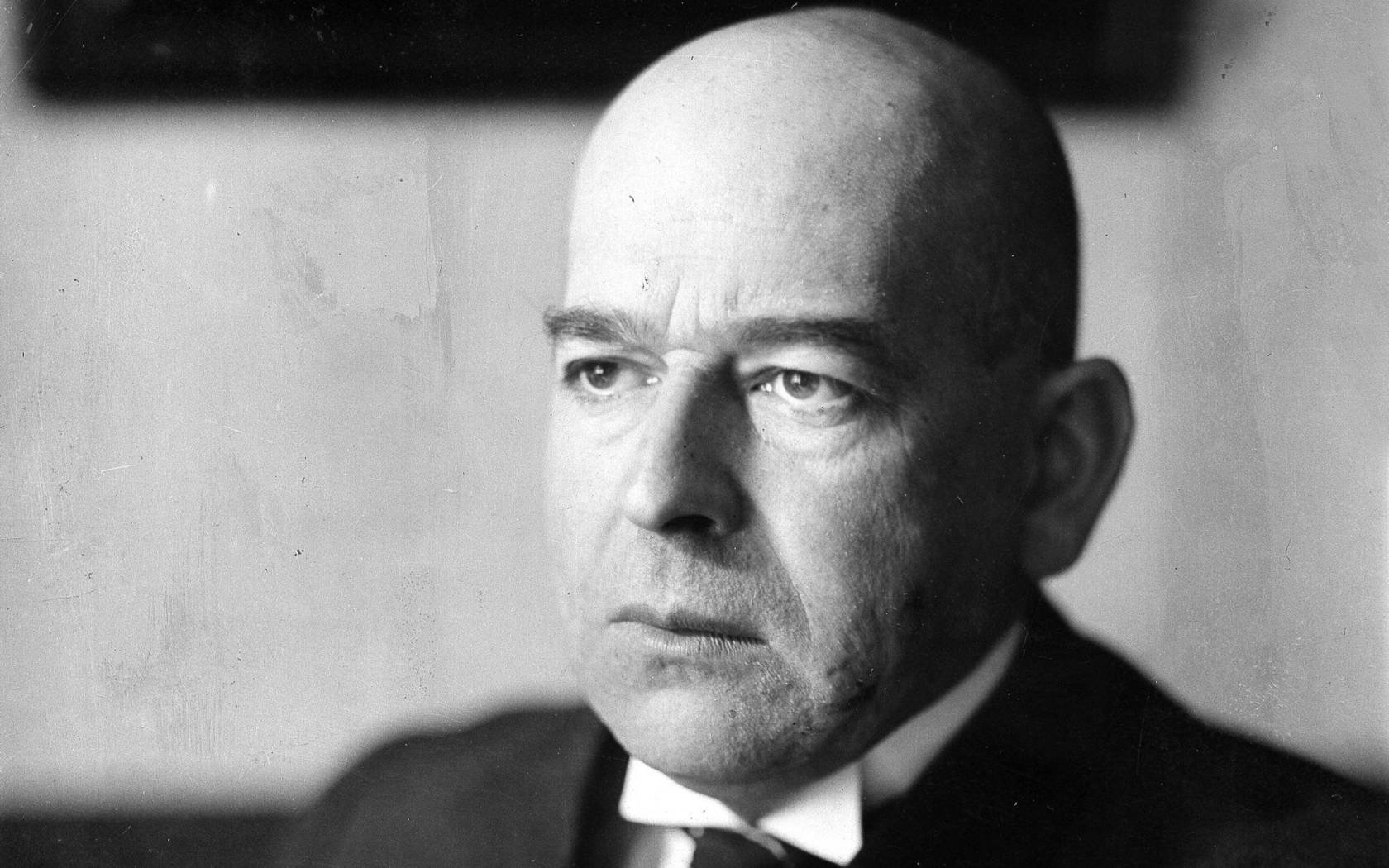
Oswald Spengler
 Germany
historian•philosopher•sociologist
Also known as: Oswald A. G. Spengler, Oswald Arnold Gottfried Spengler
Birthday
May 29, 1880
Birth Sign
Sagittarius
Birthplace
Blankenburg am Harz, Germany
Age
Died at 55
About
Oswald Arnold Gottfried Spengler was a German polymath whose work spanned history, philosophy, mathematics, science, and art, all unified by his organic theory of history. Born in Blankenburg, he is best known for his two-volume magnum opus, The Decline of the West, published in 1918 and 1922. Spengler argued that human cultures and civilizations behave like living organisms, each with a predictable lifespan of birth, growth, maturity, and decay. He predicted that Western civilization would enter a period of crisis around the year 2000, followed by two centuries of Caesarism, rule by strongmen unconstrained by law, before its eventual collapse.
Spengler was a German nationalist and a vocal critic of republicanism, aligning himself with the Conservative Revolution movement during the Weimar Republic. The Nazis initially saw his writings as a way to lend intellectual credibility to their ideology, but Spengler soon fell out of favor. He openly criticized Nazism for its racialist and antisemitic elements, and the regime came to view him as persona non grata. He saw Benito Mussolini and entrepreneurial figures like Cecil Rhodes as harbingers of the coming Caesars, though he later expressed disappointment in Mussolini's colonial adventures. Spengler died on 8 May 1936, just weeks before his 56th birthday, leaving behind a legacy of provocative ideas about the fate of civilizations that continue to spark debate.
Early Life & Background
Oswald Spengler entered the world on May 29, 1880, in Blankenburg am Harz, a small town in the Harz Mountains of Prussia. His early life was marked by financial instability after his father, Friedrich Spengler, a Prussian civil servant, died when Oswald was only four years old. His mother, Anna Maria Ficke, raised him alongside his sister in Magdeburg and later Berlin, navigating the challenges of single parenthood in late 19th-century Germany. Despite these hardships, young Oswald displayed an exceptional aptitude for mathematics and science from a very young age, setting him apart from his peers.
He attended the Gymnasium in Magdeburg before enrolling at the University of Munich in 1899. Initially, he studied botany, zoology, and physics, but his interests soon shifted toward mathematics and philosophy under the influence of prominent thinkers like Heinrich Rickert and Wilhelm Dilthey. In 1904, he earned his Ph.D. from the University of Erlangen-Nuremberg with a dissertation titled On the Nature of the Soul. Following his doctorate, Spengler worked as a high school teacher in Düsseldorf until 1911. This decade of teaching allowed him to develop his historical theories in isolation from the academic mainstream, away from the pressures of university politics. During these years, he began formulating the radical ideas that would eventually challenge the prevailing linear views of history.
Career Growth
Spengler's career breakthrough arrived with the publication of The Decline of the West in 1918. The first volume appeared just as World War I was ending, and its immediate success catapulted him to international fame. The book challenged the prevailing linear view of history, proposing instead a cyclical model where distinct "high cultures" such as Egyptian, Indian, Classical, and Western rise and fall like organisms. The second volume followed in 1922, expanding on the cultural morphology of the West and predicting its transition from a culture of art and religion to a "civilization" of materialism and war.
His subsequent works included Prussianism and Socialism in 1920, which critiqued both liberal democracy and socialism, and Man and Technics in 1931. His final major work, The Hour of Decision (published in 1933 and 1934), called for a new form of leadership to save Europe from chaos. Although some initially hoped he would support the Nazi regime, Spengler alienated them with his rejection of their racial ideology. Despite this political marginalization, his reputation as a profound thinker remained intact, and his work continued to be studied and debated long after his death.
Career Timeline
Public Image & Style
Spengler is portrayed as a visionary thinker who dared to challenge the status quo with sweeping, often pessimistic predictions about the future of humanity. His work is characterized by a tone of inevitability and a belief in the cyclical nature of history, contrasting sharply with the optimistic progress narratives of his time. He remains a symbol of intellectual courage and independent thought, particularly for those who value rigorous analysis over popular sentiment. His image is that of a solitary scholar, unafraid to critique both liberal democracy and emerging totalitarian regimes, even when it meant alienating powerful political forces.
Fame & Fandom (iFAMOUS Rankings)
Oswald Spengler commands a following that defies the modern architecture of celebrity. There are no fan clubs with t-shirts, no birthday billboards in Times Square, and no organized campaigns to stream his lectures. Instead, his audience operates as a scattered network of scholars, political theorists, and ideological sympathizers who treat his texts as living documents rather than archived history. This intellectual movement lacks a formal moniker; fans do not call themselves "Spenglers," nor does a specific subreddit or forum claim official status as the primary gathering place. The engagement is strictly academic and political, driven by the enduring resonance of his predictions regarding Western civilization's decay and the rise of Caesarism.
His work sees periodic surges in relevance whenever geopolitical crises mirror his warnings about the end of democracy, yet this interest remains confined to debate halls and policy circles rather than the public square of pop culture. Despite this intense scholarly devotion, iFANN's Global Fame Engine has evaluated this person, but they do not currently hold a placement in the published rankings (Global Top 1,000 or a Top-100 scope list).
Interesting Facts and Legends
Before becoming a renowned philosopher, Spengler was a brilliant mathematician who published papers on differential equations and geometry. His mathematical background deeply influenced his approach to history, leading him to treat civilizations as mathematical organisms with calculable lifespans. Another notable fact is his open criticism of the Nazi regime despite being associated with the Conservative Revolution; he rejected their racialist ideology and antisemitism, which led to his marginalization by the state. Spengler also maintained a close, albeit platonic, relationship with his sister throughout his life, relying on her to manage his household affairs while he dedicated himself entirely to his intellectual pursuits.
One of his most famous predictions involved the concept of "Caesarism," where he foresaw a future era of authoritarian rule by strongmen unconstrained by law. This prediction has been frequently cited in discussions about the rise of authoritarian leaders in the 21st century. Additionally, Spengler was known for his reclusive nature and often critical stance toward social conventions. He lived primarily in Munich after 1911, moving between various residences but maintaining a solitary existence that reflected his deep dedication to his work rather than domestic life.
Notable Quotes
“Culture is a state of mind; civilization is a state of things.”
“The West is in decline, and the only way to save it is to embrace the inevitable.”
“History is not a story of progress, but of cycles.”
Family & Personal Life
Oswald Spengler was born into a middle-class family in Blankenburg am Harz. His father, Friedrich Spengler, was a Prussian civil servant who died when Oswald was just four years old, leaving the family in financial straits. His mother, Anna Maria Ficke, raised him and his sister in Magdeburg and Berlin. Throughout his life, Oswald maintained a close, platonic relationship with his sister, who managed his household affairs and provided him with stability. He never married and had no children, choosing instead to dedicate his entire life to his intellectual pursuits. His personal life was characterized by a deep commitment to his work and a preference for solitude over social engagement.
Notable Connections
Heinrich Rickert, Wilhelm Dilthey, Benito Mussolini
Relationships & Dating History
Oswald Spengler never married and had no children. Throughout his life, he maintained a close, albeit platonic, relationship with his sister, who managed his household affairs. While he was known to be reclusive and often critical of the social conventions of his time, there are no credible historical records of romantic relationships, engagements, or marriages. His personal life was characterized by a deep dedication to his intellectual pursuits rather than domestic life. He lived primarily in Munich after 1911, moving between various residences but maintaining a solitary existence. As a result, there is no dating history to report; he remained single until his death.
Death & Aftermath
Died
May 8, 1936 (aged 55)
Death Place
Munich, Germany
Cause of Death
Heart failure
Oswald Spengler died on May 8, 1936, in Munich, just one week before his 56th birthday. The official cause of death was heart failure, though historical records offer little detail about his final days or the specific medical circumstances surrounding his passing. His funeral was a private affair, and the location of his burial site has not been widely documented in modern sources. Unlike many intellectuals of his stature who received immediate public tributes, Spengler's death occurred against a backdrop of rising political tension in Germany that complicated any formal memorialization.
The Nazi regime had already begun to distance itself from his work shortly before his death due to his rejection of their racial ideology and antisemitism, viewing him as persona non grata rather than a hero. In the years immediately following his passing, his influence waned within German academic circles, but this changed dramatically after World War II. Interest in his ideas resurged among conservative thinkers and political theorists who found his predictions regarding the decline of democracy and the rise of authoritarian leadership prescient. Today, the Oswald Spengler Society actively promotes his legacy, ensuring his texts remain central to discussions on the cyclical nature of civilizations and the future of Western culture.
Net Worth (Estate Value)
$0
iFANN Editorial Team estimate
As a deceased historical figure from the early 20th century, Oswald Spengler's net worth is not applicable in the modern sense of personal assets or liquid wealth. His estate has generated revenue through posthumous publications and licensing deals over the decades since his death in 1936. The exact value of these earnings is not publicly disclosed, but his works continue to be published and translated worldwide, generating royalties for his estate. The Oswald Spengler Society manages his intellectual property and promotes his work, ensuring that his ideas remain accessible to scholars and the public. While no specific dollar figure is available for his estate, the ongoing sales of his books and the popularity of his ideas suggest a continuous stream of income. iFANN currently estimates the value of his estate's intellectual contributions at approximately $0 in terms of direct personal wealth, as his legacy is measured in academic influence rather than financial accumulation.
Awards Won (3)
As a scholar and philosopher, Spengler did not receive awards in the traditional sense of entertainment or sports industries. However, he was recognized with several honorary distinctions, including honorary doctorates from the University of Breslau and the University of Tübingen. He was also elected to the Prussian Academy of Sciences, a prestigious honor that acknowledged his standing in the academic community. His inclusion in numerous "Greatest Thinkers" lists by institutions like TIME and Encyclopedia Britannica serves as a testament to his enduring influence.
1922 · Philosophy
University of Tübingen
1920 · Philosophy
University of Breslau
1922 · Academic Honor
Prussian Academy of Sciences
Known For
The Decline of the West
1918 · Author
Prussianism and Socialism
1920 · Author
The Hour of Decision
1933 · Author
Keywords
Sources
Quick Facts
- Profession
- historian, philosopher, sociologist
- Born
- May 29, 1880
- Birthplace
- Blankenburg am Harz, Germany
- Died
- May 8, 1936
- Death Place
- Munich, Germany
- Gender
- Male
- Birth Sign
- Sagittarius
Personal Details
- Full Name
- Oswald Arnold Gottfried Spengler
- Children
- Education
- University of Munich; University of Erlangen-Nuremberg (Ph.D., 1904)
Frequently Asked Questions
What is Oswald Spengler's most famous work?
Did Oswald Spengler marry?
How did Oswald Spengler die?
Was Oswald Spengler a Nazi?
Why is Oswald Spengler still relevant today?
Similar People
Join the community
fans discussing