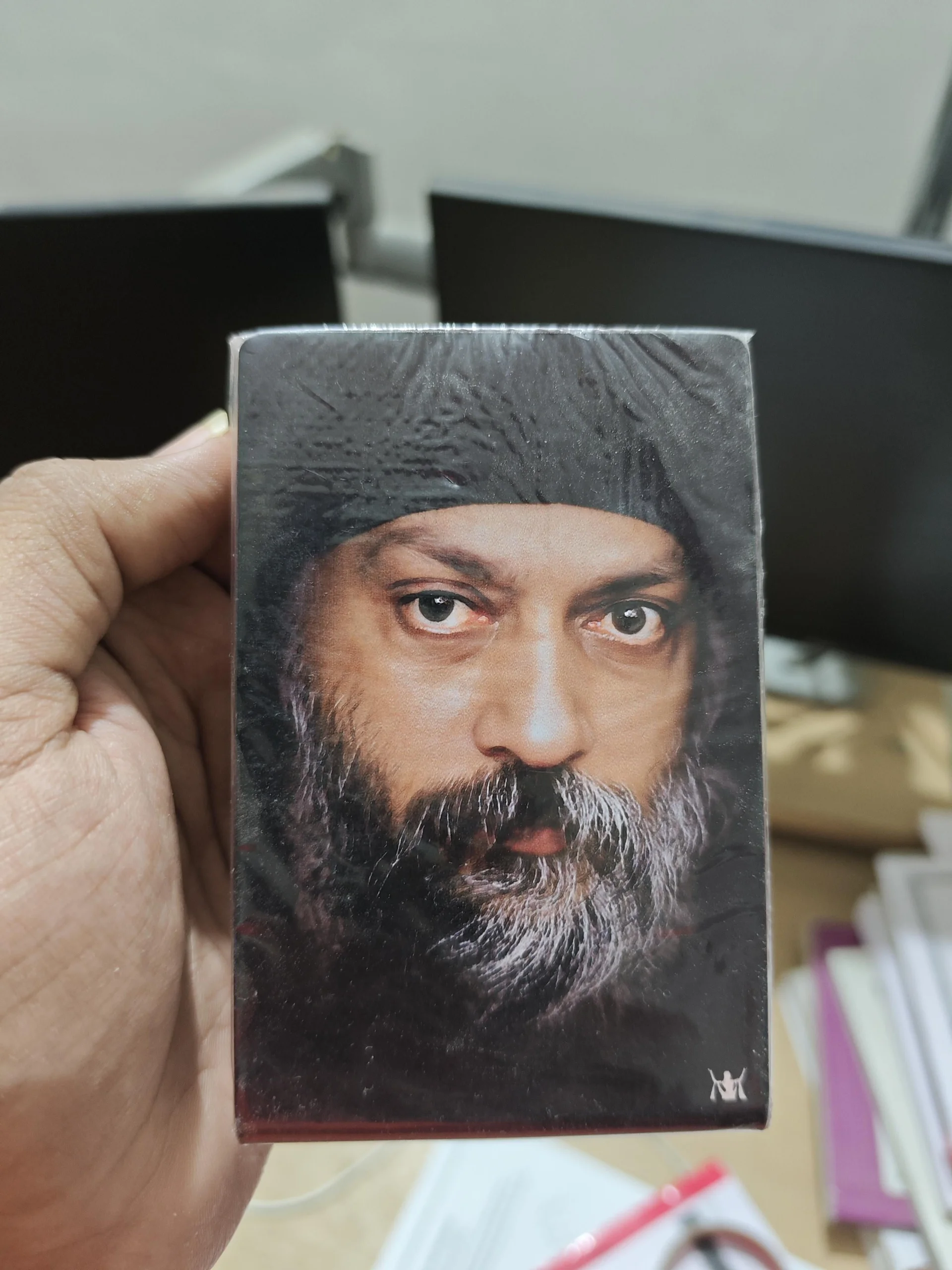
Osho
 India
IndiaAlso known as: Chandra Mohan Jain, Acharya Rajneesh, Bhagwan Shree Rajneesh, Rajneesh
Birthday
December 11, 1931
Birth Sign
Sagittarius
Birthplace
Udaipura, Madhya Pradesh, British India
Age
Died at 58
Height
5 ft 7 in (170 cm)
About
Osho was an Indian mystic, spiritual teacher, and author who founded the Osho International Foundation. Born Chandra Mohan Jain in 1931, he became known by several names throughout his life, including Acharya Rajneesh and Bhagwan Shree Rajneesh. His teachings emphasized meditation, personal freedom, and the rejection of traditional asceticism in favor of embracing life fully. He is widely recognized for developing unique meditation techniques like Dynamic Meditation, which have been practiced globally for decades.
He established the Osho International Meditation Resort in Pune in 1974, which became the global headquarters for his movement. Osho authored over 600 books that have been translated into more than 50 languages, creating a vast library of recorded discourses. He officially changed his name to Osho in 1989, signaling a shift toward a non-sectarian identity. He died on January 19, 1990, leaving behind a global network of followers and a legacy that continues to influence modern spirituality through the Osho International Foundation.
Early Life & Background
Chandra Mohan Jain was born into a middle-class Jain family in Udaipura, Madhya Pradesh, then part of British India. He showed an early aptitude for philosophy and spirituality during his schooling in Jabalpur. After completing his undergraduate studies, he earned a Master's degree in Philosophy from the University of Sagar in 1954. His academic career began when he was appointed as a lecturer in Philosophy at the University of Jabalpur.
However, his tenure was short-lived. By 1966, he resigned his position, disillusioned with the academic establishment and the state of organized religion in India. This marked his transition from an academic philosopher to a traveling guru. Before this break, he experienced what he described as a profound spiritual awakening in 1953 while sitting under a tree. At age 21, he reported losing all sense of self and entering a state of pure consciousness, which became the foundation of his future teachings. He also delivered public lectures that openly criticized religious dogmas and political figures like Mahatma Gandhi during these early years.
Career Growth
After resigning from academia in 1966, Osho traveled across India, gaining notoriety for his sharp critiques of religion and politics. He adopted the name "Acharya" and later "Bhagwan." In 1970, he moved to Mumbai, where he initiated his first group of followers, whom he called "neo-sannyasins." These initiates wore orange robes and adopted new names ending in "-devi" for women or "-ananda" for men.
In 1974, Osho relocated to Pune, establishing the Osho International Meditation Resort (originally the Rajneesh Ashram). This location became the global headquarters for his movement, offering therapies, meditation techniques, and a lifestyle that rejected traditional asceticism. A pivotal moment occurred in 1981 when he officially changed his name from "Bhagwan Shree Rajneesh" to "Osho," signaling a shift toward a more global, non-sectarian identity. He stated he wanted to be known simply as "Osho," meaning "the one who has awakened." He formally renounced the title of "Bhagwan" in 1989 before his death in 1990.
Career Timeline
Public Image & Style
Osho was known for his distinctive appearance, standing approximately 5 feet 7 inches tall. He often wore saffron-colored robes with a long beard and flowing hair, reflecting his rejection of conventional dress codes. His public persona was that of a charismatic speaker who could address audiences for hours without notes, captivating them with wit, humor, and deep philosophical insights. He was perceived as a radical thinker who challenged traditional religious dogmas and social norms. His media presence was dominated by his controversial views on sexuality, meditation, and the nature of reality.
Fame & Fandom (iFAMOUS Rankings)
For decades, the community surrounding Osho has operated less like a traditional celebrity fanbase and more as a decentralized spiritual network. Known historically as Rajneeshees or Sannyasins, these followers distinguished themselves through rigorous initiation rituals where they adopted new names ending in "-ananda" or "-devi," creating a distinct identity separate from their past lives. Their engagement was defined not by streaming parties or billboard campaigns, but by the active practice of Dynamic Meditation and the establishment of massive communal infrastructure like the short-lived city of Rajneeshpuram in Oregon. Even after the movement lost its centralized political power following the 1985 legal crises, the legacy endured through thousands of daily meditation sessions held at Osho International Foundation centers worldwide.
Osho's global standing remains robust long after his passing in 1990, reflecting a sustained influence that transcends typical biographical interest. According to the iFANN Global Fame Rankings, he is currently the 51st most famous person in India, a position holding steady from the previous cycle. His reach extends beyond national borders, marking him as the 96th most famous person from India while also securing the spot of the 54th most famous person in South Asia. These placements capture a figure whose impact continues to ripple across the globe.
Interesting Facts and Legends
While many know Osho for his philosophical discourses, the most infamous chapter of his life involves the 1985 Rajneeshpuram controversy. This verified event saw followers deliberately contaminate salad bars in The Dalles, Oregon, with Salmonella bacteria, infecting 751 people and causing one death in an attempt to suppress voter turnout during local elections. Following the scandal, Osho left the United States and returned to India in 1985, facing deportation proceedings and tax disputes before regaining freedom.
Folklore surrounding the teacher often exaggerates his lifestyle into tales of a hedonist who personally practiced extreme sexual freedom and drug use as paths to enlightenment. While he spoke openly about dismantling societal taboos, these stories frequently blur the line between metaphorical teaching and literal action. Fans still retell accounts of massive crowds gathering for his discourses, sometimes shutting down streets in India and Europe, though specific details about fans fainting or dramatic crowd control issues remain embellished versions of verified large-scale gatherings. In September 2026, news outlets reported on "Osho-inspired" events, such as a "Tantra in Silence" retreat scheduled in Gurez, Jammu and Kashmir, sparking political debates regarding the integration of his teachings in conservative regions.
Notable Quotes
“If you love a flower, don't pick it up. If you pick it up, it dies and it ceases to be what you love. So if you love a flower, let it be.”
“The real question is not whether life exists after death. The real question is whether you are alive before death.”
“To be creative means to be in love with life.”
“Experience life in all possible ways, good, bad, ugly, beautiful, terrible, wonderful, everything.”
Family & Personal Life
Osho never married and had no children. His personal life was defined by his celibacy and his role as a spiritual guide rather than a conventional family man. While he spoke extensively about sexuality, love, and relationships as paths to enlightenment, he maintained a celibate lifestyle himself. There are no verified records of romantic partners, marriages, or dating history for Osho. The rumors of his personal sexual practices often stem from misinterpretations of his teachings on breaking taboos or from the behavior of some followers within the Rajneeshpuram commune, rather than his own actions. As of his death in 1990, he was single.
Notable Connections
Relationships & Dating History
Osho never married and had no children. His personal life was defined by his celibacy and his role as a spiritual guide rather than a conventional family man. While he spoke extensively about sexuality, love, and relationships as paths to enlightenment, he maintained a celibate lifestyle himself. There are no verified records of romantic partners, marriages, or dating history for Osho. The rumors of his personal sexual practices often stem from misinterpretations of his teachings on breaking taboos or from the behavior of some followers within the Rajneeshpuram commune, rather than his own actions. As of his death in 1990, he was single.
Death & Aftermath
Died
January 19, 1990 (aged 58)
Death Place
Pune, Maharashtra, India
Cause of Death
Respiratory failure
The silence that fell over the Pune ashram on January 19, 1990, marked a profound shift for the thousands of disciples who had gathered to witness the final chapter of their teacher's life. For years, Osho had been a figure of intense controversy and vibrant energy, yet his passing was handled with a quiet dignity that belied the chaos often surrounding his movement. The spiritual leader, who had spent decades challenging established norms and guiding seekers through meditation, passed away in the city where he had built his global headquarters at the age of 58.
His final days were spent under medical care as his health declined, leading to a natural end that brought an immediate pause to the relentless activity of the commune. Official reports from the time indicated that the cause of death was respiratory failure, attributed to complications from chronic health issues including asthma and heart problems, a conclusion drawn by the attending physicians at the hospital in Pune. The reaction among the followers was one of deep mourning rather than public spectacle, with vigils held across various centers worldwide to honor the man who had redefined modern spirituality. While the broader world remained largely indifferent or skeptical, the community within the Osho International Foundation moved quickly to preserve his teachings and legacy.
Following the death, the body was cremated according to traditional Hindu rites, a ritual that concluded the physical journey of the guru. The estate was immediately placed under the stewardship of the Osho International Foundation, which continued to operate the ashram and distribute his works without interruption. The release of new recordings and books followed shortly after, ensuring that the voice of the teacher remained active even in his absence. Since his death, there have been no major legal investigations into his death itself, though the legacy of the Oregon incident remains a significant part of his biography.
Net Worth (Estate Value)
$25 Million
iFANN Editorial Team estimate
As Osho died in 1990, his net worth at the time of death is not publicly detailed in modern financial terms. However, the estate he left behind has grown significantly through the Osho International Foundation. The current value of the Osho estate is estimated to be in the tens of millions of dollars, driven by book sales, audio/video recordings, retreat fees, and merchandise. Specific figures vary by source, but the foundation operates as a non-profit organization, reinvesting profits into maintaining the ashram and spreading his teachings.
Major revenue streams include the sale of Osho's books, which have been translated into over 50 languages, audio discourses, video recordings, and the operation of the Osho International Meditation Resort in Pune. The estate is managed by the Osho International Foundation, which oversees the distribution of his works and the maintenance of the ashram. Research by the iFANN Editorial Team puts the estate's value at around $25 million as of 2026.
Awards & Accolades
View 3 records, honours and achievementsKnown For
Osho: The One Who Has Awakened
1990 · Spiritual Teacher
Dynamic Meditation
1970 · Creator
The Book of Secrets
1984 · Author
Keywords
Sources
Quick Facts
- Profession
- writer, autobiographer, guru
- Born
- December 11, 1931
- Birthplace
- Udaipura
- Died
- January 19, 1990
- Death Place
- Pune
- Gender
- Male
- Birth Sign
- Sagittarius
Personal Details
- Full Name
- Chandra Mohan Jain
- Height
- 5 ft 7 in (170 cm)
- Children
- Education
- Master's degree in Philosophy, University of Sagar (1954)
Frequently Asked Questions
What was Osho's birth name?
How did Osho die?
Did Osho ever marry?
What is the Rajneeshpuram controversy?
Is Osho still alive?
Similar People
Join the community
fans discussing