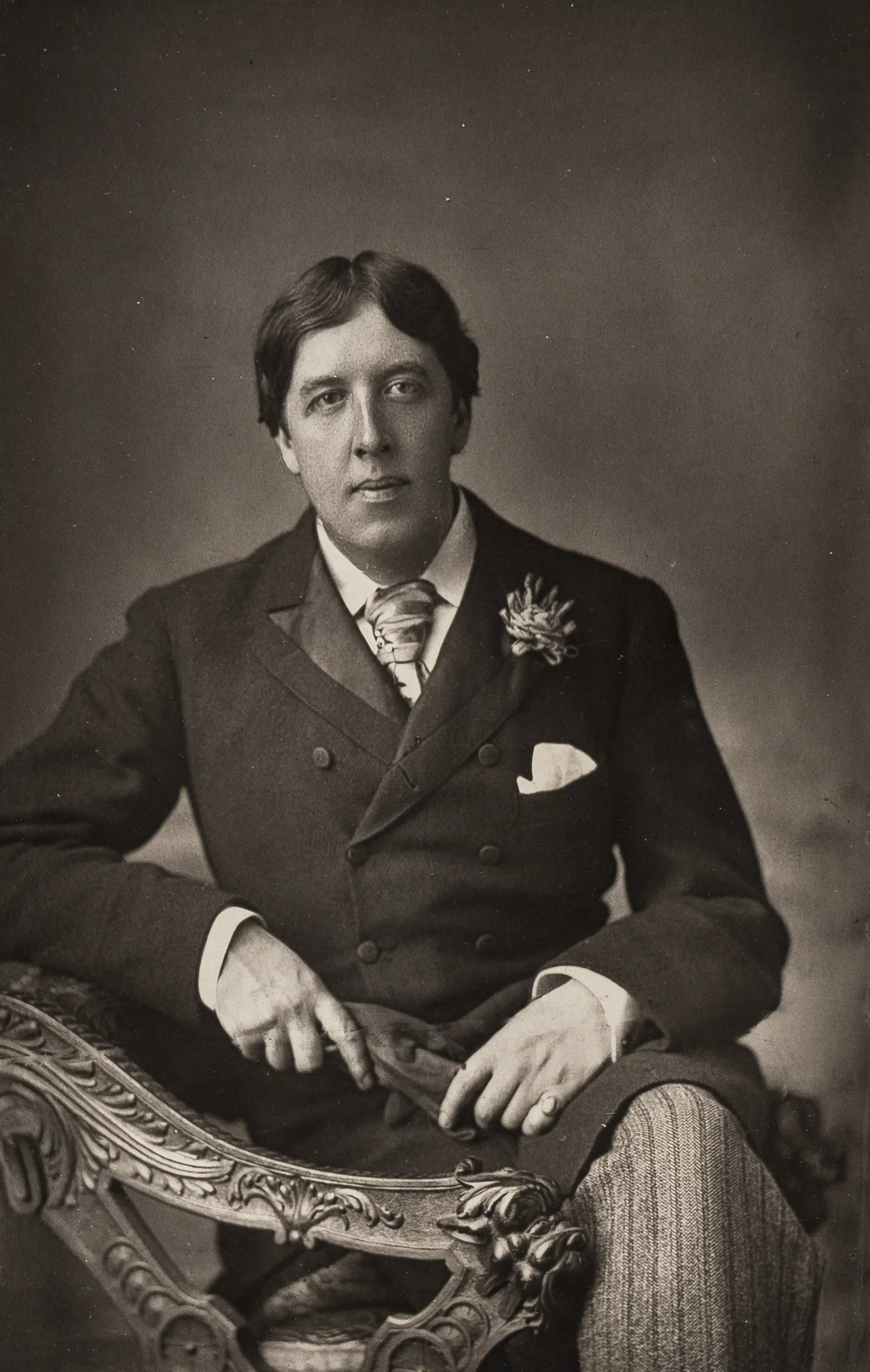
Oscar Wilde
 Ireland
poet•playwright•short story writer
Also known as: Sebastian Melmoth, O.F.O.W. Wilde
Birthday
October 16, 1854
Birth Sign
Libra
Birthplace
Dublin, Ireland
Age
Died at 46
About
Oscar Fingal O'Flahertie Wills Wilde was an Irish poet, playwright, and author who became the leading figure of the Aesthetic movement in late Victorian Britain. Born into a wealthy intellectual family in Dublin, he pursued literature with exceptional academic distinction before moving to London where he established himself as the city's most popular dramatist in the early 1890s. His career peaked with a series of society comedies that showcased his mastery of sharp epigrams and social satire.
Wilde's life ended in tragedy following a highly publicized trial for gross indecency. After serving two years of hard labor, he lived in exile until his death in Paris at age 46. Despite his fall from grace during his lifetime, he left behind a legacy defined by brilliance and enduring influence on art and culture. His works continue to be performed globally and studied in schools around the world.
Early Life & Background
Oscar Wilde entered the world on October 16, 1854, in Dublin as the son of Sir William Wilde, a renowned eye and ear surgeon, and Jane Francesca Elgee, a poet known for her nationalist writings. The family home at 2 Westland Row provided a rich environment filled with books, music, and political debate. Young Oscar absorbed these influences early, displaying a precocious talent for languages and literature. He attended Portora Royal School in Enniskillen where he won a scholarship to Trinity College Dublin.
At Trinity, Wilde excelled in classics, winning the Berkeley Gold Medal for Greek in 1871. He moved to Magdalen College, Oxford, in 1874 where he studied under Walter Pater and John Ruskin. These tutors introduced him to the philosophy of aestheticism which held that art should exist for its own sake rather than for moral instruction. Wilde adopted this worldview completely, cultivating a flamboyant personal style that included velvet suits and long hair. Before achieving fame as a playwright, he published poetry collections like Ravenna in 1878 and lectured extensively across the United States and Canada from 1882 to 1883 promoting the gospel of beauty.
Career Growth
Wilde's breakthrough arrived with the publication of his novel The Picture of Dorian Gray in 1890. This Gothic tale explored themes of decadence and duplicity with a moral complexity that shocked Victorian readers but also brought him widespread notoriety. He followed this success with a series of highly successful plays that cemented his reputation as London's premier dramatist. Lady Windermere's Fan premiered in 1892, followed by A Woman of No Importance in 1893.
His artistic output reached new heights with Salome, written in French in 1893, though English censors banned it immediately due to its biblical subject matter. In 1895, he achieved his greatest triumph with the premiere of An Ideal Husband and The Importance of Being Earnest. The latter is widely considered the greatest comedy in the English language. These works showcased his unique ability to blend witty dialogue with biting social commentary. However, his success was cut short when he was arrested later that same year.
Career Timeline
Public Image & Style
Wilde is portrayed in media as the epitome of Victorian wit, dandyism, and artistic rebellion. His signature style included elaborate clothing, long hair, and a penchant for conversation that could be both charming and devastatingly sharp. His content, whether in essays, plays, or novels, often challenged Victorian moral hypocrisy while celebrating beauty and individuality. He cultivated an image of the artist as a superior being, detached from conventional morality and dedicated solely to the pursuit of beauty. This persona made him a controversial figure in his time but a beloved icon in subsequent generations.
Fame & Fandom
iFANN has not yet collected fame data for this person. While there is no single organized fandom name like those for modern pop stars, Wilde has a dedicated community of admirers known as Wildeans or simply fans of Victorian literature. Notable fan campaigns include the annual gathering at his grave in Père Lachaise Cemetery, where visitors leave flowers and notes, a tradition that has grown into a symbol of LGBTQ+ pride. Fans often cite his quotes on social media and in literature, keeping his legacy alive through educational initiatives and literary societies. His works continue to be adapted for stage and screen, ensuring his relevance in contemporary culture.
Interesting Facts and Legends
Oscar Wilde was an accomplished athlete during his youth at Oxford, known for his skill in swimming and running. He famously wore a green carnation in his buttonhole, a symbol adopted by the Aesthetic movement and later associated with homosexuality. One enduring legend involves his exchange with a society hostess who asked about his favorite flower; he replied that he had no favorites because he loved them all. Another famous moment occurred during his trial when he turned the prosecution's questions against them with such wit that the courtroom atmosphere shifted dramatically. His final work, The Ballad of Reading Gaol, was written while he was still imprisoned and captured the brutal rhythm of prison life.
Notable Quotes
“Be yourself; everyone else is already taken.”
“To live is the rarest thing in the world. Most people exist, that is all.”
“We are all in the gutter, but some of us are looking at the stars.”
“I can resist everything except temptation.”
“The only way to get rid of a temptation is to yield to it.”
Family & Personal Life
Oscar Wilde was born to Sir William Wilde and Jane Francesca Elgee in Dublin. He married Constance Lloyd in 1884, and they had two sons: Cyril (born 1885) and Vyvyan (born 1886). The marriage ended in estrangement following Wilde's imprisonment, though no formal divorce occurred during his lifetime. After his death, his son Vyvyan Holland managed the estate and published a biography titled My Father Oscar Wilde which helped restore his father's reputation. Wilde's relationship with his family was complex, marked by deep affection for his children but also significant distance during his later years.
Notable Connections
Constance Lloyd, Lord Alfred Douglas, Robert Ross, Walter Pater, John Ruskin, James McNeill Whistler, George Bernard Shaw.
Relationships & Dating History
Oscar Wilde's primary romantic relationship was with Lord Alfred Douglas, known as Bosie, the son of the Marquess of Queensberry. Their relationship began around 1891 and intensified in 1892, becoming a central theme in Wilde's life and work. The relationship was characterized by intense passion, financial dependence, and public scandal. In 1895, after the Marquess of Queensberry publicly accused Wilde of posing as a sodomite, Wilde sued for libel. The trial backfired spectacularly; evidence presented during the libel case led to Wilde's arrest and subsequent conviction for gross indecency.
Wilde was sentenced to two years of hard labor at Reading Gaol. During his imprisonment, he wrote the long letter De Profundis, addressed to Bosie, reflecting on their relationship and his spiritual crisis. They never formally reconciled after Wilde's release in 1897. Wilde died in Paris on November 30, 1900, at age 46, alone and in poverty. There were no other confirmed long-term romantic partners or marriages beyond Constance Lloyd.
- MarriedConstance Lloyd1884 - 1895Marriage ended in estrangement following Wilde's imprisonment; no formal divorce.
- DatedLord Alfred Douglas1891 - 1897Intense relationship that led to Wilde's imprisonment; never reconciled after release.
Death & Aftermath
Died
November 30, 1900 (aged 46)
Death Place
Paris, France
Cause of Death
Acute meningitis from untreated ear infection
Oscar Wilde died on November 30, 1900, in a boarding house at 13 Rue de Béthune in Paris. He was living under the pseudonym Sebastian Melmoth after his release from Reading Gaol three years earlier. The official cause of death was acute meningitis resulting from an untreated infection of the middle ear, a condition exacerbated by malnutrition and the psychological toll of his imprisonment. He died alone without immediate family present, though his friend Robert Ross was nearby to handle his affairs.
The funeral held two days later at Père Lachaise Cemetery was a private affair attended only by a small circle of friends, including Robert Ross and Frank Harris. Initially, the British establishment largely ignored his death to avoid further scandal, but European literary circles quickly mourned him. Posthumous rehabilitation began slowly; the first major monument, a statue by Jacob Epstein, was unveiled in 1914 at St. Paul's Church in Covent Garden. His son Vyvyan Holland managed the estate after legal battles over royalties, eventually restoring his father's reputation.
Today, his estate continues to generate revenue through the licensing of his works, including adaptations of The Picture of Dorian Gray and The Importance of Being Earnest. His grave has become a global landmark, particularly for LGBTQ+ rights advocates who visit to leave flowers and notes. The IP remains highly valuable with continuous stage productions, films, and book sales contributing to ongoing income for his heirs and the estate.
Net Worth (Estate Value)
$5 Million
iFANN Editorial Team estimate
Since Oscar Wilde passed away in 1900, he does not have a current net worth in the traditional sense. However, his estate continues to generate income through royalties, licensing, and adaptations. iFANN currently estimates the value of his estate at approximately $5 million based on the enduring popularity of his works. Major revenue streams include stage productions of The Importance of Being Earnest, film adaptations of The Picture of Dorian Gray, and book sales. The estate is managed privately by his descendants and continues to thrive despite the passage of more than a century.
Awards & Accolades
View 9 records, honours and achievementsKnown For
The Picture of Dorian Gray
1890 · Author
The Importance of Being Earnest
1895 · Playwright
Lady Windermere's Fan
1892 · Playwright
An Ideal Husband
1895 · Playwright
Keywords
Sources
Quick Facts
- Profession
- poet, playwright, short story writer
- Born
- October 16, 1854
- Birthplace
- Dublin, Ireland
- Died
- November 30, 1900
- Death Place
- Paris, France
- Gender
- Male
- Spouse
- Constance Lloyd
- Birth Sign
- Libra
Personal Details
- Full Name
- Oscar Fingal O'Flahertie Wills Wilde
- Spouse
- Constance Lloyd
- Children
- Cyril Wilde, Vyvyan Wilde
- Education
- Trinity College Dublin, Magdalen College Oxford
Frequently Asked Questions
How did Oscar Wilde die?
Who was Oscar Wilde's lover?
What is Oscar Wilde's most famous play?
Why was Oscar Wilde imprisoned?
Where is Oscar Wilde buried?
Similar People
Join the community
fans discussing