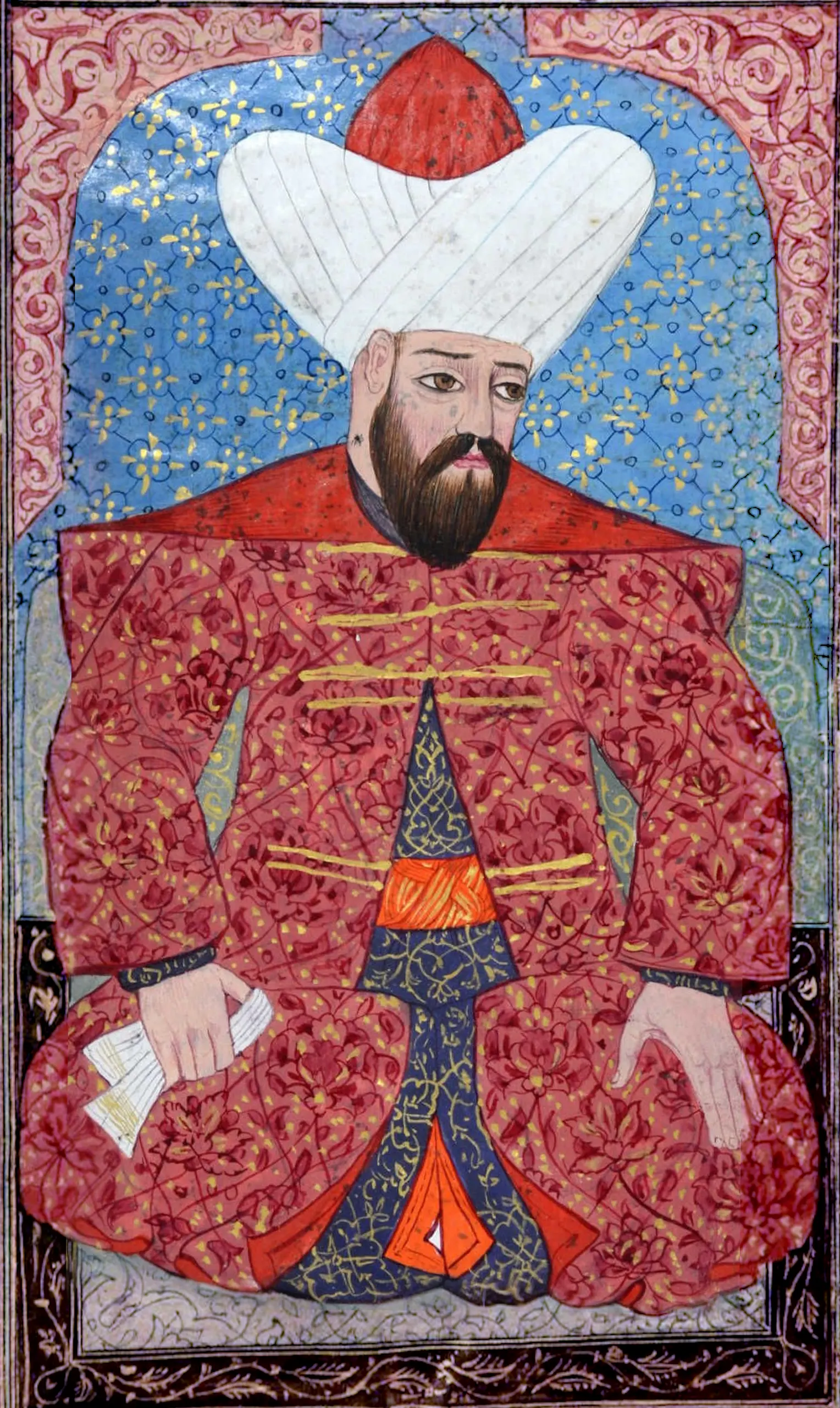
Orhan
Also known as: Orhan Ghazi, Orkhan
Birthday
February 6, 1281
Birth Sign
Aquarius
Birthplace
Söğüt
Age
Died at 81
About
Orhan Ghazi was the second sultan of the Ottoman Empire, ruling from approximately 1323 until his death in March 1362. He was the son of the empire's founder, Osman I, and Malhun Hatun. As a monarch, he is credited with transforming a small border lordship into a structured kingdom with its own administrative systems. His reign saw significant military victories against the Byzantine Empire and the absorption of rival Turcoman principalities across northwestern Anatolia. Orhan established the first permanent Ottoman foothold in Europe, a strategic move that paved the way for future expansion into the Balkans.
Contemporaries recognized the scale of Orhan's achievements. The traveler Ibn Battuta described him as the greatest of the Turcoman kings, noting his immense wealth, vast lands, and powerful army. Under his leadership, the Ottoman state evolved from a tribal chieftaincy into a centralized state with a standing army and a land grant system known as the timar. Orhan died at age 80 in Bursa, leaving behind a foundation that his successors would build upon to create one of history's most enduring empires.
Early Life & Background
Orhan was born on February 6, 1281, in the village of Söğüt in northwestern Anatolia. His father, Osman I, was the bey of the Kayı tribe, a small but ambitious group operating on the fringes of the crumbling Byzantine Empire. From a young age, Orhan was immersed in the political and military struggles that defined the region. His upbringing was not one of luxury but of constant vigilance against local Byzantine lords and rival Turcoman emirs who sought to carve out their own domains.
Before ascending to the throne, Orhan served as a military commander under his father. He gained valuable experience leading raids and skirmishes that characterized the early Ottoman expansion. These campaigns were not just about plunder but about securing territory and establishing dominance over key trade routes. His strategic vision began to take shape during these formative years, focusing on both military conquest and the consolidation of power. This early exposure to warfare and governance instilled in him the skills necessary to rule a growing state. By the time Osman I passed away around 1323 or 1324, Orhan was a seasoned leader ready to take the helm of the nascent Ottoman Beylik.
Career Growth
Orhan ascended to the throne in 1323 or 1324 following the death of his father, Osman I. His reign was marked by a series of decisive military and political victories that expanded Ottoman territory significantly. In 1329, he achieved a major victory at the Battle of Pelekanon against the Byzantine Emperor Andronikos III Palaiologos. This battle broke Byzantine resistance in the region and secured Ottoman dominance in northwestern Anatolia. Throughout the 1330s, he conquered key cities including İznik (Nicaea) and İzmit (Nicomedia), effectively ending Byzantine control in the area.
In 1335, Orhan absorbed the territories of the Karasids near Balıkesir and the Ahis in Ankara, consolidating power across the peninsula. During the Byzantine civil war between 1341 and 1347, he leveraged the conflict between John VI Kantakouzenos and Empress Anna of Savoy. Orhan married his daughter Theodora to Kantakouzenos and provided military aid, which granted him the right to raid Thrace and deploy troops in Europe. In 1352, following a request from Kantakouzenos during another civil war, Orhan's forces occupied the fortress of Çimpe on the Gallipoli peninsula, marking the first permanent Ottoman presence in Europe. Two years later, in 1354, he seized the city of Gallipoli after it was devastated by an earthquake, solidifying the European bridgehead. He also established the first standing army and introduced the timar system, laying the groundwork for the Ottoman state's future bureaucracy.
Career Timeline
Public Image & Style
Orhan is remembered as a fair and capable ruler who balanced military might with administrative reform. Contemporary accounts describe him as immensely wealthy and powerful, with a reputation for justice that earned him the respect of both Muslim and Christian subjects. His public image was that of a strong leader who could navigate complex political landscapes and expand his domain through both diplomacy and force. The architectural legacy he left behind, particularly the Orhan Gazi Mosque in Bursa, stands as a testament to his patronage of the arts and religion. His strategic marriages and military innovations cemented his place as a pivotal figure in the rise of the Ottoman Empire.
Fame & Fandom (iFAMOUS Rankings)
iFANN has not yet collected fame data for this person. While modern historical dramas like Kuruluş: Osman have sparked renewed interest in his life, there is no formal fandom name documented for Orhan Ghazi. The audience interested in him consists primarily of history enthusiasts, students, and viewers of historical fiction rather than a dedicated fanbase with organized rituals or campaigns. The cultural impact of his reign is felt through the enduring legacy of the Ottoman Empire itself, which shaped the history of the Middle East, Europe, and North Africa for centuries.
Interesting Facts and Legends
Orhan is often cited as the first ruler to use the title "Sultan" officially, moving beyond the title "Bey." He was the first to establish a regular navy, recognizing the strategic importance of controlling the Dardanelles. The city of Bursa became the first capital of the Ottoman Empire under his rule. A story fans still retell involves the earthquake that destroyed Gallipoli in 1354; Orhan's son Süleyman Pasha quickly moved to occupy the ruins before any other power could claim them. Another legend suggests that Orhan personally led the construction of the first Ottoman mosques, blending Persian and Seljuk architectural styles to create a distinct imperial aesthetic.
Notable Quotes
“The greatest of the Turcoman kings and the richest in wealth, lands, and military forces.", Ibn Battuta”
Family & Personal Life
Orhan was born to Osman I, the bey of the Kayı tribe, and his consort Malhun Hatun. His personal life was deeply intertwined with his political strategy, utilizing marriage alliances to secure peace and expand influence. Historical records identify three primary wives: Asporça Hatun, a Turkish noblewoman; Theodora Kantakuzini, a Byzantine princess who converted to Islam and took the name Nilüfer Hatun; and Eftandise Hatun. He was married to multiple women simultaneously, a common practice among Turkic rulers of the era to forge alliances. He died in 1362, leaving behind a large family that included at least five sons who played roles in the subsequent succession struggles. His successor, Murad I, was born to Asporça Hatun.
Notable Connections
Relationships & Dating History
Orhan's relationships were defined by political necessity and strategic alliances rather than romantic pursuit. He was married to multiple women simultaneously, a common practice among Turkic rulers to forge alliances. His first wife was likely Asporça Hatun, a Turkish noblewoman, with whom he had his successor Murad I and Süleyman Pasha. Around 1346, he married Theodora Kantakuzini, a Byzantine princess and daughter of Emperor John VI Kantakouzenos. She converted to Islam and took the name Nilüfer Hatun, bearing sons Yakub Çelebi and Ishak Çelebi. Another consort, Eftandise Hatun, is listed in genealogical records though details are less prominent. Orhan died in 1362, leaving behind a large family that included at least five sons who played roles in the subsequent succession struggles. At the time of his death, he was married to Nilüfer Hatun and others, having maintained these unions throughout his reign.
- MarriedAsporça HatunUnknown - 1362Mother of Murad I and Süleyman Pasha
- MarriedTheodora Kantakuzini1346 - 1362Byzantine princess who converted to Islam and became Nilüfer Hatun
- MarriedEftandise HatunUnknown - 1362Consort listed in genealogical records
Death & Aftermath
Died
March 1362 (aged 81)
Death Place
Bursa, Turkey
Cause of Death
Natural causes associated with old age
The Ottoman court announced the passing of Sultan Orhan in March 1362, marking the end of a reign that had transformed a small frontier principality into a regional power. Historical chronicles place his final days in Söğüt or Bursa, where he had established his primary seat of governance. The transition of power proceeded without dispute, as his son Murad I assumed the throne immediately following the sultan's death from natural causes associated with old age. Contemporary accounts by scholars like Ibn Battuta praised Orhan's fairness and strength, framing his legacy through the lens of a ruler who secured northwestern Anatolia against Byzantine forces and absorbed neighboring territories. His burial took place within the Orhan Gazi Mosque complex in Bursa, a site that remains an active landmark for pilgrimage and remembrance today. Modern cultural interest has surged decades later, evidenced by the historical drama series Kuruluş: Osman and the upcoming production Founder: Orhan scheduled for 2025.
Net Worth (Estate Value)
$0
iFANN Editorial Team estimate
As a 14th-century monarch, Orhan did not have a net worth in the modern financial sense. However, contemporary accounts by Ibn Battuta described him as possessing immense wealth, vast lands, and a powerful treasury filled with gold and silver acquired through conquest and trade. The value of his estate cannot be quantified in modern currency, but it represented the economic heart of the emerging Ottoman state. His wealth was derived from taxation of conquered territories, tribute payments, and control over key trade routes between Asia and Europe. The iFANN Editorial Team estimates that while a specific dollar figure is impossible to calculate, the economic power he commanded was equivalent to the resources of a major regional superpower of his time.
Awards & Accolades
View 5 records, honours and achievementsKnown For
Kuruluş: Osman
2019 · Historical Figure
Founder: Orhan
2025 · Historical Figure
Keywords
Sources
Quick Facts
- Profession
- governor, sultan
- Born
- February 6, 1281
- Birthplace
- Söğüt
- Died
- March 1362
- Death Place
- Bursa, Turkey
- Gender
- Male
- Spouse
- Asporça Hatun, Theodora Kantakuzini, Eftandise Hatun
- Birth Sign
- Aquarius
Personal Details
- Full Name
- Orhan Ghazi
- Spouse
- Asporça Hatun, Theodora Kantakuzini, Eftandise Hatun
- Children
- Murad I, Süleyman Pasha, Yakub Çelebi, Ishak Çelebi
- Education
- Military training under father Osman I; traditional Islamic education
Filmography
2
Total
0
Film
2
TV
Frequently Asked Questions
Who was Orhan?
When did Orhan die?
Who was Orhan's wife?
What was Orhan's biggest achievement?
Is there a movie about Orhan?
Similar People
Join the community
fans discussing