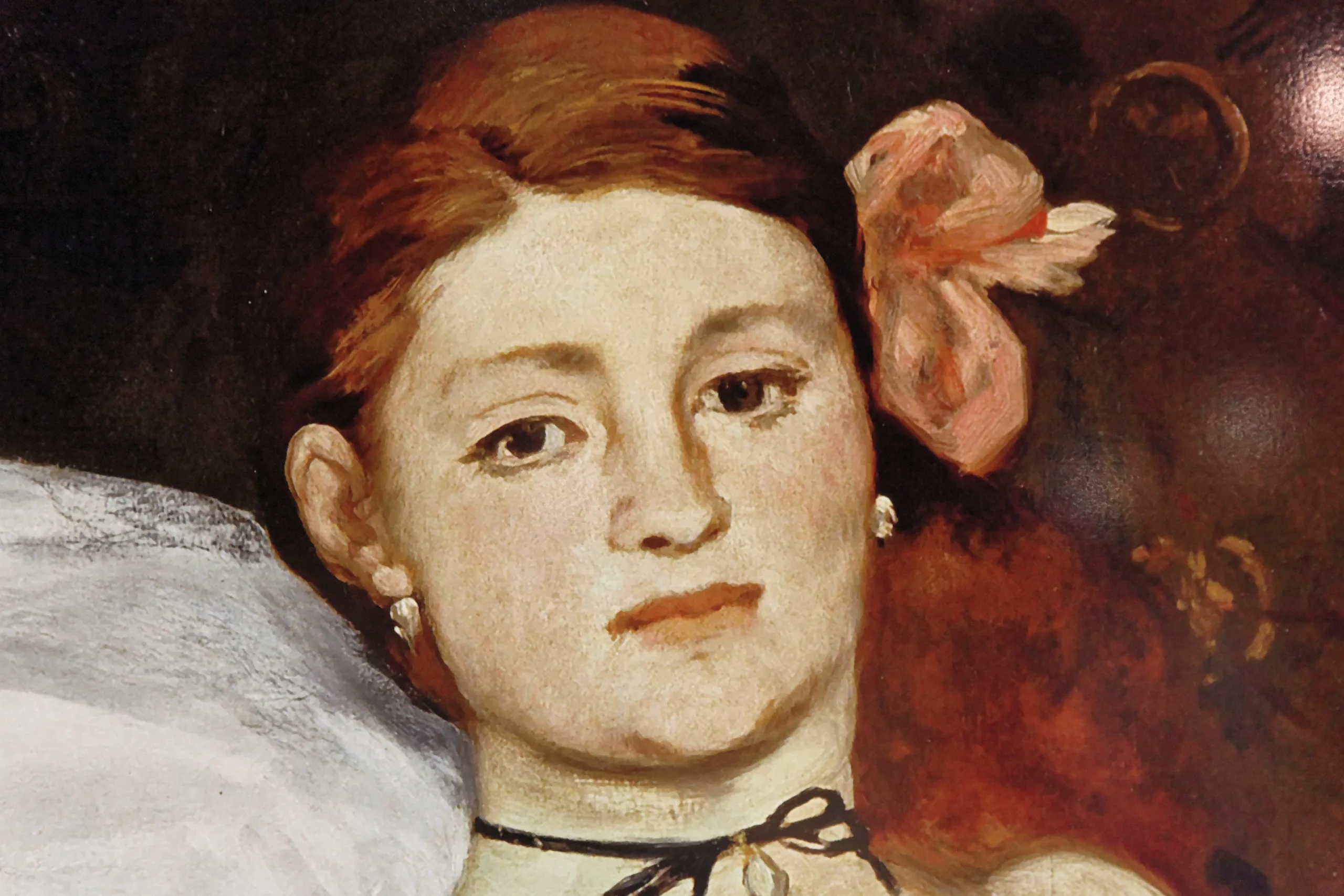
Olympias
Also known as: Polyxena, Olympias of Molossia, Olympias of Epirus
Birthday
January 1, 375 BC
Birth Sign
Capricorn
Birthplace
Passaron, Epirus (modern-day Greece)
Age
Died at 59
About
Olympias was a Molossian princess from Epirus who became queen of Macedon and the mother of Alexander the Great. She was born around 375 BC, the daughter of King Neoptolemus I, and married Philip II in 357 BC. A year later she gave birth to Alexander. From the beginning she was a force in Macedonian politics, not a figure in the background. When Alexander left to conquer Asia in 334 BC, she stayed behind and became the de facto manager of his interests in Macedon, corresponding with him and battling the regent Antipater for influence.
After Alexander died in Babylon in 323 BC, Olympias fought to keep the Argead dynasty alive. She backed her grandson Alexander IV and in 317 BC defeated the army of Adea Eurydice, briefly becoming the most powerful person in Macedon. That power lasted less than a year. Cassander besieged her at Pydna in 316 BC, captured the city, and had her executed. She was about 60. Her son's empire fragmented, and the dynasty she protected was extinguished within a few years of her death. Modern historians, particularly Elizabeth D. Carney, have reframed her as a skilled political operator rather than the vengeful caricature drawn by ancient writers.
Early Life & Background
The Molossian court at Passaron, where Olympias grew up, was not a typical Greek city-state. Epirus sat on the northwestern edge of the Greek world, and its royal women held public and religious roles that women in Athens or Sparta rarely matched. Details of her childhood are thin, but she was raised in a household where female visibility was normal, a background that helps explain her later political assertiveness. She was the eldest daughter of King Neoptolemus I, and her family traced its line to Achilles through his son Neoptolemus, also called Pyrrhus. That genealogy was not a casual claim. It was a political asset, and Olympias made sure it stayed visible. She was originally named Polyxena, and the name Olympias came later, reportedly linked to Philip's chariot victory at the Olympic Games, though the timing of the change is debated.
In 357 BC she married Philip II of Macedon, a match that sealed an alliance between Macedon and Epirus. The sources say Philip fell in love with her at the Mysteries of Samothrace, where she was an initiate. She became his fourth wife, but the marriage that mattered was the one that produced an heir. In 356 BC she gave birth to Alexander. Legend later attached three coincidences to that night: Philip's horses won at Olympia, the Temple of Artemis at Ephesus burned, and a great fire was seen in the sky. The story is a legend, not a record, but it shows how quickly her son's birth became myth.
The marriage soured in the late 330s BC. Philip married Cleopatra Eurydice, a Macedonian noblewoman with powerful relatives, and the match threatened Alexander's position as heir. Olympias and Alexander left Macedon. The break was sharp and public, and it set the stage for everything that followed. She returned to Epirus, worked her family connections, and waited. When Philip was assassinated at Aegae in 336 BC, she was widely suspected of involvement, though no source proves it. What is certain is that she benefited. Cleopatra Eurydice and her infant daughter were killed soon after, reportedly on Olympias's orders, though the details are contested. By the time Alexander crossed into Asia in 334 BC, Olympias had already shown she could play the dynastic game as well as any Macedonian noble.
Career Growth
Alexander's departure for Asia in 334 BC left Macedon in the hands of Antipater, the regent he had appointed. Olympias was not given a formal role, but she acted as if she had one. She corresponded with Alexander, managed alliances across Epirus and Macedon, and built a network of supporters that rivaled Antipater's. The two feuded for years, and their conflict shaped Macedonian politics while Alexander was away. She could not remove Antipater, but she could make his life difficult, and she did.
When Alexander died in Babylon in 323 BC, the succession collapsed. His half-brother Philip III Arrhidaeus was named king, and Alexander's infant son by Roxana, Alexander IV, was also recognized. Olympias backed her grandson. In 317 BC she returned to Macedon with an army, joined forces with the Epirote ruler Aeacides, and met the army of Adea Eurydice, Philip III's wife, in battle. Olympias won. She captured Adea Eurydice and Philip III and had them killed. For a brief period she was the effective ruler of Macedon, guardian of Alexander IV and the power behind the throne.
The victory did not hold. Cassander, Antipater's son, had his own ambitions and a stronger army. He marched on Macedon, forced Olympias to retreat to Pydna, and besieged her there. The city fell in 316 BC. Cassander had her executed, and the Argead line she had fought to preserve was extinguished within a few years. Her career shows how much a royal woman could achieve in the Macedonian court through dynastic claim, correspondence, and military backing, even if the final round went against her.
Career Timeline
Public Image & Style
Ancient writers portray Olympias as passionate, imperious, and ruthless. Plutarch and Justin describe her as a woman who acted on her hatreds and ambitions without restraint. That portrait has shaped how she is remembered for more than two thousand years. Modern scholarship, especially Elizabeth D. Carney's biography, reframes her as a skilled dynastic operator working within the constraints of the Macedonian court. The tension between the two portraits is itself part of her image. She is remembered as one of the most politically active royal women of the classical Greek world, a queen who fought in the succession wars rather than retiring to the sidelines.
Fame & Fandom (iFAMOUS Rankings)
Fame data for Olympias has not yet been gathered by iFANN. She is not on the September 2026 iFAMOUS Rankings flagship list. As a figure from the fourth century BC, she has no formal fanbase and no fandom name. Her audience today is made up of historians, students of Alexander the Great, and readers of ancient history. Modern interest in her is driven by scholarship, particularly Elizabeth D. Carney's biography, and by popular history content about Alexander's family and the wars of the Diadochi. She appears in documentaries, podcasts, and historical fiction about Alexander, usually as a formidable and dangerous mother figure. There is no organized fan culture around her, but the questions people ask about her are consistent: Was she involved in Philip's assassination? How did she die? Why did she fight so hard for Alexander IV? Those questions keep her in the historical conversation.
Interesting Facts and Legends
Ancient sources report that Philip once saw a snake lying beside Olympias and afterward kept his distance, believing she was possessed by a god. The story is linked to Dionysian and Zeus-Ammon associations and is retold as folklore rather than fact.
She was born Polyxena and took the name Olympias later, reportedly after Philip's chariot victory at the Olympic Games. The timing of the renaming is debated by scholars.
Her family claimed descent from Achilles through his son Neoptolemus. Alexander later used that genealogy in his own self-presentation, tracing his line to the hero of the Trojan War.
She never remarried after Philip. No later romantic partner is documented in the ancient sources.
Family & Personal Life
Olympias was the eldest daughter of King Neoptolemus I of the Molossians, who ruled Epirus in northwestern Greece. Her brother Alexander I of Epirus later became king and married Cleopatra of Macedon, Olympias's daughter by Philip II. The family traced its line to Achilles through Neoptolemus, a genealogy Olympias cultivated and passed on to her son.
She married Philip II of Macedon in 357 BC. Their son Alexander was born in 356 BC. Philip had other wives, including Cleopatra Eurydice, whose marriage to Philip around 337 BC threatened Alexander's succession and led Olympias to leave Macedon with her son. After Philip's death, Olympias reportedly had Cleopatra Eurydice's infant daughter killed and forced Cleopatra to hang herself, though the details come from later ancient writers and are contested by modern historians.
Her grandson Alexander IV, son of Alexander and Roxana, was the focus of her final political campaign. She became his guardian after defeating Adea Eurydice in 317 BC. Alexander IV was murdered by Cassander a few years after Olympias's death.
Notable Connections
Relationships & Dating History
Olympias married Philip II of Macedon in 357 BC. The marriage was a political alliance between Macedon and Epirus, and the sources say Philip fell in love with her at the Mysteries of Samothrace. She became his fourth wife and gave birth to Alexander in 356 BC. The marriage effectively ended around 337 BC when Philip married Cleopatra Eurydice, a Macedonian noblewoman whose family threatened Alexander's succession. Olympias and Alexander left Macedon. Philip was assassinated in 336 BC, and Olympias was widely suspected of involvement, though no source proves it. She never remarried. No later romantic partner is documented. Her closest relationship after Philip was with her son Alexander, whom she advised and supported politically until his death in 323 BC. She died in 316 BC, executed by Cassander, and was a widow at the time of her death.
- MarriedPhilip II of Macedon357 BC - 336 BCMarriage sealed an alliance between Macedon and Epirus. Ended with Philip's assassination in 336 BC; Olympias was a widow at her death.
Death & Aftermath
Died
January 1, 316 BC (aged 59)
Death Place
Pydna, Macedon (modern-day Greece)
Cause of Death
Executed by stoning, per ancient sources
Cassander's men took Pydna in 316 BC. Olympias, roughly 60 years old, was cornered. The sources say she had barricaded herself in the city and held out as long as she could, but the siege ended with her capture. What followed was not a quiet end. Cassander, son of Antipater and the man who had spent years fighting her influence, ordered her killed. The method most often repeated is stoning, though the ancient accounts do not all agree. Some suggest she was killed by the relatives of those she had earlier put to death. Diodorus Siculus and Justin both report the execution, but they wrote centuries later, and their details are shaped by the political needs of their own time.
Cassander reportedly refused her request for a proper burial. That refusal was itself a political act, meant to deny her the honors a queen would expect and to erase her from the dynastic story she had fought to control. The Argead line she had defended did not long survive her. Alexander IV and his mother Roxana were murdered within a few years, and the dynasty that had produced Philip and Alexander the Great was effectively finished.
No public mourning is recorded for Olympias. No monument raised by her allies. The aftermath of her death belongs to her enemies, who wrote the first drafts of her story. Modern historians, most notably Elizabeth D. Carney in her biography of Olympias, have worked to separate the hostile portrait from the political actor. But the ancient record is what it is: fragmentary, partisan, and written by men who had reason to remember her as dangerous. What remains is a clear outline. She was executed by Cassander, denied burial, and within a generation the family she had spent her life protecting was gone.
Net Worth (Estate Value)
$0
iFANN Editorial Team estimate
No reliable estimate of Olympias's wealth survives. She was a Molossian princess and later queen of Macedon, with access to royal resources, land, and political income, but ancient sources do not record a personal fortune. Her power came from dynastic position, alliances, and control of the Argead succession, not from a balance sheet. Any modern figure would be speculation. For this profile, iFANN lists no net worth.
Awards & Accolades
Known For
Mother of Alexander the Great
356 BC · Mother
Queen of Macedon
357 BC · Queen consort
Defeat of Adea Eurydice
317 BC · Military and political leader
Keywords
Sources
Quick Facts
- Profession
- Queen of Macedon, politician
- Born
- c. 375 BC
- Birthplace
- Passaron, Epirus
- Died
- 316 BC
- Death Place
- Pydna, Macedon
- Gender
- Female
- Spouse
- Philip II of Macedon
- Children
- Alexander the Great
- Birth Sign
- Capricorn
Personal Details
- Full Name
- Polyxena of Molossia
- Spouse
- Philip II of Macedon
- Children
- Alexander the Great
Frequently Asked Questions
What was Olympias known for?
How did Olympias die?
Was Olympias involved in Philip's assassination?
Who were Olympias's parents?
What happened to Olympias after Alexander died?
Similar People
Join the community
fans discussing