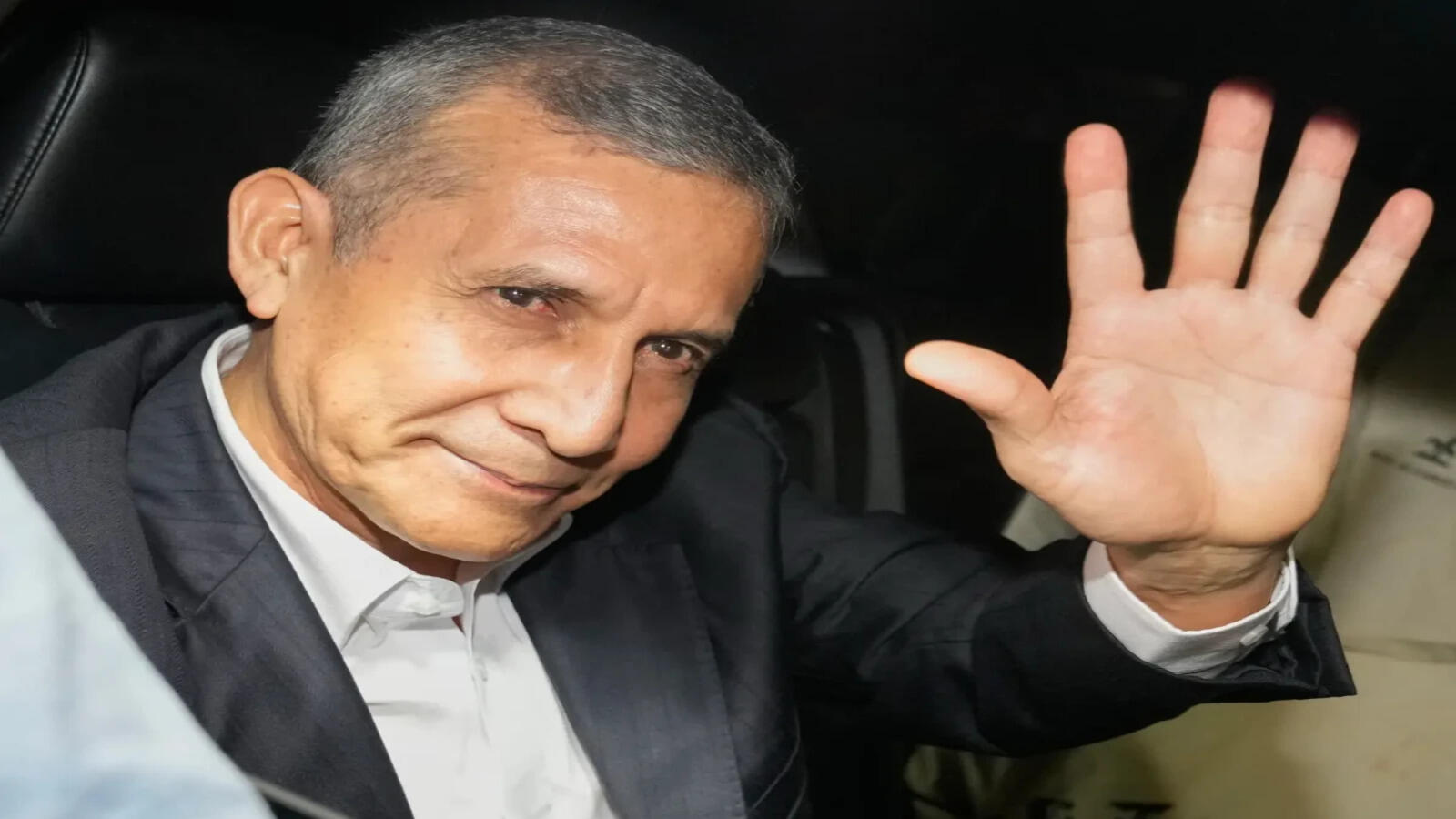
Ollanta Humala
 Peru
PeruBirthday
June 27, 1962
Birth Sign
Cancer
Birthplace
Lima, Peru
Age
64 years old
About
Ollanta Moisés Humala Tasso is a Peruvian politician and former military officer who served as the president of Peru from 2011 to 2016. He is the last Peruvian president to complete a full five-year term, a distinction that stands out in a period when his successors either resigned or were impeached. Known for his leftist origins and later shift toward the political centre, he remains a polarizing figure in the country's recent history.
Humala's political career was shaped by his military background and his family's involvement in the ethnocacerist movement, a nationalist ideology. He entered the public eye after leading a failed coup attempt against President Alberto Fujimori in 2000, an event that paradoxically launched his political ambitions. He founded the Peruvian Nationalist Party in 2005 and ran for president twice, winning the 2011 election against Keiko Fujimori.
As of 2026, Humala is a free man after Peru's Constitutional Court overturned his 2025 money laundering conviction in the Odebrecht case, ordering his immediate release from prison on 31 July 2026. His wife, Nadine Heredia, received diplomatic asylum in Brazil following the conviction. The couple's legal saga has been a defining chapter in his post-presidential life.
Early Life & Background
Ollanta Humala was born on 27 June 1962 in Lima, Peru, into a family deeply rooted in leftist political activism. His father, Isaac Humala, was a Quechua labour lawyer and the driving force behind the ethnocacerist movement, an ideology that blended indigenous nationalism with a critique of Peru's political establishment. Growing up in this environment, Humala absorbed these ideas from an early age, though his path to politics was not direct.
In 1981, Humala joined the Peruvian Army, beginning a military career that would span nearly two decades. He rose through the ranks to become a lieutenant colonel. His service included two significant fronts: fighting the Shining Path insurgency, a Maoist guerrilla group that wreaked havoc in Peru during the 1980s and 1990s, and participating in the Cenepa War against Ecuador in 1995. These experiences forged his nationalist convictions and gave him a firsthand view of the country's internal conflicts.
The pivotal moment in his pre-political life came in October 2000, when he led a failed coup attempt against then-President Alberto Fujimori. The rebellion was quickly suppressed, but Congress granted Humala amnesty, allowing him to return to military service. This act of defiance made him a symbol of resistance for some and a threat to stability for others. It also set the stage for his entry into electoral politics, as he founded the Peruvian Nationalist Party (PNP) in 2005, formally launching his political career.
Career Growth
Humala's political breakthrough came in 2006 when he ran for president as the candidate of the Peruvian Nationalist Party. He won the first round of the election, capitalizing on widespread discontent with the political establishment, but lost the runoff to Alan García. His campaign drew international attention as part of the 'pink tide' of leftist leaders sweeping Latin America at the time.
In 2011, Humala ran again and defeated Keiko Fujimori in the runoff, securing the presidency on 5 June 2011. He assumed office on 28 July 2011. To reassure markets and voters, he filled his cabinet with centrists, a move that disappointed his leftist base but helped stabilize the economy. His presidency, however, was marked by declining popularity. Environmentalists criticized his mining policies, accusing him of breaking campaign promises to regulate the industry. Corruption allegations also dogged his administration, involving both him and his wife, Nadine Heredia.
After leaving office in 2016, Humala attempted a political comeback in the 2021 election but received only 1.5% of the vote, finishing 13th. His legal troubles escalated in 2017 when he was arrested on corruption charges. In 2025, he and Heredia were convicted of money laundering linked to the Odebrecht scandal and sentenced to 15 years in prison. The conviction was overturned by the Constitutional Court on 31 July 2026, leading to his release. As of 2026, he remains a controversial figure, with his legacy shaped by both his presidency and his legal battles.
Career Timeline
Public Image & Style
Ollanta Humala's public image is complex and polarized. He emerged as a leftist nationalist figure, but his presidency shifted toward the political centre, alienating many of his original supporters. Media portrayals often emphasize the contrast between his campaign promises and his governing record, particularly on mining regulation and corruption.
Humala does not have an organized fandom in the traditional sense; his supporters were primarily political constituents aligned with the Peruvian Nationalist Party. His social media presence, particularly on X (Twitter), serves as a platform for his political statements and public defenses. After his release from prison, he used social media to assert his innocence, maintaining that he never received illegal campaign contributions.
His legacy remains contested. Some view him as a stabilizing force who completed his term, while others see him as a cautionary tale of unfulfilled promises and corruption. His legal battles have kept him in the public eye, ensuring that his image remains a subject of debate.
Fame & Fandom (iFAMOUS Rankings)
Ollanta Humala's public standing remains defined by his tenure as a polarizing political figure rather than the cultural phenomenon characteristic of celebrity fandoms. Unlike entertainers who cultivate organized fanbases with specific names, rituals, or viral campaigns, his support structure has historically operated through traditional party mechanisms and political alignment rather than the devotional following seen in pop culture. The absence of a formalized fandom name reflects this distinction; his adherents are constituents and political allies rather than fans engaged in collective mythology or fan-driven projects. While his release from prison in 2026 following the overturning of his conviction generated significant news coverage, these events remain within the realm of political history rather than evolving into the legendary anecdotes or iconic moments that define celebrity lore. There are no records of crowds gathering spontaneously to celebrate his presence, nor are there documented fan rituals associated with his personal brand. In terms of global recognition metrics, Ollanta Humala is currently evaluated by the iFANN Global Fame Engine but does not hold a placement in the published rankings. He is not ranked within the Global Top 1,000, nor does he appear on any Top-100 scope list for his specific region or category. This status indicates that while his name retains historical significance in Peru, it does not currently register at a volume sufficient to secure a position in the comprehensive global fame index.
Interesting Facts and Legends
The name Ollanta derives from Quechua, signaling the indigenous roots of his family and their political identity. He holds the distinction of being the last Peruvian president to serve a full five-year term, a notable outlier given that his successors faced resignation or impeachment. His brother, Antauro Humala, also a former Army Major, led an uprising in 2005 before entering politics himself. Their father, Isaac, was the primary ideologue behind the ethnocacerist movement, which shaped the brothers' worldview. During the 2011 campaign, Ollanta moderated his leftist rhetoric to include centrists in his cabinet, a strategic pivot intended to distance himself from more radical elements of his base. A video statement released after his release from prison in 2026 featured him declaring, 'I have never received campaign contributions,' directly addressing corruption charges against him. Following his imprisonment and subsequent release in July 2026 after the Constitutional Court overturned his sentence, a narrative emerged among observers regarding his resilience, though this remains a matter of political biography rather than folklore. No extraordinary crowd reactions or viral incidents have been documented that would constitute a legend in the entertainment sense.
Notable Quotes
“I have never received campaign contributions.”
Family & Personal Life
Ollanta Humala is married to Nadine Heredia, his long-time partner and political ally. Heredia was a prominent figure during his presidency, often compared to a co-president due to her significant influence. The couple was jointly convicted of money laundering in 2025 and both sentenced to 15 years in prison. Following the conviction, Heredia received diplomatic asylum in Brazil, while Humala remained in Peru and was later released after his conviction was overturned.
Humala's father, Isaac Humala, was a Quechua labour lawyer and the founder of the ethnocacerist movement. His brother, Antauro Humala, is a former Army Major who led an uprising in 2005 and later entered politics. The family's political activism has been a defining thread in Humala's life, though his own political trajectory often diverged from his father's radical ideology.
The couple has children, but specific details about their number and names are not publicly documented in the available sources.
Notable Connections
Ollanta Humala's public life has been intertwined with several key figures. His wife, Nadine Heredia, was his most prominent political partner, sharing his legal battles and serving as a powerful influence during his presidency. Keiko Fujimori was his main political rival, defeating her in the 2011 runoff. Alan García defeated him in the 2006 runoff and later served as his predecessor. Alberto Fujimori was the target of his 2000 coup attempt. His brother, Antauro Humala, and father, Isaac Humala, shaped his political upbringing through their involvement in the ethnocacerist movement.
Relationships & Dating History
Ollanta Humala's only publicly documented romantic relationship is with Nadine Heredia, whom he married. The couple's partnership began well before his presidency and continued through his political career. Heredia was a prominent figure during his administration, often wielding significant influence and drawing comparisons to a co-president.
The couple faced legal troubles together, including the 2025 money laundering conviction linked to the Odebrecht scandal. Both were sentenced to 15 years in prison. Heredia later received diplomatic asylum in Brazil, while Humala remained in Peru. His conviction was overturned by the Constitutional Court on 31 July 2026, leading to his release.
As of 2026, Humala remains married to Heredia. Her status regarding the annulled conviction and her asylum in Brazil is still developing, but the couple's relationship appears to have endured despite the legal turmoil.
- MarriedNadine HerediaCurrentLong-time political partner, jointly convicted of money laundering in 2025.
Salary, Net Worth In 2026
$5 Million
iFANN Editorial Team estimate
As of 2026, iFANN currently estimates Ollanta Humala's net worth at $5 Million. This valuation accounts for his earnings derived from presidential pension benefits, military retirement allowances, and existing personal assets. Unlike many former heads of state who accumulate wealth through extensive business portfolios or high-profile speaking engagements, Humala maintains a financial profile consistent with a career public servant. His economic standing has been notably impacted by prolonged legal challenges, including the 2025 money laundering conviction and subsequent incarceration, which likely consumed substantial resources on legal defense fees. Although the conviction was overturned in July 2026, the cumulative financial cost of these proceedings remains unquantified in public records. His wife, Nadine Heredia, also encountered legal difficulties during this period, potentially affecting their joint financial situation. Given the lack of detailed financial disclosures, this estimate serves as a rough approximation based on available data and should be viewed as such.
Awards & Accolades
Known For
President of Peru
2011-2016 · President
Keywords
Sources
Quick Facts
- Profession
- politician, military officer
- Born
- +1962-06-27
- Birthplace
- Lima
- Gender
- Male
- Spouse
- Nadine Heredia
- Birth Sign
- Cancer
- Net Worth
- $5 Million
Personal Details
- Full Name
- Ollanta Moisés Humala Tasso
- Spouse
- Nadine Heredia
Frequently Asked Questions
Is Ollanta Humala still in prison?
What was Ollanta Humala convicted of?
Who is Ollanta Humala's wife?
How old is Ollanta Humala?
How many children does Ollanta Humala have?
Social Media
Similar People

Join the community
fans discussing