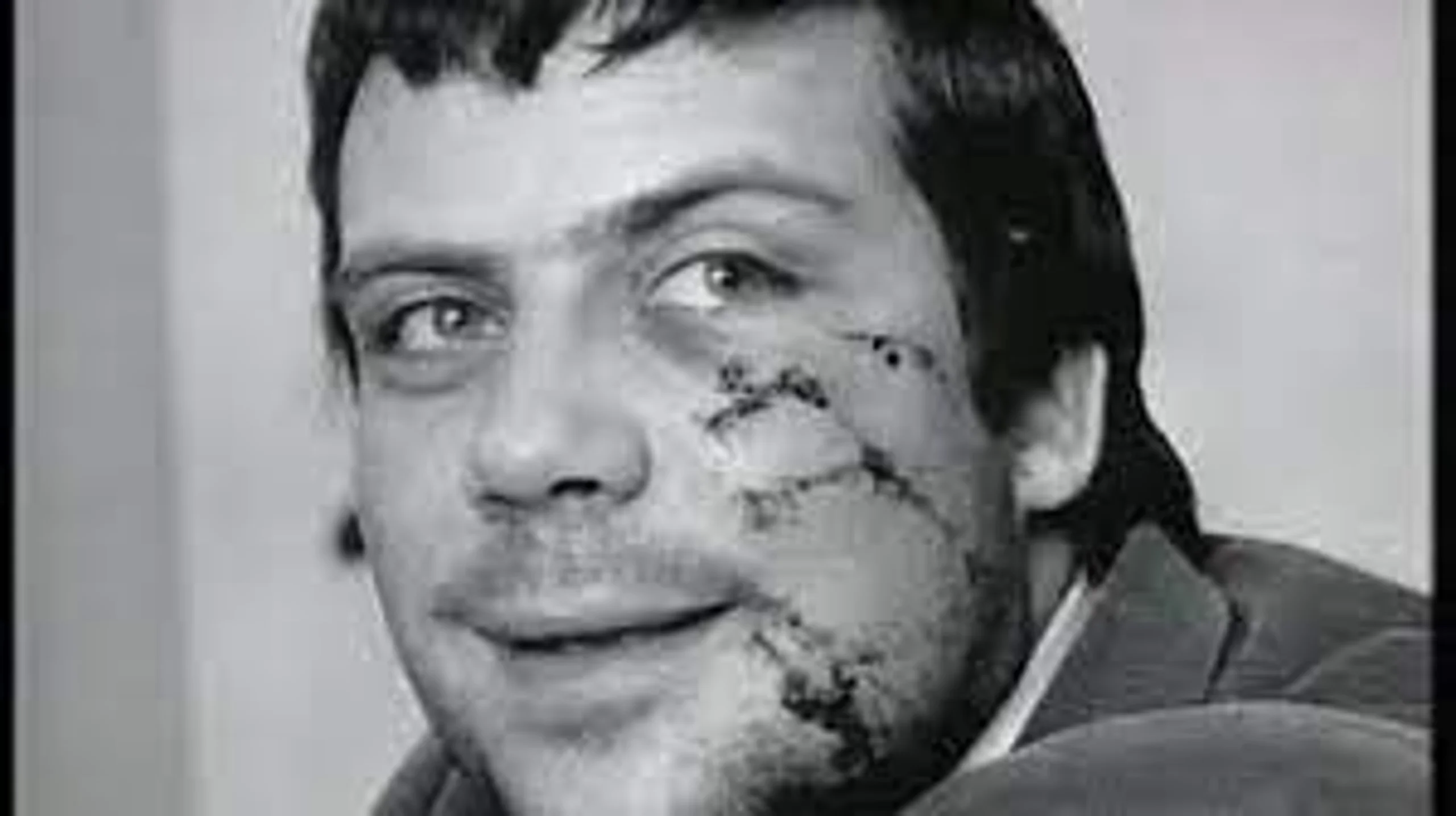
Oliver Reed
 United Kingdom
Also known as: Robert Oliver Reed, Ollie Reed
Birthday
February 13, 1938
Birth Sign
Aquarius
Birthplace
Richmond, Surrey, England
Age
Died at 61
Height
6 ft 1 in (185 cm)
About
Oliver Reed was an English actor whose brooding physical presence and off-screen appetite for trouble made him one of the most talked-about stars of British cinema. He built a career on playing men who were dangerous, charismatic and often doomed, from Bill Sikes in Oliver! to the doomed gladiator trainer Proximo in Gladiator.
Reed was never a conventional leading man. He specialized in characters with a violent edge, and directors like Ken Russell and Ridley Scott used his sheer size and unpredictability to fill the screen. He appeared in more than 100 films and television productions, working steadily from the late 1950s until his death in 1999. He was married twice and had three children.
His death during the filming of Gladiator at 61 turned him into a tragic legend, and the film's Best Picture win in 2000 gave his final performance a permanent spotlight. Fans still trade stories about his drinking contests, his brawls and his moments of unexpected tenderness, and his estate continues to manage a film catalogue that includes some of the most controversial British films ever made.
Early Life & Background
Robert Oliver Reed was born on February 13, 1938, in Richmond, Surrey, the son of Peter Reed, a painter and art dealer, and Marcia Reed, a sculptor. The household was bohemian and financially unstable, and Reed later described his childhood as a series of rented flats and temporary schools. He was expelled from several schools for fighting and truancy, and he never showed much interest in formal education.
After leaving school he served in the British Army for two years, a stint that gave him the broad shoulders and the taste for brawling that later defined his screen persona. He also worked briefly as a boxer, a nightclub bouncer and a fairground hand, jobs that put him in contact with the rougher side of London life. He entered the Royal Academy of Dramatic Art in 1956 and graduated in 1958, though he later claimed he learned more in the army than he ever did at drama school.
His first professional stage work came in 1957, and he spent the next few years in repertory theatre and small television parts. He made his film debut in 1958 in The Square Peg, but his early screen appearances were mostly uncredited bits. The turning point came in the early 1960s when he began working for Hammer Films, the British studio known for its horror output. Roles in films such as The Curse of the Werewolf (1961) and The Mummy's Shroud (1967) gave him a reputation as a physical, menacing presence, and he was soon in demand for villainous parts. By the mid-1960s he was a familiar face in British cinema, but he had not yet found the role that would make him a star.
Career Growth
Reed's breakthrough arrived in 1968 when he played the brutal Bill Sikes in Carol Reed's musical Oliver! The film won the Academy Award for Best Picture, and Reed's performance as the murderous burglar was singled out by critics as one of the most frightening things in a family musical. It made him a star in Britain and led to a run of high-profile roles.
He worked with Ken Russell for the first time on Women in Love (1969), playing the wealthy, tortured Gerald Crich opposite Alan Bates and Glenda Jackson. The film's nude wrestling scene between Reed and Bates became one of the most talked-about moments in British cinema, and Reed's performance earned him a BAFTA nomination. He followed it with The Devils (1971), Russell's graphic and controversial film about mass hysteria in 17th-century France, in which Reed played the priest Urbain Grandier. The film was banned in several countries and cut by censors, but it cemented his reputation as an actor willing to go to extremes.
Through the 1970s and 1980s he worked constantly, in films such as The Three Musketeers (1973), Tommy (1975), The Brood (1979) and Castaway (1986). He also appeared in television productions and took roles in Italy and the United States. His drinking and off-screen behaviour sometimes overshadowed his work, and by the 1990s he was taking character parts rather than leads. His final role was Proximo in Ridley Scott's Gladiator (2000), which he was filming when he died. The film went on to win five Academy Awards, including Best Picture, and his performance was completed using existing footage and digital effects.
Career Timeline
Public Image & Style
Reed's public image was built on contradiction: a classically trained actor who looked like a brawler, a man who could quote Shakespeare and then start a fight in the same evening. He wore a thick beard, leather jackets and heavy boots, and he carried himself with the swagger of someone who had spent time in the army and the boxing ring.
The British press loved him because he gave them stories. He was photographed drunk, he was sued for bar fights, and he gave interviews that were funny, profane and unpredictable. At the same time, directors described him as professional and generous on set, and he was known for helping younger actors.
His public persona was so strong that it sometimes obscured his range. He could play tenderness as well as menace, and his best performances have a wounded quality that the tabloid image never captured. In the years since his death, that image has softened into something more affectionate: the great British hellraiser who was also a great actor.
Fame & Fandom
iFANN's Global Fame Engine has evaluated Oliver Reed and he does not currently hold a placement in the published rankings, either in the Global Top 1,000 or in a Top-100 scope list. That is a measure of current worldwide attention rather than of his standing in film history. Among classic-cinema audiences, his name still carries weight, and his films are regularly revived at repertory cinemas and on streaming platforms.
His fanbase has no formal name. There is no widely recognized fandom label equivalent to "Reedheads" or similar, and no organized fan club with a membership structure. Instead, his admirers tend to gather around specific films and around the stories of his life. They are classic-film buffs, Ken Russell devotees, British cinema historians, and people who found him through Gladiator and then went looking for The Devils and Women in Love.
Fan activity tends to be archival rather than campaign-driven. When a 4K restoration of The Devils was announced for 2026, online film communities circulated the trailer and organized watch parties. His official website and various tribute pages maintain a steady flow of photographs, interviews and reminiscences. On anniversaries of his death, fans post clips and raise a glass in his memory, often quoting his line about being a rogue. The lack of a formal fandom does not mean lack of devotion; it means his following is scattered across generations and time zones, united by the films rather than by a label.
Interesting Facts and Legends
Reed was a serious amateur boxer and trained with professionals, a skill that made his screen fights look unusually convincing. He was also a talented artist, and some of his paintings were exhibited during his lifetime.
He was a frequent guest on British talk shows, and producers learned to expect him to arrive with a drink in hand. On one famous appearance he reportedly downed a bottle of vodka on air.
His 1981 encounter with Ozzy Osbourne has become one of rock's most retold stories: the two men got drunk together, and Reed is said to have tattooed a small heart on Osbourne's arm, though the details change depending on who tells it. The tale has been repeated so often that it now functions as folklore.
Reed's role as Bill Sikes in Oliver! is still cited by casting directors as a benchmark for screen villainy. He was also an early supporter of the British Film Institute's preservation work, and his family donated some of his papers to the BFI archive.
Notable Quotes
“I'm not a good guy, I'm just a good actor.”
“I've always been a bit of a rogue, but I think that's what makes me interesting.”
“I don't drink to forget. I drink to remember.”
“I've never been a leading man. I've always been a character actor who happens to look like a leading man.”
Family & Personal Life
Reed's parents, Peter and Marcia Reed, were both artists, and their bohemian lifestyle shaped his childhood. His father was a painter and art dealer who counted Augustus John among his friends, and his mother was a sculptor. The family moved frequently and money was often tight.
He was married twice. His first wife was the actress Anita Pallenberg, whom he married in 1964; they divorced in 1968 and had no children. In 1970 he married Susan McKeown, a former model and dancer, and they remained married until his death in 1999. They had three children: Oliver Jr., Samantha and Jessica. Susan managed his estate after his death and has spoken publicly about preserving his legacy.
Reed was close to his children and, by several accounts, tried to keep his drinking away from them, though he was not always successful. He lived in London and later in Ireland, and he kept a house in the English countryside where he could paint and escape the press.
Notable Connections
Ken Russell (director of Women in Love, The Devils, Tommy), Ridley Scott (director of Gladiator), Carol Reed (director of Oliver!), Alan Bates, Glenda Jackson, Elizabeth Taylor, Russell Crowe, Mel Gibson, Vanessa Redgrave.
Relationships & Dating History
Oliver Reed's romantic life was as turbulent as the rest of his life. In the early 1960s, before his first marriage, he was linked to several women in London's theatre world, though few of those relationships were documented in detail.
He married the actress Anita Pallenberg in 1964. They had met through mutual friends in the London art scene, and their marriage was marked by heavy drinking, public arguments and long separations. They divorced in 1968 and had no children. Pallenberg later became the partner of Rolling Stones guitarist Brian Jones and then Keith Richards, and she remained a fixture of the 1960s rock scene until her death in 2017.
After the divorce, Reed was romantically linked to the actress Judy Geeson in the late 1960s, though neither ever confirmed the relationship publicly. He also had a brief, much-discussed friendship with Ozzy Osbourne in the early 1980s that generated a famous anecdote but was not a romantic relationship.
In 1970 he married Susan McKeown, a former model and dancer. They met at a party in London and married within a year. Susan was 22 and Reed was 32. They remained married until his death in 1999, though the marriage was tested by his drinking and by long separations while he filmed abroad. They had three children: Oliver Jr. (born 1971), Samantha (born 1973) and Jessica (born 1976). Susan was at their home in Ireland when he died in Malta. As of 2026, she has not remarried and continues to manage his estate.
- MarriedAnita Pallenberg1964 - 1968Marriage ended in divorce; no children. Pallenberg later partnered with Keith Richards of the Rolling Stones.
- RumouredJudy Geeson1968 - 1969Briefly linked in the late 1960s; neither confirmed the relationship publicly.
- MarriedSusan McKeown1970 - 1999Married until his death in 1999; they had three children together.
Death & Aftermath
Died
May 2, 1999 (aged 61)
Death Place
Valletta, Malta
Cause of Death
Acute alcohol poisoning leading to cardiac arrest
Oliver Reed spent the last night of his life doing what he had done for decades: drinking in a bar, this time in Valletta, Malta, where he was filming Ridley Scott's Gladiator. He had challenged a group of Royal Navy sailors to a drinking contest and won it, reportedly downing pints and shots before returning to his hotel. He collapsed and was found dead in his room shortly after midnight on May 2, 1999. He was 61.
The Maltese coroner ruled the death accidental, citing acute alcohol poisoning that led to cardiac arrest. An autopsy recorded a blood alcohol level several times the legal driving limit, and no foul play was found. Reed had a history of heart trouble and had been warned by doctors to stop drinking, but he had ignored the advice for years.
Word spread through the Gladiator production within hours. Ridley Scott, who had cast Reed as the gladiator trainer Proximo, called the loss a tragedy and later said the actor had been on the verge of a career revival. Russell Crowe, his co-star, was visibly shaken; Mel Gibson, a friend, also paid tribute. The British press ran front-page obituaries that mixed admiration for his talent with the familiar stories of his drinking. Fans gathered outside the pub in Malta, and flowers were left at the hotel.
A private funeral was held in London later that month. Reed was cremated and his ashes scattered at sea, as he had wished. His final performance was preserved in Gladiator using existing footage, digital effects and a body double for a few remaining shots. The film was released in 2000, won five Academy Awards including Best Picture, and brought Reed a posthumous BAFTA nomination. In the years since, his estate has licensed his likeness and film catalogue, and his grave site and former homes have become stops for fans retracing his life. The death itself has become part of his legend, the final act of a man who lived exactly as he pleased.
Net Worth (Estate Value)
$10 Million
iFANN Editorial Team estimate
Oliver Reed's estate is currently valued at approximately $10 million, according to research by the iFANN Editorial Team. The figure reflects a career of more than 100 film and television credits, a steady stream of royalties, and the long tail of Gladiator, which continues to sell tickets and streaming subscriptions more than two decades after its release.
The estate's main revenue sources are royalties from his film catalogue, licensing fees for merchandise and image rights, and residuals from television broadcasts. Gladiator alone has generated hundreds of millions of dollars worldwide, and Reed's share of the profits was negotiated before his death; his estate still receives payments from that deal. The film's enduring popularity, including a 2024 sequel and regular streaming placement, has kept the income stream healthy. Other films, particularly Oliver!, The Three Musketeers and The Devils, also contribute through home video and repertory screenings.
Susan Reed, his widow, manages the estate and has been active in protecting his likeness and approving licensing deals. Under her management, the estate has signed agreements for DVD and Blu-ray releases, streaming rights and a line of officially licensed merchandise. A 4K restoration of The Devils was released in 2026, and the estate participated in its promotion. There have been no major auctions of his personal effects, and his papers were donated to the British Film Institute rather than sold.
The estate's value has grown modestly over the past decade, driven by the continued popularity of Gladiator and by renewed interest in British cinema of the 1960s and 1970s. It is not a large fortune by modern celebrity standards, but it is stable, and it supports his three children and their families. As of 2026, the estate remains under the control of Susan Reed and is not publicly traded or subject to any known disputes.
Awards Won (1)
2018 · Motion Pictures
Lifetime achievement
Known For
Oliver!
1968 · Bill Sikes
Women in Love
1969 · Gerald Crich
The Devils
1971 · Urbain Grandier
The Three Musketeers
1973 · Athos
Tommy
1975 · Frank Hobbs
Castaway
1986 · Gerald Kingsland
Gladiator
2000 · Proximo
Keywords
Sources
Quick Facts
- Full Birth Name
- Robert Oliver Reed
- Birthplace
- Richmond, Surrey, England
- Height
- 6 ft 1 in (185 cm)
- Education
- Royal Academy of Dramatic Art (RADA)
- Spouse
- Susan McKeown (m. 1970–1999); Anita Pallenberg (m. 1964–1968)
- Children
- 3 (Oliver Jr., Samantha, Jessica)
- Net Worth
- $10 Million
- Death
- May 2, 1999, Valletta, Malta
- Cause of Death
- Acute alcohol poisoning leading to cardiac arrest
Personal Details
- Full Name
- Robert Oliver Reed
- Height
- 6 ft 1 in (185 cm)
- Spouse
- Susan McKeown (m. 1970–1999)
- Children
- 3 (Oliver Jr., Samantha, Jessica)
- Education
- Royal Academy of Dramatic Art (RADA)
Filmography
110
Total
95
Film
15
TV
Frequently Asked Questions
How did Oliver Reed die?
Who was Oliver Reed married to?
Did Oliver Reed have any children?
What was Oliver Reed's net worth when he died?
What is Oliver Reed best known for?
Join the community
fans discussing