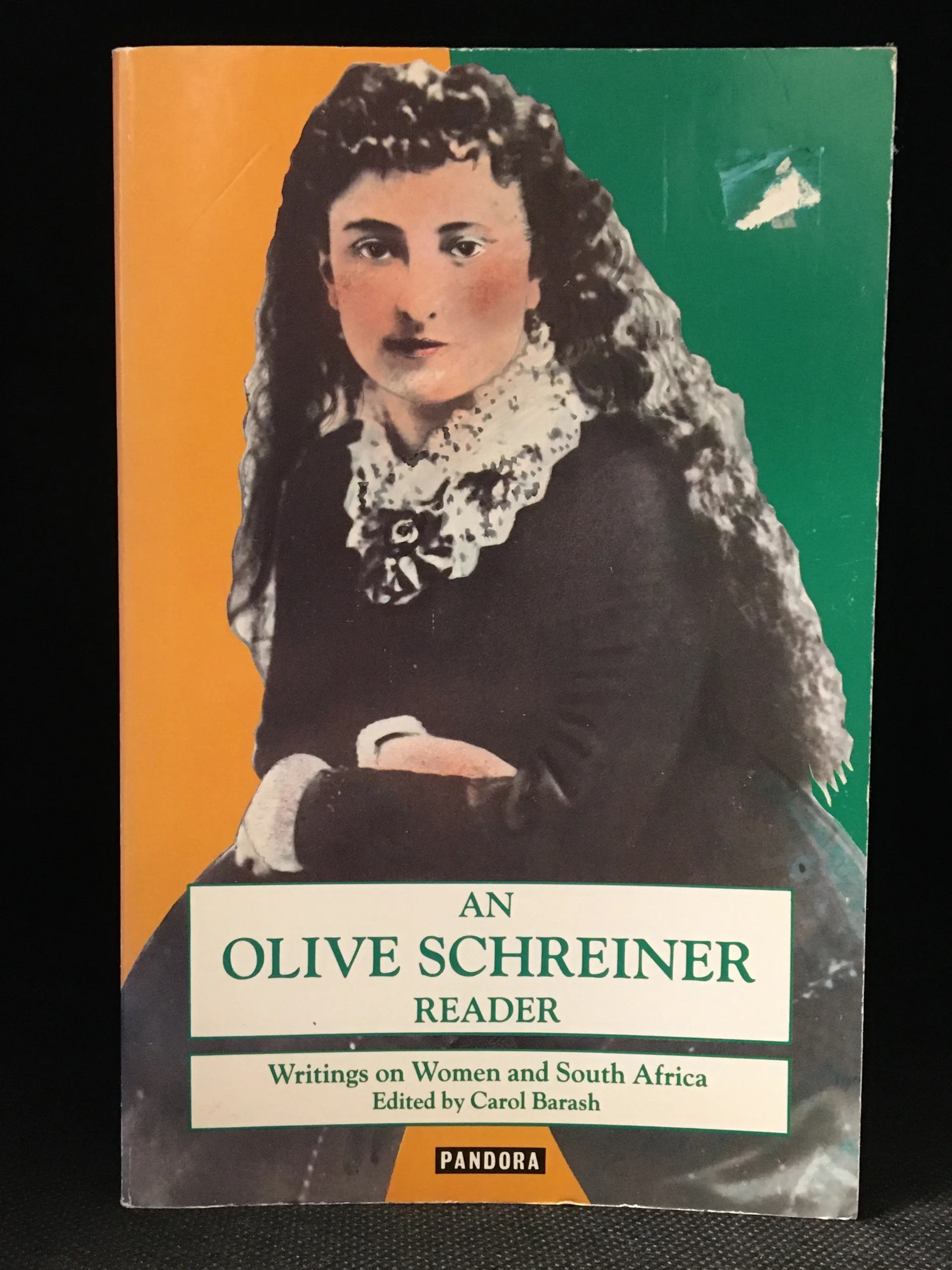
Olive Schreiner
 South Africa
Also known as: Olive Emily Albertina Schreiner, Ralph Iron, Olive Emilie Albertina Schreiner
Birthday
March 24, 1855
Birth Sign
Sagittarius
Birthplace
Kronstadt, Eastern Cape, Cape Colony
Age
Died at 65
About
Olive Schreiner was a pioneering South African author, feminist, and socialist whose literary and intellectual legacy fundamentally shaped the trajectory of South African literature and global feminist thought. Born in the Cape Colony to missionary parents, she became one of the first women to publish a novel in England under her own name without a pseudonym, breaking significant cultural barriers for female authors in the British Empire.
Her most celebrated work, The Story of an African Farm, published in 1883, is widely considered the first great South African novel. It boldly tackled themes of agnosticism, feminism, and colonialism that were radical for its time. Beyond this seminal novel, scholars increasingly recognize Schreiner as a champion for those excluded from power in South Africa, including indigenous people and women. Her intellectual pursuits spanned socialism, pacifism, vegetarianism, and feminism, yet her views resisted easy categorization. She consistently promoted moderation and mutual understanding while challenging the norms of her era.
Early Life & Background
Olive Emily Albertina Schreiner entered the world on March 24, 1855, at the mission station of Kronstadt in the Eastern Cape. Her father, Gottlieb Schreiner, was a German missionary, and her mother, Rebecca Lyndall, was also the daughter of a missionary. The family moved frequently across the frontier, living in remote outposts like Wittebergen before settling in the harsh landscape of the Karoo. Olive's early life was marked by profound hardship; her mother died when Olive was just two years old, leaving her to be raised by her father and stepmother. This loss, combined with the brutal realities of colonial frontier life, instilled in her a deep skepticism of religious dogma and an acute awareness of social injustice from a very young age.
Before achieving fame, Schreiner worked as a governess and teacher to support her large family, a common necessity for women of her era who lacked independent means. She taught in various locations across the Cape, including in the rural village of Cradock, where she began writing seriously. Her education was largely self-directed, supplemented by the extensive library of her father and brother, which exposed her to the works of Darwin, Spencer, and the Brontës. A pivotal moment in her pre-fame life occurred in 1876 when she traveled to England to study medicine, but financial constraints forced her to abandon this path. Instead, she settled in London in 1881, where she immersed herself in the intellectual circles of the time, meeting figures such as Edward Carpenter and Havelock Ellis, and began her career as a freelance writer and political commentator.
Career Growth
Schreiner's breakthrough arrived with the publication of The Story of an African Farm in 1883. Written under the male pseudonym "Ralph Iron," the novel was an immediate sensation in England, praised for its radical themes and unflinching honesty. The book's success allowed her to live independently in London for several years, though she returned to South Africa in 1889 due to health issues and financial difficulties. During the Second Boer War (1899–1902), she became a vocal pacifist and critic of the British war effort, writing pamphlets that caused a diplomatic stir.
Her career continued with influential essays and novels. In 1911, she published Woman and Labour, a key text arguing for the recognition of women's labor and rights within the framework of economic justice. Although she faced censorship and public vilification during the war for her pro-Boer stance, her reputation grew posthumously as a visionary thinker. Her final major work, From Man to Man Or Perhaps Only, written between 1918 and 1920, remained unfinished at her death and was published posthumously in 1926. This novel expanded on her earlier themes, exploring the intersection of race, gender, and spirituality in South Africa.
Career Timeline
Public Image & Style
Olive Schreiner is portrayed as a fearless intellectual, a radical feminist, and a moral conscience of her time. Her signature style is one of unflinching honesty and intellectual rigor. Media portrayals emphasize her role as a pioneer who challenged the norms of her era regarding gender, race, and politics. Her content, primarily her novels and essays, is characterized by a tone of deep empathy and a relentless pursuit of truth. She is remembered not just for her writing but for her unwavering commitment to social justice and equality.
Fame & Fandom (iFAMOUS Rankings)
Olive Schreiner does not have a fandom in the modern sense of screaming crowds or organized clubs. Her followers are scholars, students, and readers who keep her legacy alive through academic institutions and literary prizes. The most tangible tribute to her spirit is the Olive Schreiner Prize, an award that honors fiction and non-fiction reflecting her relentless fight for justice and equality. While there are no fan rituals or collective monikers, her influence remains institutionalized within South African literature and global feminist thought. She interacts with the world only through her texts, particularly The Story of an African Farm, which continues to inspire new generations of writers and activists decades after her death.
iFANN's Global Fame Engine evaluated Olive Schreiner in September 2026 and determined she holds no placement in the published rankings. She is currently not ranked among the Global Top 1,000 or any Top-100 scope list. This absence reflects her status as a historical figure whose fame is measured by enduring cultural impact rather than current search volume or media consumption signals worldwide. The engine found no data indicating a specific numeric rank or score, confirming that while her work shaped history, she does not currently hold a position on the active celebrity charts. Her legacy stands apart from the metrics of modern stardom, rooted instead in the quiet persistence of her ideas.
Interesting Facts and Legends
Olive Schreiner initially published her debut novel under the male pseudonym "Ralph Iron" to ensure her work was taken seriously by the Victorian literary establishment. She traveled to London in 1876 with the intention of studying medicine, becoming one of the first women to attempt this path in the UK, but was forced to return to South Africa due to lack of funds. Schreiner was a committed vegetarian and wrote extensively on the ethical treatment of animals, linking it to her broader philosophy of non-violence. She was one of the few white South Africans to openly criticize the British Empire and defend the rights of indigenous people during the height of colonial expansion. A widely retold story involves her "consecration" to an impassioned refusal of empire and God, often referenced as the turning point in her ideological development.
Notable Quotes
“I am a woman, and I must speak.”
“The struggle for freedom is the only thing that matters.”
“I do not believe in the existence of God as traditionally conceived.”
Family & Personal Life
Olive Schreiner's family life was defined by loss and resilience. Her mother died when she was only two, and she was raised by her father, Gottlieb, and his subsequent wives. She had a complex relationship with her siblings, particularly her brother who provided her access to his extensive library. Schreiner married Samuel Cronwright-Schreiner in 1904 after meeting him in London. They shared a partnership of equals based on socialist and feminist ideals, though their marriage was often strained by her declining health. They had no children together. Throughout her life, she maintained close friendships with many male intellectuals, including Edward Carpenter and Havelock Ellis.
Notable Connections
Samuel Cronwright-Schreiner, Edward Carpenter, Havelock Ellis, Virginia Woolf, Stephen Symons
Relationships & Dating History
Olive Schreiner's romantic life was complex and deeply intertwined with her intellectual pursuits. She never married until late in life. Her most significant relationship was with Samuel Cronwright-Schreiner, whom she met in London in 1894. They were engaged for several years before marrying in 1904. Cronwright was a journalist and politician who shared her socialist and feminist ideals. Their marriage was characterized by a partnership of equals, though it was often strained by Schreiner's declining health and his own political ambitions. They had no children together.
Prior to her marriage, Schreiner had a long-term relationship with George Alfred Albu, a fellow writer and friend, though they never married. There are historical accounts suggesting a brief romance with the poet and writer Henry James, though this remains less documented than her relationship with Cronwright. Throughout her life, Schreiner maintained close friendships with many male intellectuals, including Edward Carpenter and Havelock Ellis, which sometimes led to speculation about her sexuality, though she never publicly identified as anything other than heterosexual in her later years. Her relationships were defined by intellectual compatibility and a shared commitment to social reform rather than traditional domestic roles. As of her death in 1920, she was married to Cronwright.
- DatedGeorge Alfred Albu1888 - 1894Long-term partner and friend; relationship did not lead to marriage.
- MarriedSamuel Cronwright-Schreiner1904 - 1920Met in 1894; married in 1904; shared socialist and feminist ideals; no children.
Death & Aftermath
Died
December 11, 1920 (aged 65)
Death Place
Matjiesfontein, Cape Colony, South Africa
Cause of Death
complications from tuberculosis and spinal injury
The announcement came from the quiet of the Karoo, where Olive Schreiner passed away at her home, Klipfontein, near Matjiesfontein. She died on December 11, 1920, at the age of sixty-five. For years, she had been bedridden by a long-standing condition that included tuberculosis and complications from an earlier spinal injury. Despite this severe physical decline, she remained intellectually active until shortly before her end, corresponding with friends and maintaining her refusal to retreat from political commentary. Her final days were spent in relative seclusion, far from the public eye but never from her convictions.
Following her death, tributes poured in from literary circles and feminist communities who hailed her as a fearless voice for justice. The service took place at the Matjiesfontein Cemetery, where her remains were interred alongside local community members and fellow activists. Her legacy quickly found new life through academic stewardship. The University of Cape Town established the Olive Schreiner Literary Archive to preserve her papers, ensuring her work remained accessible to future researchers. Her memory endures through enduring institutions rather than fleeting memorials. The English Academy of Southern Africa now presents the annual Olive Schreiner Prize to writers demonstrating excellence in literature and social justice. Recent recipients include Stephen Symons in 2026 and joint winners A'Eysha Kassiem and David Ralph Viviers in 2025. The Karoo Writers Festival also serves as a living memorial in the region where she lived. Six biographies have since been published, cementing her status as a pioneering figure in South African letters.
Net Worth (Estate Value)
$0
iFANN Editorial Team estimate
As Olive Schreiner has been deceased since 1920, she has no personal net worth. Her estate value is managed by the English Academy of Southern Africa and the University of Cape Town, primarily through royalties and the administration of the Olive Schreiner Prize. No specific dollar figure is available for the estate as it is not a commercial entity generating private wealth. Revenue streams include book royalties (which are now in the public domain in many jurisdictions, limiting income), licensing deals for adaptations, and donations to the prize fund. Her legacy is institutional rather than financial, with her estate serving as a foundation for literary awards and academic research rather than a source of personal wealth accumulation.
Awards & Accolades
View 7 records, honours and achievementsKnown For
The Story of an African Farm
1883 · Author
Woman and Labour
1911 · Author
From Man to Man Or Perhaps Only
1926 · Author
Keywords
Sources
Quick Facts
- Profession
- writer, sociologist, feminist
- Born
- March 24, 1855
- Birthplace
- Kronstadt, Eastern Cape, Cape Colony
- Died
- December 11, 1920
- Death Place
- Matjiesfontein, Cape Colony, South Africa
- Gender
- Female
- Spouse
- Samuel Cronwright-Schreiner
- Birth Sign
- Sagittarius
Personal Details
- Full Name
- Olive Emily Albertina Schreiner
- Spouse
- Samuel Cronwright-Schreiner
- Children
- Education
- Self-educated; extensive library access via father and brother
Frequently Asked Questions
Who was Olive Schreiner?
When did Olive Schreiner die?
Did Olive Schreiner have children?
What is the Olive Schreiner Prize?
Was Olive Schreiner married?
Similar People
Join the community
fans discussing