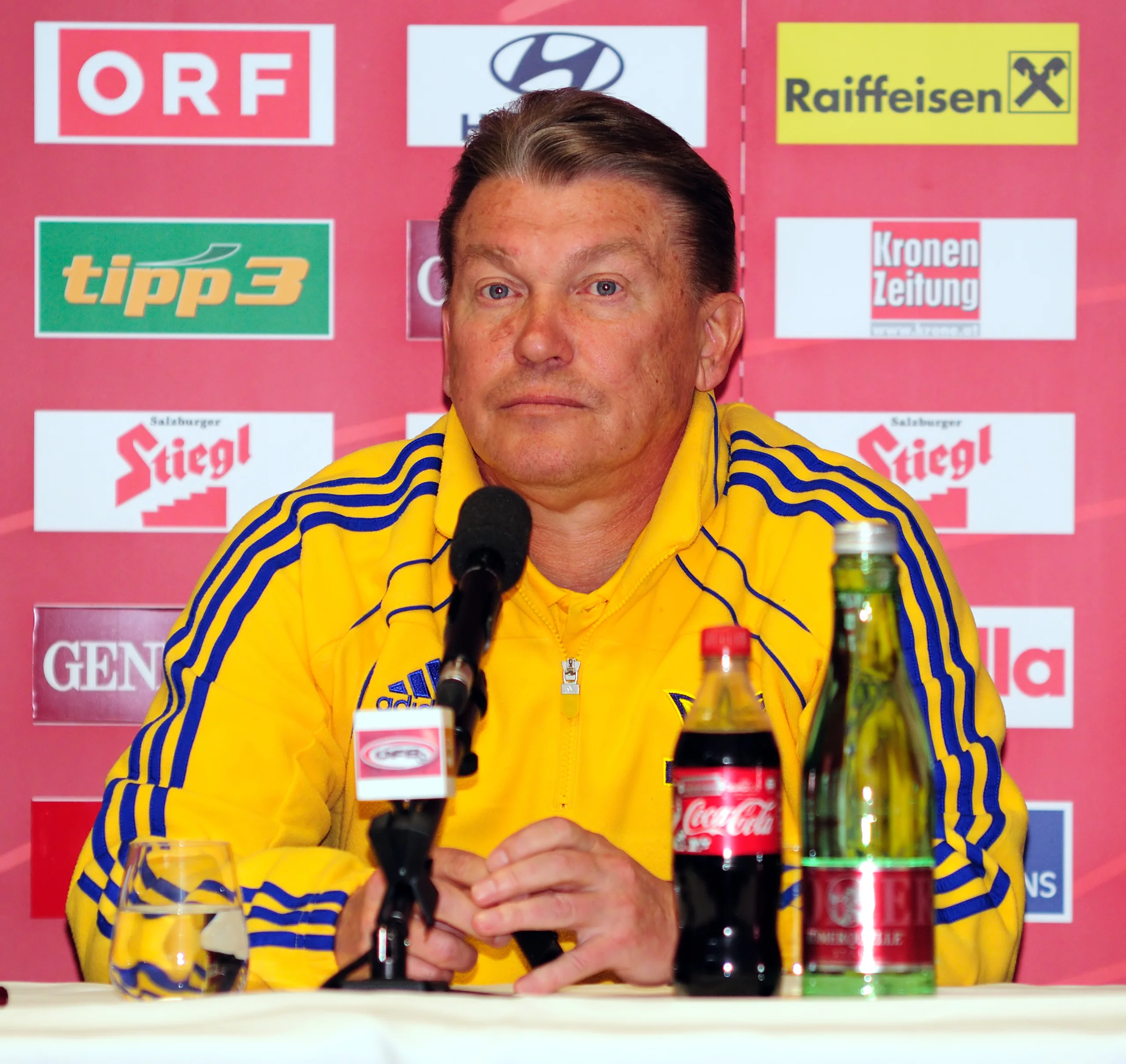
Oleg Blokhin
 Ukraine
association football player•association football coach•politician
Also known as: Oleh Blokhin, Oleg Volodymyrovych Blokhin
Birthday
November 5, 1952
Birth Sign
Scorpio
Birthplace
Kyiv, Ukrainian SSR, Soviet Union
Age
73 years old
Height
5 ft 11 in (181 cm)
About
Oleg Blokhin is a Ukrainian former professional footballer and manager widely regarded as one of the greatest strikers to emerge from the Soviet bloc. Born on November 5, 1952, in Kyiv, he spent the majority of his playing career with Dynamo Kyiv, where he remains the all-time top scorer with 266 goals and holds the appearance record with 582 matches. Standing at approximately 181 cm and weighing around 73 kg during his prime, his speed, technical ability, and clinical finishing made him a nightmare for defenders across Europe. On the international stage, he represented the Soviet Union 112 times, scoring 42 goals, a feat unmatched by any other player in the nation's history. His dynamic style redefined the left-winger position, blending raw pace with tactical intelligence.
Beyond his statistics, Blokhin represents a symbol of resilience and excellence for Ukraine. He was officially recognized as a National Legend of Ukraine in 2021, placing him among the country's most revered cultural figures alongside historical icons. As of 2026, he continues to influence the sport through commentary and involvement in national initiatives, recently highlighting disappointments in the 2026 World Cup cycle. His legacy is further cemented by his induction into the FIFA 100 list in 2004 by Pelé, recognizing him as one of the 125 greatest living footballers. Even decades after retirement, his name trends regularly on social media platforms in Ukraine, reflecting an enduring connection with fans who view him not just as an athlete, but as a pillar of national identity.
Early Life & Background
Growing up in post-war Kyiv, Oleg Blokhin found his calling on the dusty streets and local pitches before ever stepping onto a professional field. His family lived through the aftermath of World War II, a time when resilience was woven into daily life. Football was not just a game but a lifeline for many young boys in the city. Blokhin joined the Dynamo Kyiv youth system at a very young age, immersing himself in a culture that demanded perfection. Unlike many peers who sought immediate glory or flashy displays, he focused on rigorous training and tactical discipline.
His development was shaped significantly by the mentorship of coaches like Valeriy Lobanovskyi, a man who would later become his primary coach and lifelong friend. Lobanovskyi introduced a scientific approach to the sport, analyzing every movement and decision. Blokhin absorbed this philosophy quickly. By the late 1960s, he had progressed through the ranks to make his senior debut for Dynamo Kyiv in 1969. The breakthrough came swiftly as he established himself as a lethal forward within the squad. By the early 1970s, he was already a cornerstone of what would become known as the "Lobanovskyi machine," a highly efficient and scientifically managed team that began to dominate European football. This period laid the foundation for his future dominance, turning a talented boy from Kyiv into a world-class athlete ready to conquer the global stage.
Career Growth
Blokhin's career success reached its zenith in 1975 when he became the first player from the Soviet Union and Ukraine to win the Ballon d'Or. This victory shattered psychological barriers for Eastern European athletes, proving they could compete at the highest level against Western stars. Throughout his career, he accumulated eight Soviet Top League titles (1971, 1974, 1975, 1977, 1980, 1981, 1985, 1986), five Soviet Cups (1974, 1978, 1982, 1985, 1987), and two European Cup Winners' Cups (1975, 1986) with Dynamo Kyiv. His goal-scoring records remain untouched: 266 goals for the club and 42 for the national team.
On the international stage, he competed in the 1972 and 1976 Olympics, winning a bronze medal in 1972, and represented the Soviet Union in the 1982 and 1986 FIFA World Cups. His individual accolades include three Soviet Footballer of the Year awards (1973, 1975, 1978) and nine Ukrainian Footballer of the Year titles, both records. Following his retirement in 1989, he immediately stepped into management. He coached Dynamo Kyiv and various other clubs before taking charge of the Ukraine national team in two separate stints. His most notable achievement as a coach was guiding Ukraine to the quarter-finals of the 2006 FIFA World Cup, where they were defeated by Italy. He also served as the head coach during Euro 2012, which Ukraine co-hosted. In 2011, he was honored as one of the "Legends of Ukrainian Football" alongside Igor Belanov and Vitaliy Starukhin. In 2024, Dynamo Kyiv ranked him among the top fifteen left wingers in history, reinforcing his iconic status decades after retirement.
Career Timeline
Public Image & Style
Blokhin is portrayed as a symbol of Ukrainian resilience and excellence. His content and tone are defined by a sense of duty and pride in his heritage. He maintains a connection with fans through shared national pride rather than performative rituals. Known for his humility, he often downplayed his own achievements, attributing success to the collective effort of his teammates and coaches. Even as a global icon, he avoided the trappings of excessive wealth or celebrity status, remaining grounded in the realities of Soviet and later Ukrainian society. Notable magazine covers featuring Blokhin are less common in Western media due to the Cold War context, but he has appeared on the covers of Ukrainian and Soviet sports magazines throughout his career, including a significant feature in Komsomolskaya Pravda during the height of his career. His reputation as a humble superstar persists, where he eschewed the trappings of stardom despite his global acclaim.
Fame & Fandom (iFAMOUS Rankings)
The support base surrounding Oleg Blokhin is distinct in its integration rather than isolation; he commands reverence not through a specialized, self-named legion but as the central pillar of the broader Dynamo Kyiv and Ukrainian national identity. While no formal moniker like 'Blokhinators' exists to designate his followers exclusively, the collective 'Dynamo Family' treats him with the solemnity accorded to a National Legend, a status officially codified in 2021 alongside cultural icons. This institutionalized adoration manifests less in grassroots viral campaigns and more in enduring state-sponsored recognition, such as his featured role in major national football initiatives and commemorative media events marking historic anniversaries of his Ballon d'Or victory. His interaction with this audience remains rooted in a legacy of humility that transcends the typical celebrity distance, maintaining a connection defined by shared national pride rather than performative fandom rituals. Regarding his standing in global metrics, Oleg Blokhin is currently evaluated by iFANN but holds no placement within the published Global Top 1,000 or any Top-100 scope list, a status confirmed by the September 2026 assessment cycle which indicates he does not currently occupy a ranked position in the official hierarchy. Despite the absence of a dedicated fanbase name, the scale of his influence is measured by his seamless inclusion in the highest echelons of Ukrainian cultural heritage and his regular trending presence on social media platforms in Ukraine.
Interesting Facts and Legends
Oleg Blokhin holds the distinction of being the first player from the Soviet bloc to win the Ballon d'Or in 1975, a victory that shattered psychological barriers in Eastern European sports. During his tenure as head coach of Ukraine leading into Euro 2012, his pre-tournament rhetoric, including a notable declaration of having 'nothing to lose' against England, became a defining moment in the narrative of the host nation's underdog spirit. A persistent legend among fans involves his reputation as a humble superstar during the Soviet era, where he eschewed the trappings of stardom despite his global acclaim. Another widely retold story highlights his selection in late 2024 as one of the top fifteen left wingers in history by his former club, reinforcing his iconic status decades after retirement. It is also a matter of public record that his name has occasionally caused confusion in recent years due to other individuals bearing the same name in unrelated political or military contexts, though these instances are strictly distinguished from the football legend. Additionally, he received the Order of Prince Yaroslav the Wise (5th class) in 2002 for his contributions to sports and society. In June 2026, he made headlines by naming the biggest disappointments of the 2026 World Cup, showcasing his ongoing engagement with the sport.
Notable Quotes
“I have nothing to lose.”
“Football is a game of passion and dedication.”
Family & Personal Life
Oleg Blokhin has been married to Irina Deriugina since their early years. Irina is a former Olympic gymnast, bringing her own athletic pedigree to their union. The couple has maintained a long-standing partnership throughout his rise to fame and subsequent coaching career. They have two children together, though specific details about their names and ages are not extensively documented in public sources. The family has remained relatively private, focusing on their legacy in sports rather than celebrity culture. Their home life reflects the values of discipline and humility that defined Blokhin's professional life. Despite his global acclaim, the family eschewed the trappings of excessive wealth, maintaining a grounded existence in Kyiv.
Notable Connections
Relationships & Dating History
Oleg Blokhin has maintained a stable and private personal life, centered around his marriage to Irina Deriugina. The couple met during their early years and have been together for decades. Irina is a former Olympic gymnast, bringing her own athletic pedigree to their union. There are no widely publicized reports of prior marriages or high-profile romantic relationships outside of this single, enduring partnership. They have raised two children together, keeping their family life out of the spotlight despite Blokhin's global fame. As of 2026, Blokhin remains married to Irina, continuing a relationship that has stood the test of time and public scrutiny. Their union is often cited as a model of stability within the volatile world of professional sports.
- MarriedIrina Deriugina1970 - presentCurrentFormer Olympic gymnast; married since early years
Salary, Net Worth In 2026
$6 Million
iFANN Editorial Team estimate
iFANN currently estimates Oleg Blokhin's net worth at approximately $6 million, with some analyses suggesting a range between $5 million and $10 million as of 2026. This figure reflects his successful playing career, coaching salaries, and various endorsements over several decades. His wealth stems primarily from his long-term association with Dynamo Kyiv, including salary, bonuses, and potential equity stakes in the club. Additionally, he has earned from speaking engagements, ambassadorial roles, and endorsements with major sports brands, including an Adidas campaign supporting the Ukraine national team earlier in 2026. While exact figures from credible financial outlets are scarce, the estimate aligns with the earnings of similar high-profile athletes from the region who have transitioned into management and public service. Specific breakdowns indicate that his wealth comes primarily from his long-term association with Dynamo Kyiv, including salary, bonuses, and potential equity stakes in the club.
Awards Won (7)
Blokhin's trophy cabinet includes the 1975 Ballon d'Or, three Soviet Footballer of the Year awards (1973, 1975, 1978), nine Ukrainian Footballer of the Year titles, two European Cup Winners' Cups, eight Soviet Top League titles, and five Soviet Cups. He also won a bronze medal at the 1972 Summer Olympics.
1975 · Best Player in Europe
Individual Performance
1978 · Domestic Achievement
Individual Performance
1975 · Domestic Achievement
Individual Performance
1973 · Domestic Achievement
Individual Performance
Known For
Ballon d'Or Winner
1975 · First Soviet/Ukrainian winner
Dynamo Kyiv All-Time Top Scorer
1975 · 266 Goals
Ukraine National Team Coach
2006 · World Cup Quarter-Finals
Keywords
Sources
Quick Facts
- Profession
- association football player, association football coach, politician
- Born
- November 5, 1952
- Birthplace
- Kyiv
- Gender
- Male
- Spouse
- Irina Deriugina
- Birth Sign
- Scorpio
Personal Details
- Full Name
- Oleg Volodymyrovych Blokhin
- Height
- 5 ft 11 in (181 cm)
- Spouse
- Irina Deriugina
- Children
- Two children
- Education
- Dynamo Kyiv Youth System
Frequently Asked Questions
What is Oleg Blokhin's net worth?
How many goals did Oleg Blokhin score for Dynamo Kyiv?
Did Oleg Blokhin win the Ballon d'Or?
What is Oleg Blokhin's current relationship status?
Did Oleg Blokhin play in the World Cup?
Similar People
Join the community
fans discussing